


Bamboo Laser Engraving and Cutting A Practical Guide
 2026-05-28
WHAT ARE YOU LOOKING FOR?
Search Across Products, Blog Posts, Support Content, And Resources.

Bamboo Laser Engraving and Cutting A Practical Guide
2026-05-28

Bamboo is a popular material for laser engraving and cutting because it is lightweight, strong, visually distinctive, and suitable for a wide range of practical and decorative products. Its fine grain and warm surface color can produce dark engraved details on cutting boards, coasters, pens, signs, gift boxes, kitchenware, packaging, and personalized gifts.
However, bamboo is not one completely uniform material. Solid bamboo, laminated bamboo, bamboo plywood, veneer, coatings, glue layers, density, and moisture can all affect engraving contrast and cutting quality.
This guide explains how to laser engrave and cut bamboo, how to select suitable bamboo products, which laser type works best, what starting settings to test, how to solve common processing problems, and how to choose the best bamboo laser engraving machine for different production needs.
Quick Answer: Bamboo can be laser engraved and cut, and a CO₂ laser is usually the most practical choice for both processes. Results depend on whether the material is solid bamboo, laminated bamboo, bamboo plywood, veneer, or a finished product.
For cleaner results, verify the material composition, keep the bamboo flat, focus on the actual surface, run a settings test, use suitable air assist and exhaust, and adjust power, speed, line interval, and passes gradually.
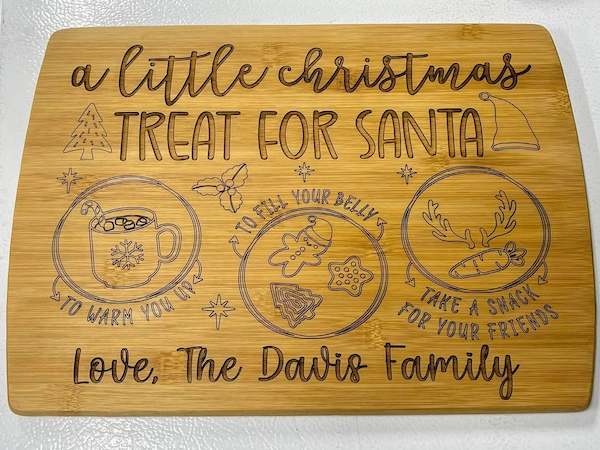
Bamboo can be laser engraved with dark, high-contrast text, patterns, and custom designs.
Yes, bamboo can be laser engraved and laser cut.
Because bamboo is a plant-based organic material, it absorbs CO₂ laser energy effectively. A properly configured laser can alter or remove the bamboo surface to create dark marks, detailed text, logos, photographs, decorative patterns, and personalized artwork.
A CO₂ laser can also cut compatible bamboo sheets and boards into:
Laser processing is contactless, so it does not require a physical cutting tool to touch the bamboo. This makes it useful for detailed personalization, changing customer names, small-batch production, and repeatable digital designs.
However, not every bamboo product responds in the same way. The final result may be affected by:
Always test the actual production material rather than relying only on a general setting for “bamboo.”
The term “bamboo” can refer to several different material constructions. Identifying the exact bamboo type is important because grain, glue, coatings, and internal layers can affect smoke, odor, engraving contrast, edge quality, and cutting consistency.
Solid bamboo products are made primarily from natural bamboo without an engineered plywood core.
They can produce attractive engraved contrast and preserve the natural bamboo texture. However, bamboo fibers, color, density, and grain direction may vary across the same product.
Solid bamboo is commonly used for:
Because the surface may be curved or naturally uneven, careful positioning and focus are important.
Laminated bamboo is made by joining multiple bamboo strips with adhesive.
It is commonly found in:
Laminated bamboo often provides a flat and stable working surface, but individual bamboo strips may engrave at different shades.
Glue lines may also affect:
Confirm the adhesive and surface treatment before processing laminated bamboo.
Bamboo plywood is an engineered sheet material made from multiple layers.
It can be suitable for:
Bamboo plywood is convenient for flat cutting and repeated production, but the internal construction should be checked before processing.
Important factors include:
Two sheets sold under the same general name may produce different results if they come from different manufacturers or production batches.
Bamboo veneer is a thin decorative bamboo layer.
It can be used for:
Because veneer is thin, it can be sensitive to heat and may curl, warp, or burn through more easily than thicker bamboo sheets.
Use controlled settings, keep the material flat, and test cutting and engraving separately.
Many finished bamboo products contain:
These surface treatments can affect engraving darkness, smoke, residue, and cleaning.
Do not assume that a finished bamboo product is automatically suitable for laser processing. Confirm the coating composition with the supplier and test the actual product before production.
Some products described as bamboo may contain:
Do not laser process an unknown bamboo composite until its complete material composition has been verified.
Appearance alone cannot confirm whether the product is suitable for laser processing.
Bamboo’s natural texture and warm color make it suitable for personalized gifts, home décor, kitchenware, branded products, packaging, craft projects, and small-batch commercial production.
Common laser-engraved and laser-cut bamboo products include:
Common customization options include:
Bamboo pens, cylindrical containers, and round bamboo gift items need more stable rotation than flat products, so a laser rotary attachment helps keep curved surfaces aligned during engraving.
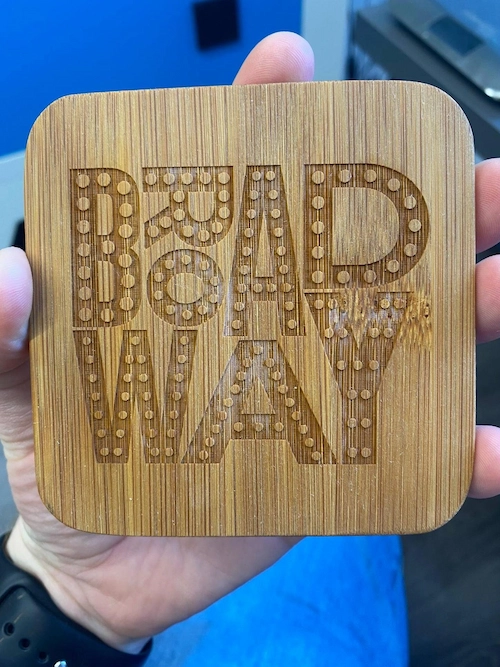
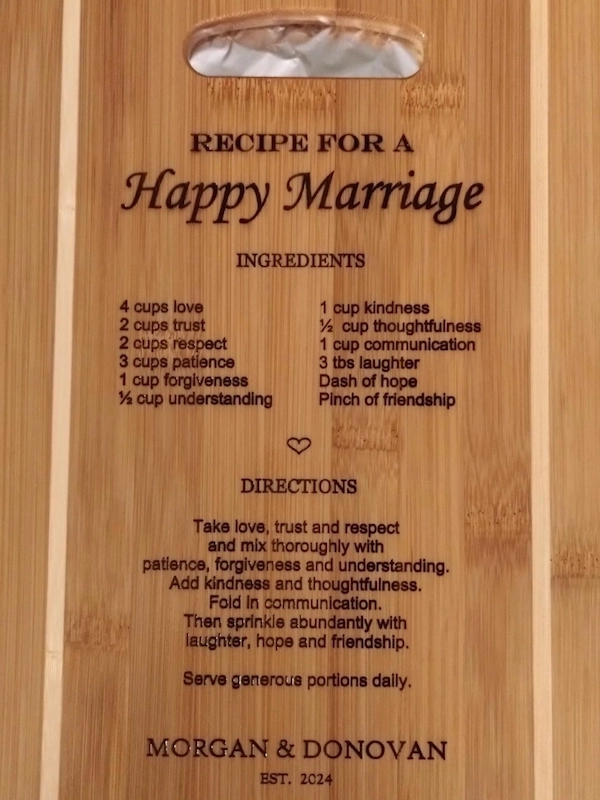
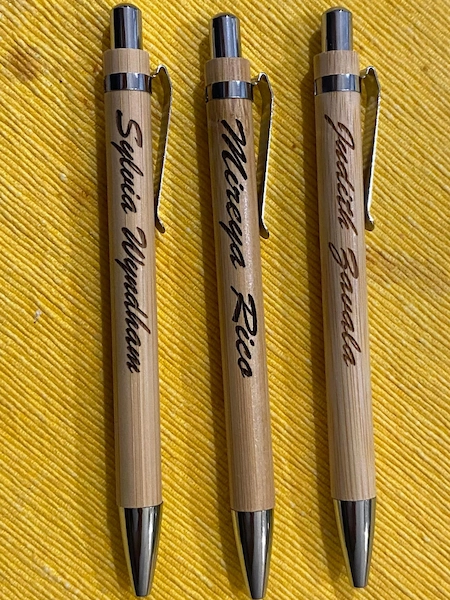
Bamboo is suitable for coasters, cutting boards, pens, gift items, decorative products, and craft projects.
A CO₂ laser is usually the best laser type for bamboo engraving and cutting.
Other laser sources may be useful for selected applications, but they do not provide the same general combination of engraving, cutting, material compatibility, and working area for most bamboo products.
CO₂ lasers are commonly used for organic and non-metal materials, including:
For bamboo, a CO₂ laser can support both surface engraving and through-cutting.
The main advantages include:
An RF CO₂ laser is especially useful when fine engraving detail, stable output, rapid response, and repeatable production are priorities.
A diode laser may engrave selected bamboo surfaces and cut some thin bamboo products, depending on:
A diode laser may suit hobby engraving and small projects, but it is generally less flexible than a professional CO₂ laser for thicker cutting, larger products, and mixed production workflows.
Fiber lasers are mainly used for metals and selected engineered materials.
They are generally not the first choice for normal bamboo engraving or cutting. A fiber laser may burn, discolor, or produce inconsistent results on organic bamboo without providing the same cutting capability as a CO₂ laser.
Use a fiber laser only when a specific bamboo-based or coated product has been tested for the intended marking process.
UV lasers can create fine markings on selected heat-sensitive materials.
However, a UV laser is usually not the most practical option for cutting bamboo boards or completing conventional deep bamboo engraving.
UV processing may be considered for a specialized surface-marking application, but the exact material and required result should be tested first.
The same material-first logic used in the Thunder Laser machine selection guide applies to bamboo: choose the laser source by material behavior first, then compare work area, power, accessories, and production capacity.
Proper settings are essential for producing clean bamboo engraving and cutting results.
The following values are reference starting settings for a Thunder Laser Nova 80W CO₂ machine. Actual results may vary according to:
Always run a small test before production.
| Thickness | Process | Speed | Min Power | Max Power | Blow Type | DPI / Lens Reference |
|---|---|---|---|---|---|---|
| Not specified | Engraving | 1000 mm/s | 20% | 20% | Low | 350 DPI |
| 3 mm | Cutting | 60 mm/s | 10% | 90% | High | 1.5-inch lens reference |
| 5 mm | Cutting | 18 mm/s | 10% | 90% | High | 2-inch lens reference |
Reference bamboo laser engraving and cutting settings for a Thunder Laser Nova 80W CO₂ machine.
Bamboo engraving is controlled by several connected settings.
Bamboo cutting quality depends on:
The 3 mm and 5 mm settings in the table should be treated as separate reference points.
A setting for 3 mm bamboo should not automatically be used for 5 mm bamboo. Laminated bamboo and bamboo plywood may also require different settings from solid bamboo of the same thickness.
A test grid helps identify a suitable balance between contrast, edge quality, cutting depth, and processing time. The safest workflow is to start from tested CO₂ laser material settings, then adjust power, speed, line interval, airflow, and passes according to the exact bamboo material.
Use an offcut from the same:
Test combinations of:
After testing, compare:
Record the final settings with the material supplier, product type, thickness, finish, machine, lens, and test date.
Identify whether the product is:
Confirm the glue, coating, oil, wax, sealant, and surface finish whenever possible.
Check for:
Select a suitable engraving area before placing the product in the machine.
Remove loose dust and residue before engraving.
Use a cleaning method suitable for the bamboo surface and test it on an inconspicuous area. Avoid soaking bamboo or applying excessive moisture.
Use an appropriate:
Make sure clamps and fixtures do not enter the laser path.
For cutting boards, gift boxes, trays, and finished products, create a reusable positioning fixture to improve alignment and batch consistency.
Use vector graphics for:
Use raster images for:
Avoid lines that are too thin for the visible bamboo grain. Small text may need thicker strokes or a larger font size.
Secure the bamboo first and then focus on the actual engraving surface.
Do not focus on the machine bed or a lower area beside the product.
For products with surface height variation, confirm that the full design remains within an acceptable focus range.
Test the exact bamboo material before processing the final product.
Evaluate power, speed, line interval, airflow, and passes. Clean and cool the sample before selecting the final result.
Use the machine’s framing function to confirm:
Framing is particularly important for cutting boards, pens, boxes, and products with pre-existing features.
Start the laser process while monitoring the material.
Bamboo is a combustible organic material and should not be left unattended during engraving or cutting.
Allow the bamboo to cool before cleaning.
Remove loose residue, inspect the contrast and edge quality, and confirm that the design is complete before applying oil, stain, paint, color fill, or another finish.
To produce a darker bamboo engraving, gradually increase the energy applied to the surface.
Possible adjustments include:
Adjust one factor at a time.
Do not continue increasing power only because the result is not dark enough. Excessive heat can create rough texture, smoke stains, loss of fine detail, or deep burning.
The natural color and density of individual bamboo strips may also cause different shades across a laminated cutting board.
For cleaner bamboo cutting:
A slow cut does not always produce a better result. If speed is too low, the edge may become heavily charred.
Multiple passes may help with selected materials, but each pass adds heat. Confirm that the material does not warp, delaminate, or continue burning between passes.
Possible causes:
Adjustment directions:
Do not judge the result only while smoke residue is still present.
Possible causes:
Adjustment directions:
Uneven engraving may be caused by:
To improve consistency:
Natural bamboo variation cannot always be removed completely. It may form part of the final appearance.
Smoke staining may result from:
Possible solutions:
Masking should be tested before use. Adhesive tape may leave residue or affect an oiled, waxed, coated, or delicate surface.
Check the following:
A bamboo sheet may fail to cut consistently if internal glue lines or dense sections respond differently from the surrounding material.
Do not immediately apply excessive power. First confirm the focus, lens, air assist, and actual material construction.
Heavy charring may be caused by:
Improvement directions:
Layer separation is mainly associated with laminated bamboo and bamboo plywood.
Possible causes include:
Stop processing if the material separates excessively or produces unexpected smoke and residue.
Test another section or batch and confirm the adhesive construction with the supplier.
Warping may be caused by:
Possible solutions:
Laser engraving may leave smoke residue or light staining around the design.
Recommended cleaning process:
Aggressive scrubbing may change the surface appearance or reduce the visible contrast of shallow engraving.
Finishing can improve appearance, durability, moisture resistance, and surface feel.
Possible finishes include:
Always test the finish on the same bamboo material before applying it to the final product.
A finish may:
For color filling:
For cutting boards, utensils, and other products intended for food contact, use a cleaning and finishing method suitable for the intended use and follow the product manufacturer’s instructions.
Proper storage and maintenance help preserve laser-engraved bamboo products.
Recommended storage conditions and practices include:
Inspect stored products periodically for:
The best bamboo laser engraving machine depends on the dimensions of the products, required engraving detail, cutting thickness, production volume, rotary requirements, working area, Z clearance, and expected business growth.
For most bamboo products, an RF CO₂ laser provides a strong combination of engraving precision, cutting capability, speed, and compatibility with organic materials.
The Bolt Plus 24 is a practical option for makers, small businesses, gift shops, and growing workshops that mainly produce small and medium bamboo products.
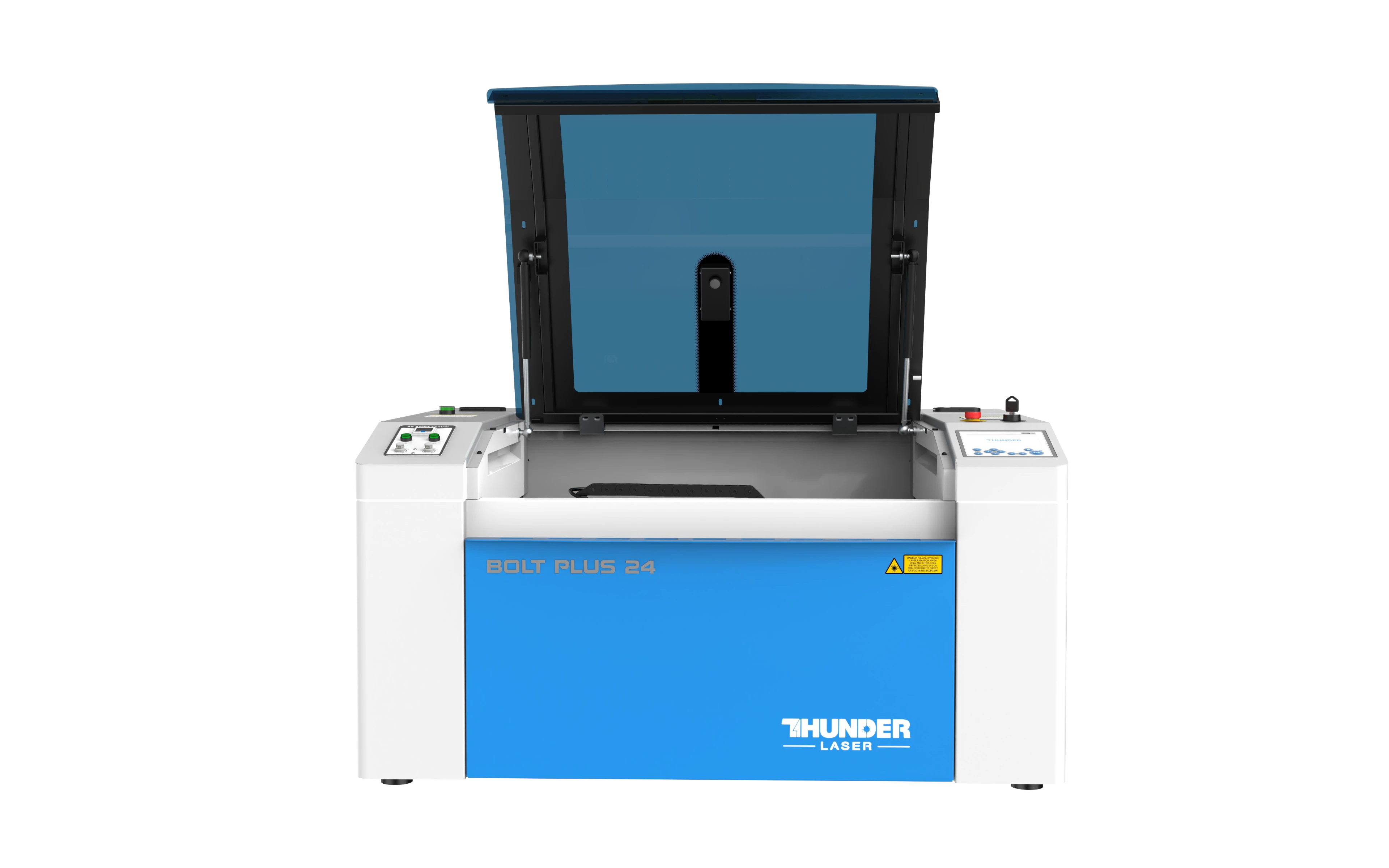
Key specifications:
It is suitable for products such as:
The RF CO₂ source supports fine details, while the working area can accommodate individual products or small production batches.
Choose the Bolt Plus 24 when:
The Bolt Pro 36 is suitable for professional makers and businesses that need a larger work area, more fixture space, and more production capacity for bamboo cutting boards, signs, trays, and batch layouts.
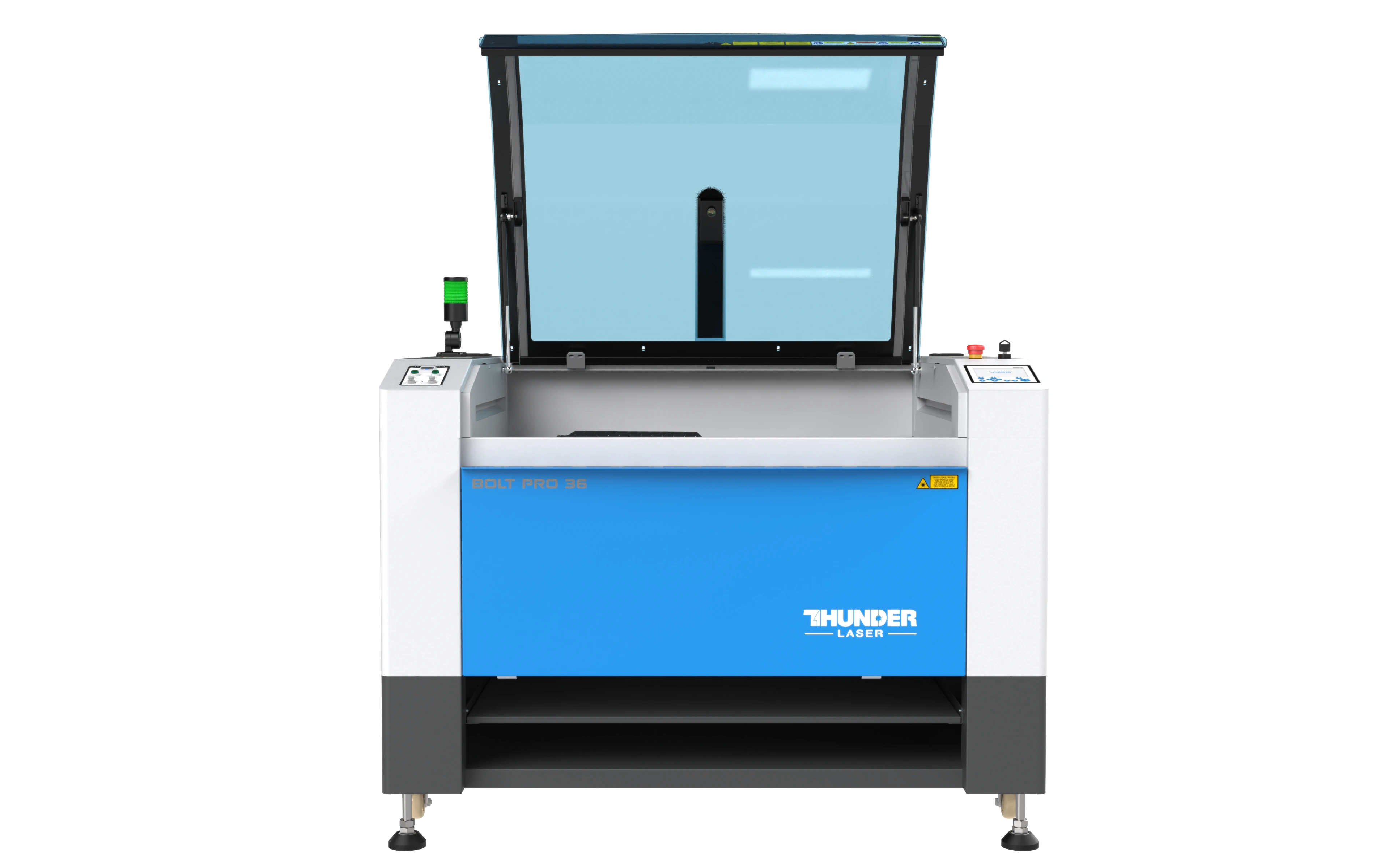
Key specifications:
It is suitable for:
Choose the Bolt Pro 36 when:
The Titan 51 is an industrial RF CO₂ platform for businesses that process large bamboo panels, multiple cutting boards, large signs, furniture components, or high-volume commercial orders.
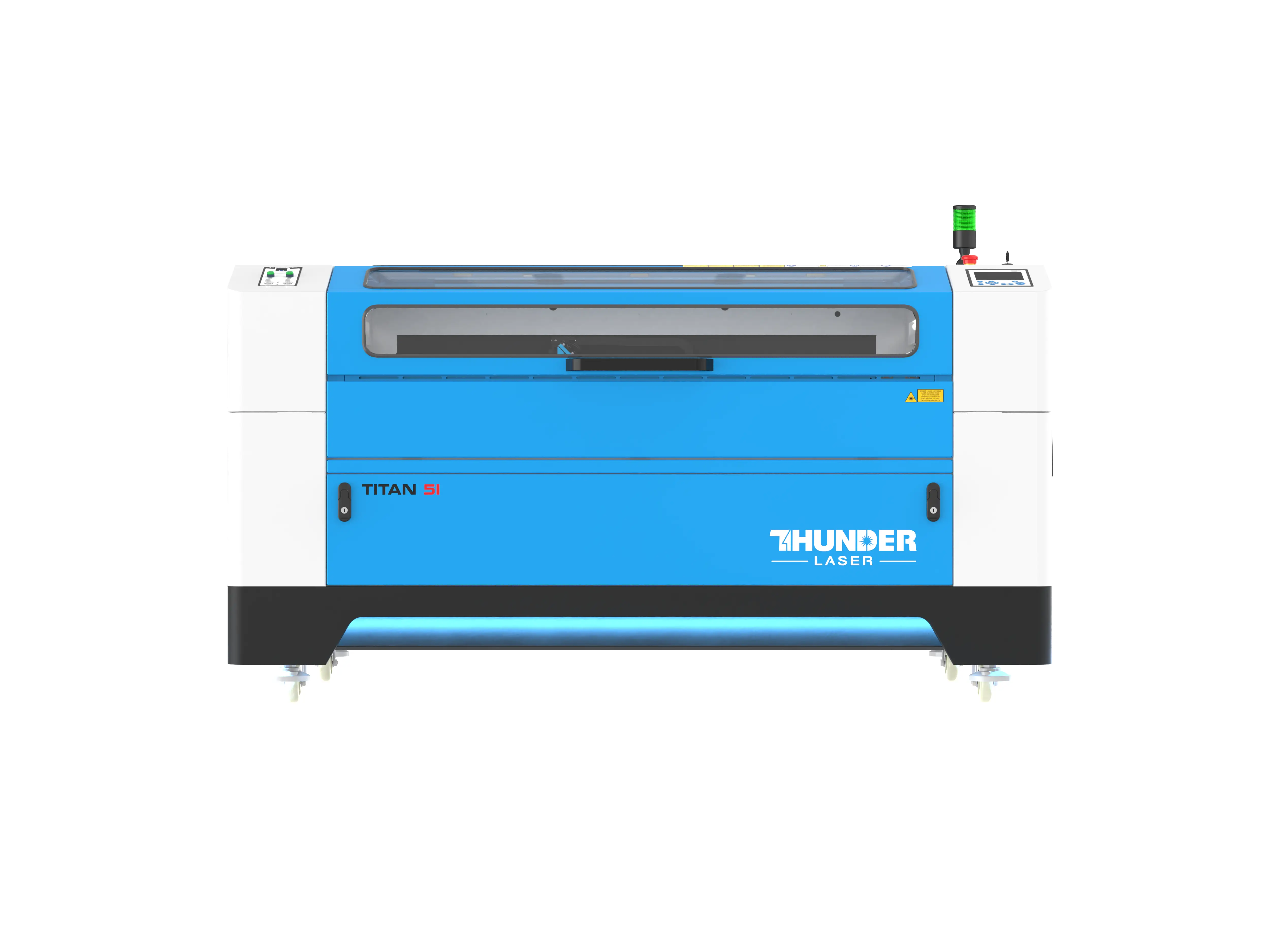
Key capabilities include:
It is suitable for:
Choose the Titan 51 when:
| Machine | Best For | Working Area | RF CO₂ Power | Maximum Engraving Speed |
|---|---|---|---|---|
| Bolt Plus 24 | Small bamboo products and growing workshops | 610 × 407 mm | 60W | Up to 2,000 mm/s |
| Bolt Pro 36 | Cutting boards, medium products, and batch layouts | 915 × 610 mm | Up to 80W | Up to 2,000 mm/s |
| Titan 51 | Large panels and industrial batch production | 1300 × 900 mm | 80W | Up to 3,000 mm/s |
A recommended machine comparison table for bamboo laser engraving and cutting production needs.
Important machine selection note: No machine is automatically suitable for every bamboo product.
Before selecting a laser, confirm bamboo type, product dimensions, material thickness, cutting requirements, engraving detail, glue layers, surface coatings, working area, Z clearance, rotary requirements, batch quantity, exhaust requirements, air-assist requirements, fixture requirements, and expected production growth. Testing the actual bamboo material is the most reliable way to confirm the required machine configuration and processing result.
Bamboo is a versatile material for laser engraving and cutting. It can be used for personalized gifts, cutting boards, coasters, signs, pens, packaging, kitchenware, home décor, and commercial product batches.
For most bamboo applications, a CO₂ laser provides the best balance of engraving detail, cutting capability, production speed, and material compatibility.
Successful bamboo processing depends on:
The Bolt Plus 24 is suitable for small bamboo products and growing businesses. The Bolt Pro 36 provides more room for cutting boards, medium products, and batch layouts. The Titan 51 supports large-format bamboo panels and industrial production.
Material testing before purchase is the most reliable way to determine which machine, lens, airflow, focus, and settings are suitable for your bamboo products.
Ready to Create Better Bamboo Laser Products?
Tell Thunder Laser about your bamboo material, product dimensions, material thickness, surface finish, required engraving detail, cutting requirements, expected production volume, available workspace, and whether your workflow needs rotary engraving, stronger air assist, or a dedicated fume extraction setup such as Thunder Air.
Contact Thunder LaserTalk To Our Experts Now!
Please leave your contact information so that we can serve you better.
FAQS
NEED HELP FINDING THE RIGHT SOLUTION?
Talk to our team for machine recommendations, application advice, and support based on your needs.


 Stable & Consistent MachinesUnlimited ApplicationsRobust After-sales SupportFactory Direct Supply


