


Fiber Laser Cutting Machine Complete Guide to Metal Cutting
 2026-10-14


Bolt Series
Professional High-Precision Laser Engraving Machine

Nova Series
Large Format Glass Tube Laser Cutting Machine

Nova Plus Series
Business-grade RF CO₂ Laser Cutter

Nova Pro Series
Professional Laser Cutting & Engraving System

Titan Series
Industrial-grade Laser System

Titan Pro Series
Industrial-grade Dual-laser System


WHAT ARE YOU LOOKING FOR?
Search Across Products, Blog Posts, Support Content, And Resources.

Fiber Laser Cutting Machine Complete Guide to Metal Cutting
2026-10-14

Fiber laser cutting is widely used for fast, precise metal processing in fabrication, manufacturing, and custom production. It can cut materials such as stainless steel, carbon steel, aluminum, brass, and other metals with high repeatability and digital control.
This guide explains how fiber laser cutting machines work, what metals they can cut, how laser power affects cutting capability, the role of assist gases, and the key factors to consider when selecting a machine.
If you are researching fiber laser cutting for the first time or considering bringing metal cutting in-house, this guide will help you understand the technology and make a more informed equipment decision.
A fiber laser cutting machine is a CNC-controlled system that uses a high-power fiber laser to cut metal sheets and plates. The laser beam is delivered through optical fiber and focused onto a small area of the metal. The concentrated energy melts the material, while assist gas removes the molten metal from the cutting path. The CNC system then moves the cutting head along a programmed design to create the finished part.
Fiber laser cutting machines are commonly used for:
Fiber laser cutters are widely used in sheet metal fabrication, machinery manufacturing, electrical enclosures, signage, HVAC, automotive components, kitchen equipment, custom fabrication, and many other industries that require accurate metal parts. Actual cutting capability depends on the material, thickness, laser power, assist gas, and machine configuration.
Fiber laser cutters and fiber laser marking machines use related laser technology but serve different applications. A fiber laser cutter is designed to cut metal into parts and shapes. A fiber laser marking machine is primarily used for surface marking, identification, and engraving.
| Feature | Fiber Laser Cutting Machine | Fiber Laser Marking Machine |
|---|---|---|
| Main Purpose | Cut through metal | Mark or engrave surfaces |
| Typical Power | Kilowatt-level | Watt-level |
| Processing System | CNC cutting system | Galvo scanning system |
| Typical Applications | Sheet metal parts, fabrication | Logos, serial numbers, QR codes |
Fiber laser cutting converts electrical energy into a concentrated laser beam and directs that energy onto a very small area of the metal. The combination of laser energy, precise motion control, focusing optics, and assist gas allows the machine to separate the material along a programmed cutting path.
Although the complete system involves many components, the basic cutting process can be understood in five stages:
1. Laser generation: The fiber laser source produces a concentrated laser beam.
2. Beam Travels: Once generated, the beam travels through the optical fiber to the cutting head.
3. Beam focusing: The cutting head focuses the beam onto the metal surface.
4. Metal cutting: The focused energy rapidly melts the material while assist gas removes molten metal from the kerf.
5. CNC motion: The machine follows the programmed cutting path to create holes, contours, and finished parts.
The overall workflow can be summarized as:
Design File → Cutting Program → CNC Motion → Laser Cutting → Finished Metal Part
Cutting performance is influenced by several variables, especially laser power, material type and thickness, cutting speed, focus position, and assist gas. These factors are covered in more detail in the following sections.
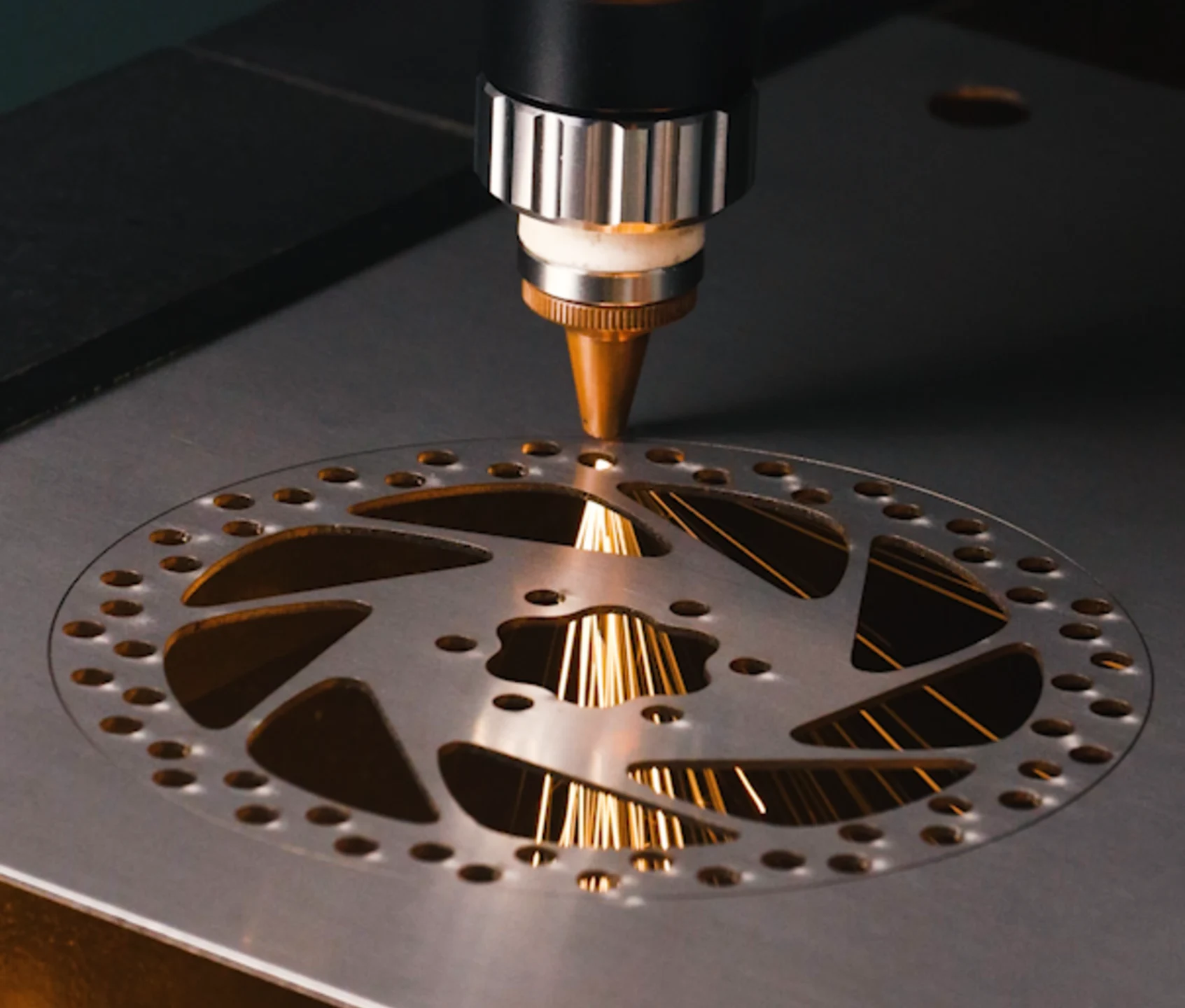
A fiber laser cutting machine processing a metal sheet along a programmed cutting path.
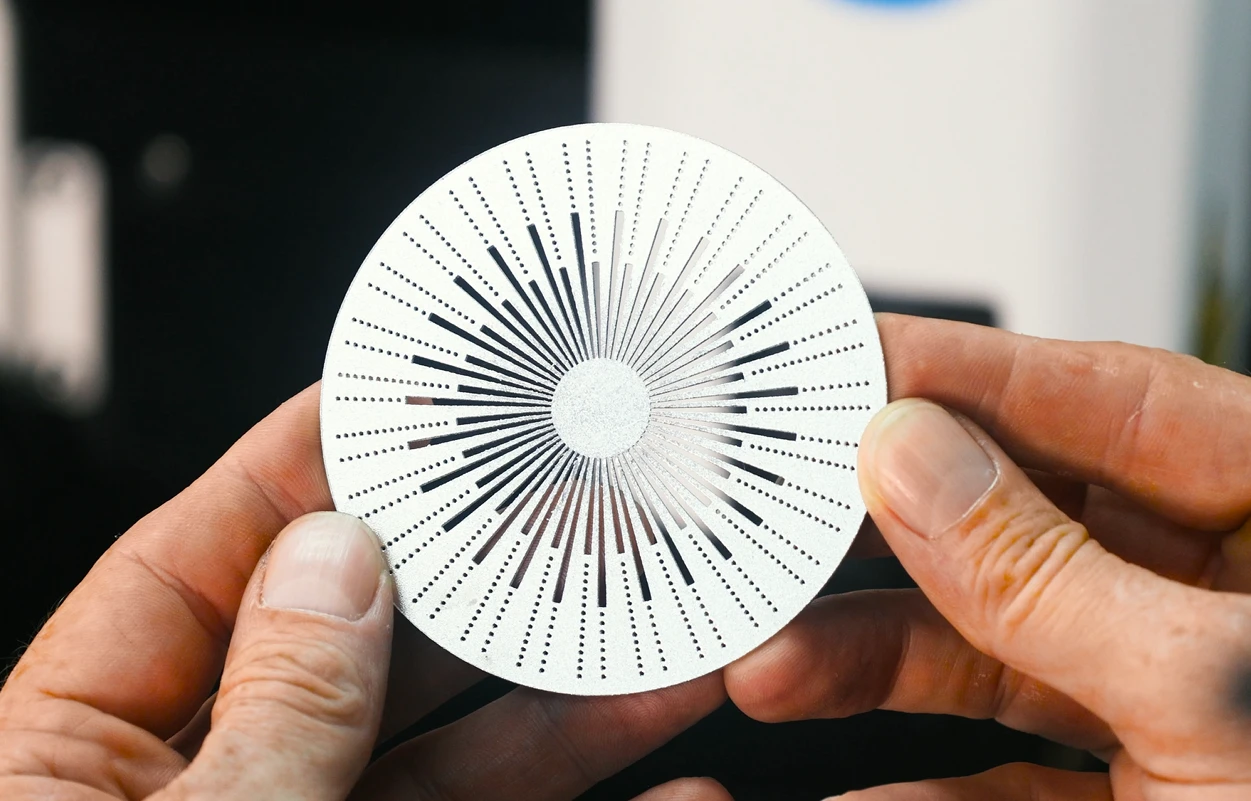
Precision-cut stainless steel parts with detailed contours and small holes produced by fiber laser cutting.
Fiber laser, CO₂ laser, plasma, and waterjet each serve different metal-cutting requirements.
| Factor | Fiber Laser | CO₂ Laser | Plasma Cutting | Waterjet |
|---|---|---|---|---|
| Best Fit | Precision sheet metal production | Laser processing across broader material types | Medium-to-thick conductive metal | Thick, heat-sensitive, or diverse materials |
| Thin Sheet Speed | Excellent | Good | Good | Lower |
| Precision | Excellent | Excellent | Moderate | High |
| Thick Plate Capability | Strong with sufficient power | Moderate | Excellent | Excellent |
| Kerf Width | Very narrow | Narrow | Wider | Narrow |
| Thermal Effect | Small HAZ | HAZ present | Larger HAZ | Cold cutting |
| Typical Materials | Mainly metals | Metals and many non-metals | Conductive metals | Metals, stone, glass, composites, and more |
| Initial Investment | High | High | Lower | Moderate to High |
Explore the detailed comparisons: Fiber Laser vs. CO2 Laser | Fiber Laser vs. Plasma Cutting | Fiber Laser vs. Waterjet Cutting.
Fiber laser cutting machines are especially well suited for processing metals because their wavelength is efficiently absorbed by many metallic materials.
Common materials include:
| Material | Fiber Laser Cutting | Key Consideration |
|---|---|---|
| Carbon Steel | Excellent | Commonly cut with oxygen, air, or other suitable assist gas |
| Stainless Steel | Excellent | Nitrogen is often used when clean, oxide-free edges are required |
| Aluminum | Excellent | Requires suitable power and cutting parameters |
| Brass | Suitable | Reflective material requiring appropriate machine capability |
| Copper | Suitable | Requires a system designed to handle highly reflective metals |
| Galvanized Steel | Excellent | Widely used in sheet metal fabrication |
Actual cutting performance varies with material type, thickness, laser power, assist gas, and machine configuration.
For a deeper look at individual materials, cutting parameters, and process considerations, see our guide to What Materials Can a Fiber Laser Cut?
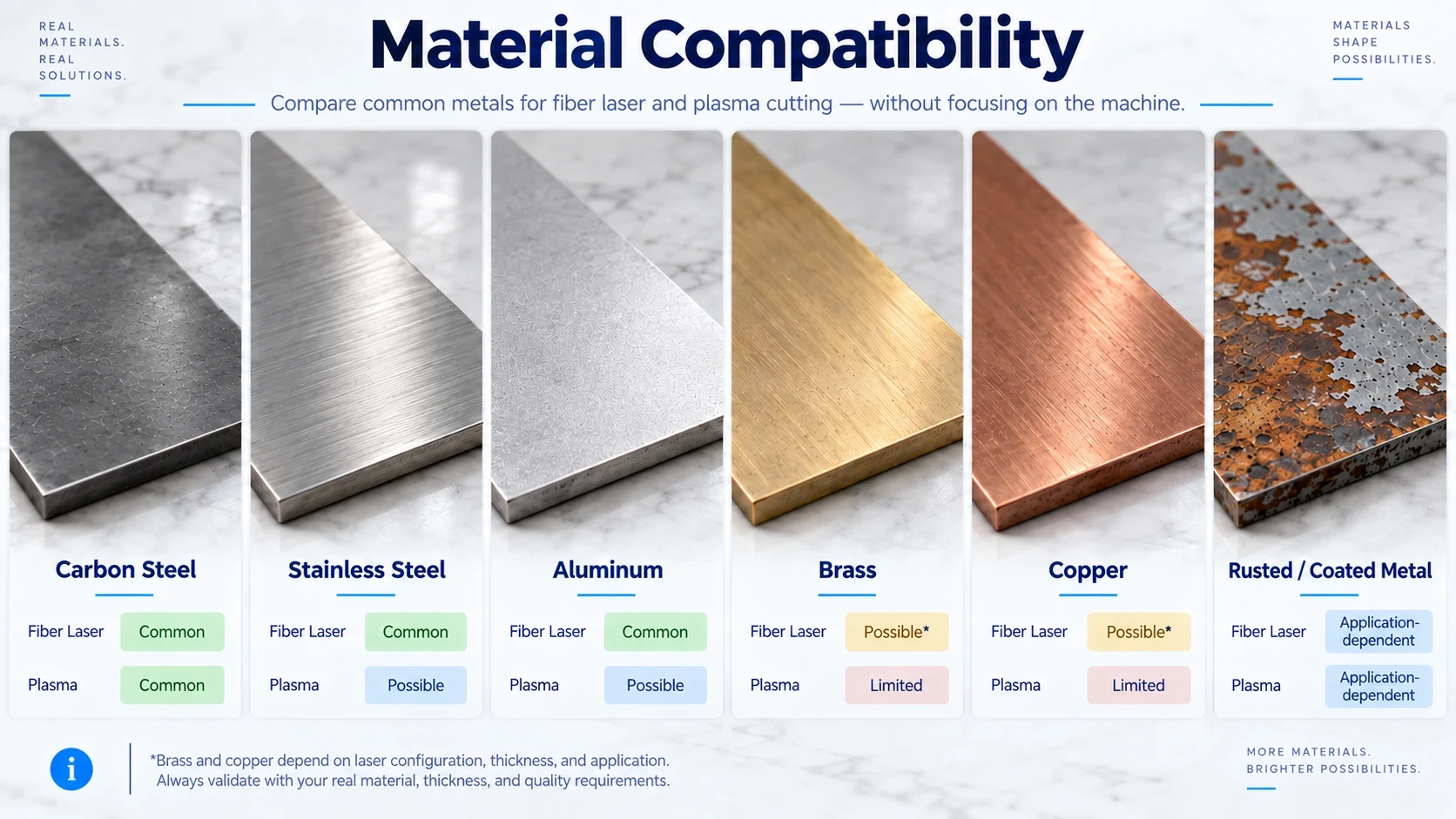
Fiber laser cutting offers strong compatibility with common industrial metals such as carbon steel, stainless steel, aluminum, brass, and copper.

A fiber laser cut brass bookmark showing the fine detail and edge quality achievable on reflective metals.
When manufacturers state how thick a fiber laser can cut, the number can mean two different things: a clean cutting thickness and an absolute maximum cutting thickness.
For everyday production, the more useful number is the maximum clean-cut thickness. This means the laser can cut completely through the material while maintaining a relatively clean edge, limited dross, reliable part separation, and little secondary finishing.
An absolute maximum cutting thickness describes the upper limit that the machine can physically cut through under suitable conditions. Near this limit, cutting becomes slower and more sensitive to focus, gas pressure, material quality, nozzle condition, and other parameters.
Near the absolute maximum, cutting is slower and more likely to require dross removal, edge finishing, or manual separation. For production planning, prioritize clean-cut thickness rather than the advertised physical maximum.
Published cutting limits vary between manufacturers and machine configurations. The table below summarizes typical maximum cutting thickness ranges reported across multiple fiber laser manufacturers and industry reference charts.
| Material | 1.5 kW | 3 kW | 6 kW | 12 kW | Common Assist Gas |
|---|---|---|---|---|---|
| Carbon Steel | ~12–16 mm | ~18–22 mm | ~25–30 mm | ~40–50 mm | O₂ / Air |
| Stainless Steel | ~5–6 mm | ~8–12 mm | ~16–20 mm | ~20–40 mm | N₂ |
| Aluminum | ~4–6 mm | ~6–10 mm | ~12–16 mm | ~18–30 mm | N₂ |
| Brass | ~3–5 mm | ~6–8 mm | ~8–12 mm | ~12–20 mm | N₂ |
| Copper | ~2–3 mm | ~4–5 mm | ~5–6 mm | ~8–12 mm | N₂ / O₂* |
* Copper cutting is particularly sensitive to material reflectivity, laser source, cutting head, assist gas, and process settings. Confirm the required thickness with the machine manufacturer through sample testing.
For regular production, select a machine with enough power margin to cut your typical material thickness cleanly, consistently, and at a practical speed.
See our How Thick Can a Fiber Laser Cut? Power & Thickness Guide for detailed material and thickness recommendations.
Different industries work with very different materials and thicknesses. A jewelry manufacturer cutting thin precious-metal sheets has very different power requirements from a fabrication shop processing 10–15 mm steel plate. The table below provides a practical starting point for selecting fiber laser power based on common industry applications.
| Industry / Application | Common Materials | Typical Thickness / Upper End of Common Work | Recommended Fiber Laser Power | Why |
|---|---|---|---|---|
| Jewelry & Precision Metal Products | Gold, silver, brass, stainless steel | Often below 1–2 mm | ≤1.5 kW | Thin materials benefit more from precision and process control than very high laser power. |
| Electronics & Electrical Enclosures | Aluminum, stainless steel, galvanized steel, carbon steel | ~0.5–3 mm | 1.5–3 kW | Suitable for thin enclosures, panels, brackets, ventilation holes, and detailed cutouts. |
| HVAC & Ductwork | Galvanized steel, stainless steel, aluminum | ~0.5–1.6 mm for much of standard ductwork | 1.5–3 kW | Most work involves thin sheet, so production speed and sheet handling usually matter more than extreme cutting thickness. |
| Metal Signs & Decorative Metalwork | Aluminum, stainless steel, carbon steel, brass | Commonly ~1–3 mm; heavier signs may use thicker plate | 1.5–3 kW | Provides ample capacity for letters, panels, decorative patterns, and most signage sheet materials. |
| Commercial Kitchen & Food Equipment | Stainless steel, galvanized steel | Commonly ~1–2 mm; heavier components may reach ~3 mm | 1.5–3 kW | Well suited to cabinets, work surfaces, panels, sinks, covers, and equipment housings. |
| Automotive Parts & Prototyping | Mild steel, stainless steel, aluminum | Common sheet work ~0.5–4 mm; some brackets and structural parts are thicker | 3–6 kW | Additional power increases throughput and provides more flexibility for mixed gauges and thicker components. |
| General Sheet Metal Fabrication | Carbon steel, stainless steel, aluminum, brass | ~1–6 mm is common, with thicker jobs depending on the shop | 3–6 kW | A broader power range supports mixed materials, varied customer jobs, and higher production volume. |
| Machinery & Heavy Fabrication | Carbon steel, stainless steel | Frequently includes ~6–15 mm plate and sometimes thicker material | 6–12 kW+ | Higher power provides the cutting headroom and productivity required for medium-to-thick plate production. |
For a more detailed comparison, see our Fiber Laser Power Guide: How Many Watts Do You Need?
Fiber laser cutting commonly uses oxygen, nitrogen, or compressed air. The gas helps remove molten metal from the kerf and directly affects cutting speed, edge quality, oxidation, and operating cost.
| Assist Gas | Common Materials | Main Benefit | Main Limitation | U.S. Price Reference* |
|---|---|---|---|---|
| Oxygen (O₂) | Carbon steel / mild steel | Supports the cutting reaction and works well on thicker steel | Creates an oxidized edge | ~$50–60 per 125 cu. ft. refill |
| Nitrogen (N₂) | Stainless steel, aluminum, brass | Clean, bright, oxide-free edge | High consumption at high pressure | ~$35 per 125 cu. ft. refill |
| Compressed Air | Carbon steel, stainless steel, aluminum | Low ongoing gas cost | Some oxidation or discoloration may occur | Generated on-site |
*Prices are rough U.S. retail references. Actual costs vary by region, gas purity, cylinder size, supplier, delivery fees, rental agreements, and purchase volume.
For most buyers, the practical choice is simple: oxygen is commonly used for carbon steel, nitrogen when a clean oxide-free edge is required, and compressed air when lower gas cost is the priority and some oxidation is acceptable.
See Oxygen vs. Nitrogen vs. Compressed Air for Fiber Laser Cutting for pressure, consumption, edge quality, and operating-cost details.
| Question to Answer | What It Determines |
|---|---|
| What metals do you cut most often? | Material/process compatibility and assist-gas requirements |
| What is your regular and maximum thickness? | Required laser power and practical cutting margin |
| What sheet size do you buy? | Required work area |
| How much do you produce? | Speed, exchange table, and automation needs |
| What edge quality is required? | Assist gas and acceptable post-processing |
| What infrastructure and budget are available? | Machine configuration, installation, and support requirements |
For component-level comparisons — laser source, cutting head, motion system, enclosure, exchange table, software, extraction, and service — see our Fiber Laser Cutting Machine Buying Guide.
The real cost of a fiber laser cutting system goes beyond the machine itself. A more useful way to budget is to separate the investment into three levels:
1. Machine purchase
2. Production setup
3. Cost to produce a finished part
| Typical User | Common Work | Typical Machine | Machine Budget | More Realistic Installed Budget* |
|---|---|---|---|---|
| Small shop / light fabrication | 1–3 mm stainless, aluminum, mild steel | 1.5–3 kW | $20,000–40,000 | $30,000–50,000+ |
| General sheet metal fabrication | 1–8 mm mixed sheet | 3–6 kW | $45,000–80,000 | $60,000–100,000+ |
| Medium-thickness production | Regular 6–15 mm metal | 6–12 kW | $70,000–150,000+ | $90,000–180,000+ |
| High-volume industrial production | Thick plate / continuous production | 12 kW+ / automation | $150,000+ | $200,000+ |
*Installed budget varies substantially by supplier, region, infrastructure, and what is included with the machine.
| Cost Layer | Include in Your Budget |
|---|---|
| Machine & setup | Machine, freight/rigging, electrical work, compressor or gas system, extraction, software, installation, training |
| Cutting operation | Assist gas, electricity, nozzles, protective lenses, filters, maintenance |
| Finished-part cost | Deburring/grinding, metal cleaning, rust protection, painting/coating, bending/welding, inspection, packaging when required |
Compare the total cost per finished part, not only the machine purchase price. See How Much Does a Fiber Laser Cutting Machine Cost? for installation, operating, post-processing, and TCO calculations.
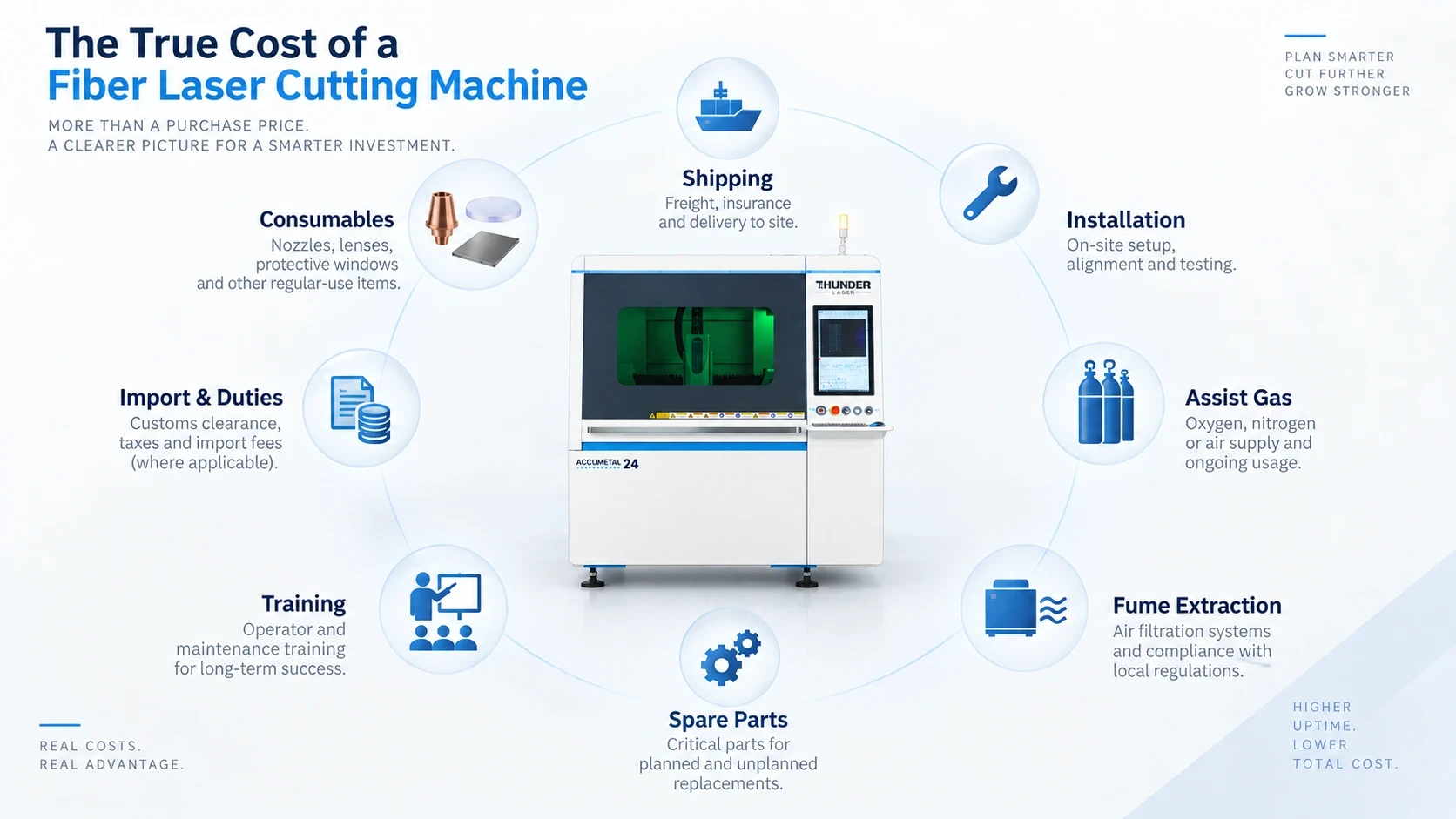
Budgeting for a fiber laser cutting machine should include the machine, production setup, and cost per finished part.
A fiber laser cutting machine is worth the investment when it can reduce your total cost per finished part, shorten production lead times, or create enough additional production capacity to recover the investment within an acceptable period.
| Buying Is More Likely to Make Sense When... | Outsourcing May Still Make More Sense When... |
|---|---|
| Cutting demand is regular; outsourcing costs or lead times are high; custom/rush work is common; production volume is growing. | Cutting demand is occasional; utilization would be low; infrastructure or trained operators are limited; a local supplier is already fast and economical. |
A simple starting formula is:
Monthly Savings = Current Outsourcing Cost − Monthly In-House Production Cost
Payback Period = Total Installed Investment ÷ Monthly Savings
Also include post-processing and new capacity/revenue when evaluating ROI. See Is a Fiber Laser Cutting Machine Worth It? ROI Guide for a complete in-house vs. outsourcing calculation.
A fiber laser cutting machine combines a high-power laser, moving mechanical systems, electricity, high-pressure gas, fumes, and hot metal. Safety and maintenance therefore need to cover the entire cutting environment.
Routine maintenance should focus on five systems: cutting head (lens/nozzle), gas and air supply, chiller, motion system, and fume extraction. Inspection frequency should follow the manufacturer schedule and actual workload.
See Fiber Laser Cutting Safety Guide and Fiber Laser Cutter Maintenance Guide for detailed procedures and schedules.
| Area | What to Check |
|---|---|
| Laser Safety | Enclosure, safety interlocks, laser-safe viewing windows, access control |
| Fume & Dust | Proper extraction and filtration for fumes and particles generated during cutting |
| Fire Risk | Remove flammable materials and monitor sparks, hot slag, and material buildup |
| Assist Gas | Secure gas cylinders, use correct regulators and piping, check for leaks |
| Compressed Air | Use clean, dry air at the pressure specified by the machine |
| Electrical Safety | Correct power supply, grounding, breakers, and qualified electrical installation |
| Operator Safety | Training, operating procedures, emergency-stop knowledge, and appropriate PPE |
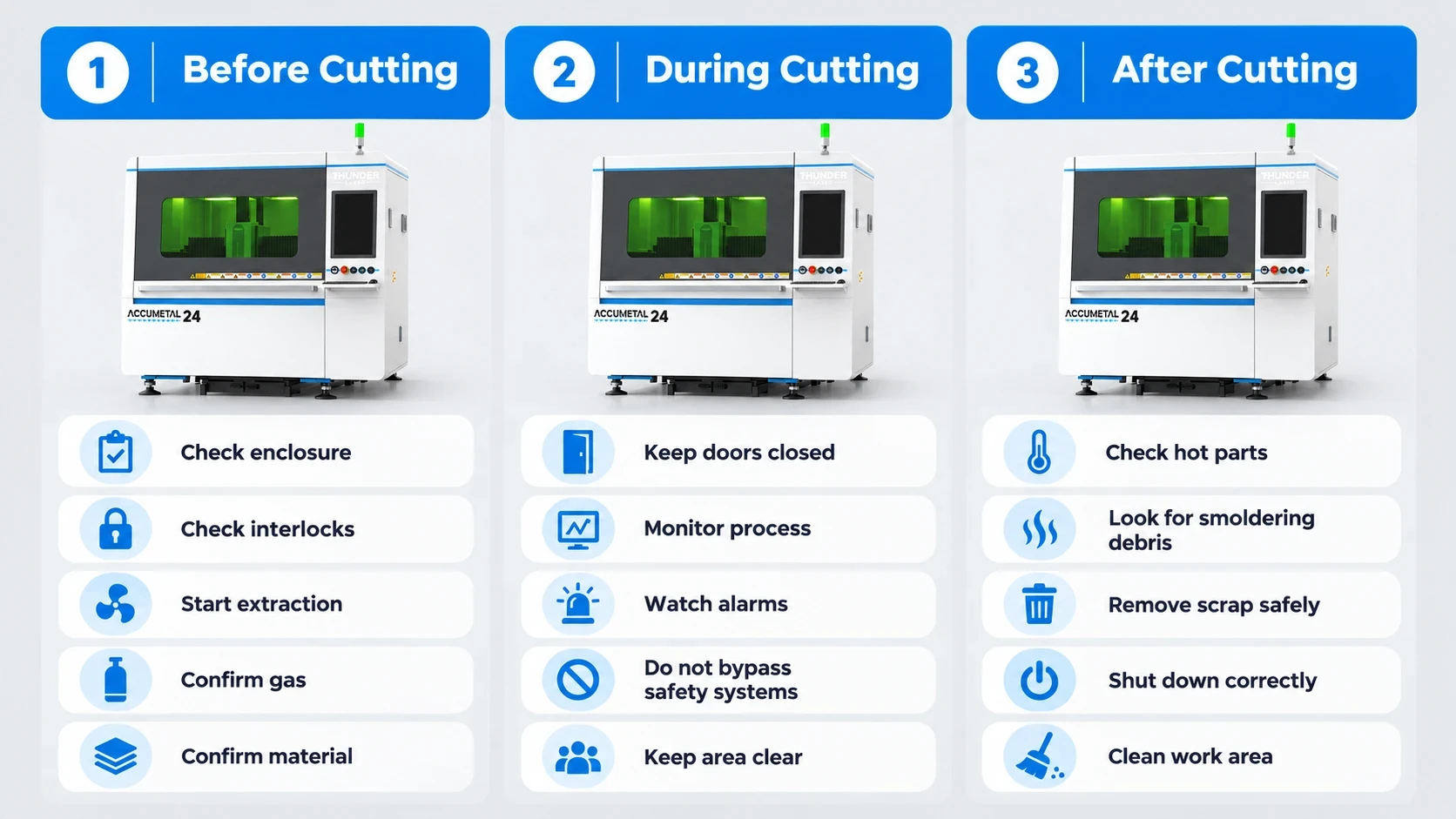
Safe operation of a fiber laser cutting machine requires attention to laser safety, fume extraction, fire risk, assist gas, compressed air, electrical safety, and operator protection.
Cleaning the work area after tasks helps maintain a safe and reliable cutting environment.
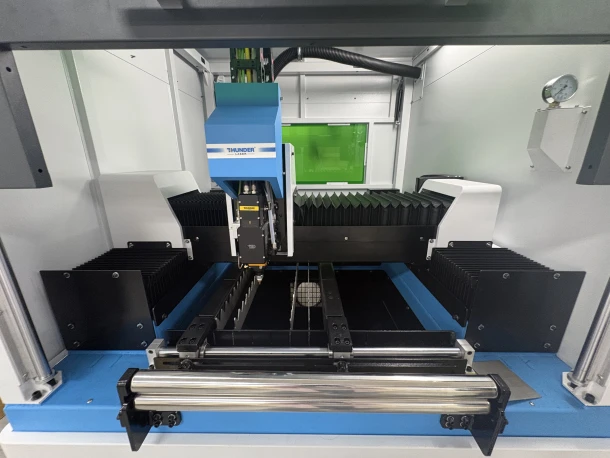
Thunder AccuMetal brings professional fiber laser metal cutting into a more practical, accessible production platform for growing businesses.
Explore the Thunder AccuMetal Series for full specifications, cutting capabilities, and configuration options.
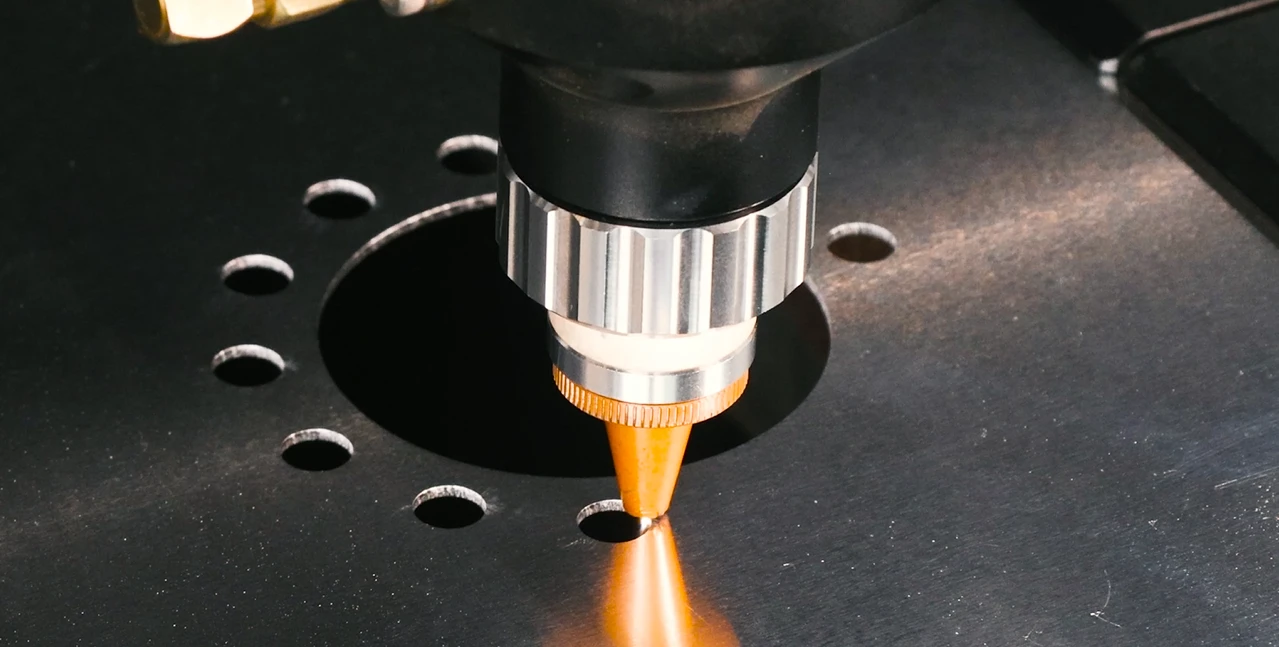
AccuMetal fiber laser cutting machine processing stainless steel parts with precision.
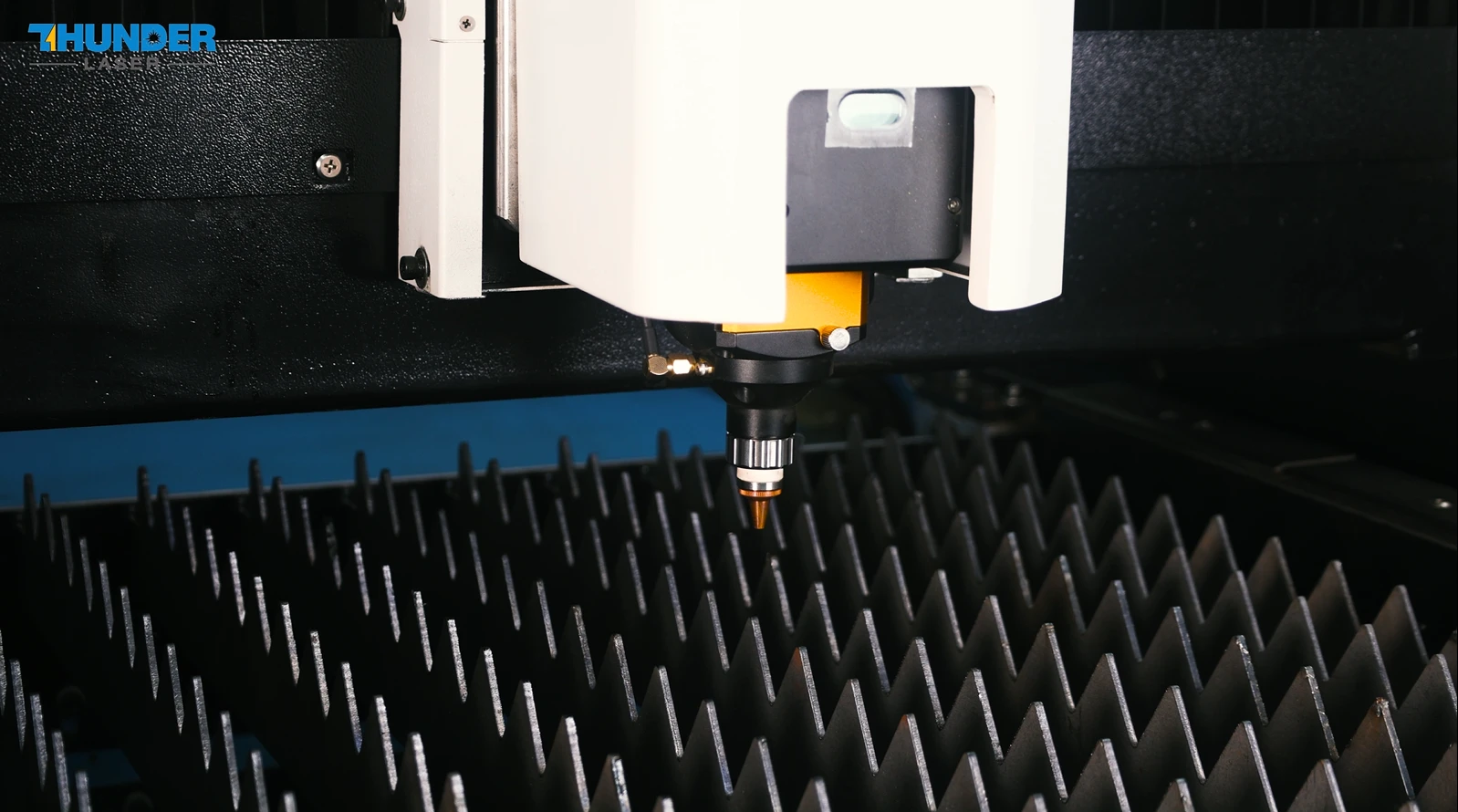
A clean blade table on the AccuMetal fiber laser cutting machine supports stable sheet support and consistent cutting.
For businesses that need reliable metal-cutting capability without moving directly into a large automated industrial production line, AccuMetal focuses on a practical balance of cutting quality, production flexibility, and overall value.
Choosing the right fiber laser cutting machine comes down to matching the machine to your actual production needs: material, thickness, laser power, assist gas, sheet size, production volume, and total operating cost.
Higher power or a larger machine is not always the better choice. The right system is one that can cut your regular materials cleanly and consistently, fit your workflow, and deliver a reasonable cost per finished part.
If you are still unsure which fiber laser cutting machine is right for your application, contact our team at sales@thunderlaser.com for help choosing the right configuration for your materials, thickness, and production needs.
Talk To Our Experts Now!
Please leave your contact information so that we can serve you better.
FAQS
A fiber laser cutting machine is a CNC-controlled system that uses a focused fiber laser beam to cut metal sheets and plates. It is widely used for stainless steel, carbon steel, aluminum, brass, copper, galvanized steel, and other metals.
Fiber laser cutters can process common metals including:
Actual cutting capability depends on the material, thickness, laser power, assist gas, and machine configuration.
Cutting thickness depends mainly on laser power, material, assist gas, and cutting parameters.
As a general market reference, a 1.5 kW machine may cut around 12–16 mm carbon steel or 5–6 mm stainless steel, while 6 kW and 12 kW systems can process substantially thicker material.
Published maximum thickness should not be confused with the thickness that can be cut cleanly and consistently in daily production.
Choose laser power based on the material and thickness you process regularly:
Choose power for your normal workload rather than an occasional maximum thickness.
The three most common assist gases are:
The best gas depends on the material, required edge quality, cutting speed, and operating cost.
Yes. Fiber lasers are widely used to cut both stainless steel and aluminum.
Nitrogen is commonly used when a clean, oxide-free edge is required. The maximum practical thickness depends on laser power and machine configuration.
A fiber laser cutter is designed to cut completely through metal sheets and plates and typically uses kilowatt-level laser power with CNC motion control.
A fiber laser marking machine normally uses watt-level power and a galvo system to create logos, serial numbers, QR codes, text, and surface engravings without cutting through the material.
It depends on the application.
Fiber laser is usually better suited to:
Plasma cutting is often more economical for heavy steel fabrication where very thick material and lower equipment cost are more important than fine precision.
Fiber laser cutting machine prices vary considerably by power, work area, enclosure, exchange table, components, and automation.
Entry-level 1.5–3 kW systems may start in the tens of thousands of dollars, while higher-power industrial systems can exceed $100,000.
The total investment should also include installation, electrical infrastructure, assist gas or compressed air, extraction, consumables, maintenance, and post-processing.
A fiber laser cutter can be worthwhile when your business has regular metal-cutting demand, high outsourcing costs, frequent custom or rush jobs, or growing production volume.
A useful starting point is:
Payback Period = Total Installed Investment ÷ Monthly Savings
Compare the complete cost of outsourced production with the cost of producing finished parts in-house before making the investment.
NEED HELP FINDING THE RIGHT SOLUTION?
Talk to our team for machine recommendations, application advice, and support based on your needs.

 Stable & Consistent MachinesUnlimited ApplicationsRobust After-sales SupportFactory Direct Supply


