


CO2 Laser vs. Fiber Laser: Which Laser Machine Should You Choose?
 2026-09-22
WHAT ARE YOU LOOKING FOR?
Search Across Products, Blog Posts, Support Content, And Resources.

CO2 Laser vs. Fiber Laser: Which Laser Machine Should You Choose?
2026-09-22

CO₂ lasers and fiber lasers are two widely used laser technologies, but they are designed around very different materials and applications. Their differences in laser source, wavelength, beam delivery, and material interaction determine what each technology does best.
CO₂ lasers are highly versatile for processing non-metal materials such as wood, acrylic, leather, paper, and textiles. Fiber lasers, by contrast, are primarily associated with metal processing and can be configured for applications ranging from sheet metal cutting and metal marking to more specialized manufacturing processes.
So the question is not simply whether a CO₂ laser or fiber laser is “better.” The better choice depends on what material you work with and what you want the laser to do.
This guide explains how CO₂ and fiber lasers work, their compatible materials, advantages and limitations, and the key differences between them to help you choose the right laser technology for your application.
Quick Answer: Choose a CO₂ laser if your work mainly involves cutting or engraving non-metal materials such as wood, acrylic, leather, paper, or fabric. Choose a fiber laser when your main work involves metals. For metal applications, the specific machine then depends on the process you need—such as cutting, marking, engraving, or metal additive manufacturing.
CO₂ laser technology has long been widely used for cutting and engraving non-metal materials. Its broad material compatibility makes it particularly useful for businesses, workshops, schools, and makers working with materials such as wood, acrylic, leather, paper, and fabric.
Understanding how a CO₂ laser works also helps explain why it performs so differently from a fiber laser.
A CO₂ laser uses a gas-based laser source. The laser is typically generated by electrically exciting a gas mixture that includes carbon dioxide, nitrogen, and helium.
Once generated, the laser beam travels through an optical path made up of mirrors and lenses. The mirrors direct the beam toward the cutting head, while the lens focuses the laser energy onto a small area of the material.
When the focused beam reaches the workpiece, the absorbed laser energy rapidly heats the material. Depending on the material and processing parameters, this can cause melting, vaporization, ablation, or other thermal reactions that make cutting or engraving possible.
Because the beam is delivered through mirrors and lenses, correct optical alignment is important for maintaining stable processing performance.
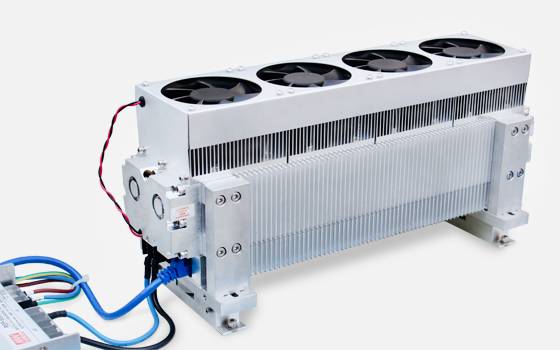
CO₂ laser source used to generate the laser beam for cutting and engraving.
One of the main strengths of CO₂ lasers is their compatibility with a wide variety of non-metal materials.
Common materials include:
CO₂ lasers can perform both cutting and engraving on many of these materials, although the exact result depends on material composition, thickness, laser power, and processing settings.
Metal processing is more limited.
Depending on the machine configuration and the surface of the material, CO₂ lasers can be used for certain metal-related applications, particularly coated, painted, or specially treated metal surfaces. However, they are generally not the preferred technology for direct industrial cutting of metals such as stainless steel, aluminum, brass, or copper.
For businesses whose primary workload is sheet metal, a fiber laser system is usually a more appropriate platform.
Because CO₂ lasers can cut, engrave, and score many non-metal materials, they are used across a broad range of production and creative workflows.
Typical applications include:
This versatility is one of the main reasons CO₂ laser machines remain popular even as fiber laser technology becomes increasingly important in metal manufacturing.
A single CO₂ laser system can often handle many different non-metal projects simply by changing the material, design file, and processing settings.
The main advantage of a CO₂ laser is not that it is universally better than other laser technologies, but that it is extremely versatile within its intended material range.
Key advantages include:
Fiber lasers are widely used for metal processing because their wavelength is well suited to many metallic materials. Unlike CO₂ laser technology, which is especially versatile across non-metals, fiber laser systems are primarily associated with applications such as metal cutting, marking, engraving, and other precision manufacturing processes.
It is also important to distinguish the laser technology from the machine itself. A fiber laser cutter, fiber laser marker, and fiber-laser-based metal 3D printing system may all use fiber laser technology, but they are designed for very different processes.
A fiber laser is a solid-state laser in which the laser beam is generated and amplified within a doped optical fiber.
Fiber lasers commonly operate at a wavelength of around 1.06 μm, much shorter than the approximately 10.6 μm wavelength of a CO₂ laser. This shorter wavelength is absorbed effectively by many metals, which is one reason fiber laser technology is widely used for metal processing.
The generated beam is delivered through optical fiber rather than through the longer mirror-based beam path commonly used in CO₂ systems. This creates a relatively compact optical architecture and reduces the need for routine mirror alignment.
What happens after the beam reaches the workpiece depends on the type of machine.
For example:
The laser source may be related, but the processing method and machine design are different.
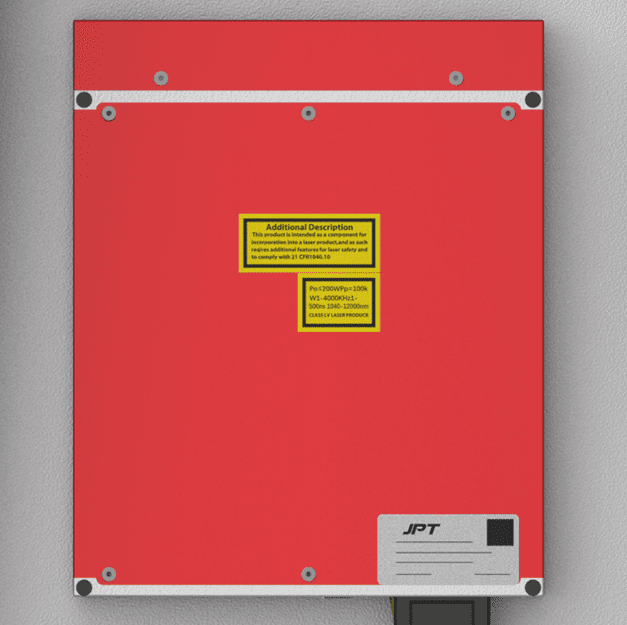
Fiber laser source used in metal cutting, marking, and other metal-processing systems.
Fiber lasers are particularly effective for processing metals.
Common materials include:
This strong metal compatibility makes fiber laser technology suitable for applications ranging from thin sheet processing to precision marking and industrial manufacturing.
Some fiber laser systems can interact with certain non-metal materials, but fiber lasers should not be treated as a general-purpose replacement for CO₂ lasers.
Materials such as wood, acrylic, paper, leather, and fabric are generally better suited to CO₂ laser systems when cutting or engraving is required.
The practical distinction is therefore straightforward: CO₂ lasers cover a much broader range of common non-metals, while fiber lasers are primarily optimized around metal processing.
Fiber laser technology is used in several different manufacturing processes rather than one single type of machine.
Common applications include:
The required system depends on what needs to happen to the metal.
A manufacturer cutting parts from sheet metal needs a very different machine from a business marking serial numbers onto finished components. Likewise, producing a three-dimensional metal component through additive manufacturing requires an entirely different process from either cutting or marking.
This is why choosing a fiber laser should begin with the process, not simply the material.
Fiber laser technology offers several advantages for metal processing.
Key benefits include:
For sheet metal production in particular, fiber laser systems can combine cutting speed, precision, automation, and repeatability in a highly production-oriented platform.
For marking applications, the same general laser technology can deliver small, precise features at high scanning speeds.
Fiber lasers are highly effective for metals, but they are not universal processing tools.
Their main limitations include:
Another important limitation is that fiber laser systems are not interchangeable simply because they use a fiber laser source.
A fiber laser marker cannot replace a high-power sheet metal cutting machine, and a fiber laser cutter cannot perform the same manufacturing process as a metal 3D printer.
The main strength of fiber laser technology is therefore not that one machine can perform every metal-processing task. It is that the technology can be engineered into highly specialized systems for cutting, marking, engraving, and advanced metal manufacturing.
CO₂ and fiber lasers differ most clearly in their wavelength, material compatibility, beam delivery, and typical applications. The table below summarizes the practical differences without repeating the technical details covered in the previous sections.
| Comparison | CO₂ Laser | Fiber Laser |
|---|---|---|
| Typical Wavelength | Around 10.6 μm | Around 1.06 μm |
| Laser Source | Gas-based laser source | Solid-state laser generated in doped optical fiber |
| Beam Delivery | Mirrors and lenses | Optical fiber |
| Best-Suited Materials | Wood, acrylic, leather, paper, fabric, rubber, and many other non-metals | Metals such as carbon steel, stainless steel, aluminum, brass, copper, and titanium |
| Metal Cutting | Limited compared with modern fiber systems | Strongly suited to metal cutting |
| Non-Metal Cutting | Broad compatibility | Limited and application-dependent |
| Typical Kerf | Can be wider depending on the material and process | Typically narrow in metal-cutting applications |
| Electrical Efficiency | Generally lower | Generally higher |
| Optical Alignment | Requires mirror and optical-path alignment | Reduced alignment requirements |
| Typical Applications | Non-metal cutting, engraving, signage, creative production | Metal cutting, marking, engraving, traceability, and advanced metal manufacturing |
Practical differences between CO₂ and fiber laser technologies.
The main distinction is straightforward: CO₂ lasers are optimized around versatile non-metal processing, while fiber lasers are optimized around metal processing.
The specific machine then determines what the fiber laser actually does. A fiber laser cutting machine, fiber laser marker, and fiber-laser-based metal 3D printing system may use related laser technology, but they are built for completely different manufacturing tasks.
Once the material and process are clear, the choice between CO₂ and fiber laser becomes much easier. The key question is not simply which laser is more powerful, but what you need to do with the material.
For direct cutting of sheet metal, a fiber laser cutting machine is generally the better choice.
Fiber laser systems are well suited to materials such as:
They are particularly valuable when production requires high cutting speed, narrow kerfs, repeatability, and integration with automated sheet-metal workflows.
CO₂ lasers can be used for certain metal-related applications, but they are generally not the preferred platform for modern industrial metal cutting.

Fiber laser source used in metal cutting.
For wood and acrylic, CO₂ laser is the more suitable technology.
These materials absorb CO₂ laser energy effectively, allowing the machine to cut and engrave with good control.
Common applications include:
For businesses working mainly with these materials, a CO₂ laser usually offers much greater versatility than a fiber laser.
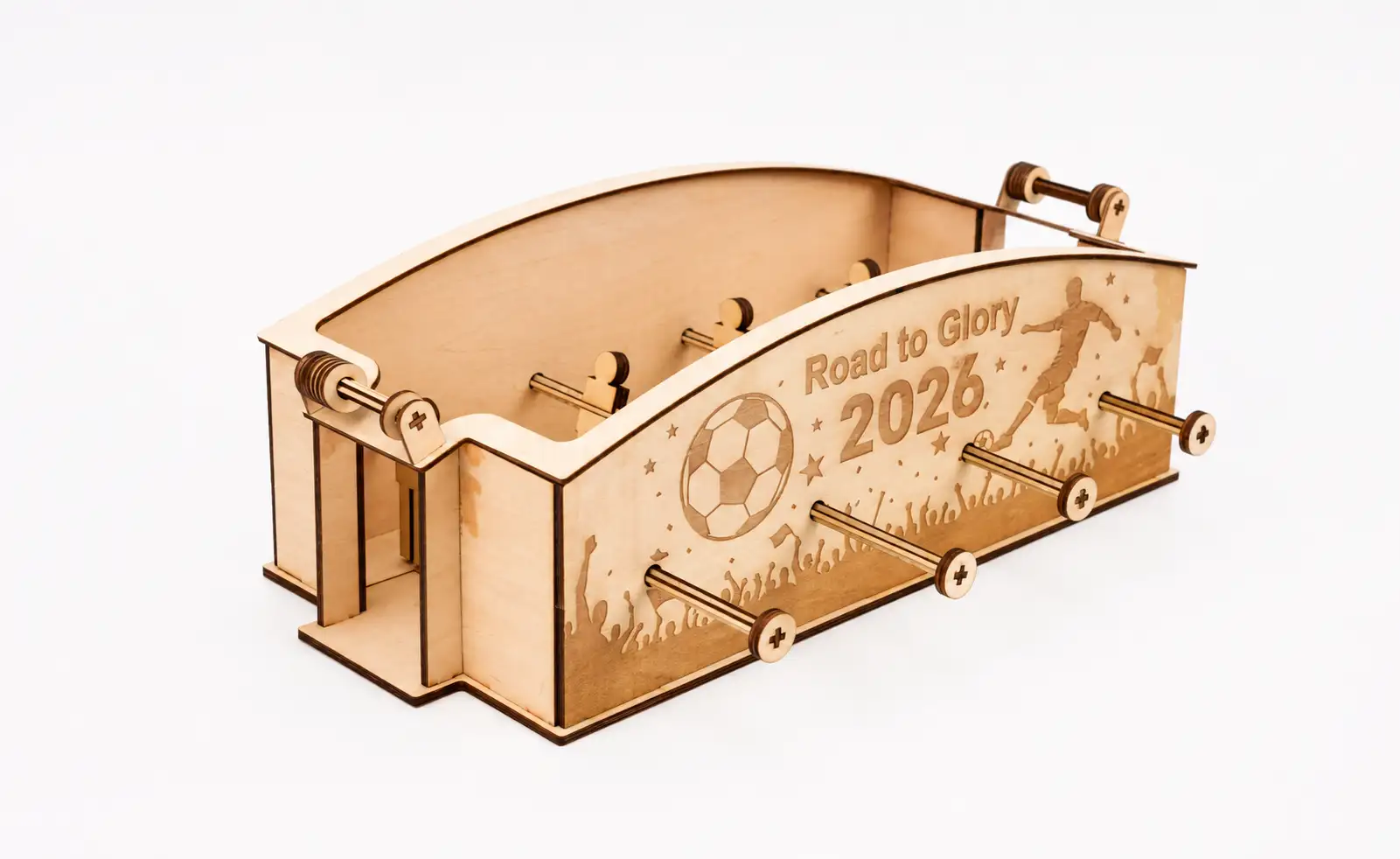
CO2 laser source used in non-metal engraving and cutting.
CO₂ lasers are also the better fit for many softer non-metal materials.
Typical examples include:
These applications often require both cutting and engraving on the same machine, which is one of the main strengths of CO₂ laser systems.
Fiber lasers are generally not intended to replace CO₂ lasers in these workflows.

CO2 laser source used in non-metal engraving and cutting.
If the goal is not to cut through the metal but to add information or surface detail, a fiber laser marker is usually more appropriate than a fiber laser cutter.
Typical applications include:
MOPA fiber laser systems can offer additional control for applications such as black marking, high-contrast marking, and certain color-marking effects on compatible metals. For a closer comparison, see Fiber vs. MOPA Laser Marking.
The important distinction is that metal cutting and metal marking require different machine architectures, even though both may use fiber laser technology.
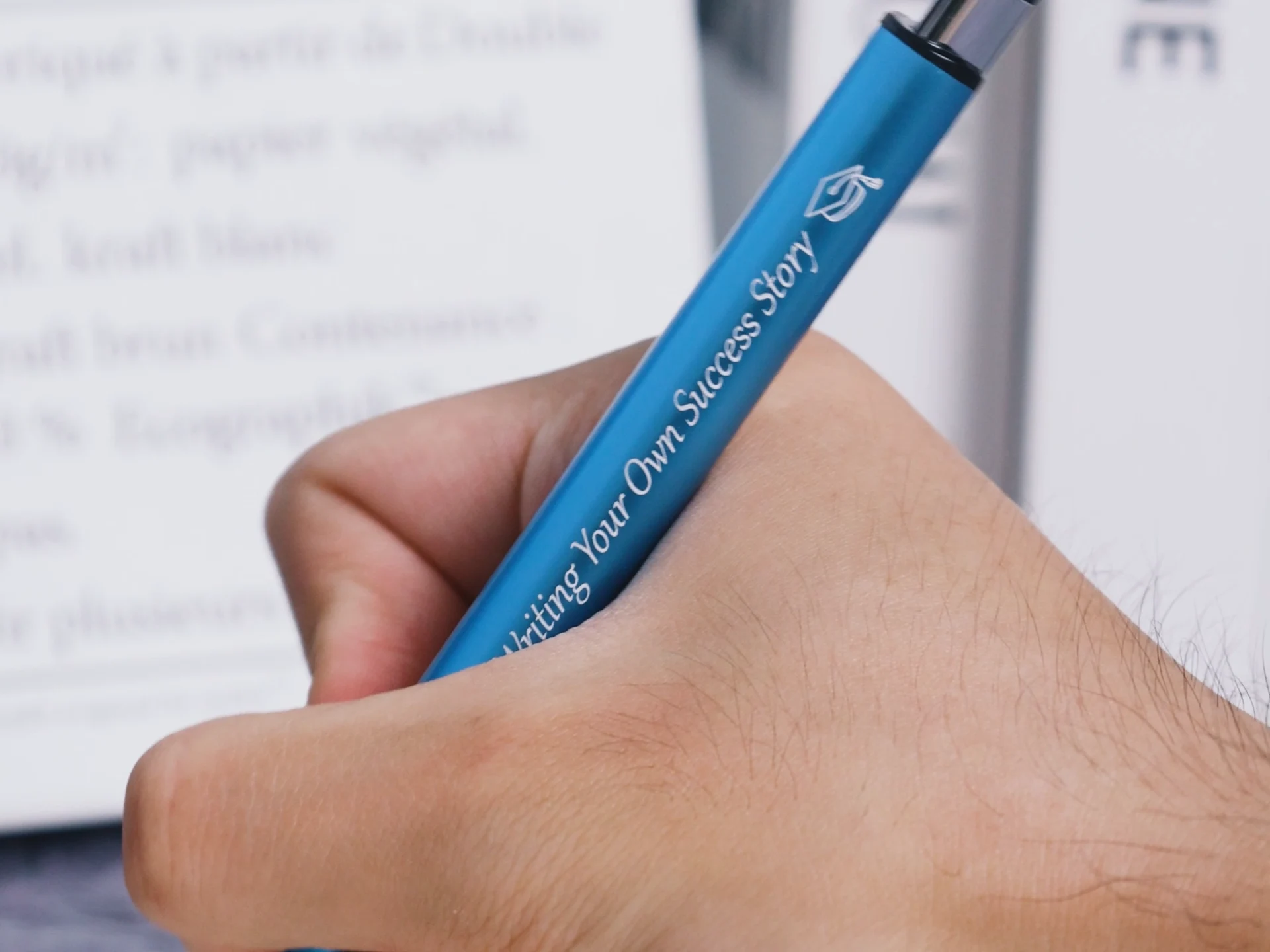
Fiber laser source used in metal marking.
Fiber laser technology can also be used for metal additive manufacturing.
In a selective laser melting process, the laser does not cut material away. Instead, it selectively melts metal powder and builds a three-dimensional part layer by layer.
This makes the process suitable for applications such as:
This is a very different use of fiber laser technology from either cutting or marking.
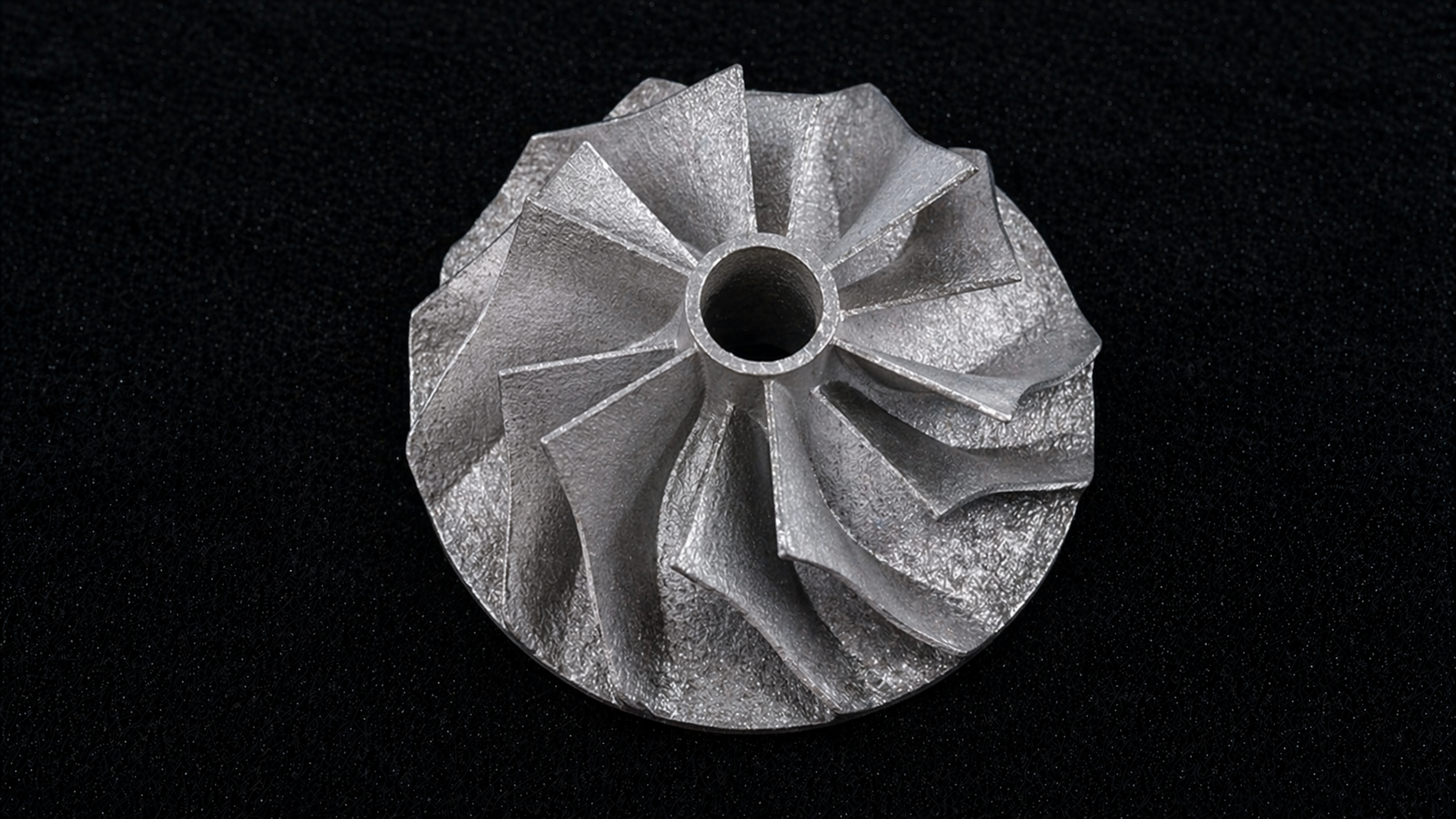
Fiber laser source used in metal 3D printing.
For makerspaces, schools, creative studios, and workshops that work with a broad range of non-metal materials, CO₂ laser systems are usually the more flexible choice.
They can support projects involving:
This flexibility makes CO₂ systems particularly useful when the workload changes frequently from one project to another.
For metal-focused production, however, fiber laser systems are usually the more appropriate starting point.
The practical rule is simple: choose the laser technology based first on the material, then on the process—cutting, engraving, marking, or additive manufacturing.
The right choice starts with two questions:
Use the table below as a practical starting point.
| Your Main Requirement | Technology to Consider |
|---|---|
| Cut or engrave wood | CO₂ Laser |
| Cut or engrave acrylic | CO₂ Laser |
| Process leather, paper, fabric, or similar non-metals | CO₂ Laser |
| Cut sheet metal | Fiber Laser Cutting |
| Cut stainless steel, carbon steel, aluminum, brass, or copper | Fiber Laser Cutting |
| Mark logos, serial numbers, barcodes, or QR codes on metal | Fiber Laser Marking |
| Deep engrave or create high-contrast marks on metal | Fiber / MOPA Laser Marking |
| Produce complex 3D metal parts | Fiber-Laser-Based Metal 3D Printing |
| Work with both metals and non-metals | Multiple laser platforms may be more appropriate |
A practical starting point for choosing between CO₂ and fiber laser technologies.
If your workload is mainly wood, acrylic, leather, paper, fabric, or other non-metal materials, a CO₂ laser is usually the more versatile choice.
If your work is mainly metal, fiber laser technology is generally the better starting point. From there, the exact machine should be selected according to the process: cutting, marking, engraving, or additive manufacturing.
For businesses working across both material groups, the best solution may not be choosing one technology over the other. In many cases, separate CO₂ and fiber laser systems provide a more practical workflow because each platform is optimized for a different range of materials and processes.
Choosing between CO₂ and fiber laser technology is only the first step. The next step is matching the required process—cutting, engraving, marking, or additive manufacturing—to the right type of machine.
Thunder Laser offers different platforms for these workflows.
For businesses, schools, workshops, and makers primarily working with non-metal materials, Thunder Laser's Bolt Series, Nova Plus Series, and Titan Series provide CO₂ laser solutions for cutting and engraving.
Typical materials include:
These systems are better suited to users who need one platform for a broad range of cutting and engraving projects rather than dedicated metal processing.
For sheet metal cutting, the Thunder AccuMetal Series is Thunder Laser's dedicated fiber laser cutting platform.
It is designed for precision metal processing across materials such as carbon steel, stainless steel, aluminum alloy, brass, copper, and galvanized sheet. The AccuMetal platform is particularly suited to businesses that need flexible in-house metal cutting, customized parts, and small-to-medium batch production.
The key distinction is simple: if the goal is to cut through sheet metal and produce finished profiles or parts, a fiber laser cutter such as AccuMetal is the appropriate type of system.
If the goal is to mark or engrave the surface of a metal part rather than cut through it, Thunder Laser's Aurora Series provides a different fiber laser workflow.
Aurora Fiber is designed for fast, durable marking on metals and is well suited to applications such as:
Aurora MOPA provides greater control over pulse width and frequency, making it better suited to applications that require finer process control, including high-contrast marking, detailed engraving, black marking on selected materials, and color marking on stainless steel.
A fiber laser marker and a fiber laser cutter therefore serve very different purposes even though both use fiber laser technology.
Fiber laser technology can also be used to build metal parts rather than remove or mark material.
The Thunder SLM-175 is a metal additive manufacturing system that uses a fiber laser and selective laser melting technology to build three-dimensional metal components layer by layer from metal powder.
This type of system is intended for applications such as:
The difference between Thunder's fiber-based platforms can therefore be summarized by the process:
| Application | Thunder Laser Solution | Main Process |
|---|---|---|
| Non-metal cutting and engraving | Bolt / Nova Plus / Titan | Cut and engrave non-metals |
| Sheet metal cutting | AccuMetal Series | Cut metal parts from sheet |
| Metal marking and engraving | Aurora Fiber / Aurora MOPA | Modify or engrave the metal surface |
| Metal additive manufacturing | Thunder SLM-175 | Build 3D metal parts layer by layer |
Thunder Laser platforms matched to different cutting, engraving, marking, and metal additive manufacturing processes.
Rather than choosing a machine simply because it uses a CO₂ or fiber laser source, start with the material and the manufacturing task. That will determine which laser platform is actually appropriate.
CO₂ and fiber lasers are designed for different materials and manufacturing needs rather than serving as direct replacements for one another.
CO₂ lasers remain highly versatile for cutting and engraving non-metal materials such as wood, acrylic, leather, paper, and fabric. Fiber laser technology is better suited to metal processing and can be configured for applications including metal cutting, marking, engraving, and additive manufacturing.
The best choice therefore starts with two questions: What material are you processing, and what do you need the laser to do? Once those are clear, selecting the right laser platform becomes much easier.
Talk To Our Experts Now!
Please leave your contact information so that we can serve you better.
FAQS
The main difference is the laser source and wavelength. CO₂ lasers typically operate around 10.6 μm and are well suited to many non-metal materials, while fiber lasers typically operate around 1.06 μm and are primarily used for metal processing.
For modern sheet metal cutting, fiber laser is generally the better choice. It is well suited to metals such as carbon steel, stainless steel, aluminum, brass, and copper, and offers strong cutting speed, precision, and automation potential.
CO₂ laser is generally better for wood and acrylic. These materials absorb CO₂ laser energy effectively, making CO₂ systems suitable for both cutting and engraving.
Some high-power industrial CO₂ systems can cut certain metals, but CO₂ laser is generally not the preferred technology for modern sheet metal production. For most direct metal-cutting applications, fiber laser is more suitable.
Some fiber laser systems can interact with certain non-metal materials, but they are primarily optimized for metals. For materials such as wood, acrylic, leather, paper, and fabric, CO₂ laser is usually the more practical choice.
No. Both may use fiber laser technology, but they are designed for different processes.
A fiber laser cutter uses high-power laser energy to cut through metal sheets or plates, while a fiber laser marker uses a scanning beam to create surface marks, logos, serial numbers, QR codes, and engravings.
Fiber laser cutting removes material completely to create separate parts or profiles.
Fiber laser marking modifies only the surface or a shallow layer of the material to create identification, text, graphics, or engraving.
The required laser power, optics, motion system, and machine structure are therefore very different.
Yes. Fiber lasers are commonly used in metal additive manufacturing processes such as selective laser melting (SLM).
Instead of cutting material away, the laser selectively melts metal powder layer by layer to build a three-dimensional metal component.
Fiber laser systems generally require less beam-path maintenance because they do not rely on the same mirror-based optical path used in many CO₂ systems.
However, fiber laser machines still require routine maintenance of components such as protective optics, nozzles, cutting heads, cooling systems, and motion components depending on the machine type.
Fiber lasers generally offer higher electrical efficiency than CO₂ lasers, especially in metal-processing applications.
Actual energy consumption still depends on laser power, machine configuration, cooling requirements, production time, and the specific process.
FIND THE RIGHT LASER FOR YOUR NEXT PROJECT
Explore Thunder Laser solutions designed for different materials, workflows, and production needs.


 Stable & Consistent MachinesUnlimited ApplicationsRobust After-sales SupportFactory Direct Supply


