


Fiber Laser Cutter Maintenance Guide Daily, Weekly & Preventive Care
 2026-10-14
WHAT ARE YOU LOOKING FOR?
Search Across Products, Blog Posts, Support Content, And Resources.

Fiber Laser Cutter Maintenance Guide Daily, Weekly & Preventive Care
2026-10-14

A fiber laser cutter can still be running while its cut quality is already beginning to drift. A contaminated protective window, damaged nozzle, low coolant level, restricted extraction, or poorly maintained motion system may first appear as more dross, unstable piercing, repeated alarms, or inconsistent parts before the machine stops completely.
Preventive maintenance is therefore less about “fixing” the machine and more about keeping cutting conditions stable. This guide explains what to inspect daily, weekly and periodically, which components deserve the most attention, what warning signs operators should watch for, and when maintenance should be handed over to qualified service personnel.
Quick Answer: What Maintenance Does a Fiber Laser Cutter Need?
Routine fiber laser cutter maintenance usually focuses on the cutting head and nozzle, protective optics, chiller, assist-gas system, extraction, cutting bed, lubrication and motion components, plus electrical and safety-system checks. Operators can handle many visual inspections and housekeeping tasks, while internal optics, laser-source service, high-voltage systems and safety-system work should follow the manufacturer’s service procedures.
| Interval | Main Focus | Typical Responsibility |
|---|---|---|
| Every shift / Daily | Nozzle, protective window, gas supply, chiller status, cutting area, alarms | Operator |
| Weekly | Extraction, filters, lubrication status, rails / cable carriers, slag buildup | Operator / Maintenance |
| Monthly / Periodic | Cooling system, mechanical condition, cabinet cooling, safety functions | Maintenance personnel |
| Scheduled service | Calibration, internal systems, laser source, deeper diagnostics | Qualified / authorized service |
Cut quality often changes before a major fault appears. More dross than usual, rougher lower edges, unstable piercing, inconsistent hole quality, or a gradual loss of dimensional consistency can all be signals that a consumable, optical surface, gas condition, cooling system, or mechanical component needs attention.
Regular inspection helps keep the process repeatable. It also makes it easier to separate a maintenance issue from other causes such as the wrong cutting parameters, material variation, or unsuitable assist gas.
A planned inspection can often be completed during a normal shift change or scheduled service window. A failed component, by contrast, can stop production without warning and may affect parts that were already in process. Preventive maintenance reduces the chance that small problems remain unnoticed until they interrupt production.
Fiber laser cutting systems contain both routine consumables and high-value assemblies. A relatively inexpensive protective window, for example, is designed to help shield more sensitive internal optics from contamination. Keeping consumables and cooling conditions within specification helps protect the components behind them.
Maintenance includes planned inspection, cleaning, lubrication, condition checks, and replacement of approved consumables according to the machine documentation. Repair begins when a fault requires diagnosis, disassembly, calibration, or component replacement beyond normal operator maintenance. Keeping those two activities separate helps prevent well-intentioned maintenance from turning into an unnecessary repair problem.
A simple maintenance schedule helps operators know what deserves attention without treating every item as a fixed replacement interval. The exact frequency should be adjusted to machine usage, working environment, materials, cutting hours, and the instructions for the specific cutting head, chiller, extraction unit, and motion system.
| Frequency | Typical Checks | Why It Matters |
|---|---|---|
| Every shift / Daily | Nozzle, protective window, gas, chiller, work area, alarms | Catches fast-changing conditions that directly affect cutting |
| Weekly | Extraction, filters, lubrication status, hoses, cable carriers, slats | Prevents buildup, wear and airflow problems |
| Monthly / Periodic | Cooling system, cabinet cooling, mechanics, safety functions | Finds gradual wear and environmental issues |
| Scheduled service | Calibration, internal optical / laser systems, deeper diagnostics | Requires trained or authorized personnel |
Important: Use this schedule as a planning framework, not as a universal replacement rule. If the machine or component manual specifies a different interval, follow the model-specific documentation.
The nozzle sits close to the cutting process and is exposed to spatter, heat, collisions, and contamination. Check for visible damage, deformation, blocked openings, heavy spatter, or signs that the nozzle has contacted the workpiece.
A damaged nozzle can disturb assist-gas flow and, on systems that use capacitive height sensing, can also contribute to unstable height control. If the nozzle is damaged or does not meet the machine’s inspection criteria, replace or service it according to the cutting-head procedure rather than trying to reshape it.
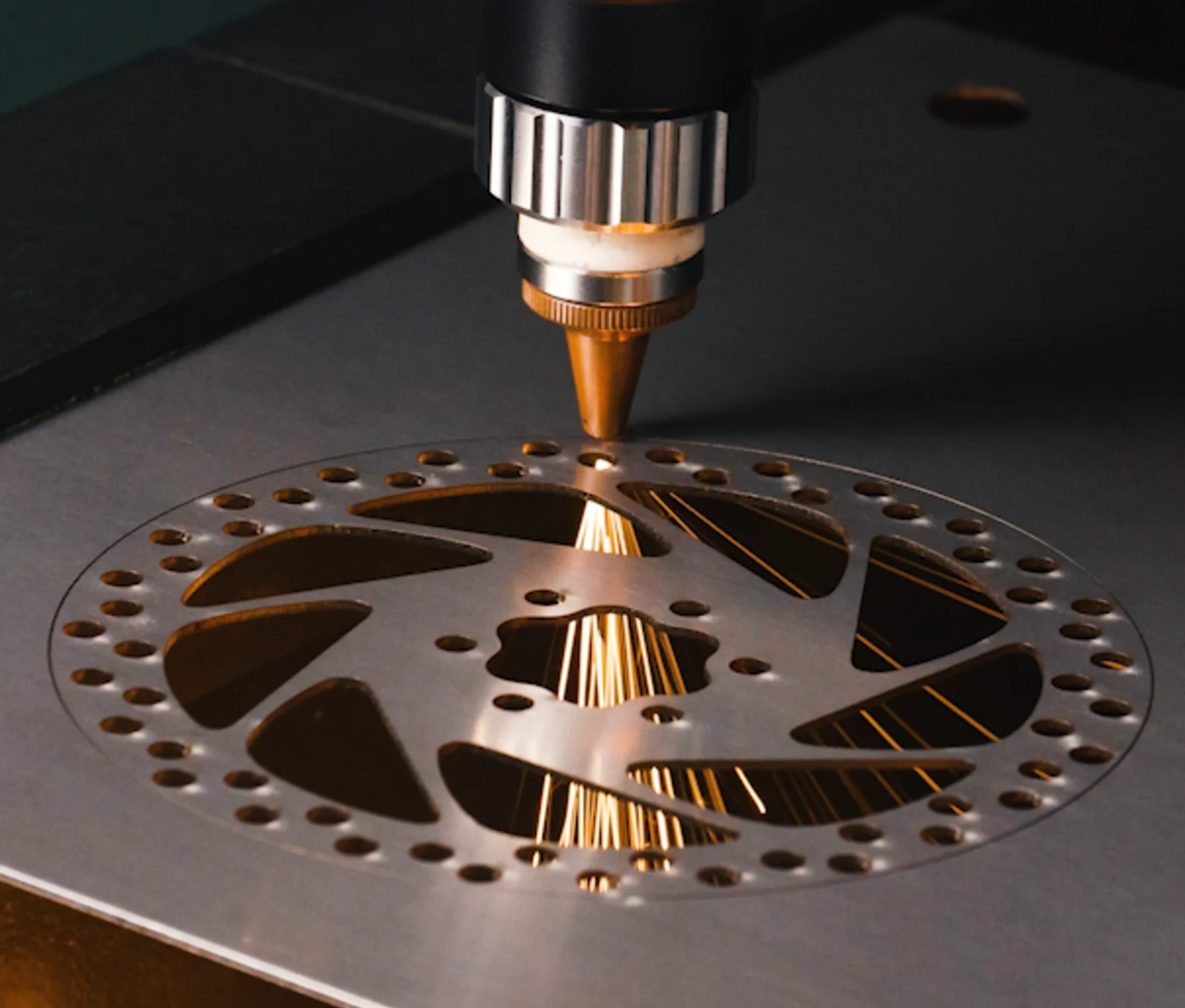
A clean nozzle supports stable assist-gas flow and consistent cut quality when processing stainless steel parts.
The protective window (often called the protective lens) helps keep contamination away from the internal cutting-head optics. Inspect it for dust, burn marks, scratches, coating damage, discoloration, or other visible contamination.
Do not turn a routine inspection into unnecessary handling. Remove, clean, or replace the protective window only using the procedure, tools, cleaning materials, and environment specified for the cutting head. Improper cleaning can introduce contamination or damage the optical surface.
Confirm that the selected assist gas matches the job and that the supply, regulator, pressure, hoses, and connections are in normal condition. If compressed air is used, air quality and filtration are also important because oil, water, or particulate contamination can affect both cutting performance and downstream components.
Unexpected changes in gas pressure or consumption should be investigated rather than compensated for only by changing cutting parameters. For guidance on choosing oxygen, nitrogen, or compressed air, see the fiber laser metal cutting assist gas guide.
Before production, review chiller temperature, coolant level, flow status, visible leaks, and active alarms. Stable cooling is important to the laser source and other temperature-sensitive components.
If the chiller repeatedly alarms or cannot maintain the specified temperature, stop and investigate according to the chiller and machine documentation instead of continuing production until the alarm becomes a shutdown.
Remove loose scrap, accumulated slag, and debris from accessible cutting areas at the interval appropriate for the workload. Excess buildup can interfere with sheet support, airflow, moving components, and housekeeping around the cutting zone.
Slats should also be watched for heavy buildup or damage that allows sheets to sit unevenly. The goal is not to make the cutting bed look new every day, but to prevent buildup from changing the way material is supported or creating avoidable hazards.
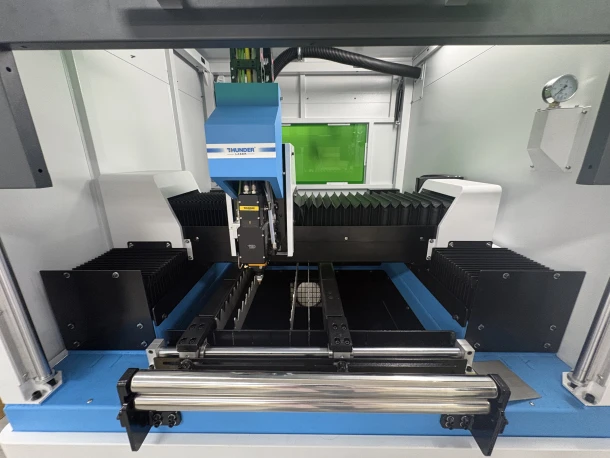
Clearing scrap, slag, and debris after tasks helps maintain a safe and reliable cutting environment.
A machine does not need to be completely stopped to be telling you something is wrong. Operators should pay attention to repeated alarms, unusual sounds, hotter-than-normal operation, unstable piercing, increasing dross, reduced extraction, or noticeable changes in gas consumption.
Recording these changes early gives maintenance personnel a much better starting point than waiting for a complete failure.
Check whether smoke and fumes are being captured as effectively as usual. Restricted filters, accumulated dust, blocked ducts, or slag around extraction zones can reduce airflow and allow more contamination to remain inside the machine.
Filter service should be based on the extraction-system instructions and actual loading condition rather than a single universal replacement period.
Inspect the lubrication status of the machine’s rails, racks, bearings, ball screws, or other motion components that apply to the specific design. Automatic lubrication systems should also be checked for normal operation and adequate lubricant supply.
Use only the lubricant type and interval specified for the machine. Too little lubrication can accelerate wear, while the wrong lubricant or excessive application can create its own problems.
Look for abrasion, kinking, loose routing, leaks, damaged fittings, or unusual movement in cable carriers and flexible lines. These components move repeatedly with the cutting system, so small signs of wear are easier to address before they become intermittent electrical, gas, or cooling faults.
Check for slag buildup, melted peaks, damaged slats, or areas that no longer support the sheet evenly. Uneven support can affect part stability, especially on smaller components or sheets with many cutouts. Replace or service slats according to condition and the machine procedure.
Periodic cooling-system maintenance may include checking filters, coolant condition, hoses, fittings, reservoir cleanliness, and other items specified by the chiller manufacturer. Coolant type, water quality, antifreeze requirements, and replacement intervals vary by system, so they should not be generalized across all fiber laser cutters.
Electrical cabinets depend on controlled temperature and airflow. Maintenance personnel should inspect cabinet cooling, fan or filter condition, and dust accumulation according to the machine schedule. Work inside electrical cabinets should be limited to qualified personnel using the required isolation procedures.
Periodic checks can include fasteners, mechanical wear, exchange-table mechanisms if fitted, sensor condition, repeatability, and other machine-specific items. A gradual change in repeatability or motion behavior should be investigated before attempting to correct it only through cutting parameters.
Emergency stops, access doors, interlocks, warning indicators, and other safety functions should be included in the maintenance program. Do not bypass a safety device to keep production running. If a safety system does not behave as documented, the machine should be evaluated by appropriately qualified personnel. For general safety practices, review the fiber laser cutting safety guide.
Operators often notice a symptom before they know which maintenance item is responsible. The following table provides a practical starting point for inspection. It is not a substitute for the machine’s diagnostic procedure.
| Component | What to Watch | Common Warning Signs |
|---|---|---|
| Nozzle | Spatter, deformation, blocked orifice, collision damage | Dross, unstable piercing, inconsistent gas flow |
| Protective window | Contamination, burn spots, scratches, coating damage | Cut-quality drift, heating, optical alarms |
| Cutting head | Collision history, height / focus alarms, contamination | Unstable height, inconsistent focus, repeated alarms |
| Chiller | Temperature, coolant level, flow, leaks | Temperature / flow alarms, unstable thermal condition |
| Assist-gas system | Pressure, leaks, filtration, connections | Poor cut, unstable piercing, abnormal gas use |
| Extraction | Airflow, filter loading, dust / slag buildup | Smoke remaining in enclosure, reduced airflow |
| Motion system | Lubrication, noise, wear, abnormal movement | Accuracy drift, vibration, unusual sound |
| Slat bed | Slag buildup, damaged or uneven slats | Poor sheet support, unstable small parts |
Cut quality is one of the most useful condition indicators because operators see it every day. The key is to treat a change in quality as a signal to inspect the process rather than assuming that one component is always responsible.
If a previously stable job begins producing more dross, inspect the nozzle, assist-gas condition, protective window, cutting-head condition, and material support before making large parameter changes. Material quality and cutting settings can cause the same symptom, so maintenance should be one part of the diagnosis.
Repeated piercing problems can be associated with the nozzle, gas supply, contamination in protective optics, height control, or cutting-head condition. Compare the current behavior with a known-good job and review any recent alarms or maintenance changes.
If quality changes by location rather than by part program, inspect material support, slats, nozzle condition, motion consistency, focus / height behavior, and calibration items specified by the manufacturer. Do not assume that an inconsistent result is automatically a laser-power problem.
Repeated cooling alarms should be treated as a maintenance or service issue, not something to bypass. Check the approved operator items such as coolant level, visible leaks, airflow, and chiller status, then follow the machine and chiller troubleshooting procedure if the condition continues.
A useful maintenance guide should make it clear who should perform each type of work. Operators can manage many routine checks, but deeper service requires the right training, tools, and authorization.
| Task | Operator | Maintenance Personnel | Authorized / Qualified Service |
|---|---|---|---|
| Clear scrap and accessible slag | Yes | ||
| Visual nozzle inspection | Yes | ||
| Check gas and chiller status | Yes | ||
| Replace approved routine consumables | If manual permits | Yes | |
| Lubrication and filter service | Yes | ||
| Electrical cabinet work | Qualified personnel | ||
| Internal cutting-head repair | Yes | ||
| Laser-source service | Yes | ||
| Safety-system repair / bypass | Yes |
The exact division of responsibility depends on the machine documentation and local safety requirements. The practical rule is simple: if a task involves internal optics, high voltage, safety-system bypass, laser-source access, or major calibration, it should not be treated as normal operator maintenance.
Calendar time is only one way to schedule maintenance. Two machines of the same model can need different inspection frequencies if one runs a single shift in a clean shop and the other cuts continuously in a dusty, high-temperature production environment.
Maintenance may need to be more frequent when the machine operates multiple shifts, has high cutting hours, produces heavy slag, performs frequent thick-plate piercing, uses compressed air extensively, works in a dusty environment, experiences high ambient temperature, or shows recurring filter loading and alarms. Condition and operating hours often matter as much as the date on the calendar.
Low temperatures can create a freezing risk in water-cooled systems. Follow the chiller and machine requirements for minimum temperature, approved antifreeze, shutdown, or circulation. Do not add automotive or unapproved antifreeze simply because the workshop is cold.
High heat increases the load on cooling and electrical systems, while humidity can increase condensation risk when surfaces are below the local dew point. Keep the machine environment within the specified operating range and investigate condensation rather than continuing operation around sensitive electrical or optical components.
Before an extended shutdown, clean the work area, follow the approved gas and cooling shutdown procedure, protect optical and mechanical components from contamination, and record the machine condition. When restarting, perform the required inspection before returning directly to full production.
A simple maintenance record makes recurring problems easier to diagnose and prevents service from depending on memory. Useful records include the date, operating hours, maintenance item, observed condition, replaced part, alarm history, technician, and next planned service.
The record becomes especially useful when a previously stable process begins to drift. A technician can compare the change against nozzle replacements, protective-window condition, chiller service, filter loading, alarms, or other maintenance events instead of starting with no history.
Use the checklist below as a practical reminder, then reconcile it with the current maintenance manual for the specific machine and components.
Fiber laser cutters may require less routine operator attention than some older laser systems, but they are not maintenance-free. Stable cutting depends on routine care of the nozzle, protective optics, cooling, assist gas, extraction, cutting bed, and motion system.
The most effective maintenance plan combines daily operator checks with scheduled technician service and machine-specific intervals from the manufacturer’s documentation. The goal is not to maintain more often than necessary, but to detect changes early enough to protect cut quality, uptime, and higher-value components.
Talk To Our Experts Now!
Please leave your contact information so that we can serve you better.
FAQ: Fiber Laser Cutter Maintenance
Routine checks should be divided by task and workload rather than one universal interval. Nozzle, protective-window condition, gas, chiller status, the work area, and alarms are commonly checked every shift, while extraction, lubrication, mechanical condition, cooling service, and deeper diagnostics follow weekly, periodic, or manufacturer-defined schedules.
Typical daily checks include the nozzle, protective window, assist-gas supply, chiller status, cutting area, scrap or slag buildup, and any alarms or unusual changes in cut quality. The machine manual should define the exact operator checklist for the model.
There is no universal replacement interval. Inspect the protective window by condition and follow the cutting-head manufacturer’s criteria for cleaning or replacement. Burn marks, scratches, coating damage, contamination, or abnormal heating can indicate that service is needed.
Common warning signs include increasing dross, unstable piercing, inconsistent edge quality, repeated alarms, reduced extraction, unusual noise, abnormal gas use, or repeated cooling issues. These symptoms can also have process or material causes, so use them as inspection triggers rather than automatic diagnoses.
The laser source usually requires less routine operator maintenance than the cutting head, gas system, motion system, and work area. However, the complete laser system still depends on proper cooling, environmental conditions, and manufacturer-specified service. Internal laser-source work should be handled by qualified or authorized personnel.
No. Operators can handle many visual inspections, housekeeping tasks, status checks, and approved routine consumables. Internal optics, high-voltage work, laser-source service, safety-system repair or bypass, and major calibration should follow the manufacturer’s service procedure and be performed by appropriately qualified personnel.
NEED HELP FINDING THE RIGHT SOLUTION?
Talk to our team for machine recommendations, application advice, and support based on your needs.


 Stable & Consistent MachinesUnlimited ApplicationsRobust After-sales SupportFactory Direct Supply


