


Top 10 Metal Laser Cutting Machine Manufacturers in 2026
 2026-09-22
WHAT ARE YOU LOOKING FOR?
Search Across Products, Blog Posts, Support Content, And Resources.

Top 10 Metal Laser Cutting Machine Manufacturers in 2026
2026-09-22

The metal laser cutting machine market includes manufacturers with very different strengths, from highly automated industrial production systems to flexible fiber laser solutions for growing fabrication businesses.
Choosing the right manufacturer depends on more than laser power alone. Buyers should also consider machine range, cutting applications, automation, software, service support, production scale, and total investment.
This guide compares 10 major metal laser cutting machine manufacturers in 2026: xTool, GWEIKE, Thunder Laser, Bodor, HSG Laser, SENFENG, TRUMPF, Bystronic, AMADA, and Han's Laser.
The companies are not ranked solely by size, power, or market share. Instead, the comparison focuses on what each manufacturer is best known for and which types of buyers and production environments they are most likely to suit.
Quick Answer: There is no single manufacturer that is best for every buyer. A large industrial plant may prioritize automation and production integration, while a growing fabrication shop may place more value on machine accessibility, flexibility, support, and overall fit for its daily workload.
| Manufacturer | Market Segment | Best For | Typical Machine Type |
|---|---|---|---|
| xTool | Compact | Small businesses / limited space | Compact metal systems |
| GWEIKE | Compact → Professional | Small workshops / growing businesses | Compact & professional cutters |
| Thunder Laser | Professional | SMB / fabrication | Professional fiber cutting |
| Bodor | Professional → Industrial | Fabrication / production | Sheet & tube fiber lasers |
| HSG Laser | Professional → Industrial | Metal fabrication | Sheet & tube systems |
| SENFENG | Professional → Industrial | Metal fabrication / production | Sheet, tube & high-power fiber lasers |
| TRUMPF | Industrial | Large manufacturers | Premium industrial systems |
| Bystronic | Industrial | High-productivity fabrication | Automated sheet processing |
| AMADA | Industrial | Established fabricators | Sheet metal systems |
| Han's Laser | Industrial | Manufacturing | Industrial laser systems |
A high-level comparison of 10 metal laser cutting machine manufacturers by market segment, buyer fit, and machine focus.
Best Fit: Compact Workshops & Small Businesses
xTool enters metal fabrication from a different direction than traditional industrial laser manufacturers. Its MetalFab system combines an 800W or 1200W fiber laser with a CNC cutting platform, while also supporting welding, cleaning, and other metalworking processes.
This makes xTool particularly relevant to small businesses and workshops that want to add CNC metal cutting without moving directly into a conventional full-size industrial fiber laser system. The 1200W configuration is listed for burr-free cutting of up to 10 mm carbon steel under specified conditions, while also covering stainless steel, aluminum, brass, galvanized sheet, and several other metals.
Representative Model: xTool MetalFab CNC Cutter with 1200W Laser Source
| Specification | xTool MetalFab |
|---|---|
| Laser Power | 1200 W |
| Working Area | 610 × 610 mm |
| Maximum Working Speed | 400 mm/s (24 m/min) |
| Motion Accuracy | ±0.1 mm |
| Machine Dimensions | 1175 × 1157 × 1230 mm |
| Machine Weight | 158 kg |
| Burr-Free Carbon Steel Cutting | Up to 10 mm |
| Burr-Free Stainless Steel Cutting | Up to 5 mm |
| Burr-Free Aluminum Cutting | Up to 4 mm |
| Burr-Free Brass Cutting | Up to 3 mm |
Representative specifications for the xTool MetalFab CNC Cutter with a 1200W laser source.
xTool's current documentation specifies a 610 × 610 mm cutting area and 400 mm/s maximum processing speed. For the 1200W configuration, its published burr-free limits reach 10 mm carbon/galvanized steel, 5 mm stainless steel, 4 mm aluminum, and 3 mm brass under specified cutting conditions.
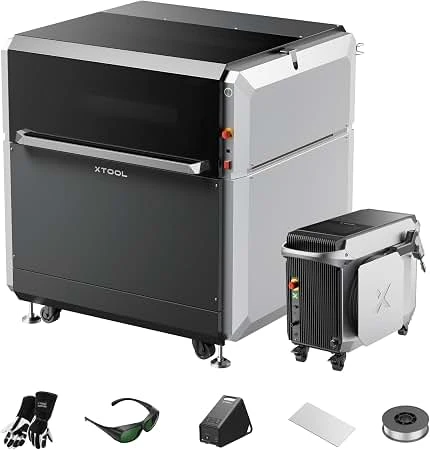
xTool MetalFab compact CNC laser cutting and multi-process metalworking system.
xTool is most relevant to small workshops, makers, custom fabrication businesses, sign shops, and businesses taking their first step into in-house CNC metal cutting.
It is particularly attractive when the business values compact size and multi-process flexibility more than large sheet capacity or industrial automation.
MetalFab is not designed around the same production model as a conventional 3 × 1.5 m industrial flatbed fiber laser. Buyers should compare its working area, material handling, duty cycle, assist-gas requirements, and supported materials with the jobs they expect to run regularly.
For occasional or flexible in-house metalwork, that compact format can be an advantage. For larger sheets, continuous batch cutting, or automated loading and unloading, a more conventional fabrication system may be more appropriate.
Best Fit: Compact & Professional Fabrication
GWEIKE covers a wider transition between compact metalworking equipment and more production-oriented CNC cutting. Its current M Series includes 800W and 1200W fiber configurations with both compact 620 × 620 mm cutting areas and larger 1380 × 920 mm formats.
The systems combine CNC metal cutting with welding and cleaning, while selected M3 configurations add a CO₂ laser for non-metal processing. This gives GWEIKE a broader machine-size and process range than many purely compact metalworking systems.
Representative Model: GWEIKE M2 Pro
| Specification | GWEIKE M2 Pro |
|---|---|
| Laser Power | 1200 W Fiber Laser |
| Working Area | 620 × 620 mm |
| Maximum Working Speed | 600 mm/s (36 m/min) |
| Repeat Positioning Accuracy | ±0.02 mm |
| Maximum Acceleration | 0.6 G |
| Maximum Material Width with Front/Rear Feed | 620 mm |
| Maximum Feeding Material Thickness | 50 mm |
| Published Cutting Thickness | Up to 10 mm |
Representative specifications for the GWEIKE M2 Pro fiber laser system.
The M2 Pro is the 1200W, 620 × 620 mm configuration in GWEIKE's current M Series. Its published specifications include 600 mm/s working speed, ±0.02 mm repeat positioning accuracy, and 0.6G acceleration.
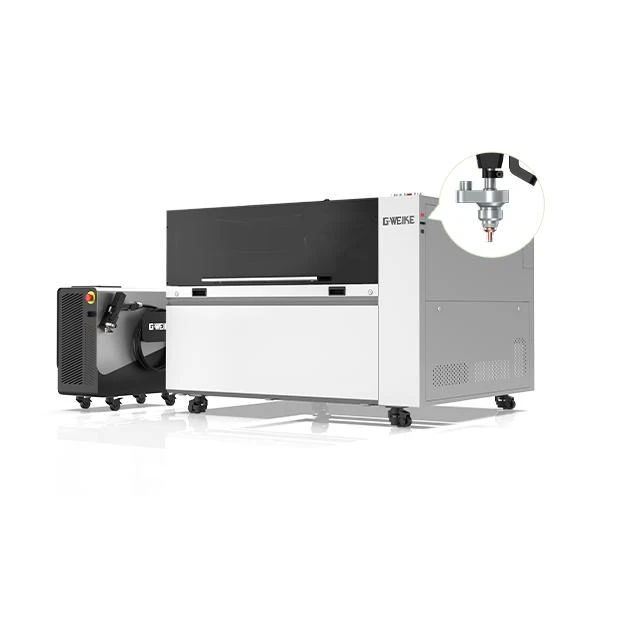
GWEIKE multi-process CNC laser cutting system for compact and professional fabrication.
GWEIKE is most relevant to small fabrication businesses, custom manufacturers, workshops, and growing businesses that need more cutting area or production capability than a desktop-style system but do not yet require a large industrial fiber laser line.
The larger M Series configurations can also be useful when part size and nesting space are becoming more important.
GWEIKE lists several machine formats with different laser combinations, so buyers should compare the exact configuration rather than treating the M Series as one machine.
Maximum listed cutting thickness should also be separated from normal production capability. For repeat work, sample testing with the actual alloy, thickness, gas, and part geometry remains more useful than choosing a model from the maximum thickness figure alone.
Best Fit: Professional In-House Fabrication
Thunder Laser is a China-based laser equipment manufacturer with an established international presence across CO₂ laser cutting and engraving, fiber marking, industrial mixed-material processing, and now dedicated metal cutting. In 2026, Thunder Laser expanded further into metal fabrication with the Thunder AccuMetal Series. The AccuMetal Series is positioned as a precision metal cutting machine for businesses looking to bring sheet-metal cutting in-house, particularly for custom parts, prototypes, detailed metal products, and small- to medium-batch production.
Unlike manufacturers whose portfolios are centered mainly on very high-power industrial cutting, Thunder Laser's current metal-cutting positioning is more focused on accessible professional production for growing businesses and fabrication shops.
Representative Model: Thunder AccuMetal Series
| Specification | Thunder AccuMetal |
|---|---|
| Laser Power | 1.5–3 kW Fiber Laser |
| Working Area | 610 × 610 mm to 1300 × 1300 mm |
| Positioning Accuracy | ±0.02 mm |
| Maximum Speed | 500 mm/s (30 m/min) |
| Maximum Acceleration | 1.5G to 2.0G |
| Maximum Table Load | 500 kg to 1000 kg |
| Machine Dimensions | 1750 × 1590 × 2260 mm to 2130 × 2450 × 2015 mm |
Representative specifications for the Thunder AccuMetal Series.
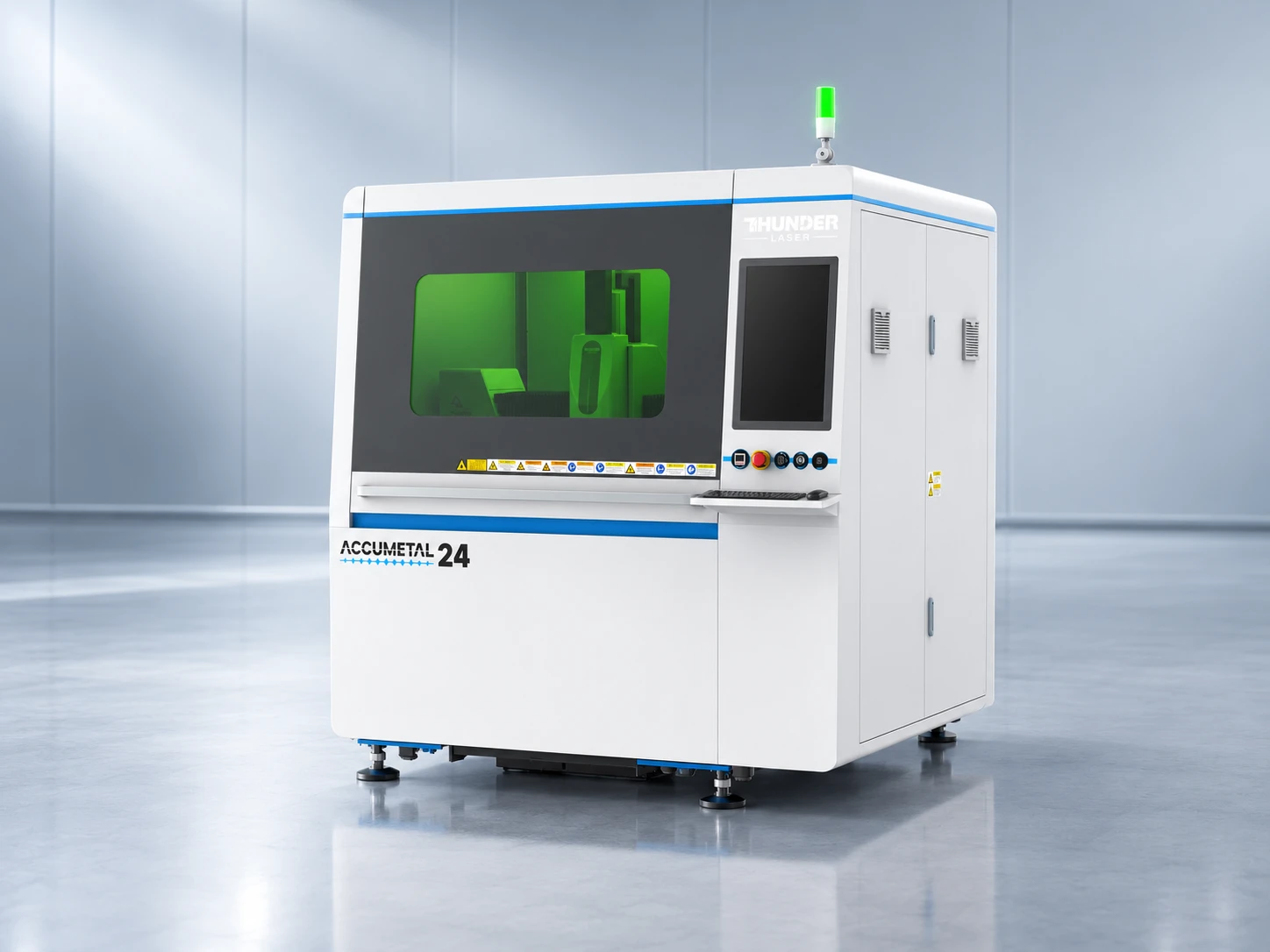
Thunder AccuMetal Series high-precision fiber laser cutting machine for professional in-house metal production.
Thunder Laser is especially relevant for:
Thunder Laser is a newer entrant in dedicated metal laser cutting than companies such as TRUMPF, Bystronic, AMADA, Bodor, or HSG. Buyers should therefore compare its current metal-cutting portfolio with their actual production requirements rather than assuming it covers the same range of high-power, large-format, tube, or fully automated systems.
Key points to verify include:
Thunder Laser stands out most clearly for buyers who want to move from outsourced or limited metal cutting toward accessible in-house professional production, rather than businesses whose main requirement is ultra-high-power heavy-plate cutting or highly automated large-scale manufacturing.
Best Fit: Professional Fabrication & Industrial Manufacturing
Bodor is a China-based laser equipment manufacturer with a broad portfolio covering sheet cutting, tube cutting, sheet-and-tube systems, profile cutting, laser welding, and automated material-handling systems. Its product range extends from entry-level fiber laser machines to high-power and large-format cutting systems.
Representative Product: Bodor A Series
| Specification | Bodor A Series |
|---|---|
| Machine Type | Single-Platform Metal Sheet Laser Cutting Machine |
| Laser Power Range | 1.5–60 kW |
| Working Area Range | 3048 × 1524 mm to 14000 × 3100 mm |
| Maximum Acceleration | Up to 1.5 G |
| Processing Focus | Sheet Metal |
| Safety Design | Safety light curtain and enclosed crossbeam protection |
Representative specifications for the Bodor A Series metal sheet laser cutting machine.
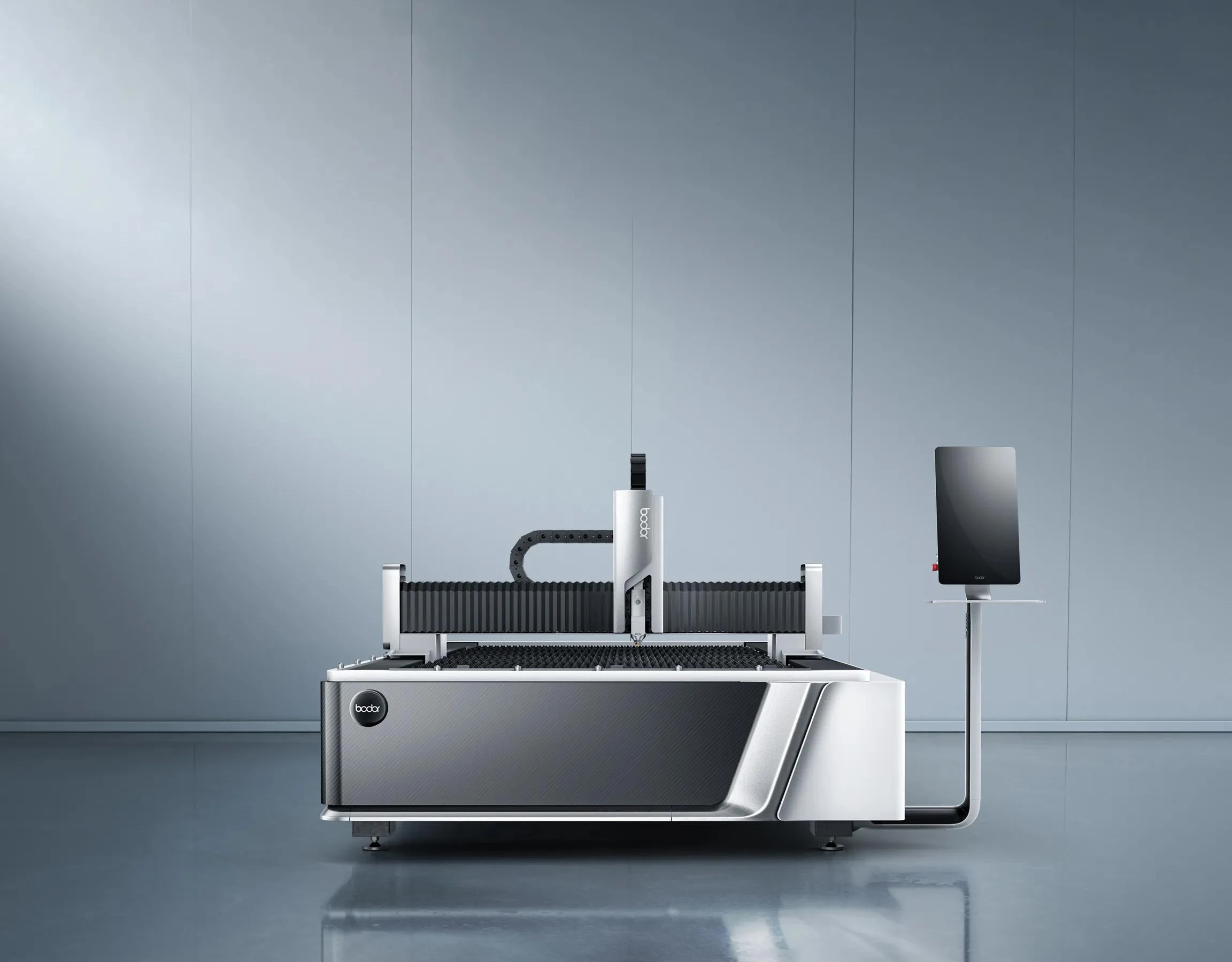
Bodor A Series fiber laser cutting machine for professional and industrial sheet-metal production.
Bodor is especially relevant for:
Because Bodor has a very broad product portfolio, buyers should define the required configuration carefully before comparing quotations.
Key points to verify include:
Bodor maintains regional service resources, including 24/7 online machine support and parts operations in markets such as North America, but buyers should confirm the exact local support structure available in their own region before purchase.
Bodor's main advantage in this comparison is the breadth of its metal-processing portfolio, from relatively accessible sheet-cutting systems to large-format, high-power, tube, and automated production solutions.
Best Fit: Professional Fabrication & Industrial Manufacturing
HSG Laser is a China-based manufacturer focused on metal laser processing equipment. Its current portfolio covers flat-sheet cutting, tube and profile cutting, sheet-and-tube combination systems, high-power fiber laser cutting, bending, welding, and automated material-handling solutions. In recent years, HSG has expanded further toward integrated sheet and tube production and automation.
Representative Model: HSG C3015
| Specification | HSG C3015 |
|---|---|
| Laser Power | 3–6 kW |
| Processing Format | 3048 × 1524 mm |
| X/Y Positioning Accuracy | ±0.05 mm/m |
| Platform Type | Single Platform |
| Structure | Open-Type |
| Primary Application | Sheet Metal Cutting |
Representative specifications for the HSG C3015 fiber laser cutting machine.
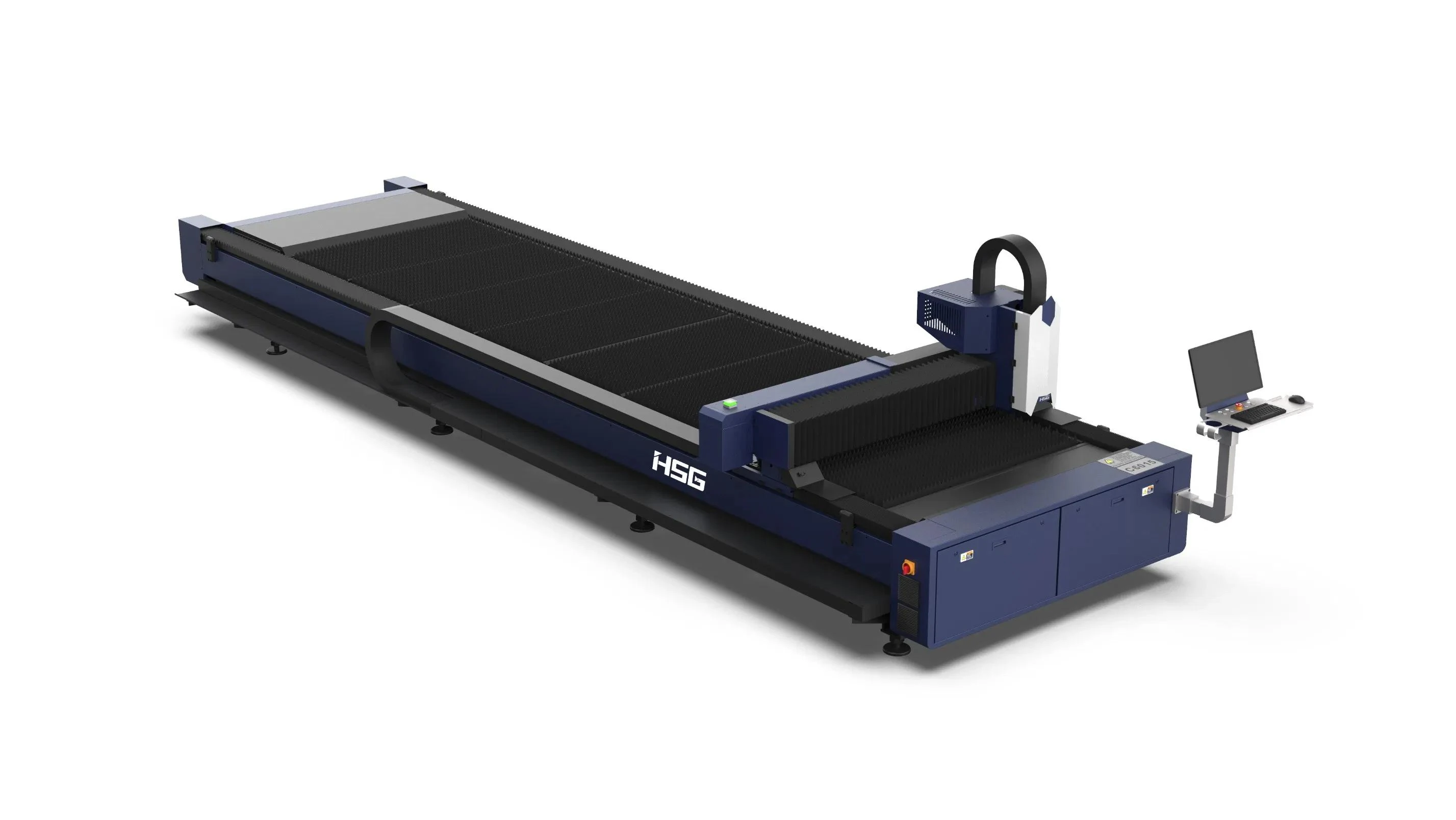
HSG C3015 single-platform fiber laser cutting machine for sheet-metal fabrication.
HSG Laser is especially relevant for:
Before selecting an HSG system, buyers should verify:
HSG has been expanding regional support—for example, its North American operation includes a Chicago-based headquarters and local parts inventory—but buyers should confirm the service structure available in their own market.
Best Fit: Professional Fabrication & Industrial Manufacturing
SENFENG has developed a broad metal-fabrication portfolio covering fiber laser sheet cutting, tube cutting, welding, bending, automation, and other metal-forming processes.
Its current fiber laser catalog extends from 1.5 kW general sheet-cutting machines to industrial systems reaching 80 kW, with standard-format, large-format, and automated production options available.
Representative Model: SENFENG SF3015N
| Specification | SENFENG SF3015N |
|---|---|
| Laser Power | 1.5–6 kW |
| Working Area | 3050 × 1530 mm |
| X/Y Positioning Accuracy | ±0.05 mm |
| X/Y Repeat Positioning Accuracy | ±0.02 mm |
| Maximum Speed | 100 m/min |
| Maximum Platform Load | 1100 kg |
| Machine Dimensions | 4360 × 2760 × 1800 mm |
| Automation | Optional loading system |
Representative specifications for the SENFENG SF3015N fiber laser cutting machine.
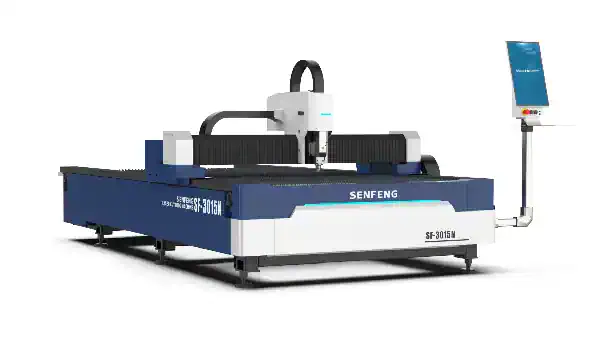
SENFENG SF3015N fiber laser cutting machine for professional sheet-metal fabrication.
SENFENG is relevant to general metal fabricators that want conventional sheet or tube cutting equipment, but it also provides a pathway into larger-format, high-power, and automated manufacturing.
It is especially worth considering when a buyer expects to source several types of metal-fabrication equipment from the same supplier rather than purchasing only a standalone laser cutter.
The large product range makes configuration selection important. A buyer processing ordinary sheet-metal jobs may have little reason to evaluate the same systems designed for very large sheets or 30–80 kW production.
Compare the machine that matches your regular workload and verify the specific regional installation, training, spare-parts, and service resources available for it.
Best Fit: Industrial Manufacturing & Automated Production
TRUMPF is a German industrial technology company with a broad portfolio of laser cutting systems for sheet metal, tubes, profiles, and automated production. Its metal cutting offering spans entry-level 2D systems through high-productivity fiber laser machines and fully automated manufacturing solutions. TRUMPF also provides its own laser technology, automation, software, and service infrastructure as part of the wider production ecosystem.
Representative Model: TRUMPF TruLaser 1030 fiber
| Specification | TruLaser 1030 fiber |
|---|---|
| Laser Power Options | 4 / 6 / 9 / 12 kW |
| Working Range | 3000 × 1500 mm |
| Maximum Simultaneous Speed | 140 m/min |
| Maximum Workpiece Weight | 900 kg standard |
| Machine Dimensions | 9333 × 5990 × 2200 mm |
| Basic Machine Weight | Approx. 9400 kg |
| Automation | Automation and machine integration available |
Representative specifications for the TRUMPF TruLaser 1030 fiber.
TRUMPF's current Series 1000 documentation lists a 3000 × 1500 mm working range for the 1030, 140 m/min simultaneous speed, and laser configurations extending through 12 kW.
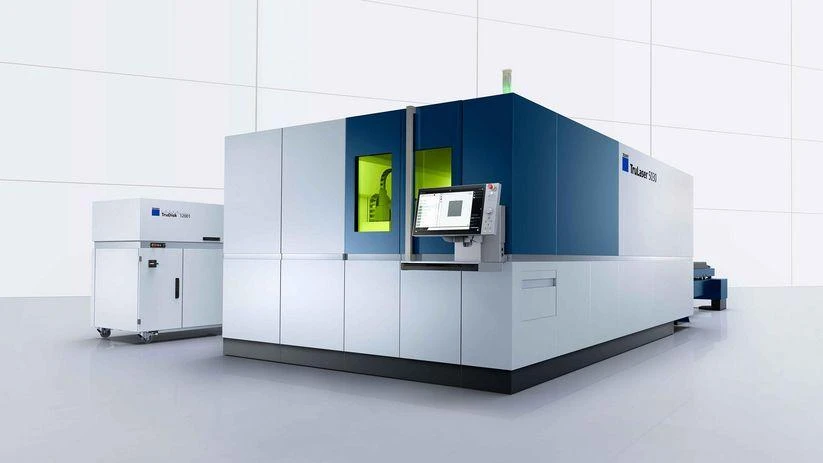
TRUMPF 2D fiber laser cutting system for industrial sheet-metal production.
TRUMPF is especially relevant for:
TRUMPF offers systems ranging from more economical entry-level machines to highly automated industrial production platforms, so buyers should compare the configuration with their actual production scale rather than treating the brand as a single machine category.
Before choosing a TRUMPF system, consider:
For manufacturers that can make use of advanced automation and integrated production workflows, TRUMPF represents one of the most comprehensive industrial laser cutting ecosystems in this comparison.
Best Fit: Industrial Sheet Metal Production
Bystronic focuses on sheet metal processing, combining fiber laser cutting, tube cutting, bending, automation, and production software. Its current portfolio ranges from standalone laser cutters to connected production systems designed for higher-throughput fabrication.
Representative Model: Bystronic ByCut Eco 3015
| Specification | ByCut Eco 3015 |
|---|---|
| Laser Power | 2–6 kW |
| Nominal Sheet Size | 3000 × 1500 mm |
| Maximum Positioning Speed | 140 m/min |
| Materials | Mild steel, stainless steel, aluminum and non-ferrous metals |
| Automation | Automation-ready |
| Control | BySoft Cell Control Cut |
| Machine Format | Industrial Sheet Metal Fiber Laser |
Representative specifications for the Bystronic ByCut Eco 3015.
Bystronic currently positions the ByCut Eco 3015 as its more accessible entry into industrial fiber cutting, with 2–6 kW options, a 3000 × 1500 mm nominal sheet size, 140 m/min positioning speed, and automation readiness.
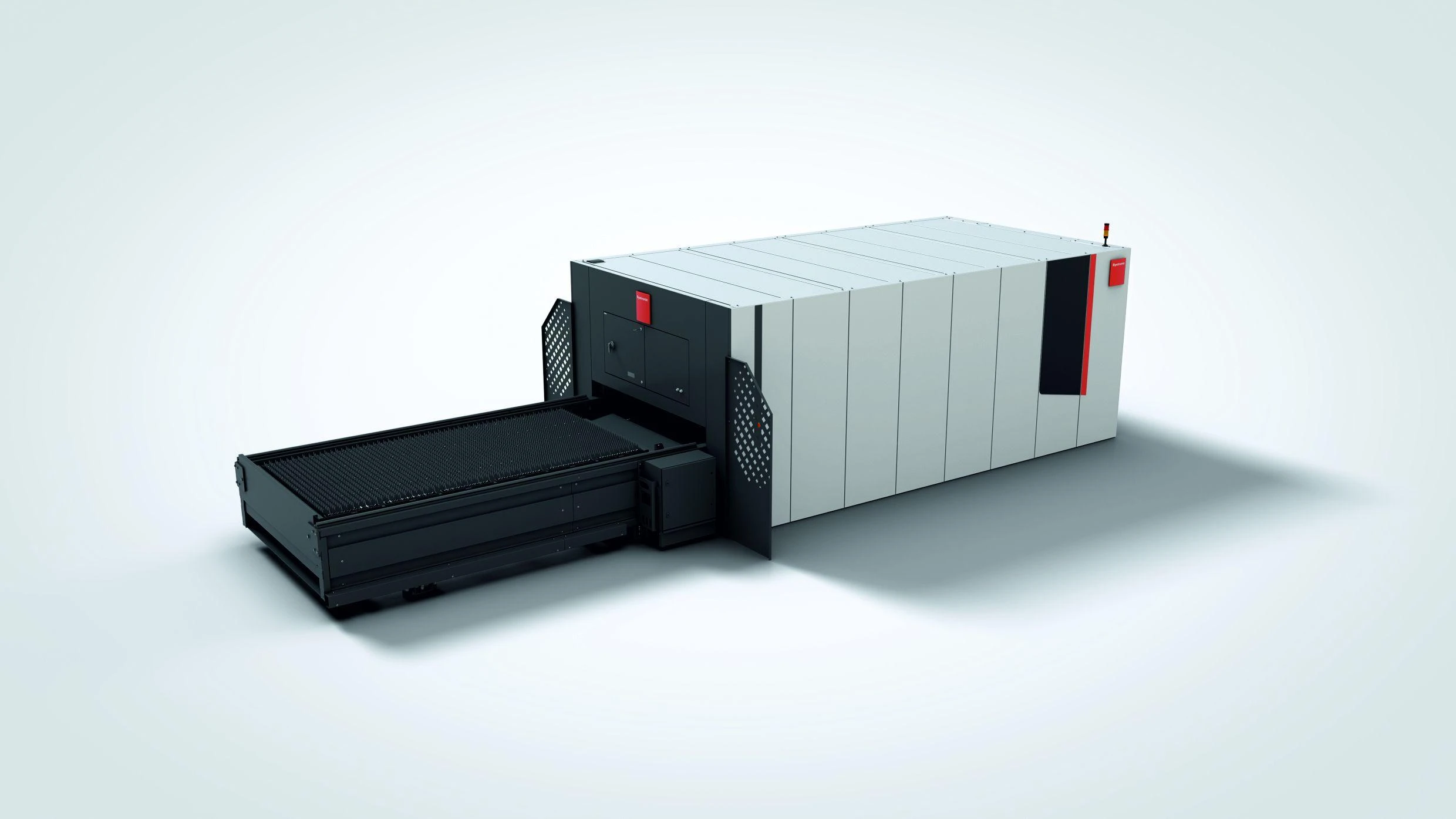
Bystronic ByCut Eco 3015 industrial fiber laser cutting machine.
Bystronic is especially relevant for:
Before selecting a Bystronic system, buyers should define:
Bystronic is particularly well suited to businesses that want to scale from individual machines toward a more automated and digitally connected sheet metal production workflow.
Best Fit: Integrated Industrial Sheet Metal Fabrication
AMADA provides a broad sheet metal manufacturing ecosystem that includes fiber laser cutting, punching, bending, automation, software, and related production technologies. Its current laser portfolio includes compact systems, general-purpose fiber lasers, high-productivity machines, rotary-index configurations, and large-format cutting solutions.
Representative Model: AMADA ORSUS-3015AJe
| Specification | ORSUS-3015AJe |
|---|---|
| Laser Power | 3 / 6 / 8 kW |
| Working Range | 3070 × 1550 mm |
| Z-Axis Working Range | 100 mm |
| Repeat Positioning Accuracy | ±0.01 mm |
| Maximum Simultaneous Feed Rate | 170 m/min |
| Maximum Table Load | 920 kg |
| Machine + Shuttle Table Dimensions | 9505 × 2840 × 2000 mm |
| Automation | Multiple automation options available |
Representative specifications for the AMADA ORSUS-3015AJe.
AMADA's current ORSUS specifications list 3, 6 and 8 kW variants, ±0.01 mm repeat positioning accuracy and 170 m/min maximum simultaneous feed rate.
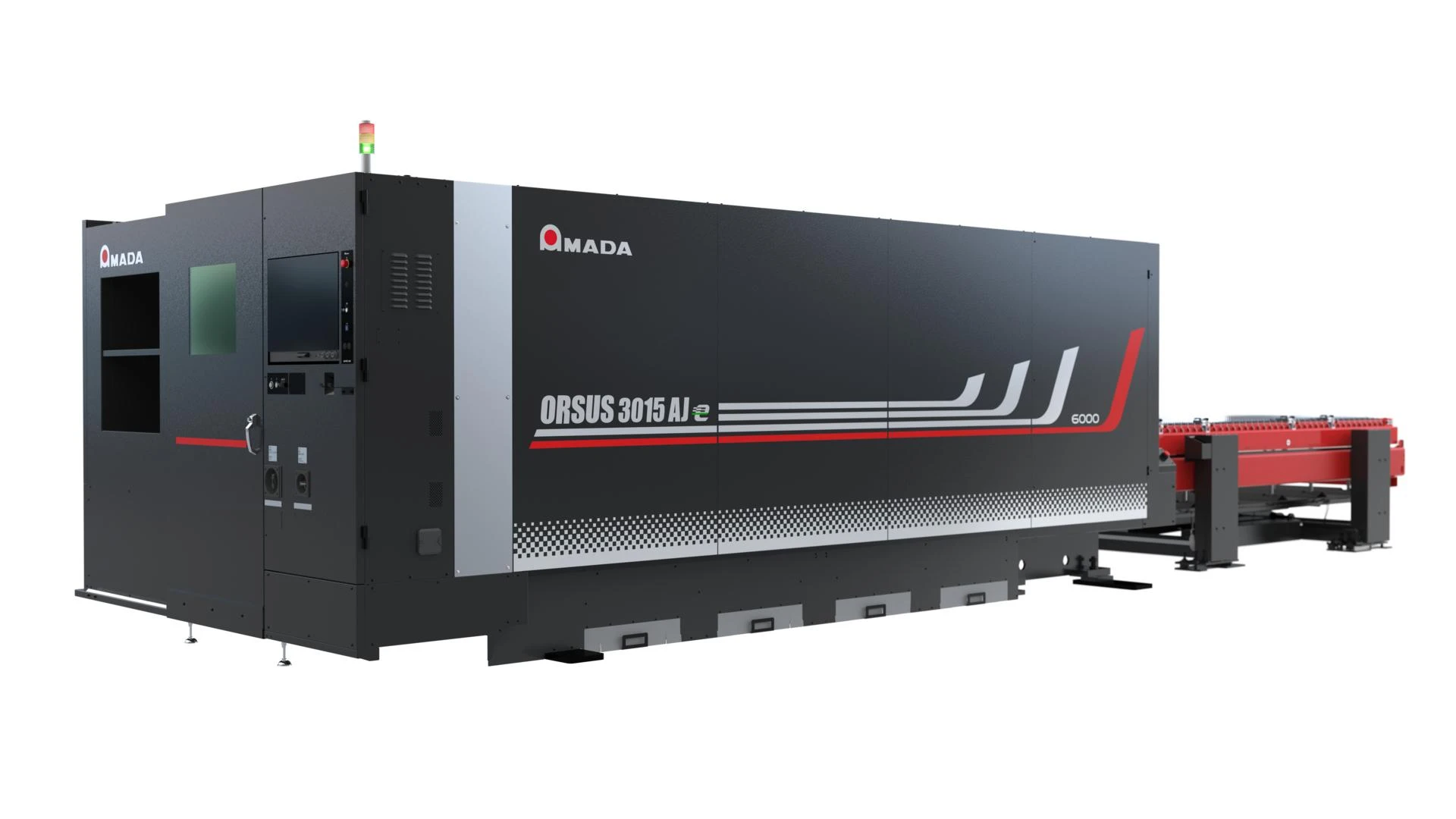
AMADA ORSUS fiber laser cutting system for integrated industrial sheet-metal fabrication.
AMADA is especially relevant for:
AMADA offers many machine and automation combinations, so buyers should first define:
For businesses already operating—or planning to build—a broader sheet metal manufacturing workflow, AMADA's main advantage is the ability to combine laser cutting with automation and other fabrication processes within the same production ecosystem.
Best Fit: Large-Scale Industrial Manufacturing
Han's Laser is a China-based industrial laser manufacturer with a much broader technology portfolio than metal cutting alone. Its product range includes laser cutting, welding, marking, automation, laser generators, precision processing, and systems for industries such as automotive, electronics, batteries, photovoltaics, and sheet metal fabrication.
For metal fabrication, Han's offers flat-sheet fiber laser cutting systems, tube cutting equipment, automated production lines, and ultra-high-power machines.
Representative Model: Han's Laser MPS-3015C
| Specification | MPS-3015C |
|---|---|
| Working Area | 3000 × 1500 mm |
| X/Y Positioning Accuracy | ±0.05 mm/m |
| X/Y Repeat Positioning Accuracy | ±0.03 mm |
| Maximum Positioning Speed | 120 m/min |
| Maximum Acceleration | 1.2 G |
| Maximum Worktable Load | 700 kg |
| Machine Weight | Approx. 6.5 t |
| Machine Dimensions | 8700 × 2920 × 2000 mm |
Representative specifications for the Han's Laser MPS-3015C.
Han's current international MPS-C technical sheet publishes these motion, table and machine dimensions, but does not state one fixed laser power for MPS-3015C on the current public technical table; it notes that cutting capacity varies with the laser source. Power is therefore not inferred from another Han's product line here.
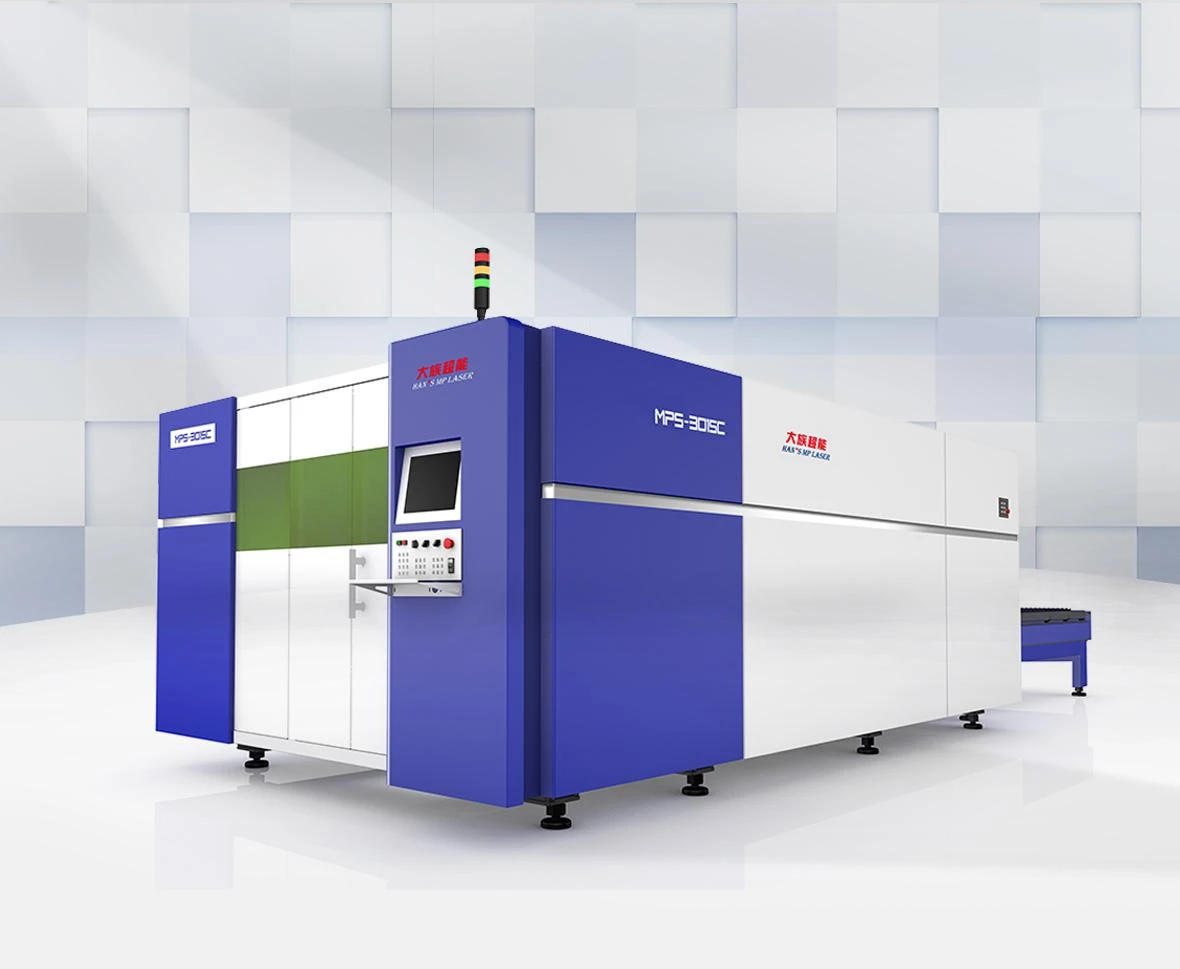
Han's Laser MPS-C fiber laser cutting system for large-scale industrial metal production.
Han's Laser is especially relevant for:
Because Han's Laser covers a very wide range of technologies and industries, buyers should focus specifically on the product line relevant to their metal fabrication needs.
Key points to verify include:
Han's provides after-sales channels for technical support and spare-parts requests, but buyers should confirm the exact local support resources and response structure available in their country before purchase.
Han's stands out in this comparison primarily for the breadth of its industrial laser portfolio and its ability to combine metal cutting with other laser and automated manufacturing technologies.
| Manufacturer | Representative Machine | Laser Power | Working Area | Max. Speed | Published Precision | Max. Acceleration |
|---|---|---|---|---|---|---|
| xTool | MetalFab CNC Cutter | 1.2 kW | 610 × 610 mm | 24 m/min | ±0.1 mm motion accuracy | — |
| GWEIKE | M2 Pro | 1.2 kW | 620 × 620 mm | 36 m/min | ±0.02 mm repeat positioning | 0.6 G |
| Thunder Laser | AccuMetal Series | 1.5–3 kW | 610 × 610 mm to 1300 × 1300 mm | 30 m/min | ±0.02 mm positioning | 2.0 G |
| Bodor | A Series | 1.5–60 kW | 3048 × 1524 mm to 14000 × 3100 mm | — | — | 1.5 G |
| HSG Laser | C3015 | 3–6 kW | 3048 × 1524 mm | — | ±0.05 mm/m positioning | — |
| SENFENG | SF3015N | 1.5–6 kW | 3050 × 1530 mm | 100 m/min | ±0.05 mm positioning / ±0.02 mm repeat | — |
| TRUMPF | TruLaser 1030 fiber | 4–12 kW | 3000 × 1500 mm | 140 m/min | — | — |
| Bystronic | ByCut Eco 3015 | 2–6 kW | 3000 × 1500 mm | 140 m/min | — | — |
| AMADA | ORSUS-3015AJe | 3 / 6 / 8 kW | 3070 × 1550 mm | 170 m/min | ±0.01 mm repeat positioning | — |
| Han's Laser | MPS-3015C | Not publicly specified | 3000 × 1500 mm | 120 m/min | ±0.05 mm/m positioning / ±0.03 mm repeat | 1.2 G |
Representative machine specifications across the 10 metal laser cutting manufacturers in this comparison.
These manufacturers serve very different production environments. Some focus on compact in-house metal cutting, while others offer broad fabrication platforms or highly automated industrial production systems.
The table below summarizes where each manufacturer fits most naturally.
| Manufacturer | Best Fit | Main Focus | Sheet Cutting | Tube Cutting | Automation |
|---|---|---|---|---|---|
| xTool | Compact Workshops & Small Businesses | Compact, multi-process metalworking | Yes | Limited | Limited |
| GWEIKE | Compact & Professional Fabrication | Compact to professional in-house metal fabrication | Yes | Model dependent | Limited / selected systems |
| Thunder Laser | Professional In-House Fabrication | Professional sheet-metal cutting for custom and small- to medium-batch production | Yes | Current focus is sheet cutting | Limited |
| Bodor | Professional Fabrication & Industrial Manufacturing | Broad fiber laser cutting portfolio across sheet, tube, large-format, and high-power applications | Yes | Yes | Extensive options |
| HSG Laser | Professional Fabrication & Industrial Manufacturing | Sheet, tube, profile, and high-power metal cutting | Yes | Yes | Extensive options |
| SENFENG | Professional Fabrication & Industrial Manufacturing | Broad metal fabrication equipment from general cutting to high-power production | Yes | Yes | Extensive options |
| TRUMPF | Industrial Manufacturing & Automated Production | Integrated laser cutting, automation, software, and material handling | Yes | Yes | Extensive |
| Bystronic | Industrial Sheet Metal Production | High-productivity sheet metal cutting and connected production | Yes | Yes | Extensive |
| AMADA | Integrated Industrial Sheet Metal Fabrication | Laser cutting integrated with bending, punching, automation, and software | Yes | Selected systems | Extensive |
| Han's Laser | Large-Scale Industrial Manufacturing | Broad industrial laser processing and automated manufacturing | Yes | Yes | Extensive |
Comparison of production fit, machine focus, sheet and tube capability, and automation across the 10 manufacturers.
xTool, GWEIKE, and Thunder Laser are more relevant to businesses that want to bring metal cutting in-house without immediately moving into a large industrial production system.
Their strengths are not necessarily maximum laser power or factory-scale automation. Buyers in this segment are more likely to care about:
Within this group, xTool sits closer to compact multi-process metalworking, GWEIKE spans compact to more professional configurations, while Thunder Laser's AccuMetal is positioned more specifically around professional in-house sheet-metal cutting.
Bodor, HSG Laser, and SENFENG cover a much wider range of fabrication requirements.
Their product portfolios extend beyond standard sheet cutting into areas such as:
These manufacturers are particularly relevant to job shops and fabrication businesses that need flexibility today but may also want room to increase production capacity or automation later.
TRUMPF, Bystronic, AMADA, and Han's Laser are more strongly associated with larger industrial production environments.
In this segment, buyers often evaluate more than the laser cutter itself. Production decisions may also involve:
For these manufacturers, the value of the system becomes increasingly tied to how well the machine integrates with the rest of the production environment.
This comparison is therefore less about identifying one manufacturer with the highest specifications and more about narrowing the market to the suppliers that match the scale and structure of your production.
There is no single metal laser cutting machine manufacturer that is the best choice for every buyer. The right choice depends on what you manufacture, how much you produce, the machine configuration you need, and how much support you expect from the manufacturer.
Instead of choosing a brand based on reputation alone, start by identifying the type of production environment you operate.
Large manufacturers typically have different priorities from smaller fabrication shops. When laser cutting is part of a high-volume production line, throughput, automation, and system integration can have a greater impact on productivity than the machine's maximum cutting speed alone.
Look for manufacturers that can provide:
For this type of operation, it can make sense to prioritize manufacturers with strong industrial automation capabilities and the resources to support a larger production environment.
Fabrication shops often need a more flexible machine that can handle different materials, thicknesses, part sizes, and customer orders without requiring a highly specialized production line.
Important factors include:
For a shop handling a wide variety of jobs, a machine that is easy to operate and adaptable to different production requirements may provide more value than a system designed primarily for maximum automation.
If your production regularly involves thick metal plate, higher laser power can improve cutting capability and productivity. However, power should not be considered in isolation.
When comparing manufacturers, look at the complete cutting system, including:
A higher-wattage laser does not automatically mean better production results. Ask manufacturers to test the materials and thicknesses that represent your actual workload rather than relying only on maximum thickness claims.
If your business processes both flat sheet and tubes or pipes, a sheet-and-tube laser can eliminate the need for separate machines and reduce material handling between processes.
When comparing manufacturers, consider:
The most suitable system depends on how frequently you switch between sheet and tube work. If tube cutting represents only a small part of your production, a dedicated sheet machine with limited tube capability may be more practical than paying for a highly specialized system.
A lower purchase price does not necessarily mean a lower overall cost.
When comparing manufacturers, consider the machine's total cost of ownership alongside its expected production output. The initial quotation may need to be evaluated together with shipping, installation, training, consumables, maintenance, spare parts, software, and future service requirements.
More importantly, consider how the machine will affect your business:
A less expensive machine may be the better investment if it provides the capabilities you need. Conversely, paying more for automation or higher performance can make sense when those features generate enough additional production capacity to justify the investment.
The goal is not to find the cheapest machine. It is to find the manufacturer and machine configuration that provide the right combination of capability, productivity, reliability, support, and total cost for your operation.
The right manufacturer depends largely on your production scale and workflow. xTool and GWEIKE are better suited to compact and flexible in-house metalworking; Bodor, HSG Laser, and SENFENG cover a broader range of professional fabrication needs; while TRUMPF, Bystronic, AMADA, and Han's Laser are more relevant to larger industrial and automated production environments.
Thunder Laser sits between compact systems and large industrial platforms, with AccuMetal focused on professional in-house sheet-metal cutting for custom parts, prototypes, and small- to medium-batch production. The best approach is to shortlist the manufacturers that match your workload, then compare actual machine configurations, sample-cut results, support, and total investment before making a decision.
Talk To Our Experts Now!
Please leave your contact information so that we can serve you better.
FAQS
Start with evidence that the manufacturer can support your actual application. Look at whether it offers machines suitable for your materials, thicknesses, working area, and production volume, then verify cutting performance with real samples. Service capability is equally important: installation, operator training, warranty handling, spare parts, and technical support should all be clear before the order is placed.
A strong manufacturer should be able to recommend a machine based on your application rather than simply pushing the highest-power or most expensive configuration.
Give the manufacturer specific information about what you plan to cut, including material type, regular thickness, maximum thickness, part size, production volume, and whether you process sheet, tube, or both.
Then ask what machine configuration they recommend, what is included in the quotation, what utilities and assist gases are required, how installation and training work, where spare parts are supplied from, and who will provide technical support after the machine is installed.
The quality of these answers can tell you a lot about how well the supplier understands your application.
Yes. Whenever possible, provide your own material and production drawings rather than relying only on demonstration parts prepared by the manufacturer.
A representative cutting test allows you to evaluate edge quality, dross, small holes, corners, fine details, dimensional accuracy, and practical cutting speed on the type of work you actually produce.
It also gives the manufacturer an opportunity to verify whether the proposed laser power and machine configuration are appropriate before you commit to the purchase.
Local service becomes especially important when the machine is part of daily production. Even a capable machine can create costly downtime if technical support, replacement parts, or troubleshooting are difficult to access.
Before buying, confirm who provides installation and training, whether local technicians are available, where common spare parts are stocked, how warranty claims are handled, and what happens when a problem cannot be solved remotely.
For buyers comparing similar machines, the quality of the local support structure can be a meaningful deciding factor.
Either model can work well if responsibilities are clear.
Buying directly may provide closer access to the manufacturer and application team. A qualified local dealer, however, can make installation, training, technical support, and spare-parts service easier, particularly when the manufacturer is based overseas.
The important question is not simply who sends the quotation. It is who will support the machine after it arrives.
Make sure the quotations describe comparable machine configurations. Two machines with the same laser power can include very different cutting heads, laser sources, working areas, software, automation, safety systems, accessories, training, and service packages.
Also check whether shipping, installation, training, starter consumables, spare parts, assist-gas equipment, extraction, and other supporting equipment are included or priced separately.
Comparing only the headline machine price can make two very different offers appear more similar than they actually are.
China has a large and increasingly diverse fiber laser manufacturing industry, with suppliers ranging from high-power industrial equipment companies to manufacturers focused on more accessible fabrication systems.
For buyers considering a Chinese manufacturer, country of origin alone is not a useful measure of quality. More important factors include the actual machine configuration, cutting-test results, manufacturing capability, warranty terms, international installation experience, spare-parts supply, and local support.
This is also why buyers should evaluate individual manufacturers rather than treating all Chinese laser cutting machines as one category.
Thunder AccuMetal is particularly relevant to businesses that want to bring professional sheet-metal cutting in-house without moving immediately into a large, highly automated heavy-industrial production system.
Typical users may include small and medium-sized fabrication businesses, job shops, metal signage businesses, professional workshops, prototype production, and companies currently outsourcing custom sheet-metal parts.
For these buyers, the more useful starting point is to provide Thunder Laser with the materials, thicknesses, part sizes, and expected production volume. The team can then evaluate whether AccuMetal's current configuration is suitable and arrange application testing when necessary.
FIND THE RIGHT LASER FOR YOUR NEXT PROJECT
Explore Thunder Laser solutions designed for different materials, workflows, and production needs.


 Stable & Consistent MachinesUnlimited ApplicationsRobust After-sales SupportFactory Direct Supply


