


From CNC to Metal 3D Printing: Faster Prototyping with Thunder SLM-175
 2026-10-15
WHAT ARE YOU LOOKING FOR?
Search Across Products, Blog Posts, Support Content, And Resources.

From CNC to Metal 3D Printing: Faster Prototyping with Thunder SLM-175
2026-10-15

What if a metal component could be redesigned, prototyped, and manufactured without carrying forward all the constraints of its original CNC machining process?
For engineers developing complex metal parts, the challenge is often more than producing a single prototype. Each design revision may require changes to machining programs, multiple manufacturing steps, and additional assembly work. Moving from a validated design to small-batch production introduces another set of decisions.
Thunder Laser explored a different approach with a cutting cone used in its Thunder Bolt laser system. Using the Thunder SLM-175 metal 3D printer, the engineering team redesigned a three-piece CNC assembly into a two-component configuration and produced 22 cutting cones in a single printing batch.
The redesigned component has since been commercially launched, demonstrating how metal 3D printing can support a workflow extending from design exploration and prototyping to production.
The cutting cone is a functional component of the Thunder Bolt laser system. Its design influences internal airflow, sealing, and cutting consistency.
The original cone consisted of three separately CNC-machined parts that required precise assembly.
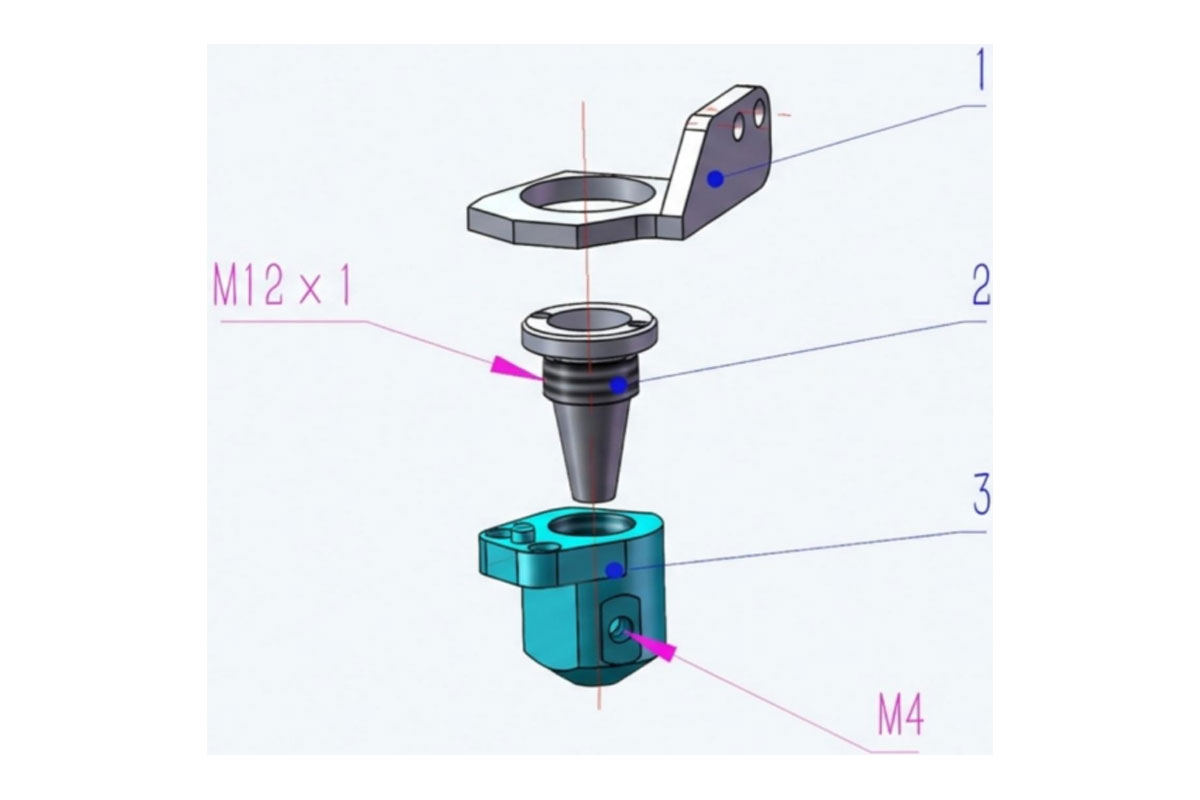
While CNC machining provides excellent precision, this particular design presented several challenges.
Multiple manufacturing steps. Three individual components required separate machining operations, followed by assembly.
Assembly-dependent performance. Multiple interfaces introduced alignment and sealing considerations that had to be controlled during production.
Restricted internal geometry. The internal air passages had to be designed around the physical reach of cutting tools and the original component arrangement.
Less flexible design changes. Modifying the cone could require updates to multiple machining programs and another round of manufacturing and assembly.
Thunder's process documentation recorded approximately 60 minutes of CNC machining time per cutting cone.
Rather than optimizing the existing machining sequence alone, the engineering team asked a more fundamental question: Could a different manufacturing process enable a simpler design?
The team turned to selective laser melting (SLM), a metal additive manufacturing process that builds parts layer by layer from metal powder.
Instead of reproducing the original three CNC components, the engineers reconsidered the cutting cone's architecture, including its internal airflow features and assembly interfaces.
The redesign focused on two objectives: integrating structural features and creating greater flexibility to refine the internal geometry.
The result was a reduction from three separately manufactured parts to two components.
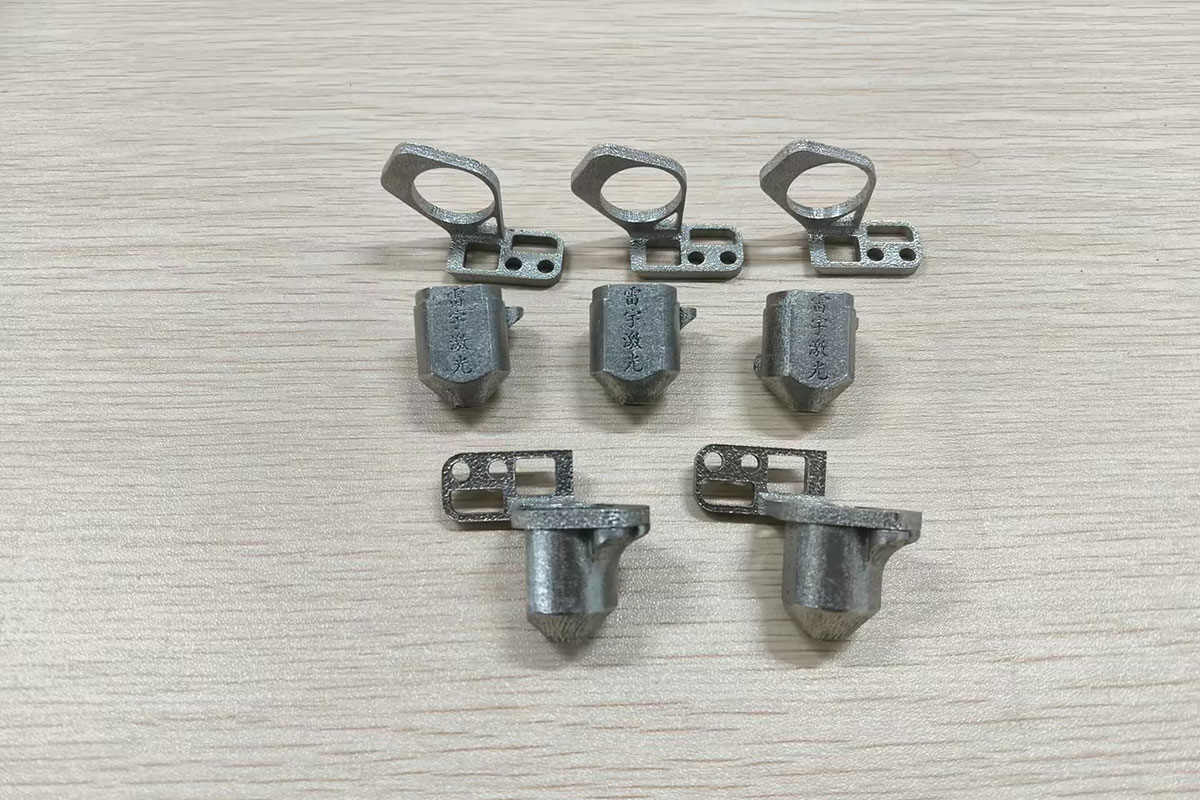
This change illustrates an important advantage of design for additive manufacturing (DfAM): engineers can rethink how a part is constructed rather than simply transfer an existing design from one machine to another.
For the cutting cone, reducing the part count also reduced the number of assembly interfaces and provided opportunities to improve the continuity of the internal airflow structure.
Just as importantly, the new approach made it possible to explore future geometry changes without being constrained by exactly the same tool-access requirements as the original CNC design.
Design iteration is a major consideration when developing functional metal components.
With CNC machining, significant geometry changes may require revised toolpaths, additional setups, or different ways of dividing and assembling a component. That preparation can become particularly involved when the design contains hard-to-reach internal features.
SLM provides another development route.
Engineers can revise a 3D model, prepare a new build, and produce a metal prototype based on the updated geometry. This makes additive manufacturing particularly useful when development involves complex internal features, part consolidation, or repeated design exploration.
The Bolt cutting cone is an example of that design flexibility in practice. The team was able to reconsider a component previously designed around three machined parts and manufacture its redesigned structure using SLM.
The prototyping advantage is not simply making the same part on a different machine. It is having more freedom to test a different design.
This can help manufacturers explore functional alternatives before committing to a larger production program.
A metal 3D printer becomes even more valuable when it can support both prototype development and subsequent production requirements.
For the redesigned cutting cone, Thunder used the SLM-175 with stainless steel powder.
Rather than producing each component through a separate machining sequence, the team arranged multiple cutting cones within one printing job.
The documented production results were:
| Manufacturing Detail | Thunder SLM-175 Application |
|---|---|
| Manufacturing process | Selective Laser Melting (SLM) |
| Material | Stainless steel powder |
| Build area used | 175 × 175 mm |
| Cutting cones per batch | 22 |
| Recorded batch printing time | Approximately 8.5 hours |
| Average printing time per cone | Approximately 23 minutes |
Producing 22 cutting cones in one build demonstrates how batch nesting can be used for suitable small, complex metal components.
Instead of treating every unit as an independent machining task, manufacturers can organize multiple parts into one build, making better use of the available manufacturing space.
This provides a practical route from individual prototype development to small-batch manufacturing without abandoning the underlying additive process.
The internal comparison also illustrates how the manufacturing workflow changed after the redesign.
| Comparison | Original CNC Design | Redesigned SLM Approach |
|---|---|---|
| Component structure | Three independent parts | Two components |
| Manufacturing approach | Separate machining and assembly | Batch metal printing with subsequent processing |
| Recorded processing time | About 60 minutes per cone | About 23 minutes of average printing time per cone |
| Geometry development | Constrained by machining access | More flexibility to redesign internal features |
| Production organization | Multiple individual machining operations | 22 cones produced in one build |
The recorded SLM printing time, averaged across the batch, was approximately 62% lower than the documented CNC machining time per cone.
The 23-minute figure is the batch-averaged printing time, not the complete finished-part production cycle.
The value of this change extends beyond the time comparison.
Batch printing allows several parts to be processed within the same automated build. Once the job is prepared and started, operators can organize other activities while the equipment completes the printing cycle.
Powder handling, part removal, finishing, and inspection still require appropriate resources. Nevertheless, the ability to combine multiple components in one build offers a different way to plan equipment utilization and small-batch production.
Manufacturing efficiency was not the only consideration in the cutting cone project.
Because the cone plays a role in the laser system's airflow and sealing, its internal configuration matters.
According to Thunder's engineering project documentation, the redesigned structure delivered improvements in three areas:
These outcomes show why prototyping flexibility matters. Greater freedom to redesign internal features can support functional improvements—not just changes in manufacturing speed or part count.
The redesigned Bolt cutting cone has moved beyond an engineering demonstration.
Thunder Laser has introduced it as a commercially available component, and the company has received customer inquiries about purchasing it.
For the engineering team, this connects the entire development process: identifying limitations in an existing assembly, reconsidering its design, manufacturing the revised metal components, and bringing the resulting product to market.
For other manufacturers, the lesson is especially relevant when rapid prototyping is expected to lead to functional parts and repeatable small-batch production.
The Bolt cutting cone example suggests that SLM deserves consideration in several situations.
SLM does not need to replace CNC in every application. For straightforward geometries, high-volume production, or precision-critical finishing operations, conventional machining may remain the more efficient choice.
In many applications, the two methods can also work together: SLM creates a complex near-net-shape component, while CNC finishes critical dimensions and interfaces.
The Thunder Bolt cutting cone project demonstrates what can happen when metal 3D printing is introduced early enough to influence part design—not just the final manufacturing step.
Using Thunder SLM-175, the engineering team redesigned a three-piece CNC assembly into two components and demonstrated batch manufacturing with 22 cutting cones in a single build.
The project highlights three connected advantages: greater freedom to explore complex geometries, a flexible route from digital design to functional metal prototypes, and an efficient batch-printing approach for suitable small metal parts.
With the redesigned cone now commercially available, this application also shows how an additive manufacturing workflow can extend beyond initial prototyping.
For manufacturers developing complex components, metal 3D printing offers more than another way to make parts. It creates new opportunities to refine designs and move from prototyping to small-batch manufacturing.
Discover how Thunder SLM technology can support your rapid prototyping, custom metal components, and small-batch manufacturing requirements.
Explore Thunder SLM Metal 3D Printers
For a closer look at the geometry possibilities behind additive manufacturing, read How Metal 3D Printing Enables Complex Geometries. If you are evaluating equipment for your own applications, our SLM Metal 3D Printer Buying Guide explains the key selection factors.
Talk To Our Experts Now!
Please leave your contact information so that we can serve you better.
FIND THE RIGHT LASER FOR YOUR NEXT PROJECT
Explore Thunder Laser solutions designed for different materials, workflows, and production needs.


 Stable & Consistent MachinesUnlimited ApplicationsRobust After-sales SupportFactory Direct Supply


