


15 Glass Etching Ideas for Gifts, Décor & Business in 2026
 2023-12-18
WHAT ARE YOU LOOKING FOR?
Search Across Products, Blog Posts, Support Content, And Resources.

15 Glass Etching Ideas for Gifts, Décor & Business in 2026
2023-12-18

Glass etching ideas can turn everyday drinkware, bottles, mirrors, jars, awards, and decorative panels into personalized products with a clean frosted finish. These projects are useful for gift shops, wedding businesses, restaurants, corporate branding, home décor, awards, and small-batch customization.
Laser glass etching is a non-contact process, but good results still depend on the glass composition, surface condition, part geometry, focus, rotary setup, artwork, and heat control. The best project is one that matches both the customer’s use case and the type of glass you can process safely and consistently.
Last reviewed: July 2026.
Quick Answer: What Are the Best Glass Etching Ideas?
Popular glass etching ideas include personalized wine glasses, whiskey tumblers, water bottles, wine and spirit bottles, cosmetic jars, holiday ornaments, wedding table numbers, back-engraved mirrors, coasters, trophies, plaques, candle holders, vases, perfume bottles, and illuminated glass panels. For a small workshop, start with standardized products that are easy to fixture and replace, such as coasters, straight-sided tumblers, plaques, and bottles with consistent dimensions.
Laser glass etching can create text, logos, patterns, and photographic effects on suitable glass products.
Laser glass etching, often called laser glass engraving, uses a focused laser beam to create a visible surface change on glass. With a CO₂ laser, rapid localized heating can produce tiny surface fractures and a frosted appearance. A UV laser can mark selected glass and coated materials with a smaller heat-affected area, depending on the glass composition and desired result.
Most everyday “etched glass” projects are shallow surface effects rather than deep carving. The finished mark may contain text, a logo, a monogram, vector artwork, a pattern, or a processed photograph. Digital files make the design repeatable, which is useful for personalized orders and branded batches.
Glass is brittle, and different products can respond differently even when they look similar. Float glass, soda-lime drinkware, borosilicate glass, mirror glass, crystal, coated glass, tempered glass, and laminated architectural glass should not be treated as one material. Review the Thunder Laser Glass Material Guide and test the exact item before production.
The following laser glass etching ideas preserve the original article’s focus on gifts and creative products while emphasizing projects with clearer commercial value, more distinct search intent, and more manageable safety considerations.
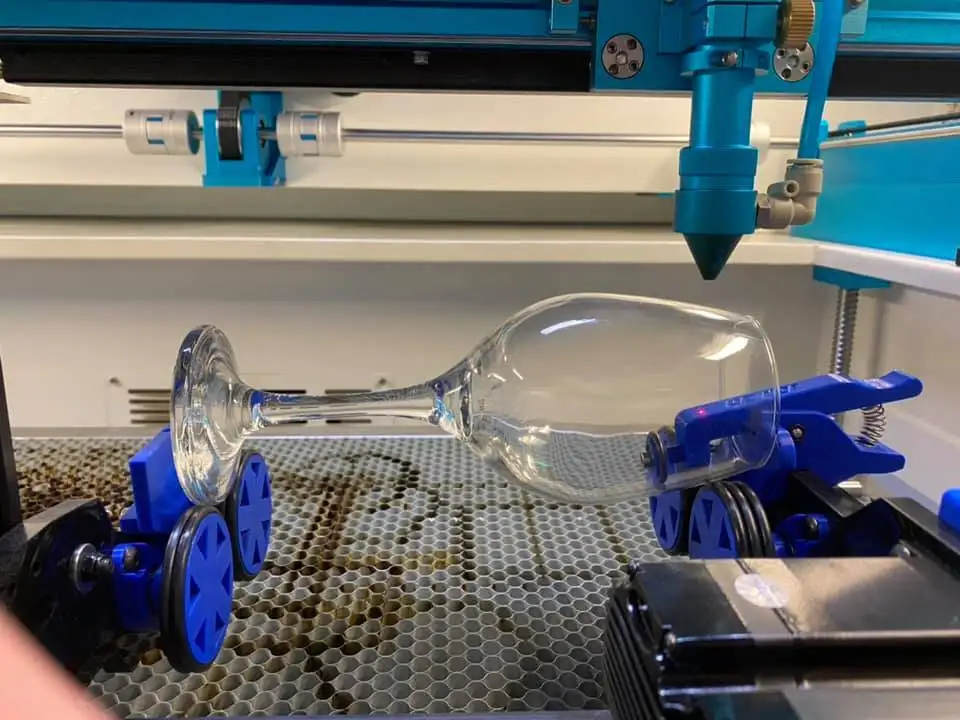
Wine glasses are a classic choice for weddings, anniversaries, restaurants, wineries, and gift sets. Popular designs include monograms, names, dates, vineyard logos, small floral borders, and event messages.
Stemware can be delicate and may taper from top to bottom. A suitable rotary fixture, stable support, careful focus, and a small test area help reduce distortion and uneven engraving. Keep artwork away from thin rims and stressed edges.
Personalized wine glasses are popular for weddings, events, restaurants, and premium gifts.
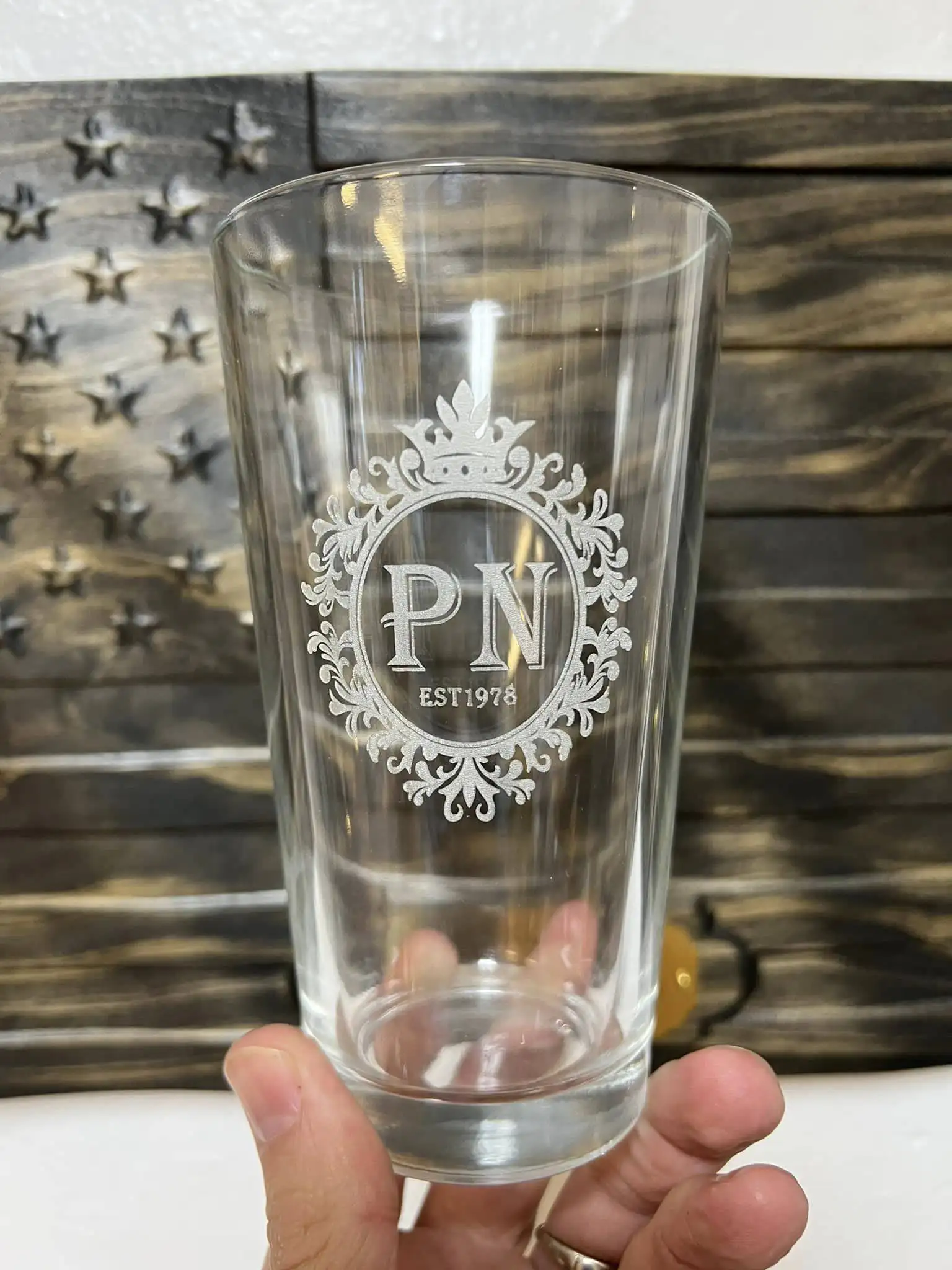
Straight-sided whiskey glasses, lowball tumblers, pint glasses, and beer mugs are practical products for a glass engraving business. Their wider surfaces can accommodate logos, initials, maps, club emblems, and themed artwork.
Compared with narrow stemware, many tumblers are easier to hold and rotate. Standardizing one or two glass models also simplifies fixture design, testing, packaging, and repeat orders.
Reusable glass water bottles can be customized with names, fitness quotes, company logos, event graphics, or decorative patterns. They work well for wellness brands, employee gifts, schools, gyms, and promotional campaigns.
Bottles often include shoulders, necks, silicone sleeves, caps, or protective coatings. Remove detachable parts when appropriate, confirm the engraving zone, and use a rotary fixture that supports the body without applying excessive pressure.
Glass water bottles can be personalized with names, logos, quotes, and repeatable branded designs.
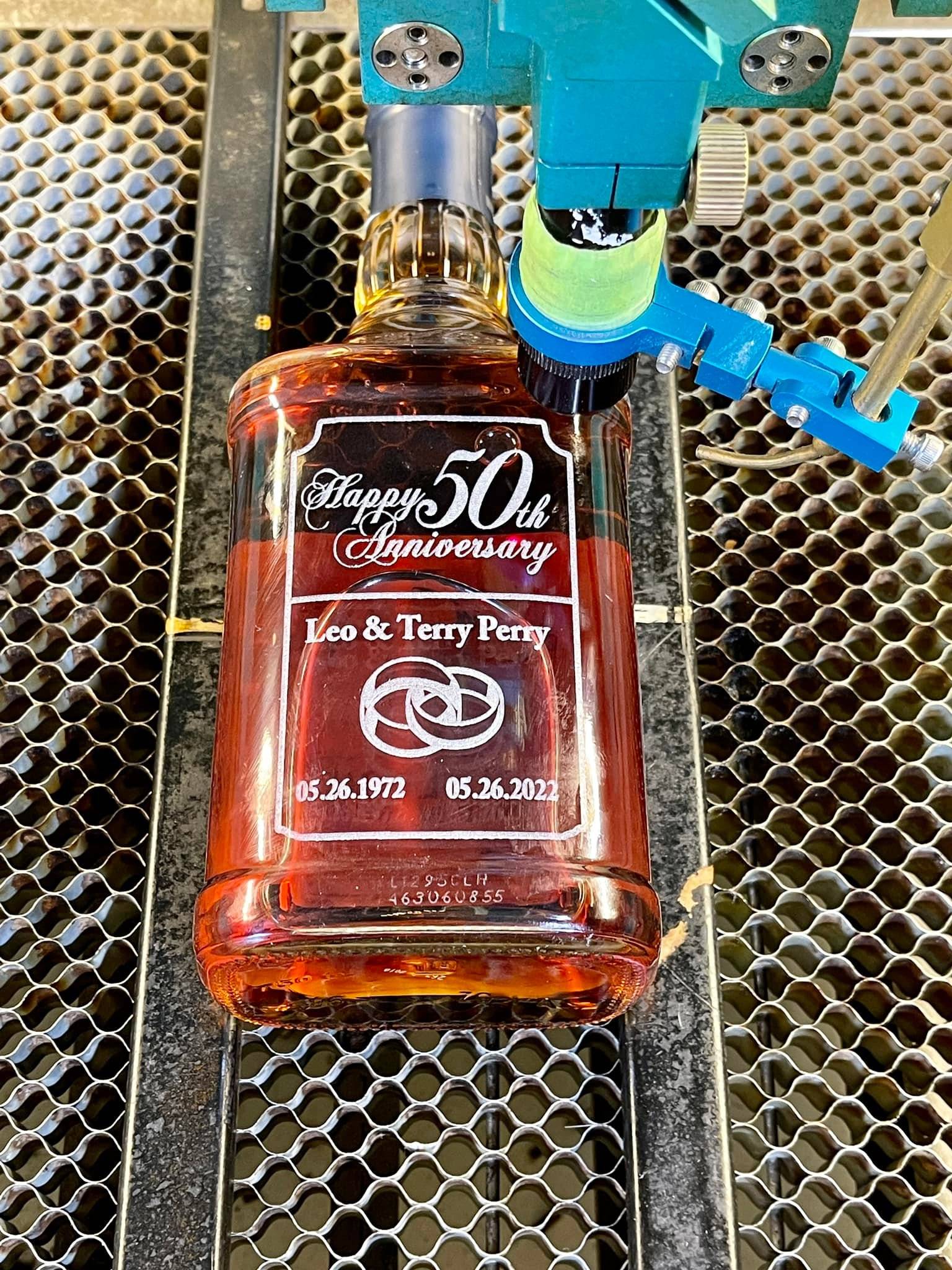
Wine, whiskey, champagne, and spirits bottles can become premium gifts, commemorative pieces, event centerpieces, or branded packaging. Designs may include names, dates, venue artwork, corporate logos, or limited-edition numbering.
Bottle curvature and shoulder transitions can change the focus distance. Keep the main artwork within a stable cylindrical area or divide a larger design into controlled sections. The Bottle Laser Engraving Guide explains rotary setup and material differences in more detail.
Candle jars, food jars, skincare containers, and cosmetic packaging can be etched with product names, logos, botanical graphics, batch information, or decorative borders. This is a useful idea for boutique brands that want a subtle, premium finish without a printed label covering the glass.
Confirm whether the container is bare glass, painted, coated, frosted, or screen printed. The coating may react differently from the glass underneath, so test both the mark quality and any fumes produced during processing.
Glass ornaments can be personalized with family names, memorial text, dates, snowflakes, stars, animals, or seasonal illustrations. They are suitable for Christmas products, commemorative gifts, school fundraisers, and limited-edition collections.
Thin blown ornaments can be fragile and may contain uneven wall thickness or internal stress. Flat glass ornaments, thicker cast pieces, or supplier-approved laserable blanks are often easier to process consistently.
Glass table numbers, seating signs, place cards, welcome panels, and menu displays are attractive products for wedding planners and event decorators. Frosted lettering can be combined with painted backs, metallic stands, dried flowers, or edge lighting.
Flat rectangular pieces are easier to fixture than curved drinkware and can be produced in coordinated sets. Use rounded or finished edges, confirm the glass is intended for decorative fabrication, and avoid processing unknown tempered panels.
Mirrors can be customized with names, quotes, borders, floral artwork, logos, or illuminated designs. A common workflow removes part of the reflective backing from the rear side, allowing the design to appear through the front.
Mirror the artwork before processing the back. Confirm the composition of the paint and reflective layers, use suitable extraction, and test a sample because backing systems vary by manufacturer. Do not direct an unsuitable laser at a highly reflective front surface.
Glass coasters are compact, easy to package, and suitable for names, monograms, maps, logos, geometric patterns, and themed sets. They can serve restaurants, breweries, corporate gifts, weddings, real-estate closing gifts, and home décor shops.
Flat coasters are among the easiest glass products to position in a repeatable jig. A multi-position fixture can improve alignment and support batch production.
Glass trophies, recognition awards, and crystal-style blocks can be engraved with names, achievements, dates, logos, and sponsor information. Their perceived value makes them suitable for schools, companies, sports organizations, associations, and ceremonies.
Awards may be made from glass, optical crystal, lead crystal, or coated material. Request the supplier’s material specification and test an identical blank because internal stress and composition can affect the engraving response.
Glass plaques and signs can display office names, room numbers, opening hours, memorial text, donor recognition, brand stories, or decorative artwork. Frosted graphics can be combined with metal standoffs, wood bases, edge lighting, or a colored backing layer.
Flat plaques provide a large design area and are suitable for vector graphics, text, and processed photographs. Architectural or safety glazing requires professional review and should not be treated like an ordinary craft blank.
Candle holders, lantern panels, and luminaries can be etched with seasonal patterns, wedding motifs, botanical artwork, city skylines, or personalized messages. The frosted design becomes more visible when illuminated from within.
Use purpose-made containers with consistent walls and keep the engraving away from sharp transitions. Laser processing changes the surface, so do not claim that a decorative item retains any heat or safety rating unless the manufacturer has approved the modified product.
Glass vases are useful for weddings, anniversaries, memorial arrangements, corporate gifts, florists, and home décor. Designs can include names, event dates, botanical lines, poems, venue sketches, or business branding.
Many vases are tapered or irregular. A stable rotary setup and a smaller engraving zone can improve focus consistency. Hand-blown pieces may have uneven thickness and internal stress, so they require careful testing.
Perfume bottles can be customized with initials, luxury monograms, anniversary dates, small logos, or limited-edition numbering. This application is relevant to fragrance brands, beauty retailers, events, and premium personalization services.
Work only with empty, clean containers when required by the process and workplace rules. Perfume, alcohol, oils, coatings, and decorative films can create fire or fume hazards. Confirm the bottle construction and remove incompatible contents before engraving.
Engraved glass lamps, illuminated panels, photo displays, and edge-lit décor can create a strong visual effect. Suitable designs include portraits, pet images, line-art buildings, wedding photos, landscapes, and commemorative messages.
For photographic engraving, image preparation matters as much as the machine. Convert the image for the intended glass and viewing distance, test dithering and resolution, and evaluate the panel with its final lighting base before approving production.
A long list of ideas becomes more useful when each product is matched to a customer group and production workflow.
| Business Type | Strong Glass Etching Ideas | Why They Fit |
|---|---|---|
| Gift shop or personalization studio | Coasters, water bottles, tumblers, perfume bottles, photo displays | Compact products, frequent personalization, and manageable order quantities |
| Wedding and event business | Wine glasses, champagne bottles, table numbers, place cards, vases, mirrors | Coordinated designs and higher-value event packages |
| Restaurant, bar, winery, or brewery | Glassware, bottles, coasters, jars, signs | Branding, table service, retail merchandise, and customer gifts |
| Corporate branding supplier | Awards, plaques, bottles, coasters, desk displays | Logos, recognition programs, events, and repeat business orders |
| Home décor studio | Mirrors, vases, candle holders, plaques, light panels | Decorative surfaces and opportunities to combine glass with wood, metal, or lighting |
| Beauty and packaging brand | Perfume bottles, cosmetic jars, candle jars, branded containers | Premium packaging and subtle permanent decoration |
Choose glass projects that match your customer group, fixture capability, order size, and material supply.
Uniform soda-lime drinkware, flat glass blanks, mirror samples, and supplier-approved decorative glass are usually easier to test than handmade pieces. Consistent dimensions reduce focus and fixture variation.
Tempered and safety glass should not be treated as ordinary engraving material. Localized laser heating may cause unpredictable shattering or affect a certified safety product. Architectural railings, doors, shelves, cookware, and protective panels require exact material identification and approval from the glass manufacturer or a qualified fabricator.
Crystal and hand-blown glass may contain different additives, uneven wall thickness, bubbles, or internal stress. These variations can change the frosted effect and increase the risk of cracking. Test an identical blank before committing a valuable piece.
Decorative coatings may create strong contrast when removed, but they may also release fumes or residue. Obtain material information where possible and use appropriate extraction. Do not process an unknown coating simply because the underlying item is glass.
For a commercial glass etching business, choosing a repeatable blank is often more important than offering every glass shape. Standard products make it easier to create fixtures, save focus positions, document settings, control packaging, and replace damaged items.
Coasters, plaques, table numbers, mirror panels, and flat ornaments can be positioned directly on the work table or in a jig. Keep the surface level and protect the machine bed from sharp edges. A repeatable corner stop or template helps align batches.
Bottles, tumblers, wine glasses, jars, and candle holders often benefit from a rotary attachment. The rotary turns the item while the laser scans the design, helping maintain alignment around a curved surface.
Confirm the diameter, taper, weight, handle clearance, neck position, and clamping pressure before starting. A tapered glass may require a rotary that can level the engraving area, while handled mugs need enough clearance to rotate safely.
A small logo may fit within the usable focus range without a full rotary workflow, depending on the curvature and lens. Wider artwork and wraparound designs usually require controlled rotation. Run a frame test and verify the design does not enter a steep shoulder or narrow neck area.
Remove dust, oil, fingerprints, adhesive, and packaging residue before engraving. Use a cleaner appropriate for the glass and allow the surface to dry. Handle the prepared area by the edges when possible.
More laser power does not automatically create a better frosted mark. Excessive heat can create large chips, rough texture, cracks, or an inconsistent edge. Begin with a conservative test matrix and adjust power, speed, resolution, focus, and line spacing together.
Very high resolution can place scan lines too close together and increase heat accumulation. For photographs, test several dithering methods and resolutions on the exact glass. Judge the sample at the normal viewing distance rather than only under magnification.
Some operators use a damp paper towel, a thin removable coating, or another tested surface-preparation method to reduce sharp micro-chipping and improve the frosted appearance. Results vary by glass and machine, so the method should be tested on an identical blank and must not interfere with focus, ventilation, or safe operation.
Movement during engraving can distort fine lines and photographs. Use a fixture that supports the glass without creating concentrated pressure. Avoid overtightening a rotary chuck or clamp on thin glass.
Avoid thin rims, sharp edges, handles, seams, drilled holes, corners, and visible stress points. Place the design on a stable surface area with enough clearance for the fixture and laser head.
Record the product supplier, glass type, dimensions, machine, lens, focus method, fixture, artwork version, and settings. Keep an approved physical sample for repeat orders.
A CO₂ laser is the most common choice for creating a frosted surface effect on glass drinkware, bottles, mirrors, plaques, awards, and decorative panels. A UV laser may be preferred for selected fine-marking applications where a smaller heat-affected area is important. The best choice depends on the glass, design, part size, batch volume, and required finish.
There is no universal minimum wattage for glass etching. Beam quality, laser source, focus, glass composition, engraving area, speed, resolution, and heat control all affect the result. Select a machine by testing the actual product rather than relying on a single wattage threshold.
The Bolt Series is a compact RF CO₂ option for high-detail engraving and smaller workshop products. The Nova Plus Series provides RF CO₂ capability with larger work areas for business production. The Nova Series uses a glass CO₂ laser source and offers larger-format processing for workshops that need broad material capability.
For a complete machine-selection discussion, read the Glass Laser Etching Machine Guide. You can also explore the Thunder Inspiration Library for project tutorials and design ideas.
The strongest glass etching ideas combine an attractive product with a repeatable blank, safe material information, reliable fixturing, and a clear customer use case. Wine glasses, coasters, bottles, awards, wedding décor, mirrors, cosmetic containers, and illuminated panels can all support valuable personalization services when the process is properly tested.
Start with consistent commercial glass, use controlled heat input, document your test matrix, and avoid unknown tempered or safety glass. For a new product, use the Thunder Laser Material Testing Service to evaluate the sample before choosing a production process or machine.
Ready to develop a glass engraving workflow for gifts, branding, events, or batch production? Review the glass laser machine guide or contact Thunder Laser with your glass type, dimensions, design, and production goals.
Talk To Our Experts Now!
Please leave your contact information so that we can serve you better.
GLASS ETCHING IDEAS FAQS
FIND THE RIGHT LASER FOR YOUR NEXT PROJECT
Explore Thunder Laser solutions designed for different materials, workflows, and production needs.


 Stable & Consistent MachinesUnlimited ApplicationsRobust After-sales SupportFactory Direct Supply


