






Laser Cutting & Engraving Rubber: Materials, Safety and Uses
 2026-07-29
WHAT ARE YOU LOOKING FOR?
Search Across Products, Blog Posts, Support Content, And Resources.

Laser Cutting & Engraving Rubber: Materials, Safety and Uses
2026-07-29
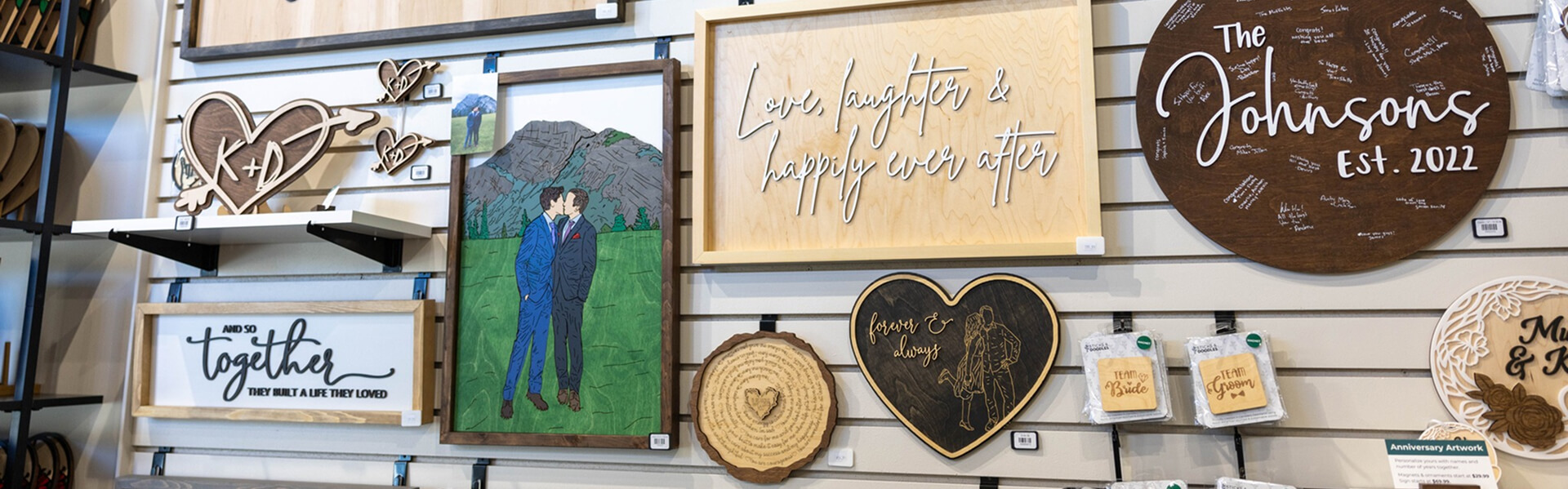
Rubber can be laser cut, engraved, or marked to create custom stamps, gaskets, seals, labels, mats, watch straps, decorative parts, and precisely shaped prototypes. A laser can reproduce fine text, logos, surface patterns, and complex outlines without using a physical cutting tool.
However, rubber is not one single material. Different products may contain pigments, fillers, adhesives, reinforcement layers, flame retardants, or halogen-containing compounds that change both the processing result and the fumes produced. The exact rubber formulation must therefore be identified before any cutting, engraving, or marking test begins.
This guide explains which rubber materials may be suitable, which compounds should be avoided, how cutting differs from engraving and marking, when to use a CO₂ or UV laser, how to test settings, and how to select a suitable rubber laser machine.
Quick Answer: Verified laser stamp rubber and selected formulations of EPDM, NBR, SBR, natural rubber, and silicone rubber may be cut, engraved, or marked after product-level verification and testing.
CO₂ lasers are generally used for cutting rubber sheets and creating deeper engraving, including raised rubber stamps. UV lasers are more suitable for fine surface marking on selected silicone and heat-sensitive rubber products.
Do not process PVC, chlorine-containing rubber, PTFE, halogen-containing compounds, or unidentified rubber. Review the SDS and technical data, run a small test, and use effective exhaust or a suitable fume extractor during processing.
Laser cutting, laser engraving, and laser marking are related processes, but they affect rubber in different ways. Selecting the correct process helps determine the appropriate laser source, artwork, settings, and material.
Laser cutting directs enough energy through a rubber sheet to separate it along a vector path. It can produce complex contours without physical blades or dies and is commonly used for:
Cut quality depends on the material formulation, thickness, focus, power, speed, air assist, and number of passes. Some rubber products may melt, curl, leave sticky edges, or create heavy residue even when the cut passes through completely.
Laser engraving removes material from the rubber surface to create measurable depth. It is commonly used for raised rubber stamps, recessed logos, text, patterns, textured surfaces, and deeper identification marks.
In a rubber stamp, the laser removes the background while leaving the printable text or artwork raised. The engraving depth and shoulder profile must support fine details while preventing the recessed background from touching the paper.
Laser marking changes the appearance or texture of the rubber surface with less material removal than deep engraving. It may be used for logos, serial numbers, product codes, symbols, silicone watch straps, labels, and decorative graphics.
Marking contrast varies by formulation. Some rubber produces a strong light or dark mark, while another product may show only a subtle change in shade or surface texture.
| Process | Effect on the Rubber | Typical Applications | Common Laser Choice |
|---|---|---|---|
| Laser Cutting | Passes through the sheet along a vector path. | Gaskets, stamp outlines, pads, mats, holes, and custom shapes. | CO₂ laser |
| Laser Engraving | Removes material to create visible depth. | Rubber stamps, recessed logos, textures, and deep patterns. | CO₂ laser |
| Laser Marking | Changes surface color or texture with limited depth. | Logos, codes, silicone straps, labels, and identification. | UV laser or another tested marking system |
Laser cutting, engraving, and marking serve different rubber-processing needs.
One product may use more than one process. A custom rubber stamp, for example, is normally engraved first and then cut into its final outer shape.
The exact product formulation, not just the general rubber name, determines whether a material is suitable. Thunder Laser’s rubber material application guide provides a broader overview of rubber applications, but every sheet should still be checked against its SDS, technical data, and supplier information.
| Rubber Material | Possible Laser Process | General Status | Main Verification Point |
|---|---|---|---|
| Laser-specific stamp rubber | Deep engraving and cutting | Preferred for rubber stamps | Confirm manufacturer instructions, thickness, and cleaning method. |
| Natural or latex rubber | Cutting or engraving | Formulation-dependent | Check additives, backing, odor, smoke, and residue. |
| NBR / nitrile rubber | Cutting or engraving | Test required | Confirm fillers, reinforcement, adhesive, and end-use requirements. |
| EPDM or SBR | Cutting or engraving | Test required | Verify the exact product and ensure it contains no hazardous additives. |
| Silicone rubber / PDMS | CO₂ cutting or UV marking on selected products | Formulation-dependent | Check pigments, fillers, reinforcement, adhesives, and flame retardants. |
| PVC or vinyl rubber | None | Do not process | Contains chlorine and may release hazardous, corrosive fumes. |
| PTFE or fluorinated material | None | Do not process | Contains fluorinated compounds. |
| Unknown recycled or composite rubber | None until verified | Avoid | Composition, adhesives, fillers, and flame retardants may be unknown. |
Rubber suitability depends on the exact formulation, additives, backing, and processing goal.
Laser-specific stamp rubber is designed for deep engraving and usually produces more predictable depth, shoulder formation, cleaning, and print quality than an unidentified general-purpose rubber sheet.
Before purchasing stamp rubber, confirm its manufacturer, sheet thickness, laser compatibility, recommended engraving depth, adhesive backing, cleaning instructions, and available safety documentation.
Verified formulations of natural rubber, nitrile rubber, EPDM, and SBR may be suitable for cutting or engraving. Possible applications include gaskets, seals, flexible pads, prototypes, and custom profiles.
A part that can be cut successfully is not automatically suitable for its final function. Gaskets and seals may also need validation for compression, temperature, pressure, chemicals, dimensional tolerance, and long-term deformation.
Some silicone rubber and PDMS products can be processed with a laser, but commercial silicone materials may contain pigments, conductive fillers, fiberglass, adhesives, foam structures, coatings, or flame retardants.
A CO₂ laser may be tested for cutting selected silicone sheets, pads, gaskets, and simple profiles. A UV laser may be more suitable for fine surface marking on selected silicone straps, seals, accessories, and compact components.
Before processing, confirm the exact product, manufacturer, polymer type, additives, reinforcement, adhesive layers, flame-retardant status, SDS, and supplier guidance.
Do not laser process PVC, vinyl rubber, PTFE, chlorine-containing rubber, halogen-containing compounds, unidentified flame-retardant rubber, unknown recycled rubber, old tires, or multi-layer products with unverified adhesives and coatings.
Important: Do not use smell as the only safety test. A material may release hazardous compounds even when the odor does not seem unusually strong.
CO₂ and UV lasers serve different purposes. CO₂ systems are generally selected for rubber-sheet cutting and deeper engraving, while UV systems are better suited to fine surface marking on selected rubber and silicone formulations.
| Laser Type | Best-Fit Rubber Process | Main Advantages | Main Limitations |
|---|---|---|---|
| RF CO₂ Laser | Cutting, deep engraving, rubber stamps, gaskets, pads, and larger sheets. | Supports raster engraving and vector cutting in one workflow. | Heat, fumes, residue, and edge melting must be controlled. |
| UV Laser | Fine surface marking on selected silicone and rubber parts. | Suitable for compact graphics, small text, and low visible heat impact. | Not intended for deep stamp engraving or cutting rubber sheets. |
CO₂ and UV lasers are used for different rubber-processing workflows.
A CO₂ laser is the primary option for cutting rubber sheets, engraving measurable depth, making raised rubber stamps, and processing larger layouts. RF CO₂ systems are especially useful when fine detail, small text, responsive power control, and repeated engraving are required.
CO₂ lasers can engrave first and then cut the outer profile without moving the material. This makes them suitable for custom stamps, gaskets, mats, pads, decorative components, and batch layouts.
A UV laser is intended for surface marking rather than deep engraving or rubber-sheet cutting. It may be tested for silicone watch straps, fine logos, product codes, compact symbols, small text, and selected heat-sensitive components.
The exact mark still depends on the material formulation. Pigments, fillers, coatings, and surface texture can change the contrast, texture, and readability of the final result.
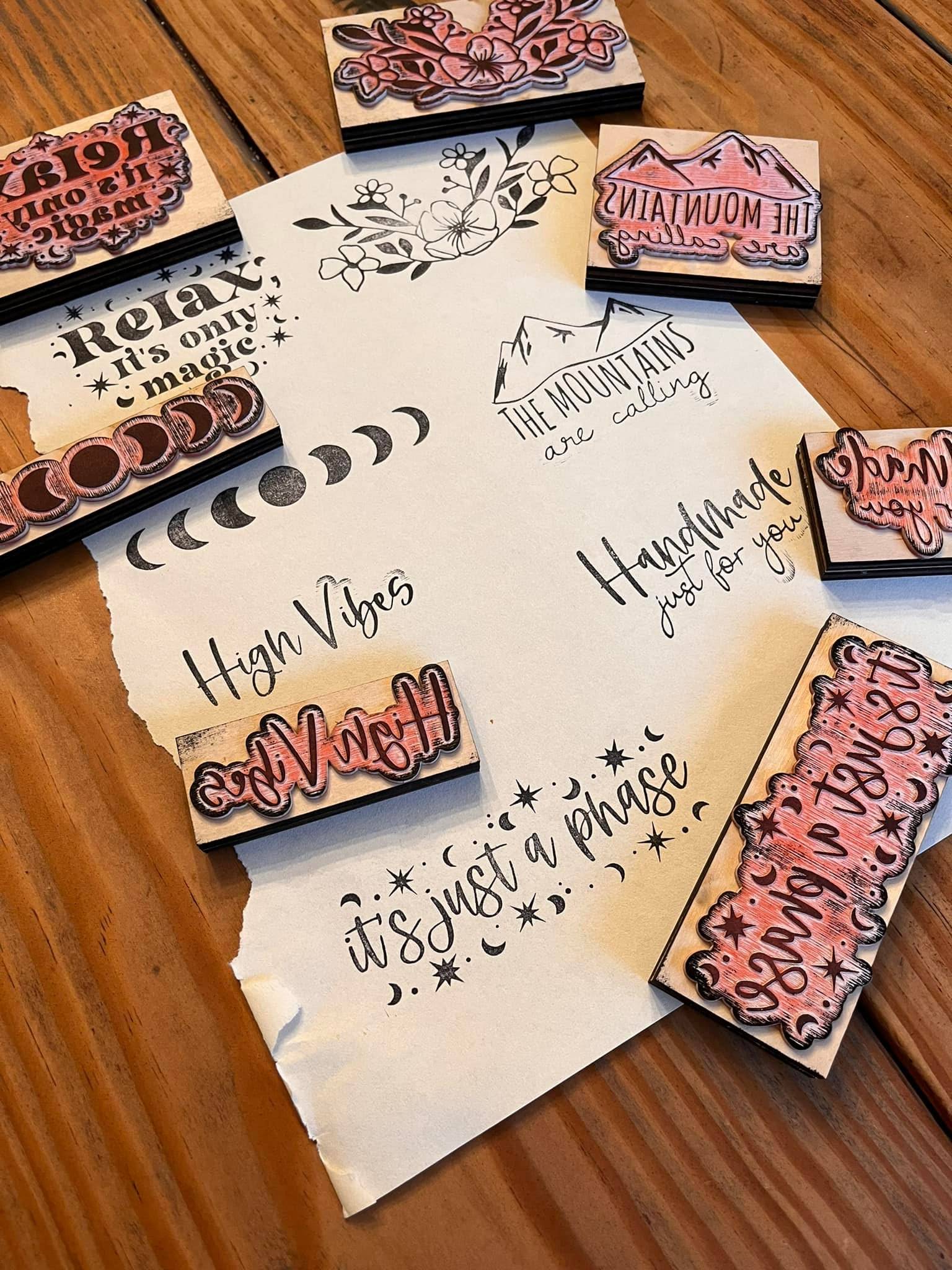
A CO₂ laser can engrave the stamp surface before cutting the rubber into its final outline.
Custom rubber stamps are one of the most established applications of rubber laser engraving. The laser removes the background while preserving raised text, logos, icons, or illustrations.
This page provides a general overview, while the dedicated rubber stamp engraving and cutting guide explains the complete LightBurn workflow, mirroring, inversion, shoulder support, engraving depth, cleaning, mounting, and test printing.
Laser cutting can create gaskets, seals, flexible spacers, pads, O-ring-style profiles, holes, and prototype components. The original phrase “cylinder heads and seals” should be understood as cylinder-head gaskets and related rubber sealing parts rather than the cylinder head itself.
Functional parts should be validated for dimensional tolerance, compression, chemical compatibility, temperature resistance, edge integrity, and actual sealing performance.
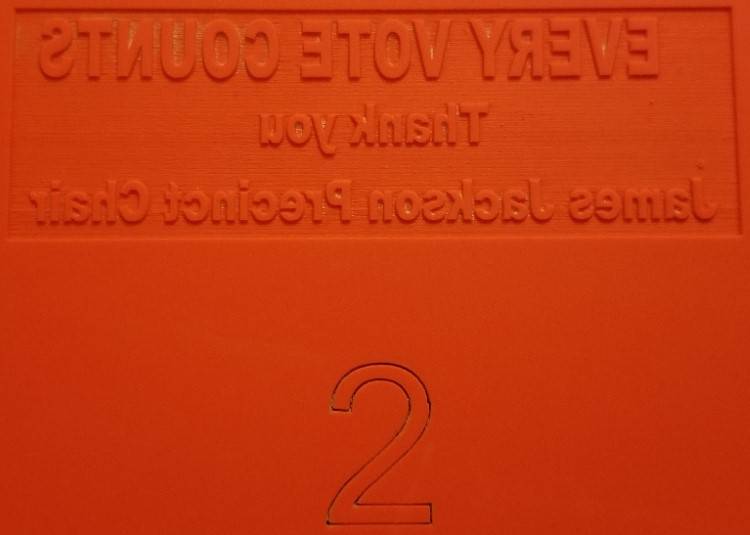
Laser engraving can add decorative patterns, text, or surface textures to verified rubber mats.
Rubber sheets may be engraved or cut for decorative mats, floor patterns, machine pads, furniture bumpers, anti-slip components, and protective surfaces. Large or reinforced materials require additional testing to control heat, residue, and dimensional changes.
Shallow engraving and surface marking can create product names, logos, serial numbers, batch codes, symbols, and identification graphics without ink or direct tool contact.
Mark durability depends on the rubber formulation, surface wear, chemicals, heat, friction, and environmental exposure. Test the finished mark under its actual use conditions before production.
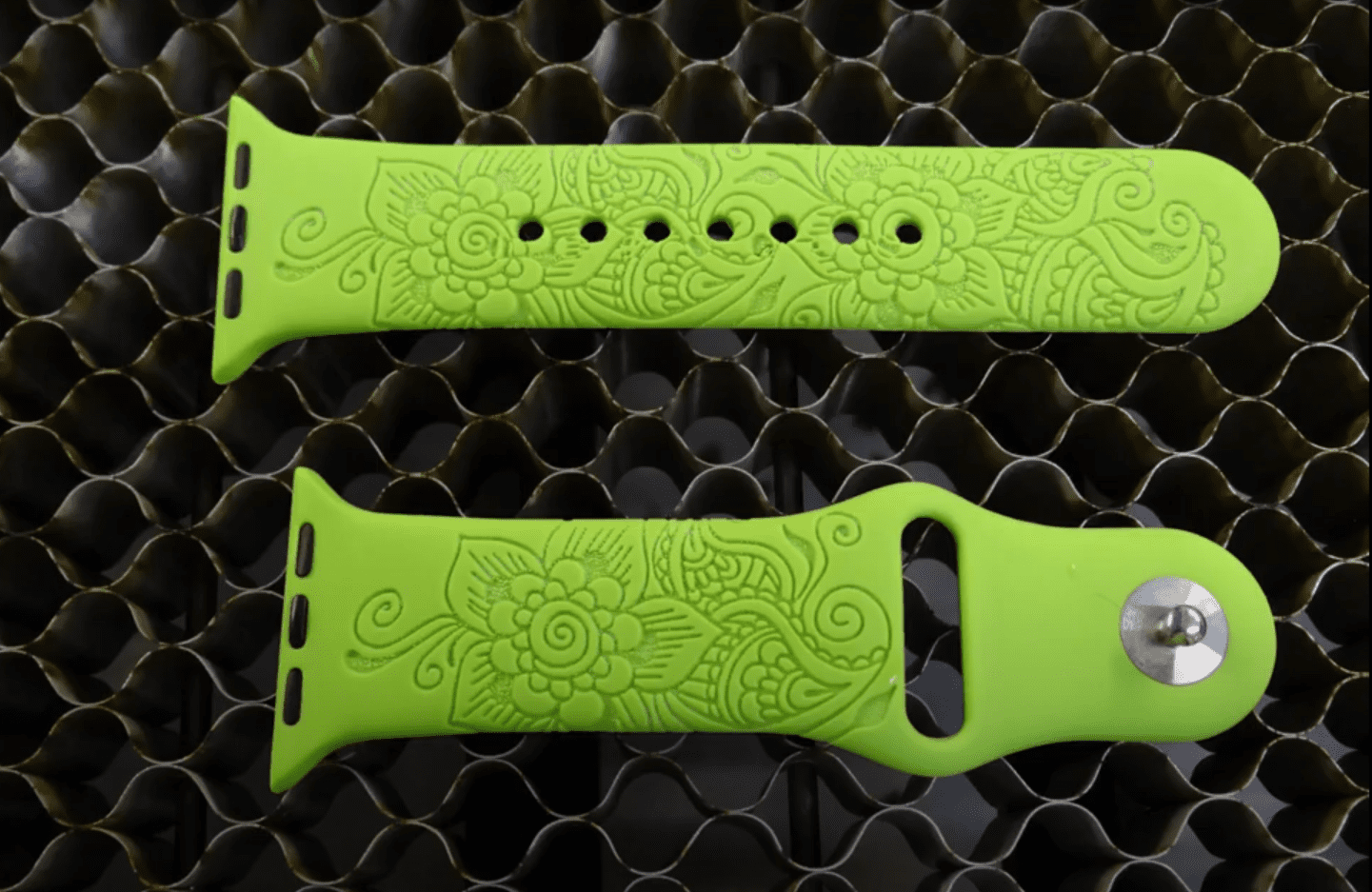
Selected rubber and silicone watch straps can be tested for personalized surface marking.
Verified silicone and rubber accessories may be marked with names, logos, patterns, and decorative textures. UV is often the more relevant option when the goal is fine surface marking with limited visible heat impact.
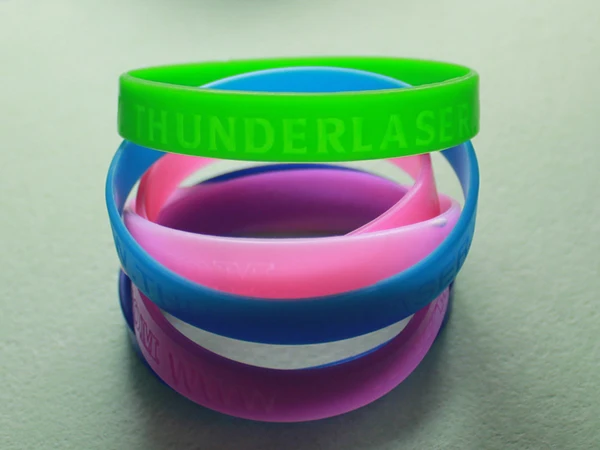
Laser processing can create detailed shapes and decorative patterns in verified rubber materials.
Rubber can also be used for decorative rings, flexible artwork, stencils, prototypes, and custom profiles. Designs should account for stretching, flexibility, narrow connecting areas, wall thickness, and the possibility of melted or sticky edges.
Record the product name, manufacturer, rubber type, thickness, color, surface treatment, backing, adhesive, reinforcement, and intended use. Do not process an unknown sheet simply because it resembles a previously tested rubber.
Check for PVC, chlorine, halogens, fluorinated compounds, flame retardants, adhesives, fibers, fillers, and hazardous thermal decomposition products. Contact the supplier when the documentation is incomplete.
Use closed vector paths for cutting and remove duplicate lines. For engraving or marking, confirm the text size, line width, image resolution, orientation, required depth, and whether the artwork should be positive or negative.
Place the material flat on the work table and secure it when necessary. Accurate focus helps maintain consistent depth, sharp text, clean edges, and uniform marking quality.
Confirm that the exhaust or fume extractor is operating before processing. Rubber can generate smoke, odor, particles, and sticky residue, while suitable air assist can move smoke away from the beam and reduce contamination around the lens.
Test a corner or spare sample and evaluate contrast, engraving depth, edge quality, melting, warping, odor, smoke, residue, and dimensional accuracy. Change one major parameter at a time.
Complete deep engraving or surface marking before cutting when the finished part may become difficult to hold flat. Remain beside the machine and stop if the material develops flame, excessive smoke, bubbling, rapid deformation, or an unusual odor.
Use the lowest validated energy that completes the cut. Avoid unnecessary repeated passes because accumulated heat can increase melting, residue, and edge deformation.
Allow the material to cool before removing residue. Depending on the verified product, cleaning may involve a brush, toothbrush, soft cloth, water, mild detergent, ultrasonic cleaning, or a manufacturer-approved cleaner.
Do not use an unidentified solvent. A cleaner that is suitable for one rubber formulation may swell, soften, discolor, or damage another.
Check the dimensions, edge quality, engraving depth, residue, small-text clarity, warping, flexibility, and final function. Stamps should be mounted and test-printed, while gaskets and functional parts require application-specific validation.
Rubber stamp production combines deep engraving with contour cutting. The following summary retains the most useful information from the original article without repeating the complete dedicated tutorial.
Use clear text and graphics with enough line width to remain stable after engraving. Confirm whether the software or stamp mode automatically mirrors and inverts the artwork so the printed impression appears in the correct orientation.
A shoulder creates a sloped support around raised text and graphics. It helps prevent fine letters and narrow details from bending or collapsing during stamping.
Engrave the design while the full sheet remains stable and flat, then cut the outer shape. This normally improves positioning and reduces movement during deep engraving.
Remove dust and residue, allow the rubber to dry, and attach it evenly to the stamp base. Test the printed result for incorrect orientation, background marks, missing details, uneven pressure, and ink smudging.
The complete rubber stamp tutorial explains the detailed setup, while the tested Rubber Stamp project in the Inspiration Library includes a downloadable design file, preparation instructions, and Bolt 30W starting parameters.
Rubber settings depend on the exact product, thickness, artwork, required depth, laser source, lens, machine power, and desired edge quality. Settings from another rubber formulation should be treated only as a starting reference.
Thunder Laser’s Inspiration Library includes the following tested settings for a rubber stamp made with a Thunder Bolt 30W:
| Process | Machine | Speed | Power | DPI |
|---|---|---|---|---|
| Engraving | Thunder Bolt 30W | 150 mm/s | 80% | 500 |
| Cutting | Thunder Bolt 30W | 15 mm/s | 80% | — |
These settings apply to that specific project and material. Different stamp rubber, thicknesses, lenses, artwork, or required engraving depths may need different values.
Silicone formulations vary too widely for one universal marking setting. Build a small parameter matrix that changes speed, power, frequency where applicable, focus, line interval, passes, and hatch direction.
Evaluate contrast, texture, readability, warping, stickiness, flexibility, odor, and residue before selecting production settings.
| Field | Information to Record |
|---|---|
| Exact Product | Manufacturer and product name |
| Rubber Type | Stamp rubber, NBR, EPDM, SBR, silicone, or other |
| Material Details | Thickness, color, backing, adhesive, and reinforcement |
| Machine | Exact model and rated laser power |
| Optics | Lens and focus method |
| Process | Cutting, engraving, or marking |
| Parameters | Speed, power, DPI or line interval, frequency, and passes |
| Air and Extraction | Air-assist setting and exhaust or fume extractor used |
| Result | Contrast, depth, edge quality, residue, warping, smoke, and odor |
| Test Information | Date and operator or application team |
A rubber test record helps compare formulations and avoid copying one setting across different rubber products.
| Problem | Possible Causes | Recommended Adjustment |
|---|---|---|
| Excessive smoke or unusual odor | Unsafe material, weak extraction, saturated filter, unknown backing, or excessive heat. | Stop immediately, verify the material, inspect extraction, and do not continue until the cause is identified. |
| Sticky or melted edges | Power is too high, speed is too low, too many passes, or a heat-sensitive formulation. | Increase speed, reduce power, limit passes, or test a different rubber product. |
| Heavy charring | Excessive energy, incorrect focus, weak air assist, or slow cutting speed. | Refocus, reduce heat input, and improve suitable airflow. |
| Cut does not go through | Insufficient energy, incorrect focus, excessive thickness, reinforcement, backing, or warped material. | Verify the construction, flatten and refocus the sheet, then adjust validated settings gradually. |
| Rubber warps | Heat accumulation, large filled engraving, repeated passes, or inadequate support. | Reduce heat, split large engraving areas, allow cooling, and improve support. |
| Engraving is too shallow | Power is too low, speed is too high, focus is incorrect, or insufficient passes. | Increase energy gradually while monitoring shoulder strength, residue, and raised details. |
| Stamp prints the background | Insufficient depth, incorrect inversion, weak shoulder, excessive ink, or uneven mounting. | Check the artwork, increase validated depth, improve the shoulder, clean the stamp, and remount it evenly. |
| Fine stamp details collapse | Lines are too thin, shoulder support is weak, engraving is too deep, or the rubber is too soft. | Increase line width, strengthen the shoulder, reduce excessive depth, or use suitable stamp rubber. |
| Powdery residue remains | Ablation dust, weak exhaust, or incomplete cleaning. | Improve extraction and use a manufacturer-approved cleaning process. |
| UV mark is too faint | Low material response, excessive speed, incorrect focus, fillers, coatings, or wide line spacing. | Run a controlled parameter matrix or test another verified formulation. |
Most rubber laser-processing problems are related to formulation, heat input, extraction, focus, or cleaning.
There is no single machine that is best for every rubber project. The correct choice depends on whether the application requires cutting, deep engraving, fine surface marking, a small part, a large sheet, or repeated batch production.
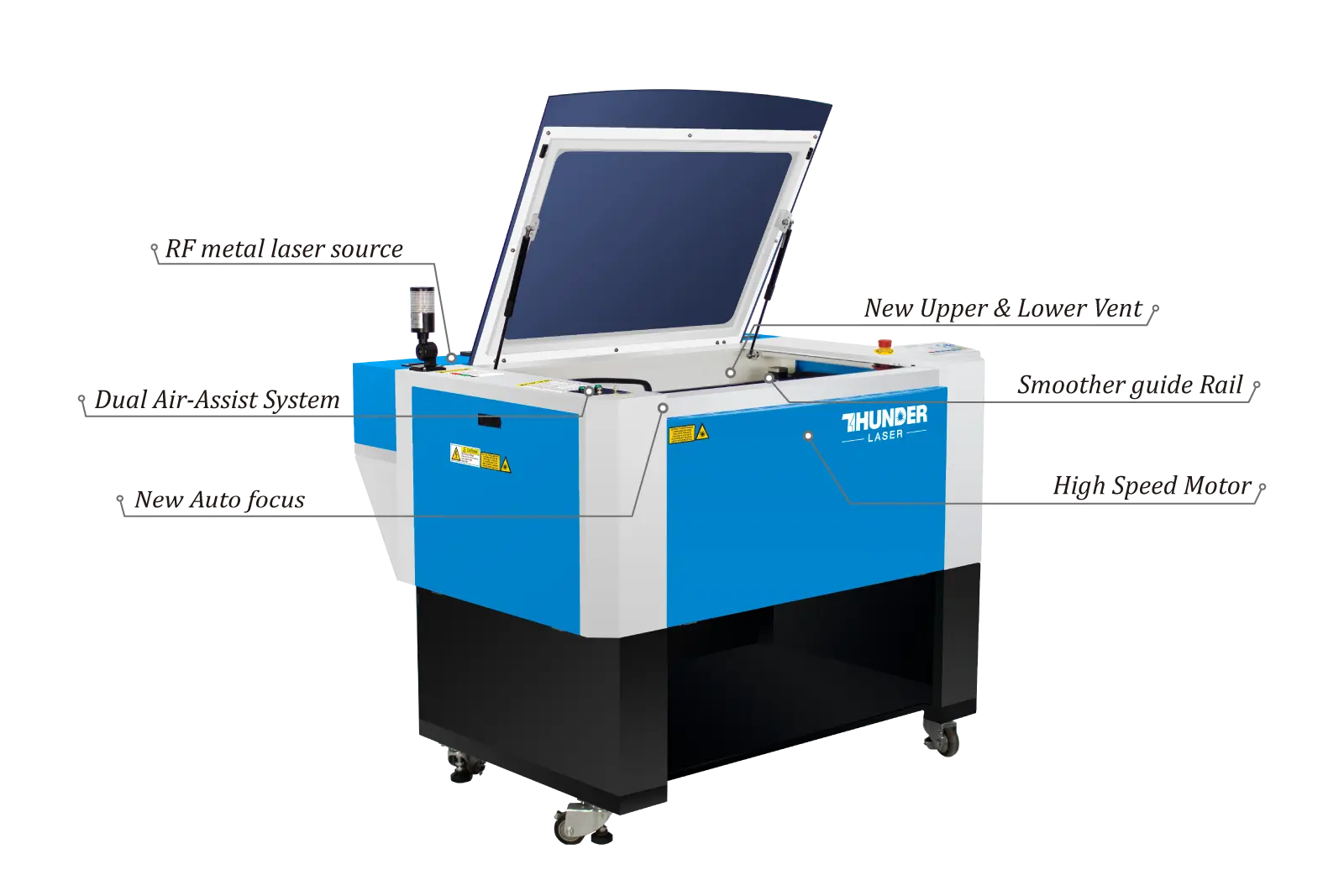
CO₂ laser systems are commonly used for rubber cutting, deep engraving, and custom stamp production.
| Laser Machine | Best-Fit Rubber Applications | Main Reason to Choose It |
|---|---|---|
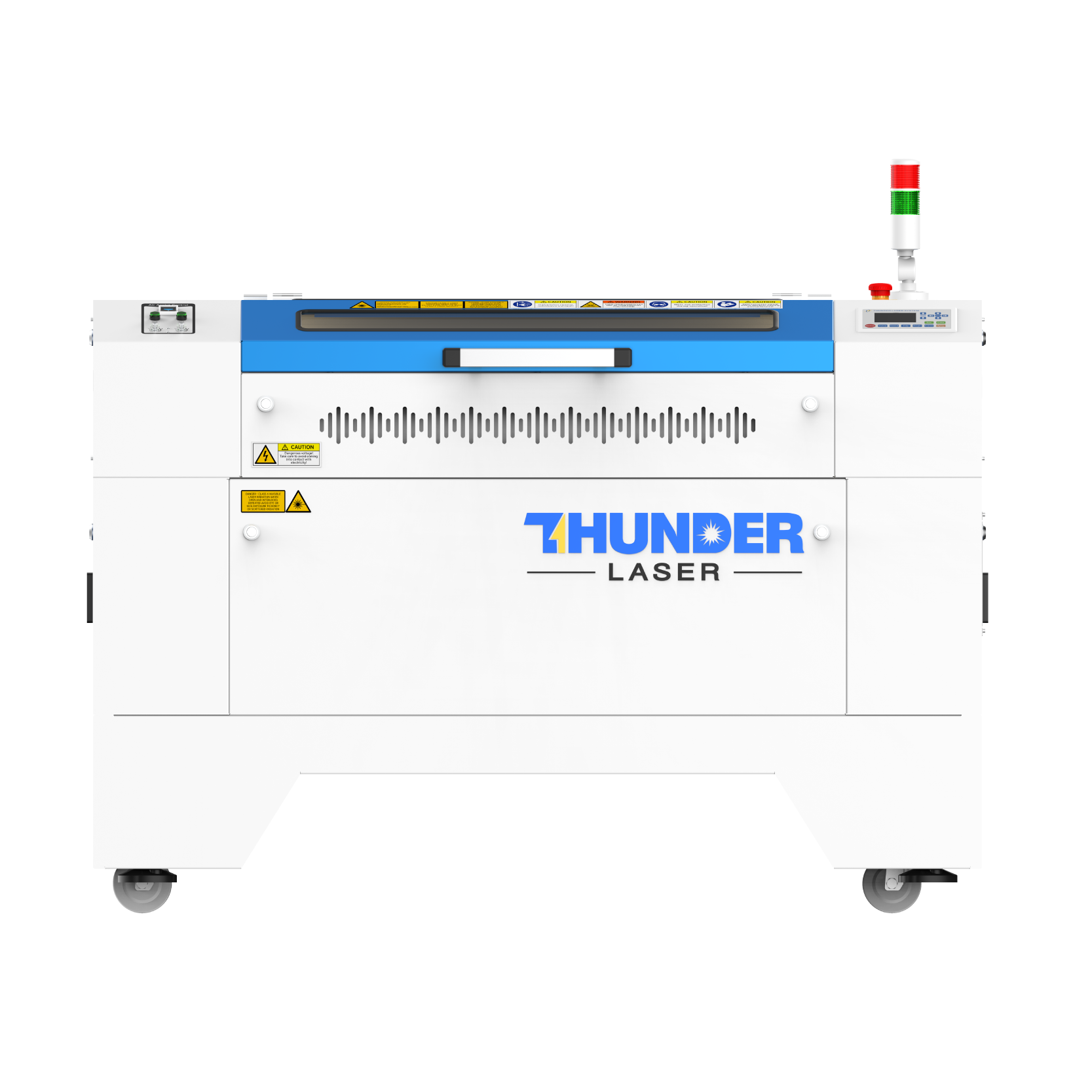
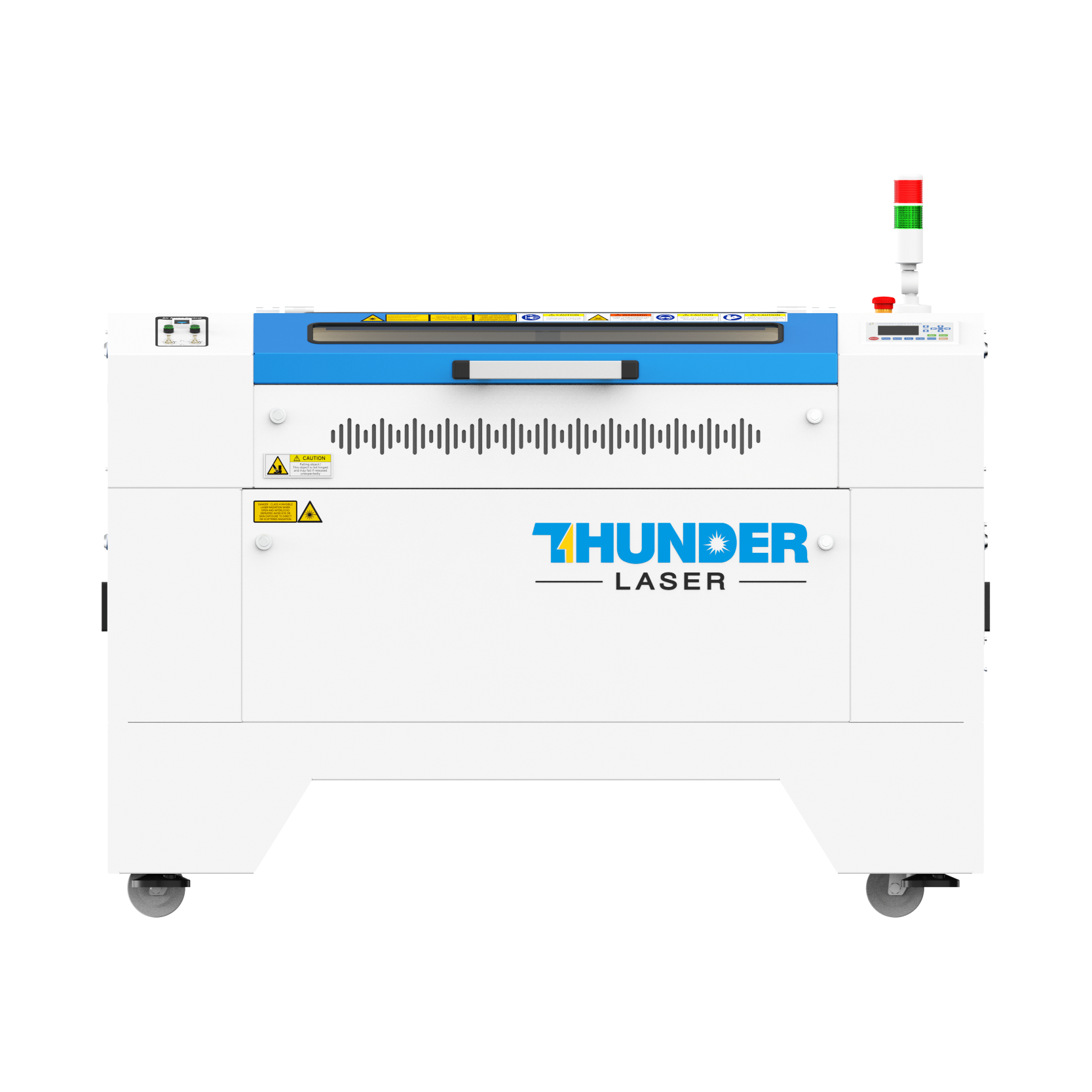
| Bolt Series | Custom stamps, detailed engraving, small-to-medium sheets, personalized parts, and short production runs. | RF CO₂ precision, fast engraving response, raster and vector processing, and multiple working-area options. |
| Nova Plus Series | Larger rubber sheets, multiple stamps, gaskets, profiles, cutting-heavy jobs, and growing batch production. | Larger processing areas and higher-power RF CO₂ configurations for production workflows. |
| Aurora UV | Fine surface marking on selected silicone straps, seals, labels, and small rubber components. | Compact, high-precision marking with limited material removal. |
Bolt, Nova Plus, and Aurora UV serve different rubber cutting, engraving, and marking needs.

The Bolt Series supports detailed rubber engraving, custom stamp production, small-to-medium rubber cutting, and short production runs.
The Thunder Laser Bolt Series is suitable for detailed rubber engraving, custom stamps, small-to-medium sheets, labels, decorative components, and small-batch production.
Its RF CO₂ source supports fine raster engraving and vector cutting, making it useful for small text, logos, stamp shoulders, and complex outlines. Different work-area and power options allow users to choose a configuration according to material size, fixture requirements, and production volume.

The Nova Plus Series provides larger working areas for rubber sheets, multiple stamps, gaskets, custom profiles, and growing batch production.
The Nova Plus Series is better suited to larger rubber sheets, multiple stamps in one layout, gaskets, custom profiles, larger fixtures, and higher production volume.
Its larger working areas allow more parts to be arranged in one job, while the RF CO₂ source supports both detailed engraving and cutting-focused production.

Aurora UV is suitable for fine surface marking tests on selected silicone straps, compact rubber parts, labels, logos, and small heat-sensitive components.
The Aurora UV is intended for fine surface marking rather than rubber-sheet cutting or deep stamp engraving.
It may be suitable for selected silicone watch straps, product codes, compact logos, fine text, and small heat-sensitive components. The exact product must still be tested because fillers, coatings, colors, and additives affect the mark.
Choose the Bolt Series for detailed engraving, stamp production, and small-to-medium rubber cutting. Choose Nova Plus when a larger work area, more parts per job, or growing batch capacity is required. Choose Aurora UV when the project is limited to fine surface marking on a verified rubber or silicone product.
Whatever machine is selected, the setup should include effective exhaust or a suitable fume extractor such as Thunder Air. Fume management removes smoke, odor, particles, and residue from the enclosure, but it does not make PVC, halogen-containing rubber, or unidentified materials safe to process.
Rubber can be laser cut, engraved, or marked for stamps, gaskets, seals, mats, labels, watch straps, artwork, and custom components. The most important step is identifying the exact rubber formulation before selecting a machine or copying settings.
Use a CO₂ laser for cutting and deeper engraving, and consider UV for fine surface marking on verified silicone or rubber products. Review the SDS, avoid hazardous or unknown compounds, prepare suitable extraction, test a small sample, and record the complete settings before production.
Need Help Testing a Rubber Material?
Send Thunder Laser the exact product name, SDS, thickness, design, required process, and expected production quantity. Our application team can help evaluate the material and recommend an appropriate testing direction.
Contact Thunder LaserTalk To Our Experts Now!
Please leave your contact information so that we can serve you better.
LASER CUTTING RUBBER FAQS
FIND THE RIGHT LASER FOR YOUR NEXT PROJECT
Explore Thunder Laser solutions designed for different materials, workflows, and production needs.


 Stable & Consistent MachinesUnlimited ApplicationsRobust After-sales SupportFactory Direct Supply


