


Cooling for RF Laser Machines: Water Cooling vs. Air Cooling
 2025-10-01
WHAT ARE YOU LOOKING FOR?
Search Across Products, Blog Posts, Support Content, And Resources.

Cooling for RF Laser Machines: Water Cooling vs. Air Cooling
2025-10-01

RF laser machines generate high heat during operation, which can affect beam stability, precision, and equipment lifespan. This article explains the two main cooling systems used in RF laser machines—water cooling and air cooling—how they work, their advantages, and their limitations.
RF-excited CO₂ lasers generate significant heat during operation, which comes from two main sources:
The gas discharge inside the laser cavity—where CO₂, N₂, and He are excited by the RF electric field—generates laser light but also produces significant heat. Only about 10% of the RF power from the internal amplifier becomes actual laser output; the rest is converted into heat. Additionally, other electronic components in the RF tube generate heat during operation. Effective thermal management therefore becomes critical to prevent damage from heat buildup and high temperatures.
Learn more: CO₂ lasers – carbon dioxide laser
Electronic components such as the high-voltage power supply and control circuits contribute additional heat during operation.
If this heat is not effectively managed:
That is why an effective cooling system is essential. An effective cooling system ensures that RF laser machines maintain beam stability, consistent performance, and reliable operation, even under continuous industrial workloads.
Industrial RF laser machines rely on effective cooling systems to manage the heat generated during operation. The two primary systems used are water cooling and air cooling, each designed to maintain stable beam quality and consistent performance under different conditions.
Water cooling circulates a liquid coolant around the laser tube and critical components, efficiently absorbing and transferring heat away. This is especially effective for high-power lasers or continuous operation, where heat buildup is significant.
Air cooling uses forced airflow to dissipate heat from the laser tube and surrounding electronics. It is simpler in design, easier to maintain, and often sufficient for lower-power lasers or intermittent usage. Both cooling systems aim to stabilize the laser’s operating temperature, but they differ in efficiency, complexity, and suitability depending on the machine’s power and intended application. Understanding these two cooling systems provides a foundation for exploring how each method works in practice, along with their respective advantages and limitations.
Water cooling in RF laser machines relies on a closed-loop system that pumps coolant through channels surrounding the laser tube and other heat-sensitive components. As the water flows through the laser cavity, it absorbs heat, and then it returns to an external chiller—also called a laser chiller or cooling unit—where the heat is exchanged and dissipated. This continuous circulation ensures that the generated heat is constantly and effectively removed. As a result, the laser tube supports consistent beam quality and output power during prolonged industrial operation.
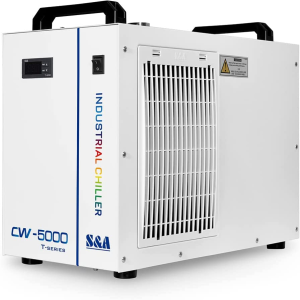
A water chiller used with Nova Series.
In practice, a 100W RF laser is typically paired with an industrial-grade chiller. Beyond circulating cooling water, these units often include temperature displays and alarm systems to ensure precise control. This stable heat management brings several practical benefits:
Despite their benefits, water cooling systems also have drawbacks. They require an external chiller and plumbing, which adds cost and takes up space. Maintenance is also more demanding. For high-power RF laser machines, however, the advantages of water cooling often outweigh its drawbacks.
Air cooling represents the more straightforward approach to heat management in RF laser machines. Fans or blowers are integrated with the laser tube and electronic components. As the air passes over heated surfaces, it absorbs and carries away the excess heat. This system requires no external chillers or water circulation, making the machine compact and easy to operate. While not as effective as water cooling, air cooling is a practical, cost-effective solution for many small- to medium-power RF lasers.
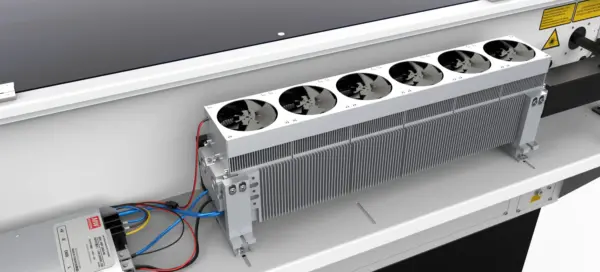
Fans are integrated into our Thunder Laser RF metal tube.
While cooling systems are designed to keep RF laser machines running reliably, their performance depends heavily on proper maintenance. Water-cooled and air-cooled setups require different approaches, reflecting their underlying designs.
Water cooling relies on a closed-loop circuit paired with an external chiller. To ensure long-term stability, operators need to:
Neglecting these steps can lead to clogged water lines, reduced cooling performance, and accelerated wear on the laser tube and electronics. For readers interested in learning more about maintaining a water-cooled RF laser system, including best practices for coolant management and chiller care, a dedicated guide is available that covers these topics in detail.
Air cooling is simpler but still requires attention. Key practices include:
With minimal effort, an air-cooled RF laser can operate reliably for years. The focus is less on water quality or leak prevention, and more on ensuring consistent, unobstructed airflow.
Both water cooling and air cooling are widely used in RF laser machines, but they differ significantly in performance, cost, and application suitability. Water cooling provides superior thermal management, making it the best cooling option for high-power lasers with continuous industrial operations. Air cooling, in contrast, offers a simpler and more compact solution, suitable for smaller-scale or moderate-power applications.
| Feature | Water Cooling | Air Cooling |
| Cooling Efficiency | High | Moderate |
| Temperature Stability | Maintains near-constant operating temperatures | More sensitive to ambient conditions |
| Environmental Adaptability | Works well in hot or dusty environments | Performance reduced in hot or dusty air |
| Maintenance | Requires water quality checks and system upkeep | Minimal, mainly fan maintenance |
| Cost / Size | Higher cost, external chiller adds bulk | Lower cost, compact and lightweight |
| Best Application Scenario | High-power, long-duration industrial laser operations | Small- to mid-power systems, lighter use |
A table that compares water cooling and air cooling for RF laser machines.
As discussed earlier, the cooling system of an RF laser machine is not something the buyer selects separately—it comes as part of the machine’s design. However, the type of cooling reflects three key factors that you should consider when choosing the right system overall: power requirements, operating environment, including temperature and humidity, and available workspace. These factors must be weighed together rather than in isolation.
Low-power machines can be either air cooled or water cooled, depending largely on your budget and the space you have. Air-cooled models are compact, while water-cooled models add stability for longer operations.
For those looking for a compact yet reliable solution, the Bolt Series is a perfect fit. Designed as a small-format air-cooled machine, it efficiently manages heat without the need for a separate cooling unit. It is ideal for makers, studios, and first-time users.
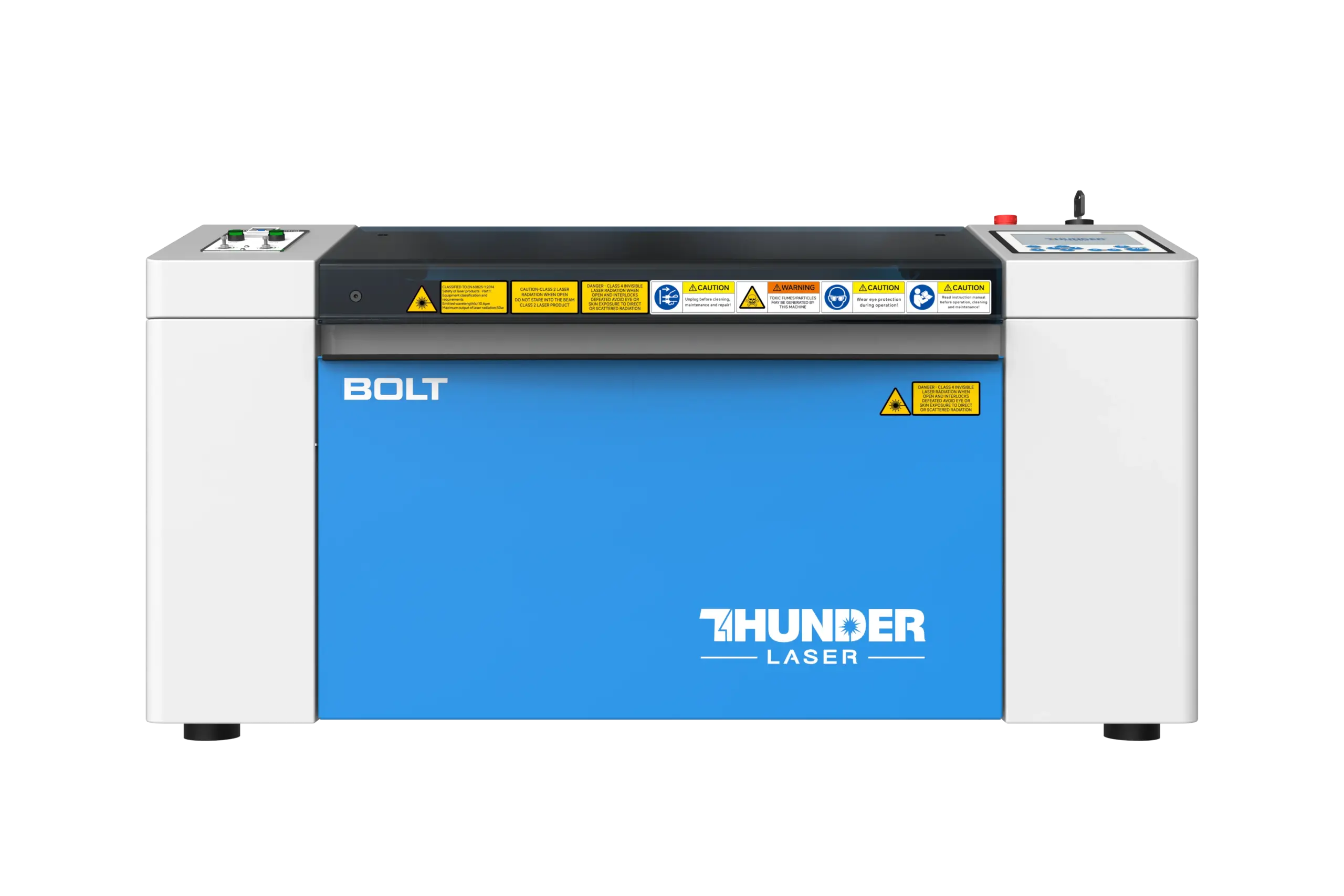
Thunder Laser Bolt Machine.
High-power machines are better suited to water cooling, since it provides better thermal management. However, in regions with lower year-round temperatures, high-power air-cooled machines can still perform reliably. In hotter climates or in dusty environments, water cooling is usually the safer choice.
For those who prefer high-power water cooling, the Nova Plus Series is available in 100W and 120W configurations, delivering good thermal management for continuous, heavy-duty production.
If you are looking for high-power air cooling, the Titan Series is the right choice, offering up to 100W of output with reliable industrial-grade performance.
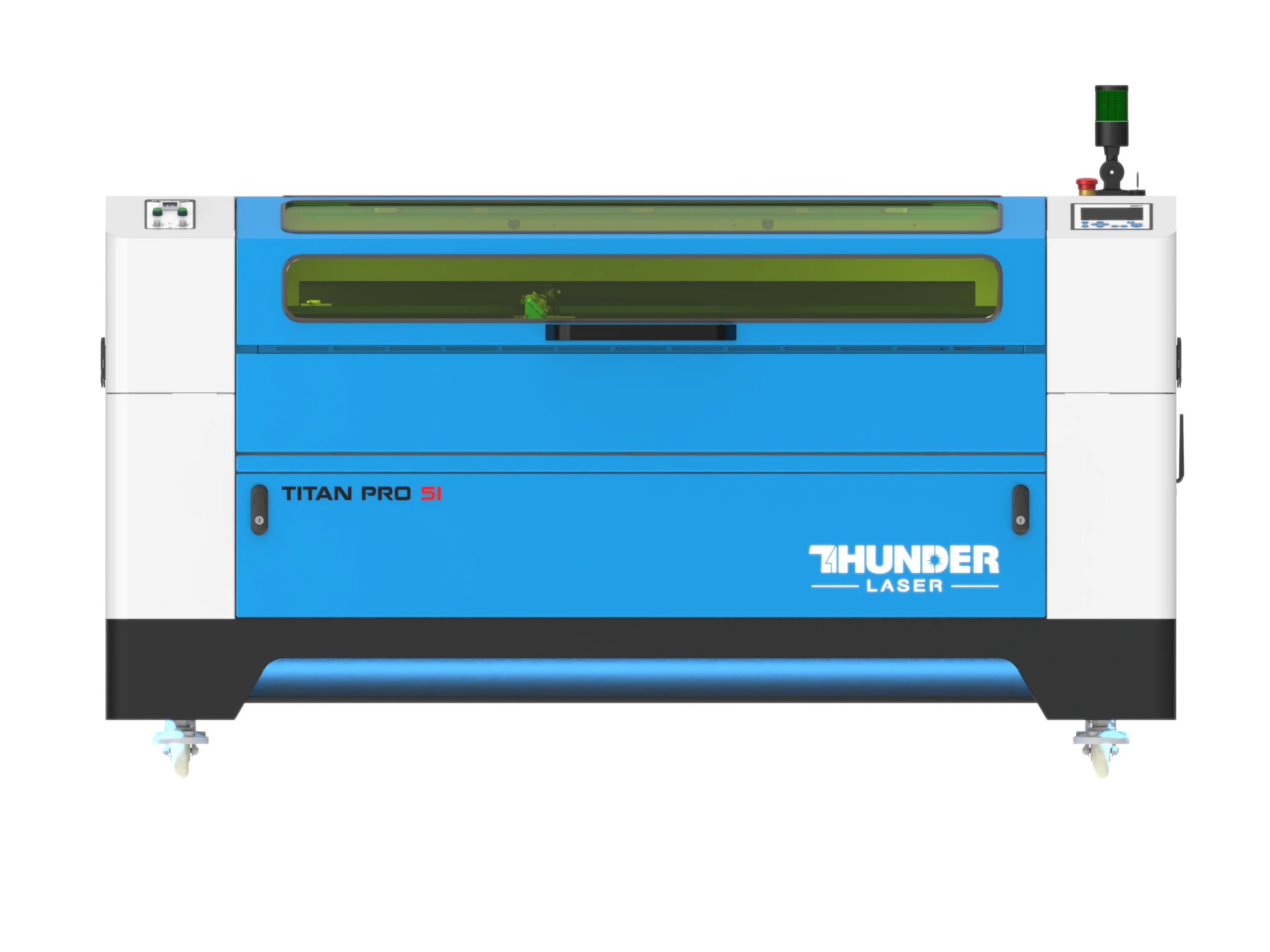
Thunder Laser Titan Pro Machine.
By efficiently managing the heat generated in the laser tube and electronic components, both water and air cooling systems protect beam quality, maintain stable output, and extend the lifespan of the equipment. Water cooling offers superior performance for high-power, continuous industrial operations, while air cooling provides a simpler, more compact solution for moderate workloads.
Talk To Our Experts Now!
Please leave your contact information so that we can serve you better.
FAQS
FIND THE RIGHT LASER FOR YOUR NEXT PROJECT
Explore Thunder Laser solutions designed for different materials, workflows, and production needs.


 Stable & Consistent MachinesUnlimited ApplicationsRobust After-sales SupportFactory Direct Supply


