Best Laser Engraver for Metal: Uses and Buying Guide
 2022-10-31
WHAT ARE YOU LOOKING FOR?
Search Across Products, Blog Posts, Support Content, And Resources.

Best Laser Engraver for Metal: Uses and Buying Guide
2022-10-31

A laser engraver for metal can help businesses create permanent marks, detailed graphics, product labels, identification tags, jewelry designs, awards, and branded items with high speed and precision. Compared with many traditional engraving methods, laser metal engraving is cleaner, faster, and easier to repeat in production.
Because there are many laser engraving machine types, brands, power levels, and working areas available, choosing the right metal laser engraver can feel difficult. This guide explains common laser engraver types for metal, popular metal engraving uses, how the process works, and what factors to compare before buying.
A laser engraver for metal uses a focused laser beam to engrave, mark, or etch metal surfaces. Depending on the laser source, power, pulse control, material, and settings, the machine can create logos, text, serial numbers, QR codes, decorative patterns, and other permanent marks.
Metal laser engraving is useful for both business and industrial applications. It can support product personalization, brand identification, traceability, labeling, and small-batch or batch production with consistent results.
A laser engraver for metal can use different laser sources. The laser source affects material compatibility, engraving quality, speed, maintenance needs, and cost. The three common types discussed here are CO2 laser engravers, fiber laser engravers, and YAG laser engravers.
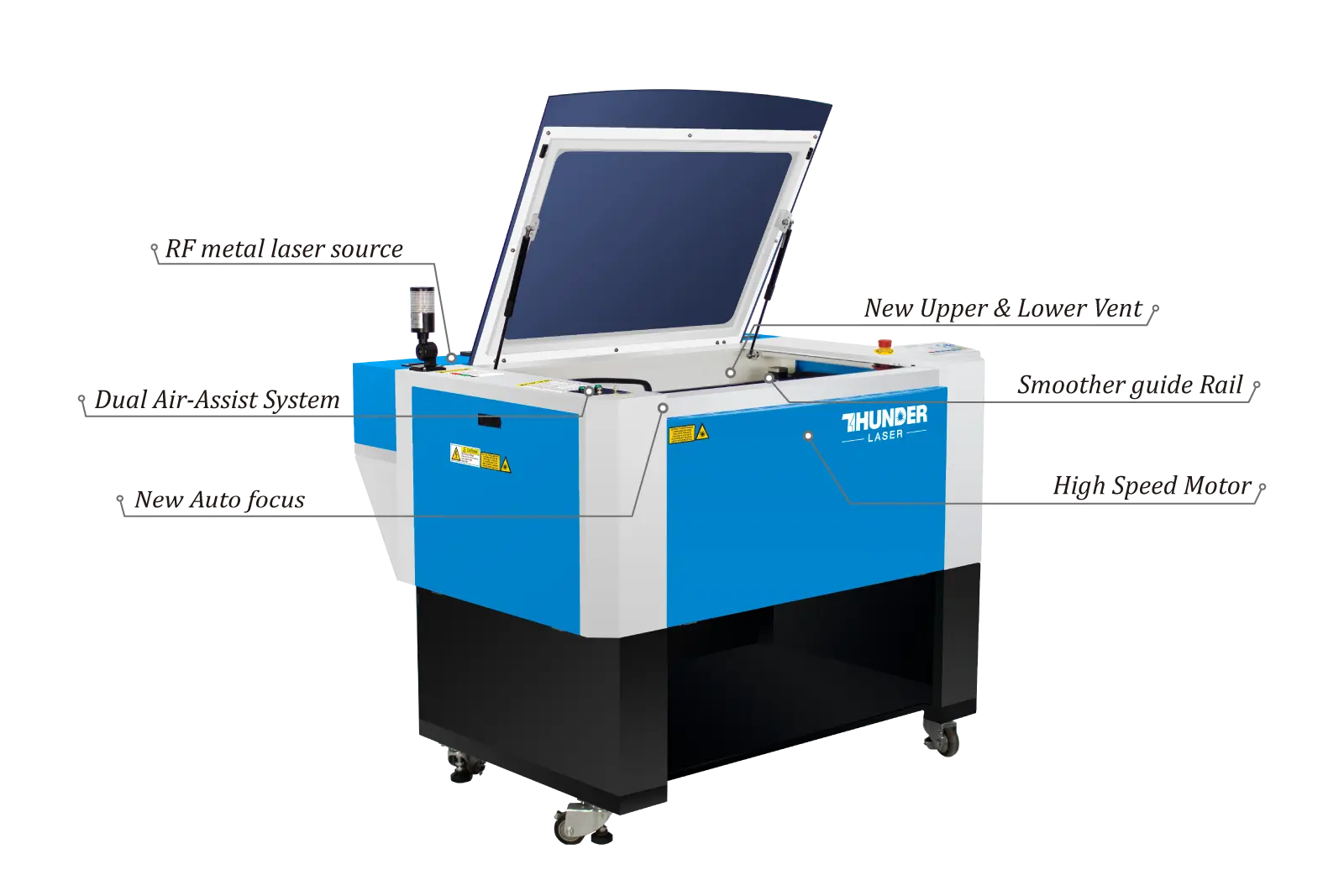
CO2 laser engravers generate laser energy through a gas tube that mainly contains carbon dioxide. CO2 lasers are widely used for non-metal materials such as wood, acrylic, paper, leather, rubber, and some coated materials.
For metal applications, CO2 lasers are usually more suitable for coated metals, anodized metals, painted metal surfaces, or thin non-ferrous metal processing under suitable conditions. If your main goal is direct metal engraving or industrial metal marking, a fiber laser is usually a stronger direction.
Fiber laser engravers are solid-state laser systems that use optical fibers to amplify the laser beam. Because fiber lasers can produce a small focal spot and high energy density, they are widely used for fine metal engraving, marking, and etching.
Fiber lasers are a common choice for engraving stainless steel, carbon steel, aluminum, brass, copper, and many other metals. They can also be used on selected plastics and industrial parts. For many businesses looking for a dedicated metal laser engraver, fiber laser systems are often the most practical option.
For metal marking and engraving, the Aurora Series is a relevant direction to explore. It is designed for professional marking applications on metals, plastics, tools, components, and industrial products.
YAG laser engravers are also solid-state laser systems. YAG stands for yttrium aluminum garnet, which is the host crystal used in the laser system. YAG lasers are used in many industrial material processing applications and can be suitable for selected metal engraving or etching work.
YAG laser engravers may be used for materials such as stainless steel, aluminum, brass, pewter, silverware, plastics, and acrylic depending on configuration and settings. However, for many modern metal engraving workflows, fiber laser systems are more commonly considered because of their efficiency, beam quality, and maintenance advantages.
| Laser Type | Best-Fit Use | Typical Materials |
|---|---|---|
| CO2 Laser Engraver | Non-metal engraving, coated metal marking, creative products | Wood, acrylic, paper, leather, coated metals, selected plastics |
| Fiber Laser Engraver | Direct metal engraving, marking, industrial traceability | Stainless steel, carbon steel, aluminum, brass, copper, selected plastics |
| YAG Laser Engraver | Industrial etching and selected metal engraving | Steel, aluminum, brass, silverware, plastics, acrylic |
Metal laser engraving is popular because it is fast, accurate, and suitable for detailed designs. It can be used for identification, decoration, branding, labeling, personalization, and industrial production.
Laser engraving uses a focused beam of light to create high heat at a precise point on the material surface. When the beam reaches the metal surface, the selected area can melt, vaporize, discolor, or change texture depending on the material and laser settings.
The laser head or scanning system moves according to a digital design prepared in software. CNC-style motion control or galvanometer scanning directs the laser across the work area, allowing the machine to engrave text, images, logos, or codes accurately and repeatedly.
Laser engraving software allows users to import artwork, adjust design position, set engraving parameters, and control laser power, speed, frequency, and other process settings. The right settings depend on the metal type, desired mark depth, contrast, and production goal.
Choosing the right laser engraver for metal starts with your application. A machine used for jewelry personalization may not need the same working area or power as one used for industrial part marking. Before purchasing, compare your materials, products, budget, production volume, and skill level.
First, define why you need the machine. Consider whether your main goal is cutting, engraving, marking, branding, jewelry work, industrial labels, or DIY metal projects. A clear purpose helps narrow down the machine type and specification range.
Identify the metal materials you will process most often, such as stainless steel, carbon steel, aluminum, brass, or copper. Also consider the typical part thickness and whether you need surface marking, deep engraving, or cutting. These details help determine the suitable laser source and power level.
Budget affects machine size, power, accessories, software, and support. Lower-cost machines may have fewer features, while professional machines can offer better stability, service, and application flexibility. Choose based on long-term value rather than price alone.
The engraving area determines the maximum size you can process in one setup. If your products are small tags, rings, or tools, a compact marking area may be enough. For larger signs, plates, or repeated production layouts, choose a machine with a suitable working field.
Some metal laser engravers are easier to operate than others. Review the software workflow, focusing method, fixture setup, safety design, and training support. A user-friendly machine can reduce setup time and help beginners create better results more quickly.
| Buying Factor | What to Check |
|---|---|
| Purpose | Cutting, engraving, marking, branding, jewelry, labels, or DIY projects |
| Metal Type | Stainless steel, carbon steel, aluminum, brass, copper, coated metal, or mixed materials |
| Laser Source | Fiber, CO2, YAG, MOPA, or other marking configuration |
| Engraving Area | Maximum product size, batch layout, and fixture requirements |
| Budget and Support | Machine price, software, training, service, warranty, and long-term reliability |
A laser engraver for metal can support profitable and flexible business applications, including identification tags, jewelry, awards, signage, branding, promotional items, nameplates, and product labels. The best machine depends on your materials, engraving purpose, production needs, budget, and working area.
For direct metal marking and engraving, fiber laser systems are often a strong choice. For non-metal work or coated metal applications, CO2 laser engravers may also be useful. Before choosing a machine, compare laser source, power, working field, software workflow, support, and long-term reliability.
Need Help Choosing a Metal Laser Engraver?
Contact Thunder Laser to find a laser engraving or marking machine that matches your metal materials, product size, and business goals.
Contact UsTalk To Our Experts Now!
Please leave your contact information so that we can serve you better.
METAL LASER ENGRAVER FAQS
FIND THE RIGHT LASER FOR YOUR NEXT PROJECT
Explore Thunder Laser solutions designed for different materials, workflows, and production needs.


 Stable & Consistent MachinesUnlimited ApplicationsRobust After-sales SupportFactory Direct Supply