


Top 10 Laser Equipment Suppliers Worldwide in 2026
 2023-09-13
WHAT ARE YOU LOOKING FOR?
Search Across Products, Blog Posts, Support Content, And Resources.

Top 10 Laser Equipment Suppliers Worldwide in 2026
2023-09-13

Laser equipment suppliers serve very different markets. Some specialize in enclosed CO2 engraving and cutting systems for workshops, schools, studios, and growing businesses. Others focus on high-power fiber laser cutting, tube processing, automated sheet-metal production, textile finishing, laser marking, welding, cleaning, or smart-factory integration.
This 2026 guide compares 10 established laser equipment suppliers by their current product focus, typical buyer fit, technology coverage, automation capabilities, and the factors buyers should verify before purchasing. The list preserves the original supplier set used on this page while replacing outdated product references and unsupported claims with a clearer, source-based comparison.
Quick Answer: Which Laser Equipment Supplier Should You Choose?
Choose a supplier according to the process you need rather than brand recognition alone. Thunder Laser is oriented toward enclosed CO2 engraving and cutting, compact laser marking, education, workshops, studios, and business production. AMADA, Mazak, TRUMPF, Bystronic, Salvagnini, and Ermaksan are more closely aligned with industrial sheet-metal cutting, tube processing, bending, and automation. Golden Laser is especially relevant to textiles, flexible materials, digital converting, and CO2 galvo processing. DXTECH offers a broad catalog spanning cutting, welding, cleaning, marking, and engraving, while HiSpeed Laser focuses strongly on compact marking, engraving, welding, cleaning, and application-specific laser systems.
Last verified: July 2026. Thunder Laser publishes this article and is included in the comparison. The order is editorial and does not represent an independent market-share ranking.
The phrase “top laser equipment suppliers” can refer to companies serving very different applications. A high-power fiber laser manufacturer may be highly suitable for automated sheet-metal production but unsuitable for a compact engraving studio. A supplier with strong CO2 engraving products may be a better fit for personalization, signage, education, or small-batch manufacturing but may not offer the scale required for heavy industrial fabrication.
The 10 suppliers in this guide were reviewed using the following criteria:
This comparison is intended as a practical buying guide. It does not claim that every supplier offers equivalent products, pricing, service coverage, or local availability in every country.
| Supplier | Current Product Focus | Typical Buyer Fit | Key Factor to Verify |
|---|---|---|---|
| Thunder Laser | CO2 engraving and cutting, RF CO2 production systems, fiber/MOPA/UV marking, dual-laser processing | Workshops, schools, studios, personalization businesses, growing production teams | Choose the correct series and laser source for the material mix and production target |
| AMADA | Industrial fiber and CO2 sheet-metal laser cutting, rotary index systems, automation | Sheet-metal manufacturers and high-volume industrial users | Factory layout, automation scope, local service, and total capital requirement |
| Mazak Optonics | 2D laser cutting, 3D processing, tube and pipe laser cutting, automation | Industrial metal processors and manufacturers integrating laser production | Machine configuration, material flow, automation, and production software |
| TRUMPF | 2D and 3D cutting, tube cutting, welding, marking, punching, bending, automation, smart-factory systems | Advanced industrial manufacturers and integrated production environments | System scope, regional product availability, integration complexity, and lifecycle cost |
| Bystronic | Sheet and tube laser cutting, press brakes, bending, sorting, automation, software | Sheet-metal fabrication and automated cutting-and-bending workflows | Automation level, software ecosystem, local service, and throughput requirements |
| Golden Laser | Textile laser cutting, vision cutting, CO2 galvo engraving, digital laser converting, flexible materials | Textile, garment, label, packaging, leather, and roll-material processors | Material-handling method, camera workflow, extraction, and roll-to-roll requirements |
| Salvagnini | Fiber laser sheet cutting, panel bending, press brakes, punching, FMS, automated material flow | Industrial sheet-metal manufacturers seeking integrated flexible production | Integration with downstream bending, material storage, sorting, and factory software |
| Ermaksan | Fiber laser cutting, tube and profile cutting, automation, press brakes, metal additive manufacturing | Industrial metal-processing businesses and large-format production users | Power, table size, automation, local technical support, and application requirements |
| DXTECH | Metal cutting, welding, cleaning, marking, bending, automation, and selected engraving systems | Buyers seeking a broad laser and metal-processing catalog across budget and production levels | Model-specific specifications, component brands, installation scope, and regional after-sales support |
| HiSpeed Laser | Fiber, CO2 and UV marking, engraving, welding, cleaning, compact cutting, and custom systems | Metal-marking shops, product-identification users, jewelers, small manufacturers, and integrators | Machine enclosure, certification, software, warranty terms, and local support availability |
A 2026 comparison of laser equipment suppliers by product focus, buyer type, and purchasing considerations.
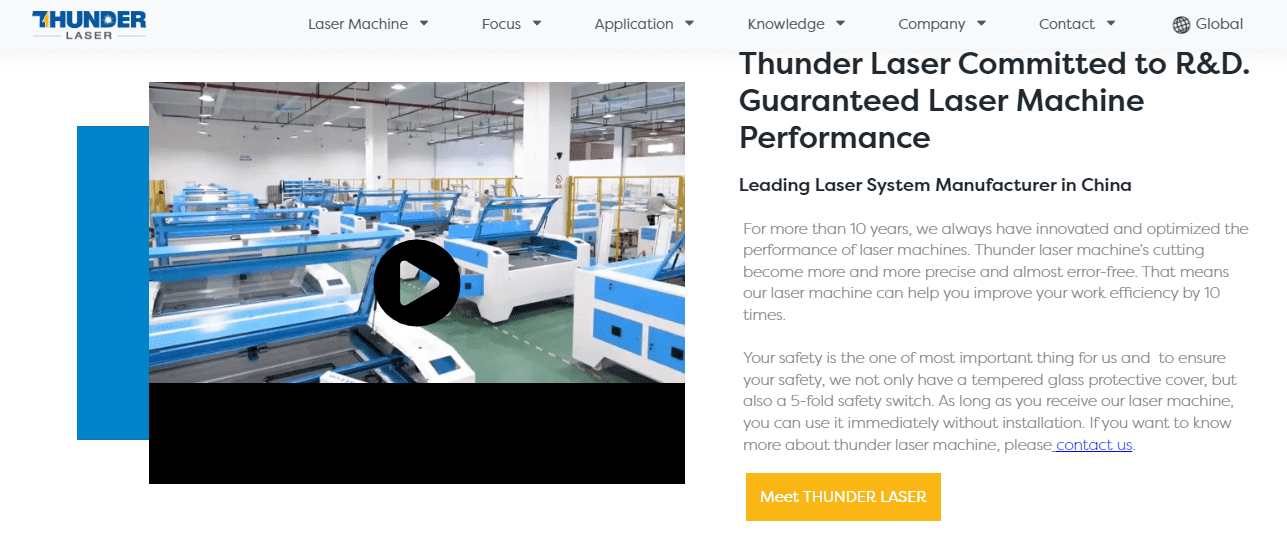
Thunder Laser provides enclosed engraving, cutting, marking, and dual-laser systems for business, education, and production users.
Current focus: Thunder Laser currently organizes its portfolio around professional engraving and cutting systems, laser marking machines, mixed-material dual-laser production, software, accessories, extraction, and material-testing support. The current range includes the Bolt Series, Nova Series, Nova Plus Series, Titan Series, Titan Pro Series, and Aurora Series.
Best for: Schools, makerspaces, studios, personalization businesses, signage companies, workshops, small-batch production teams, and businesses that need enclosed CO2 systems or compact marking equipment.
Key strengths: A broad progression from compact RF CO2 engraving to larger production systems; dedicated fiber, MOPA, and UV marking options; mixed-material processing through Titan Pro; and application support through the Thunder Laser Material Testing Service.
Factors to verify: Buyers should match the exact laser source, work area, power, Z clearance, rotary support, extraction setup, and expected production volume to their materials. A compact marker and a large enclosed CO2 platform solve different problems.
Official source: Thunder Laser product range.
AMADA focuses on industrial laser cutting systems and sheet-metal production workflows.
Current focus: AMADA publishes a range of industrial laser machines for sheet-metal processing, including fiber laser systems, CO2 laser systems in selected markets, rotary-index configurations, and automation options. Its broader sheet-metal portfolio also includes punching, bending, welding, and manufacturing support systems.
Best for: Established sheet-metal manufacturers, high-volume factories, and industrial users that need cutting capacity integrated with material handling, software, service, and related fabrication processes.
Key strengths: Industrial sheet-metal specialization, a wide range of laser-cutting configurations, and the ability to combine laser processing with broader factory production systems.
Factors to verify: Machine footprint, electrical and gas requirements, automation scope, installation responsibility, operator training, local service response, spare-parts availability, and total cost of ownership.
Official source: AMADA laser machines.
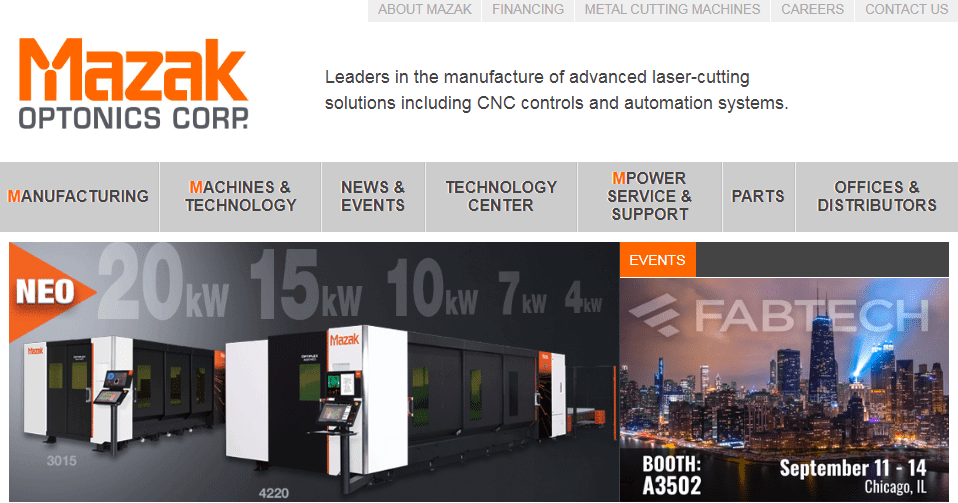
Mazak Optonics offers 2D, 3D, tube, and pipe laser-processing systems for industrial metal production.
Current focus: Mazak Optonics currently lists 2D laser-processing machines, 3D systems, and tube and pipe laser-cutting equipment. Its portfolio also includes automation solutions and production-support technologies designed for industrial metal processing.
Best for: Fabricators and manufacturers that require flat-sheet cutting, tube processing, 3D laser capability, or automated industrial workflows.
Key strengths: A product range spanning multiple metal-processing geometries and production formats, supported by automation and manufacturing software.
Factors to verify: Whether the selected machine is optimized for flat sheet, tube, pipe, or 3D components; the required laser power; loading and unloading method; production mix; and local service coverage.
Official source: Mazak Optonics products.
TRUMPF supplies laser cutting, welding, marking, tube processing, automation, and smart-factory systems.
Current focus: TRUMPF publishes one of the broadest industrial portfolios in this comparison, covering 2D and 3D laser cutting, tube laser cutting, laser welding, marking systems, punching, punch-laser processing, bending, storage, automation, lasers, software, and smart-factory solutions.
Best for: Advanced manufacturing environments that need integrated machines, laser sources, software, automation, and connected production workflows.
Key strengths: Extensive technology coverage across cutting, welding, marking, forming, automation, and production networking.
Factors to verify: The scale of the complete system, implementation and training requirements, regional product availability, factory integration, service agreements, and lifecycle operating costs.
Official source: TRUMPF machines and systems.
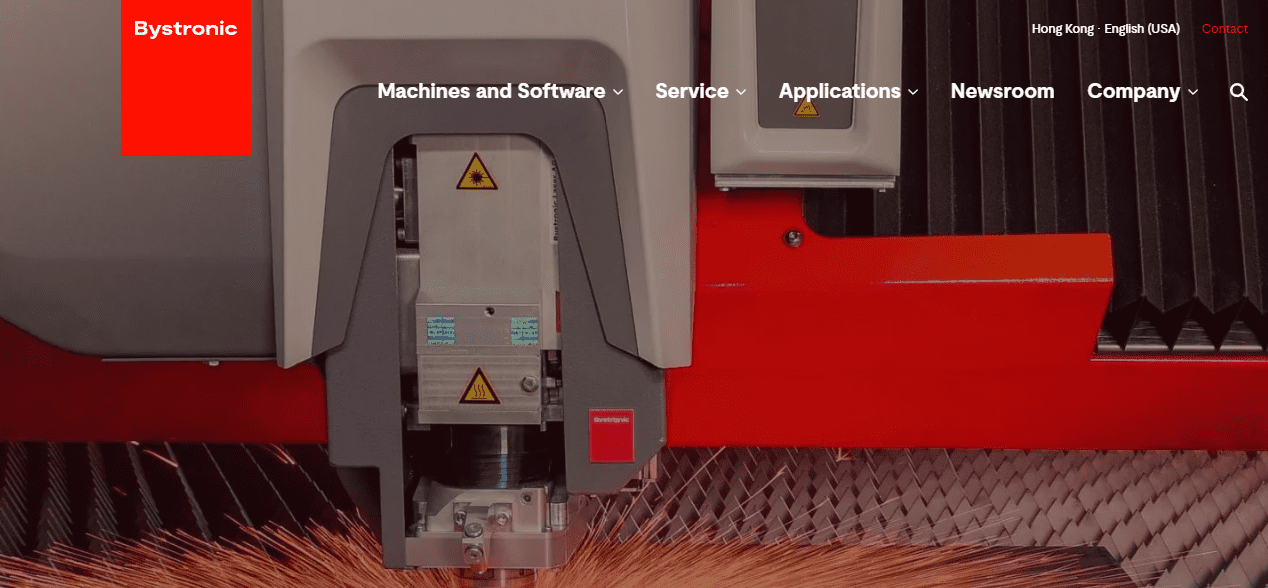
Bystronic focuses on laser cutting, bending, automation, software, and sheet-metal production.
Current focus: Bystronic’s published portfolio centers on sheet-metal processing, including laser cutting, laser automation, press brakes, bending automation, tube laser cutting, sorting, and software.
Best for: Industrial sheet-metal fabricators that want to connect cutting, bending, automation, and production software.
Key strengths: A focused sheet-metal ecosystem with machines and automation designed to support material flow from cutting through bending and handling.
Factors to verify: Required throughput, sheet and tube dimensions, automation level, sorting needs, software integration, factory space, service coverage, and operator skill requirements.
Official source: Bystronic laser cutting, bending, and automation.
Golden Laser is especially relevant to textiles, flexible materials, digital converting, vision cutting, and CO2 galvo processing.
Current focus: Golden Laser currently publishes laser die-cutting systems, CO2 flatbed machines, vision laser cutters, CO2 galvo systems, laser cutting plotters, specialty machines, and fiber laser equipment. Its product pages place particular emphasis on textiles, garments, roll materials, labels, packaging, leather, technical fabrics, and digital converting.
Best for: Textile and garment manufacturers, dye-sublimation processors, label converters, leather processors, roll-material users, and businesses requiring camera-based contour cutting or high-speed CO2 galvo processing.
Key strengths: Strong specialization in flexible materials, roll-to-roll workflows, vision registration, galvo engraving and perforation, and application-specific textile systems.
Factors to verify: Material width, conveyor and feeding method, camera accuracy, roll tension, extraction, software workflow, production speed, and whether the machine is designed for cutting, engraving, perforating, or converting.
Official source: Golden Laser products.
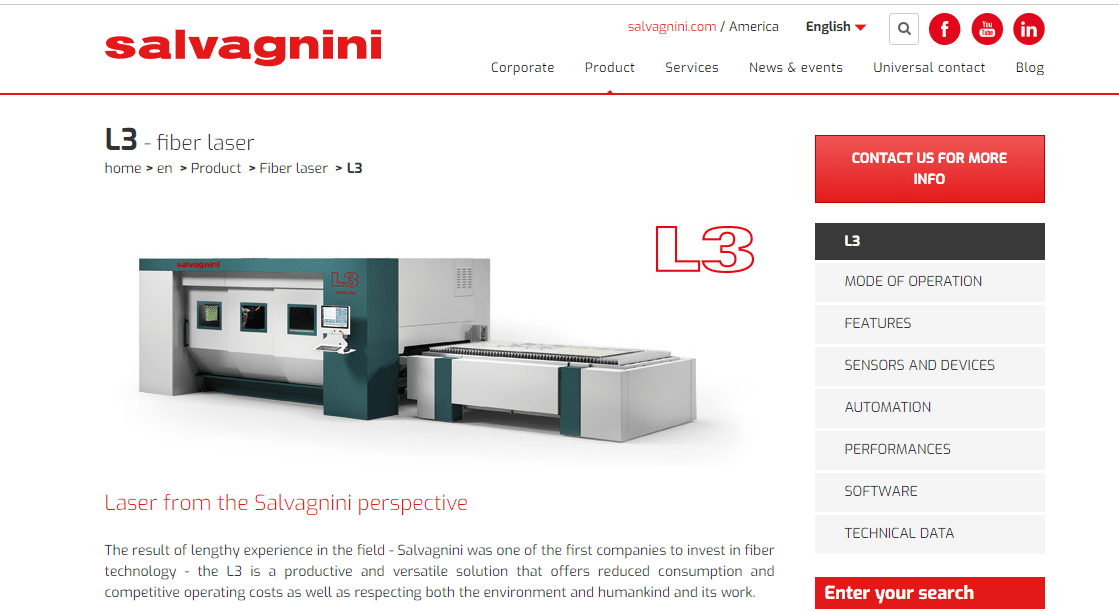
Salvagnini combines fiber laser cutting with bending, punching, FMS, and automated sheet-metal workflows.
Current focus: Salvagnini’s current laser range includes L3, L3.G4, and L5 fiber laser cutting systems. Its broader portfolio includes panel benders, press brakes, punching machines, flexible manufacturing systems, storage, software, and services for sheet-metal production.
Best for: Sheet-metal manufacturers that want laser cutting integrated with downstream bending, handling, storage, and flexible production systems.
Key strengths: A strong focus on connected sheet-metal workflows rather than an isolated cutting machine, with automation options designed to reduce manual handling and improve factory flow.
Factors to verify: Material mix, sheet thickness, automation scope, sorting, storage, connection to panel bending or press brakes, software integration, and production-volume economics.
Official source: Salvagnini laser systems.
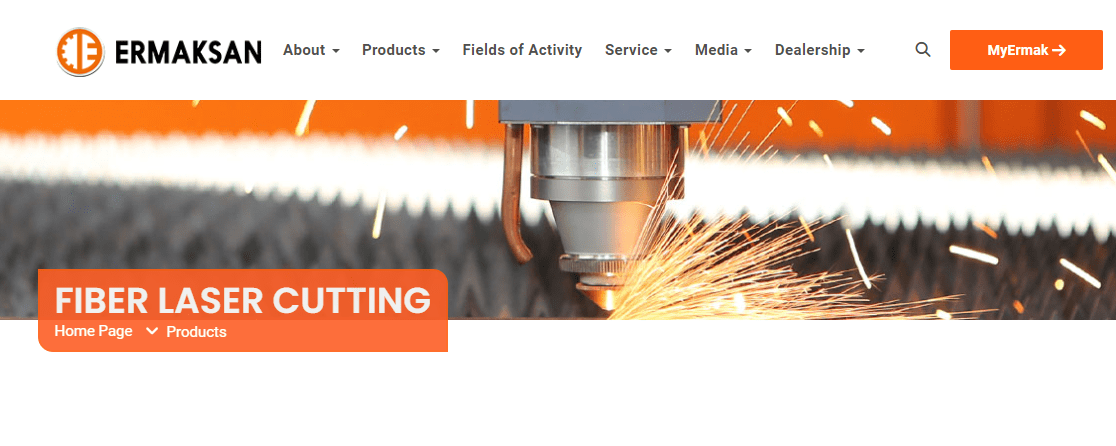
Ermaksan supplies fiber laser cutting, tube processing, automation, bending, and metal additive manufacturing equipment.
Current focus: Ermaksan’s current portfolio includes fiber laser cutting machines, tube and profile lasers, laser automation, press brakes, shearing, plasma cutting, punching, metal 3D printing, optoelectronics, and related industrial technologies. Its laser-cutting range extends from standard sheet systems to large-format gantry configurations.
Best for: Industrial metal fabricators, tube and profile processors, high-power cutting users, large-format production environments, and companies considering both conventional sheet-metal equipment and metal additive manufacturing.
Key strengths: Broad industrial metal-processing coverage and a current laser portfolio that includes high-power, tube, large-format, automation, and special-machine options.
Factors to verify: Table dimensions, laser power, cutting head, controller, acceleration, automation, bevel requirements, local service, installation, and whether the selected system matches the real material thickness and production mix.
Official source: Ermaksan products.
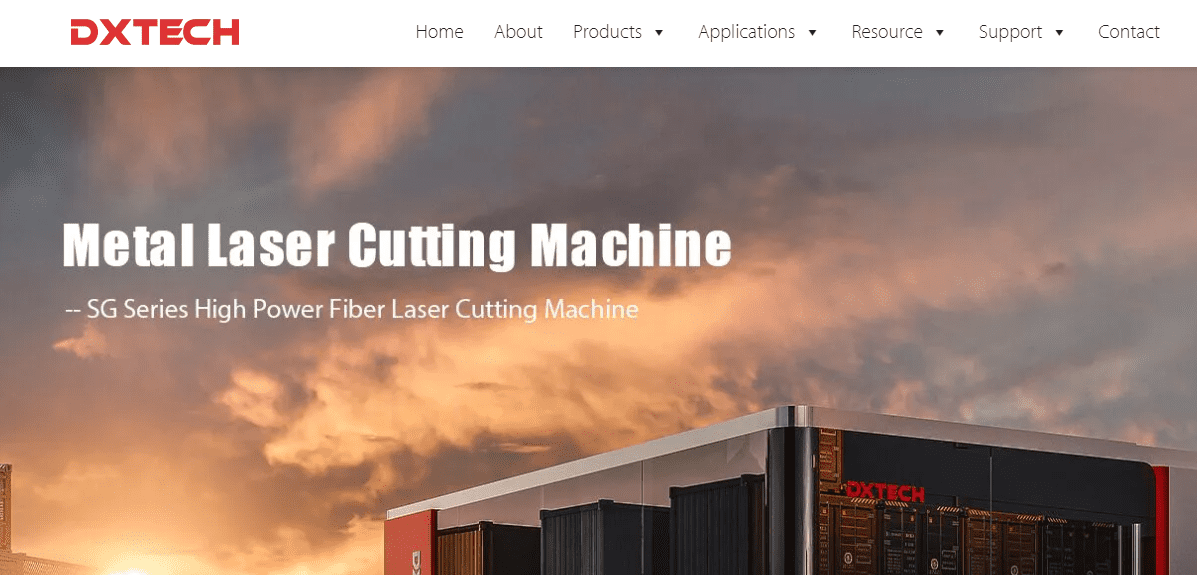
DXTECH publishes a broad range of cutting, welding, cleaning, marking, bending, and laser automation equipment.
Current focus: DXTECH currently presents metal laser cutting, tube cutting, laser welding, cleaning, marking, bending, tube bending, and automated production solutions. Its website also describes CO2 and fiber engraving and marking equipment for metal and non-metal applications.
Best for: Buyers comparing a broad catalog across metal cutting, fabrication, welding, cleaning, marking, and selected engraving applications.
Key strengths: Wide product coverage across multiple laser and metal-processing categories, with options for different production scales.
Factors to verify: The exact model specification, laser source and component brands, safety enclosure, controller, certification, commissioning, training, replacement parts, warranty terms, and service availability in the buyer’s country.
Official source: DXTECH laser equipment.
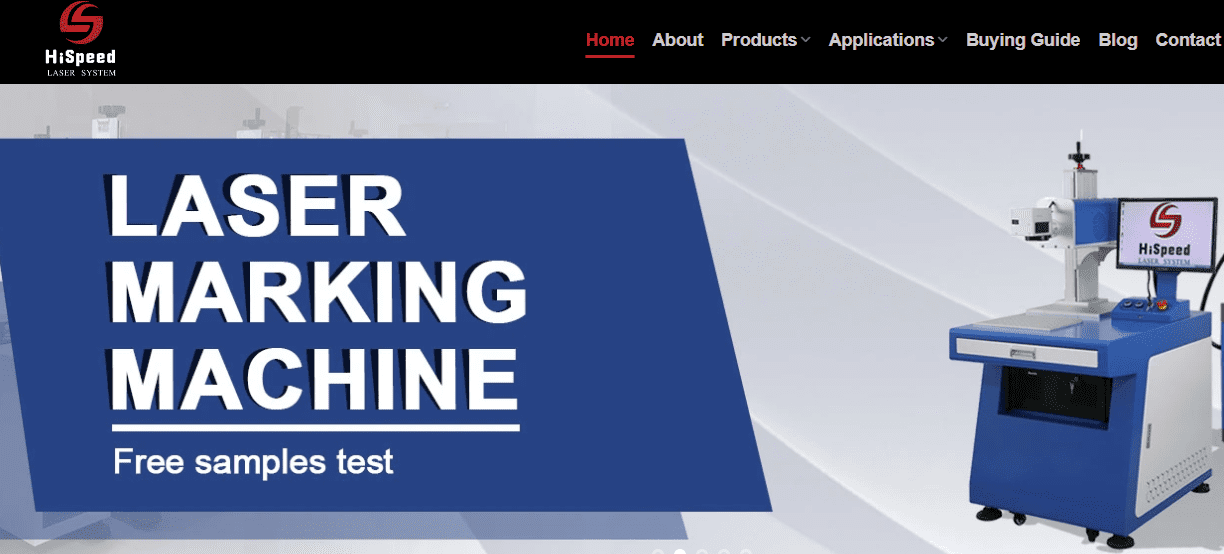
HiSpeed Laser focuses on fiber, CO2, and UV marking together with engraving, welding, cleaning, and compact laser systems.
Current focus: HiSpeed Laser’s published catalog emphasizes fiber, CO2, and UV laser marking and engraving, with additional equipment for welding, cleaning, precision cutting, and application-specific industrial processes. Marking machines are a central part of its current product positioning.
Best for: Metal-marking shops, product-identification users, jewelers, electronics and component manufacturers, small factories, and integrators seeking compact or customized laser systems.
Key strengths: Strong coverage of compact galvo marking technologies and a product mix spanning fiber, CO2, UV, welding, cleaning, and accessories.
Factors to verify: Enclosure class, extraction, laser-source configuration, marking field, lens, software license, rotary support, certification, warranty coverage, training, and local technical service.
Official source: HiSpeed Laser.
The best supplier is the one whose machine architecture, support model, and production focus match the job. Start with the application and then narrow the supplier list.
Separate the required process into laser cutting, engraving, marking, welding, cleaning, perforating, converting, or additive manufacturing. These processes use different laser sources, motion systems, safety measures, fixtures, software, and extraction requirements.
A machine specification does not describe the full production system. Compare material loading, unloading, nesting, camera positioning, rotary support, autofocus, extraction, part sorting, bending, storage, software, data collection, and connection to upstream or downstream processes.
Confirm enclosure design, interlocks, laser classification, extraction, guarding, local electrical requirements, emissions control, documentation, and any certifications required in the destination market. A supplier’s general certificate should not be treated as proof that every machine configuration meets every local requirement.
Ask who performs installation, how training is delivered, where spare parts are stocked, which failures can be diagnosed remotely, how quickly an engineer can respond, which components are covered by warranty, and whether support is provided directly or through a distributor.
Compare purchase price together with freight, import costs, installation, electrical and gas preparation, extraction, consumables, maintenance, service agreements, software, operator time, energy use, downtime, replacement optics, and expected productivity.
| Business or Application | Supplier Type to Prioritize | Important Buying Factors |
|---|---|---|
| Home studio or compact business | Enclosed CO2 engraving or compact marking specialist | Footprint, enclosure, ventilation, software, training, ease of use |
| Small workshop or personalization business | CO2 engraving/cutting supplier with a scalable machine range | Work area, RF or glass tube, speed, rotary support, extraction, support |
| School, makerspace, or university | Enclosed system supplier with education support | Safety, training, documentation, material guidance, classroom workflow |
| Metal marking and product identification | Fiber, MOPA, or UV marking specialist | Laser source, marking area, lens, enclosure, rotary, software, fixtures |
| Textile, garment, label, or roll material | Textile and digital-converting laser specialist | Conveyor, roll handling, camera, perforation, extraction, registration |
| Industrial sheet-metal fabrication | High-power fiber cutting and automation supplier | Power, sheet size, material handling, sorting, bending, software, service |
| Tube and profile production | Tube laser specialist or industrial integrated supplier | Diameter range, loading, chuck design, bevel cutting, part support, automation |
| Mixed-material production | Supplier offering multiple laser sources or a dual-laser platform | Material mix, changeover time, work area, fixture strategy, extraction |
Choose laser equipment suppliers according to the application, production scale, and complete workflow rather than brand name alone.
For an engraving-focused comparison, see Top 10 Laser Engraving Machine Manufacturers in China 2026. Buyers evaluating a Thunder Laser system can also submit samples through the Material Testing Service before final machine selection.
The laser equipment market includes compact engraving systems, high-speed galvo markers, textile-processing platforms, industrial sheet-metal machines, tube lasers, automation, and complete smart-factory solutions. These categories should not be compared as though they solve the same production problem.
Thunder Laser is most relevant to businesses, schools, workshops, studios, and production teams looking for enclosed CO2 engraving and cutting, compact fiber/MOPA/UV marking, or mixed-material dual-laser processing. AMADA, Mazak, TRUMPF, Bystronic, Salvagnini, and Ermaksan are more closely aligned with industrial metal cutting and integrated fabrication. Golden Laser is especially relevant to textiles and flexible materials, while DXTECH and HiSpeed Laser offer broad or application-specific product catalogs across several laser categories.
The best decision comes from defining the material, process, production target, facility, automation level, and support expectation before selecting a supplier. Request representative material tests and a written system scope rather than relying only on a headline power rating or purchase price.
Compare Laser Equipment for Your Real Workflow
Share your materials, product sizes, process requirements, and production goals with Thunder Laser to identify a suitable engraving, cutting, marking, or mixed-material system.
Contact Thunder LaserTalk To Our Experts Now!
Please leave your contact information so that we can serve you better.
LASER EQUIPMENT SUPPLIERS FAQS
FIND THE RIGHT LASER FOR YOUR NEXT PROJECT
Explore Thunder Laser solutions designed for different materials, workflows, and production needs.


 Stable & Consistent MachinesUnlimited ApplicationsRobust After-sales SupportFactory Direct Supply


