


Airliner Inventor Laser Cutting STEAM Project with LaserMaker
 2024-08-14
WHAT ARE YOU LOOKING FOR?
Search Across Products, Blog Posts, Support Content, And Resources.

Airliner Inventor Laser Cutting STEAM Project with LaserMaker
2024-08-14

In this STEAM maker project, students continue the “magic brush” design journey by turning a hand-drawn passenger airplane into a laser-cut airliner model using LaserMaker. The lesson reviews image scanning, cropping, outlining, engraving, and cutting, then extends the activity with landing gear, welded plates, main wings, tail structure, bayonet-style joints, dual motors, propellers, wiring, and remote-control testing.
This project builds on the earlier car inventor lesson. Students reuse the draw-scan-process-cut workflow, then learn how an airliner model needs different structural parts, including a fuselage, wings, tail, landing gear, power unit, and optional remote-control system.
| Item | Details |
|---|---|
| Project | Airliner Inventor laser cutting project |
| Software | LaserMaker |
| Main Skills | Hand drawing, image scanning, picture cropping, outline extraction, bitmap engraving, vector cutting, landing gear design, welded plate design, B-spline or curve drawing, mirroring, bayonet-style joints, wiring, remote-control testing, and assembly |
| Suggested Materials and Parts | Plywood, paper, drawing pen, small wooden sticks, wooden rings, remote-control receiver board, two small motors, propellers, battery box, switch, 18650 lithium battery, wires, electrical tape, hot glue or white glue |
| Classroom Fit | Laser cutting and maker projects, STEAM art and engineering, transportation design, beginner LaserMaker review, airplane model design, simple wiring practice, and hands-on classroom assembly |
Students will draw an original passenger airplane side view, scan it into LaserMaker, prepare a clean outer cutting contour, engrave the drawing, cut the airplane body, create a more complete airliner model with wings and landing gear, then explore a remote-control upgrade using two small motors and propellers.
For teachers: Use this project to review the car inventor workflow while introducing aircraft structure, curve drawing, mirroring, landing gear, wiring, motor direction, and remote-control testing.
For students: Use the activity to turn a drawing into a laser-cut airliner model and improve it with wings, tail parts, wheels, motors, propellers, and wiring.
For makerspaces: Use it as a transportation-themed project that combines creative drawing, digital fabrication, assembly, and simple electrical components.
Explain the main role of passenger aircraft, including transporting people and cargo.
Identify key airliner model structures, including fuselage, wings, tail, landing gear, and power unit.
Create a clear side-view drawing and process it in LaserMaker using Picture Crop and Picture Outline.
Design laser-cut landing gear wheels, small wooden rings, welded plates, tail parts, main wings, and bayonet-style joints.
Install and test an optional remote-control system with two motors, propellers, a receiver board, switch, and battery box.
Design thinking: Start from an imaginative airliner drawing, then improve the model with structure, balance, details, and optional motion.
Computational thinking: Use cropping, outlining, layers, dimensions, arrays, mirroring, repeated parts, and wiring checks to prepare a working model.
Engineering thinking: Consider wing placement, tail support, landing gear stability, propeller clearance, motor symmetry, wire direction, and safe testing.
Students should operate the laser cutter only under teacher or lab supervisor guidance. Before cutting, check focus, layer output, material placement, and processing parameters. When adding motors and propellers, keep hands, wires, loose paper, and hair away from rotating parts, and test the model under supervision.
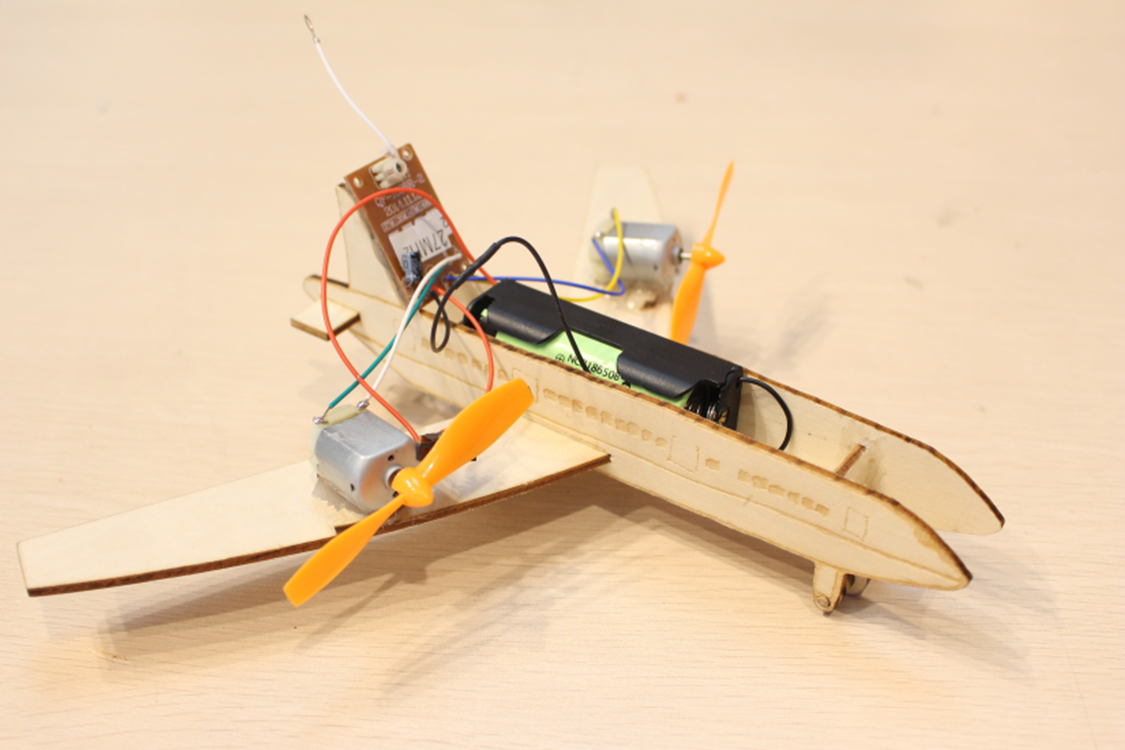
This lesson asks students to build an airliner based on skills learned in the first lesson. Instead of focusing only on a flat silhouette, students gradually add structure, landing gear, wings, and an optional remote-control propulsion system.

Teachers can begin the lesson with aircraft design questions. These prompts help students observe structure, purpose, and function before they start drawing.
What is the main role of a passenger aircraft?
What are the main structures of an airliner?
If you were designing your own airliner, what shape, details, and functions would you include?
Classroom Discussion: Students can describe an airliner as a system with a fuselage, wings, tail, landing gear, and power unit. For this maker project, the focus should stay on observation, model design, digital fabrication, simple wiring, and safe assembly.
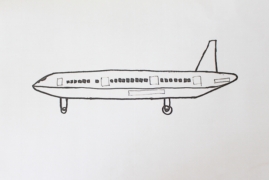
Ask students to sketch the passenger airplane they imagine. A side view works best for this project because it gives a clear fuselage outline that can be processed into a cutting contour.
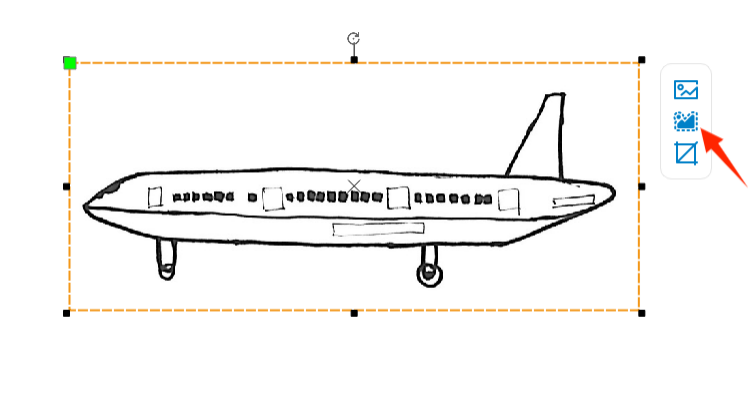
Use a scanning app or another classroom-approved method to scan the drawing and import it into LaserMaker. First, use Picture > Crop to remove blank space around the image.
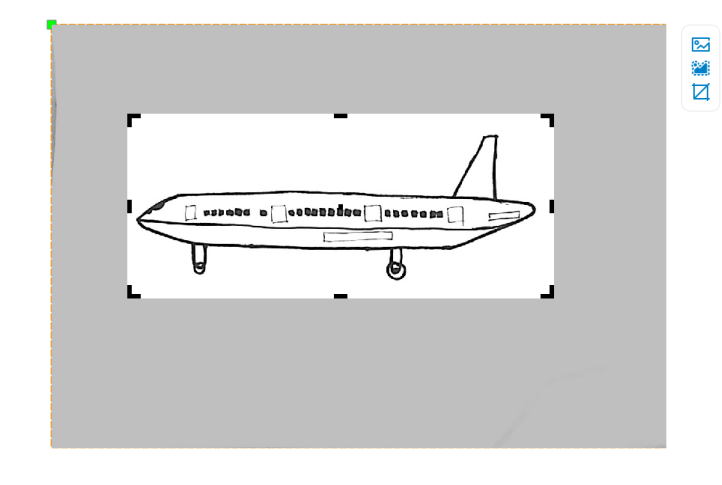
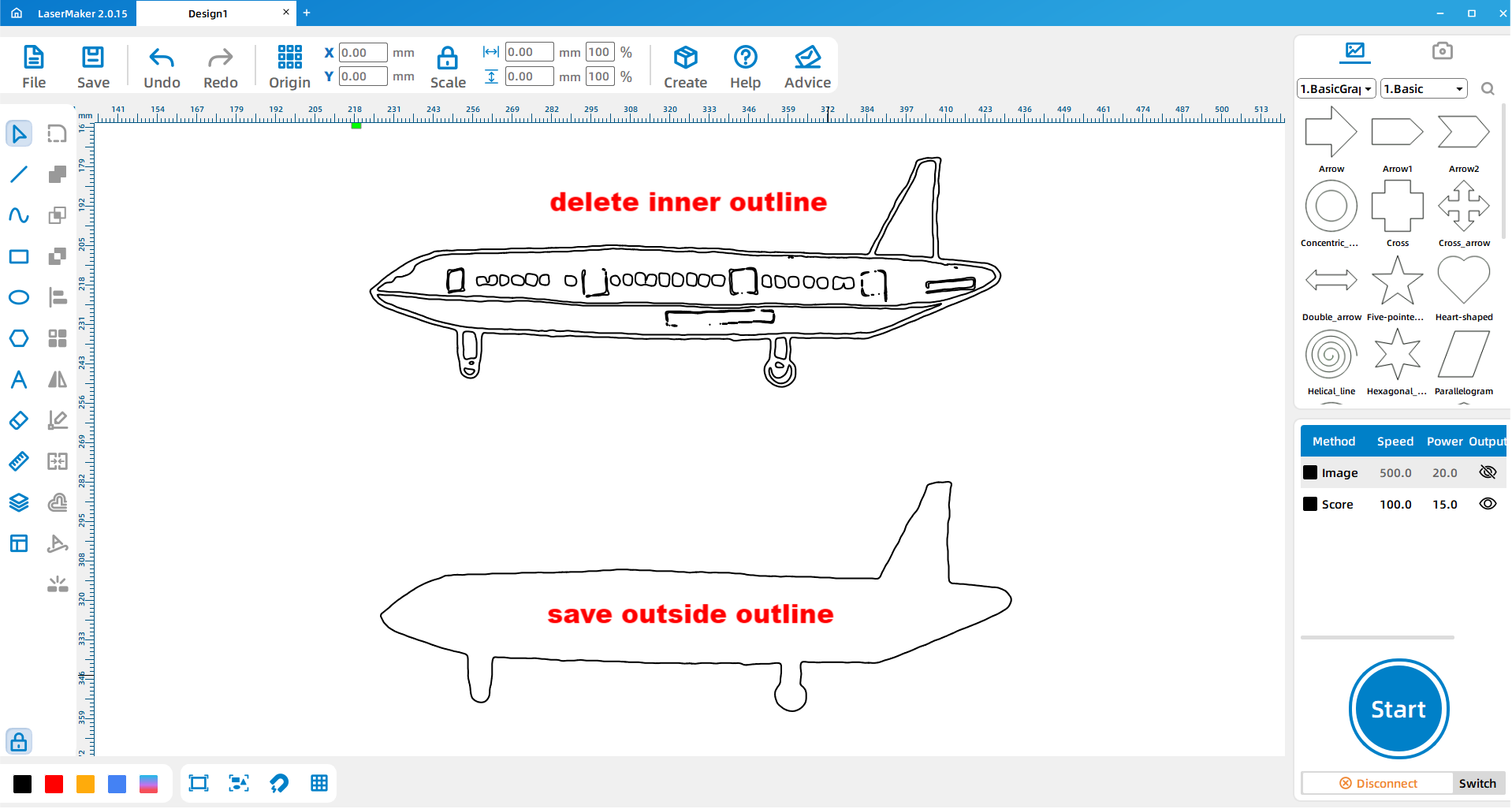
Next, use Picture > Outline to generate the airliner outline. Temporarily turn off bitmap output, select and delete the inner outline, and keep only the outer contour for cutting. Then turn bitmap output back on so the student’s original drawing can be engraved on the finished model.
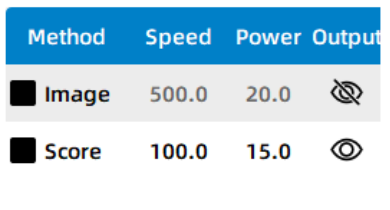
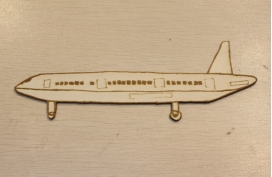
Double-click the layer parameter area in LaserMaker and set the engraving and cutting parameters for the plywood project. After checking the settings, send the file to the laser cutter for processing.
Start by designing the airliner landing gear wheels and small wooden fixing rings. In the source workflow, the wheel diameter is 13 mm. Add a 3 mm center hole to the wheel position and use Array Copy to create the required rings and repeated parts.
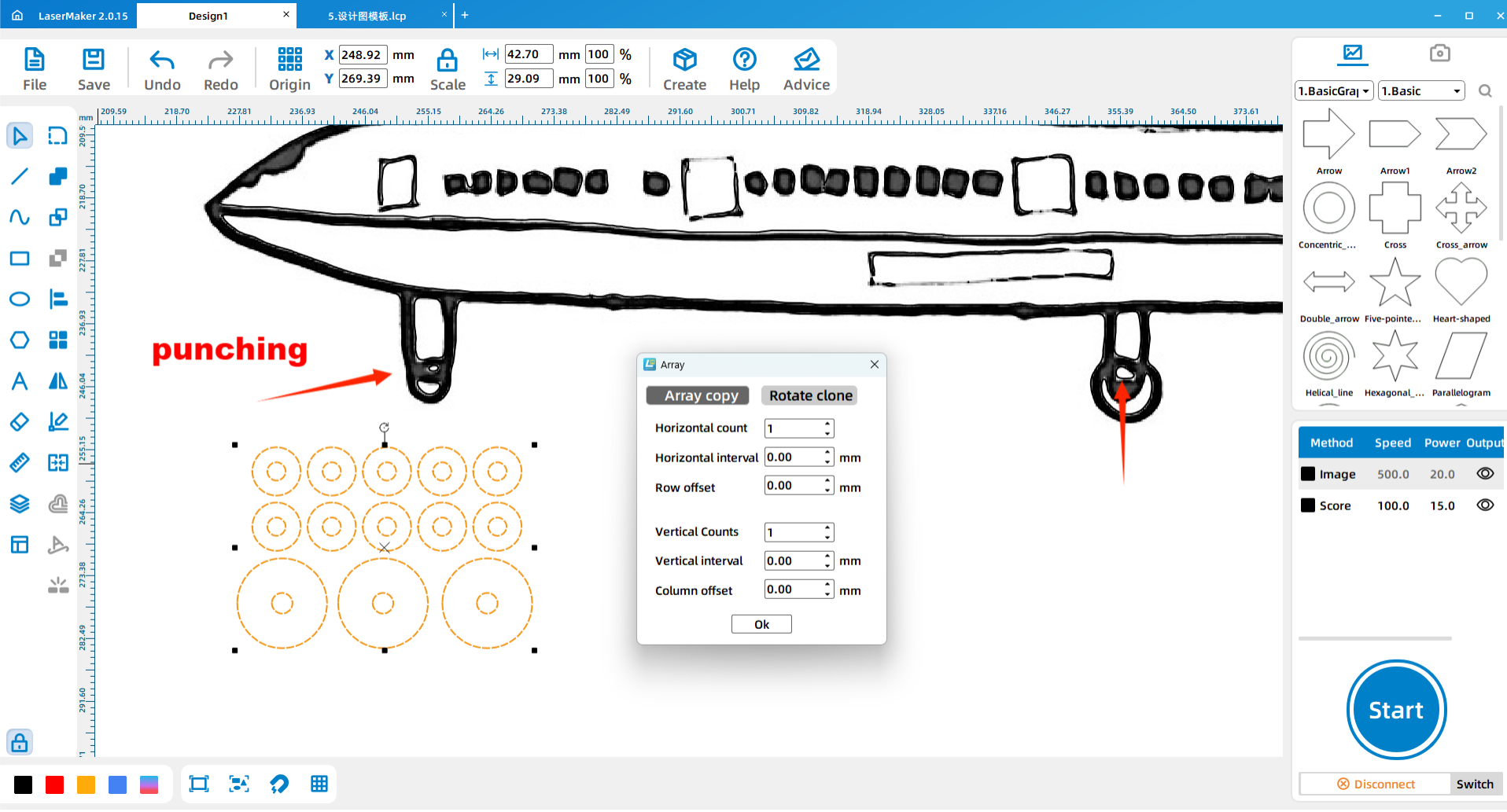
Next, design two welded plates for the airliner. The source workflow uses welded plates sized 20 mm by 15 mm, with card features sized 10 mm by 3 mm. These plates help connect the airplane body and improve assembly stability.
Draw a 60 mm by 15 mm rectangle for splicing the tail section of the airliner.
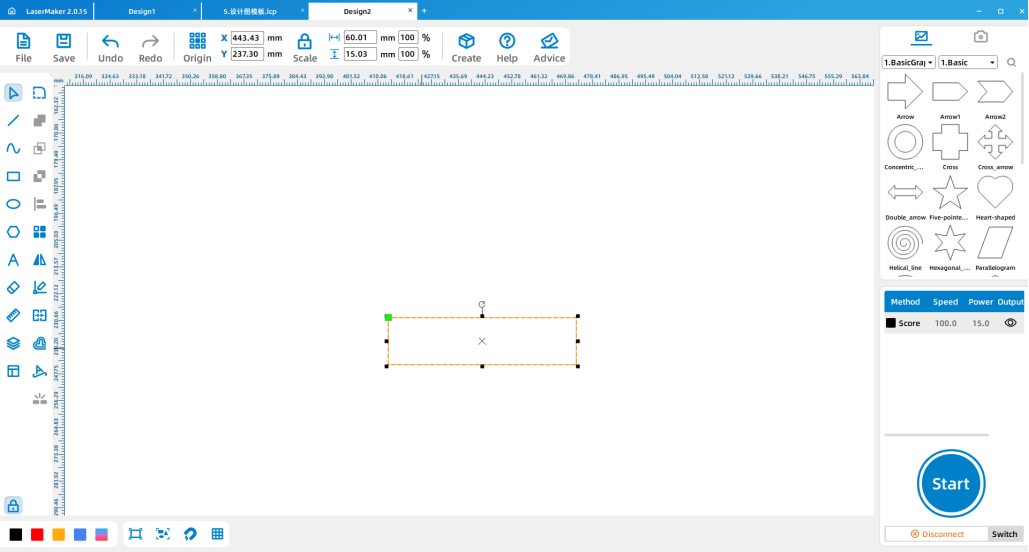
Draw a 20 mm by 120 mm rectangle and use the Bessel curve and line drawing tool in LaserMaker to create the main wing shape. In the source workflow, students click to place points, drag to create arcs, and right-click to finish the drawing.
Tool Tip: Curve tools are useful for airplane wings because they let students create smoother aerodynamic-looking shapes than simple rectangles or straight lines.
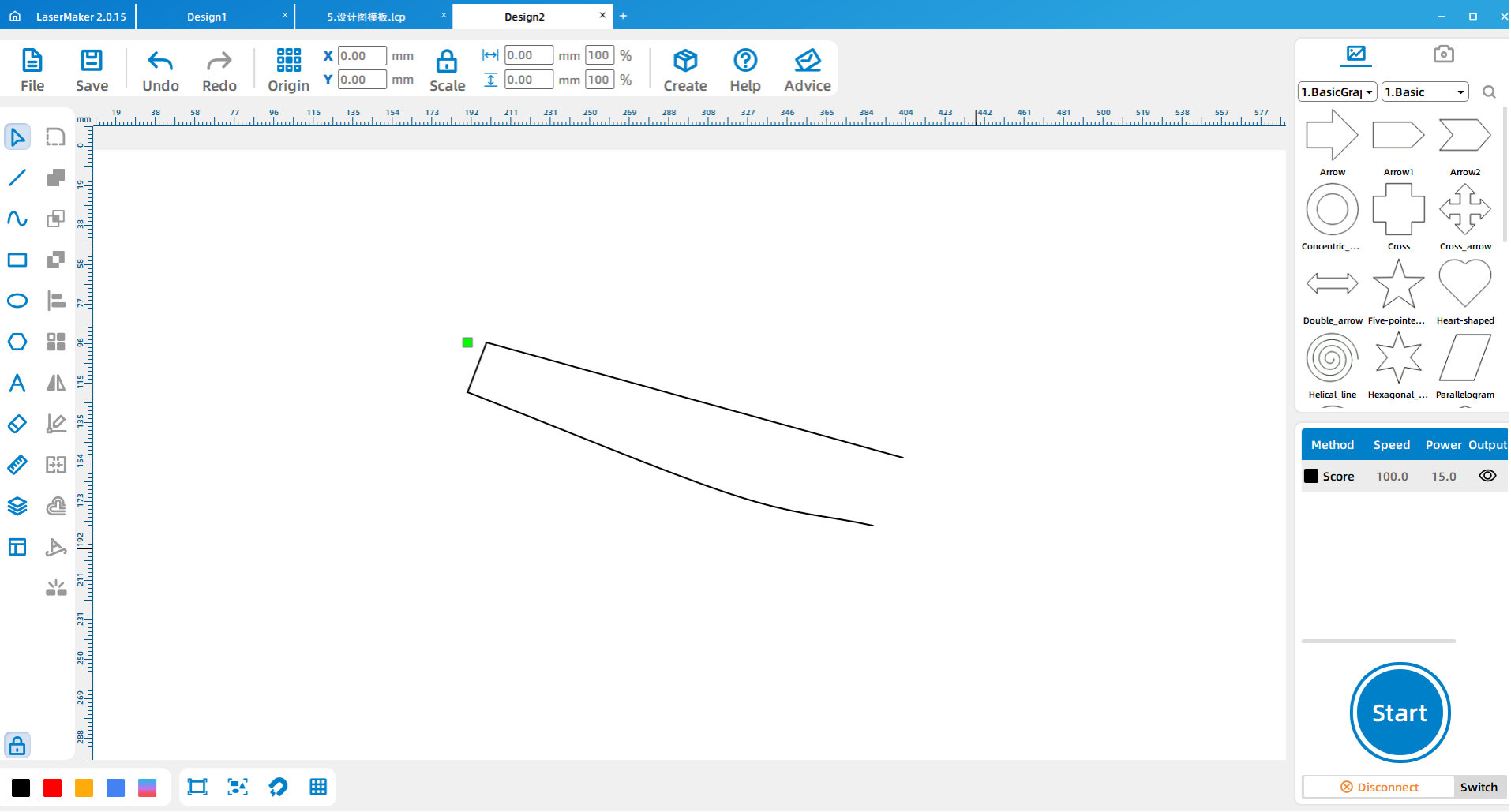
Copy and paste the wing, then mirror it for the opposite side. Use the welding function to connect the wing to the rectangle, then repeat the same welding operation for the other side.
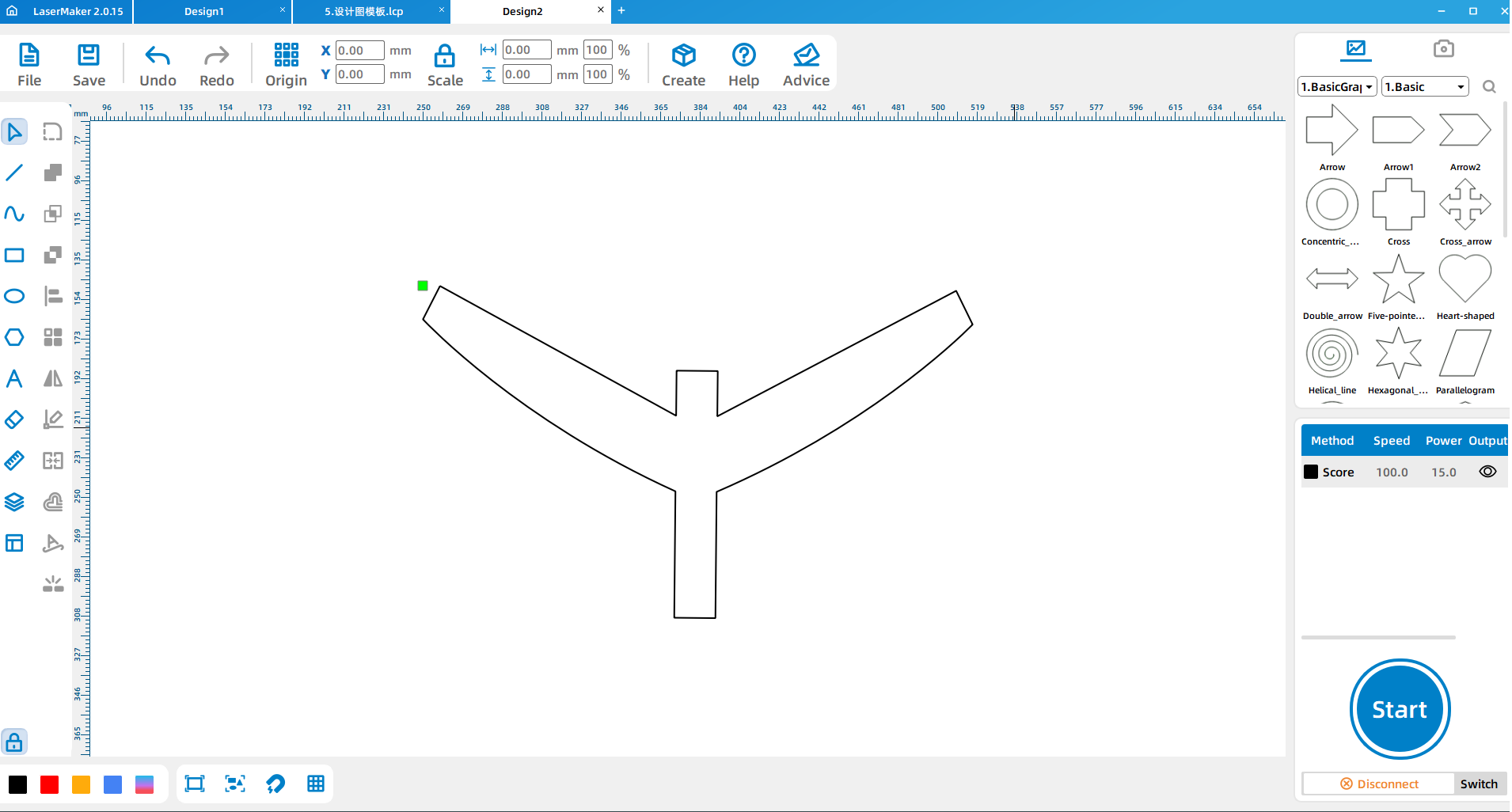
Draw the corresponding bayonet-style joint features and place them according to the source layout. The source workflow lists the bayonet sizes as 10 mm by 2.7 mm, 37 mm by 2.7 mm, and 15 mm by 2.7 mm.
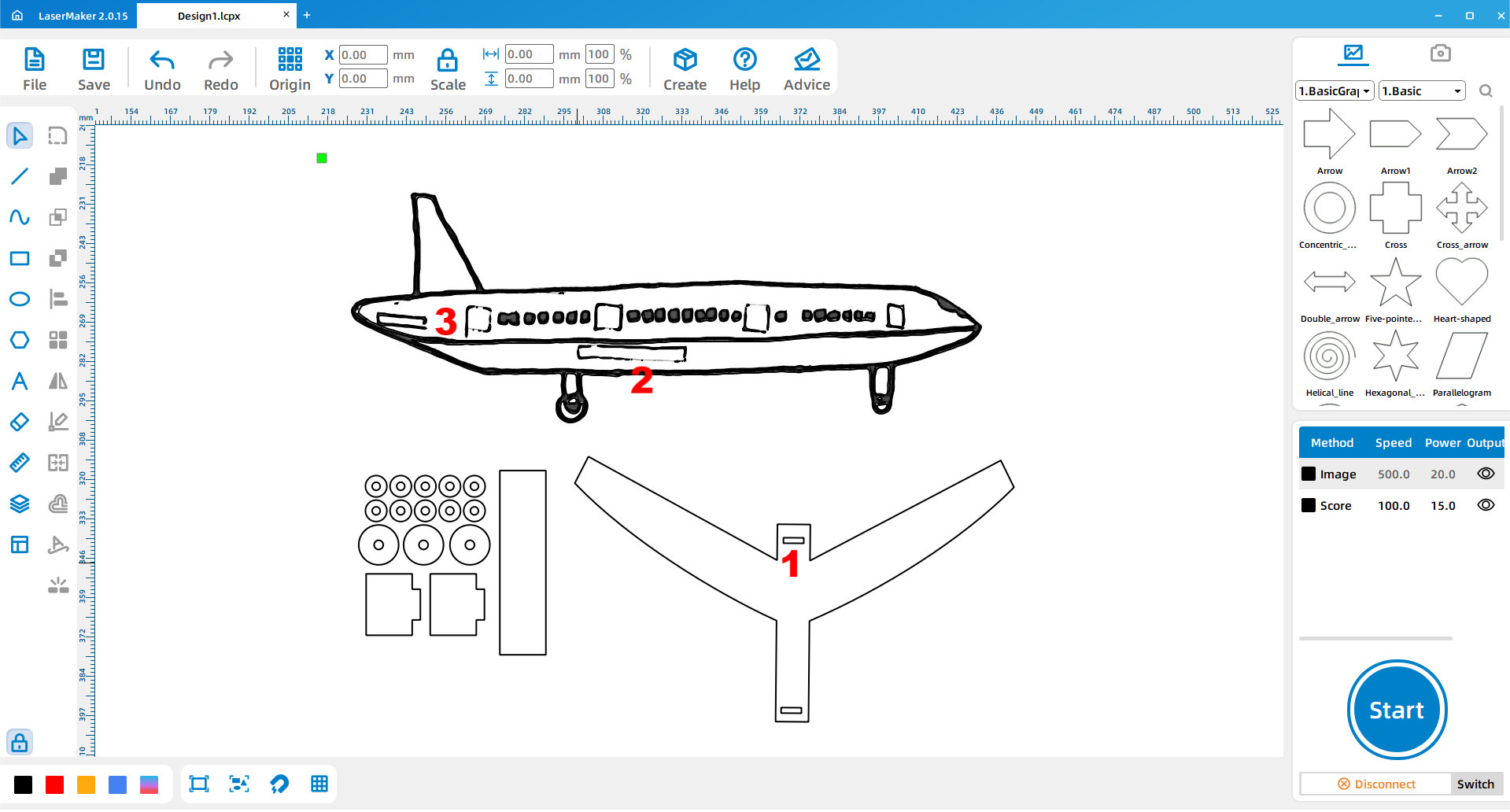
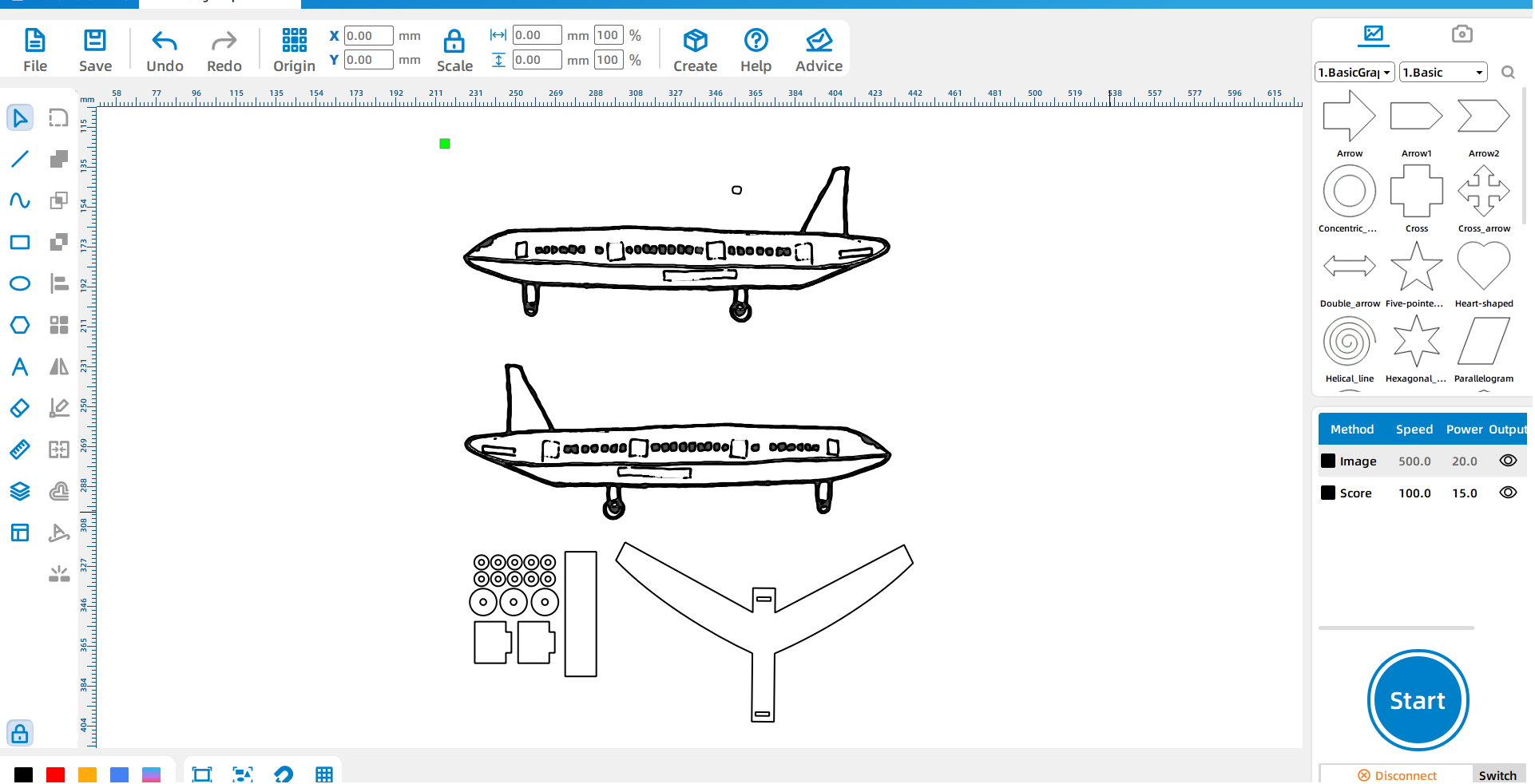
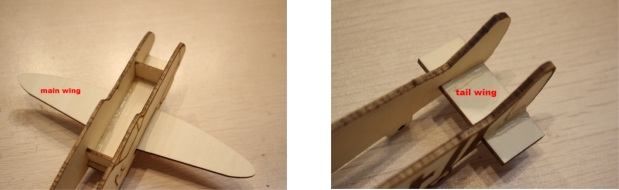
After all parts are designed, send the design file to the laser cutter for processing. Once the parts are cut, splice the welded plates into the airplane body. Use hot glue or white glue to reinforce the assembled structure where needed.
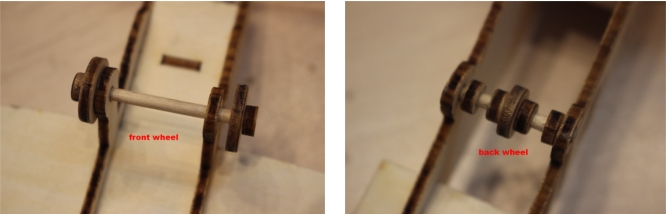
Attach the wheels to the front and rear of the aircraft using small sticks and wooden rings to form the landing gear. In the source workflow, the model uses two rear wheels and one front wheel.
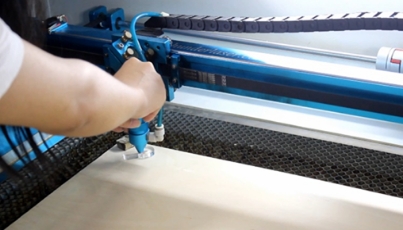
Import the saved design files into the laser cutting machine for processing. Before processing, check material placement, engraving and cutting layers, and focal length. The source lesson reminds students to adjust the focus before cutting to reduce the risk of incomplete cuts.
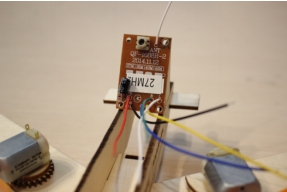
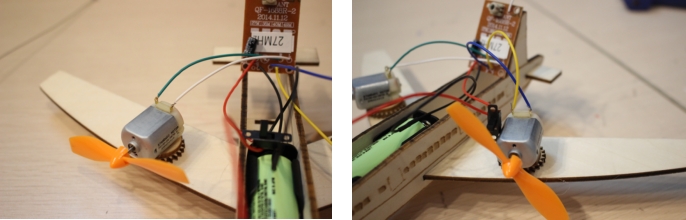
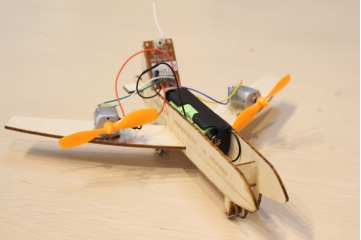
For the remote-control upgrade, attach the receiver board to the vertical tail of the passenger aircraft. Then glue two small motors symmetrically on both sides of the main wing and install propellers on the motor shafts.
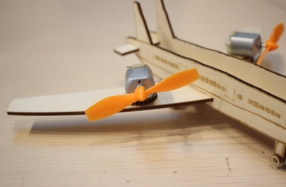
Clearance Check: After installing the motors, turn the propellers by hand to confirm they do not touch the airplane body. If a propeller touches the model, add a small support board under the motor to raise it slightly.
Take out the battery box and switch. Connect the black wire, or negative wire, from the battery box to the receiver board with electrical tape. Connect the red wire, or positive wire, to the switch as shown in the source workflow.
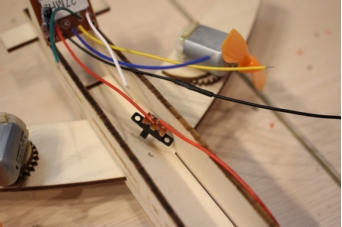
Connect the BL line, green and white wires, on the receiver board to the small motor on the right. Install the battery, turn on the switch, and press the right button on the remote control to check whether the motor rotates.
Connect the BF line, blue and yellow wires, on the receiver board to the small motor on the left. Turn on the switch again and press the left button on the remote control to check whether the left motor rotates.
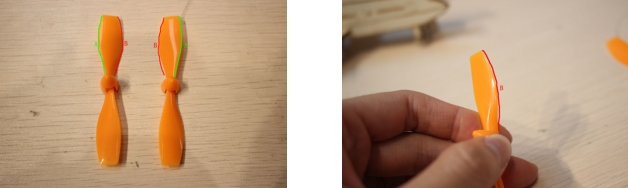
The two propellers should rotate in opposite directions. In the source workflow, the left propeller rotates clockwise and the right propeller rotates counterclockwise. The B arc of each propeller blade should lean inward.
After installing the 18650 lithium battery and turning on the switch, use the remote control to check whether the propellers can drive the aircraft forward. If the lower buttons make the airplane drive backward, remove the motor wires, swap their positions, and reconnect them while keeping the green and white wires on the right motor and the blue and yellow wires on the left motor.
Troubleshooting: If the model does not move forward, check whether the wiring is installed correctly, whether the propeller blade direction is reversed, and whether the two propellers are rotating in opposite directions.
Hand drawing: Give students paper and pens, then check that the airliner side view has a clear outer contour before scanning.
Software design: Guide students through importing, cropping, outlining, deleting inner contours, setting layers, creating landing gear wheels, and drawing the wings.
Machine processing: Process student files in a safe classroom order and confirm focus before cutting.
Assembly: Let students assemble the body, welded plates, wings, tail, landing gear, and optional remote-control upgrade with teacher support.
Review the car inventor workflow before introducing the airliner project so students understand what is being reused and what is new.
Prepare spare wheels, wooden rings, small sticks, welded plates, and simple wiring supplies when class time is limited.
Use batch processing when appropriate by arranging several student airplane parts into one laser processing file.
When students add remote control, test one motor at a time before testing the full model.
Ask students to compare how wing shape, landing gear placement, motor symmetry, and propeller direction affect the model’s movement.
What are the basic structures of an airliner?
What is the function of the fuselage, wings, tail, power unit, and landing gear?
How could you improve your airliner model’s balance, appearance, or remote-control movement?
Students can evaluate their own work and give peer feedback based on creativity, structural firmness, appearance, and learning attitude.
| Evaluation Item | Self-Evaluation | Peer Evaluation |
|---|---|---|
| Creativity, 30 points | ||
| Firmness, 30 points | ||
| Appearance, 20 points | ||
| Learning Attitude, 20 points | ||
| Total, 100 points |
At the end of the lesson, students can display their airliner models, explain how they designed the fuselage, wings, tail, landing gear, and remote-control upgrade, and discuss what they would improve in the next version.
After finishing the basic airliner model, students can redesign the wing shape, adjust landing gear positions, improve tail support, test different motor positions, or compare propeller directions. They can also design an airport runway, terminal, hangar, display stand, or classroom transportation exhibit to extend the project environment.
For a broader creative challenge, students can use the same draw-scan-process-cut-upgrade workflow to design other vehicles, such as gliders, helicopters, rockets, boats, trains, or future transportation concepts.
This project is suitable for classroom laser cutters that support engraving and cutting of thin plywood for student maker activities. For schools and beginner STEAM labs, projects like hand-drawn airplane models, wings, landing gear, and beginner LaserMaker activities can be completed with a classroom laser cutter such as the Thunder Laser Bolt Series.
Teachers can choose the machine and material setup based on classroom space, student supervision needs, material thickness, project size, and ventilation setup. Students should always test settings, check focus, and follow the school’s laser safety rules before final cutting.
Talk To Our Experts Now!
Please leave your contact information so that we can serve you better.
FIND THE RIGHT LASER FOR YOUR NEXT PROJECT
Explore Thunder Laser solutions designed for different materials, workflows, and production needs.


 Stable & Consistent MachinesUnlimited ApplicationsRobust After-sales SupportFactory Direct Supply


