





RF Laser Tube vs DC Glass Laser Tube: Complete CO2 Laser Source Comparison Guide
 2025-03-06
WHAT ARE YOU LOOKING FOR?
Search Across Products, Blog Posts, Support Content, And Resources.

RF Laser Tube vs DC Glass Laser Tube: Complete CO2 Laser Source Comparison Guide
2025-03-06

Choosing the right CO2 laser source is one of the most important decisions when buying or upgrading a laser engraving and cutting machine. The laser tube affects engraving detail, cutting efficiency, power stability, operating safety, maintenance workload, and long-term cost.
The two most common CO2 laser source types are RF metal laser tubes and DC glass laser tubes. Both can process many non-metal materials, but they are built for different priorities. RF laser tubes are known for high beam quality, fast response, stable output, long service life, and safer operation. DC glass laser tubes are widely used because they offer strong cutting value at a lower upfront cost.
This complete guide explains how RF and DC glass laser tubes work, compares their performance in real laser engraving and cutting workflows, and helps you choose the right Thunder Laser machine based on your production needs.
Quick recommendation: choose an RF laser tube if engraving precision, speed, beam stability, and long service life matter most. Choose a DC glass laser tube if cost-effective cutting performance and lower upfront investment are your main priorities.
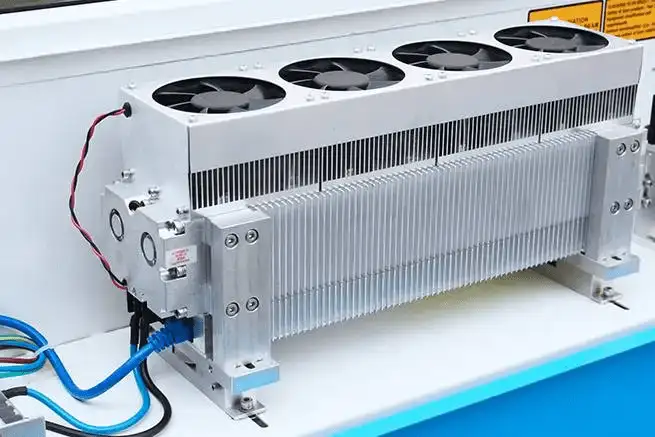
An RF laser tube is a metal CO2 laser source excited by radio frequency energy. Instead of using direct high-voltage discharge through electrodes inside a glass tube, RF lasers use radio frequency energy to excite the gas mixture and generate a coherent laser beam.
RF metal lasers are designed to operate without high voltage or water cooling. This makes them safer and easier to manage in many professional environments. Their metal construction also supports efficient heat dissipation, stable output, and longer service life.
The core mechanism of an RF laser is radio frequency excitation. When RF power is introduced to the laser tube, it excites the CO2 gas or gas mixture inside the resonator. This excitation generates high-energy photons, which are amplified and emitted as a coherent laser beam.
Because RF lasers can operate at high repetition rates, they are well suited for rapid engraving and marking. In many engraving workflows, each contrasting pixel can be generated by a laser pulse, so fast response and stable pulse control are important for clean, high-resolution results.
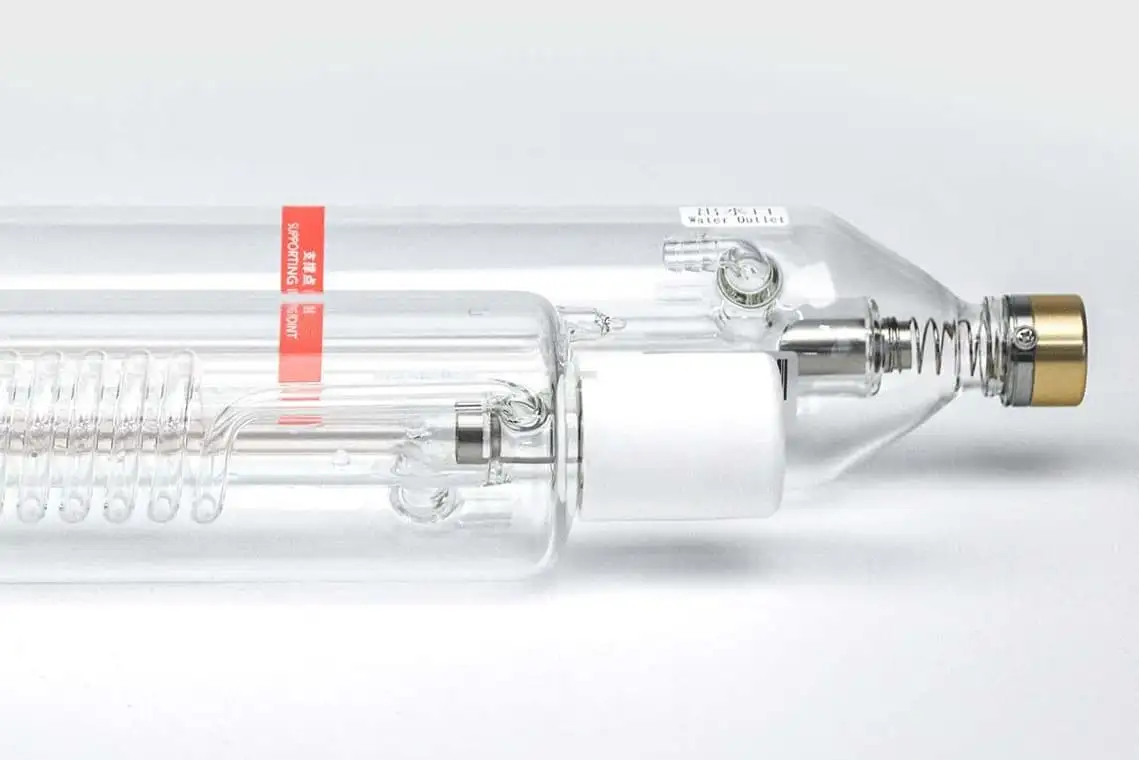
A DC glass laser tube is a traditional CO2 laser source housed in a glass tube. It usually contains a gas mixture that includes nitrogen, carbon dioxide, helium, and sometimes hydrogen or xenon. Carbon dioxide acts as the laser-active medium, while other gases help support excitation and heat dissipation.
DC glass tubes are popular because they are affordable and practical for many cutting and engraving applications. They are commonly used in industries such as signage, crafts, leather, clothing, acrylic processing, and general non-metal material production.
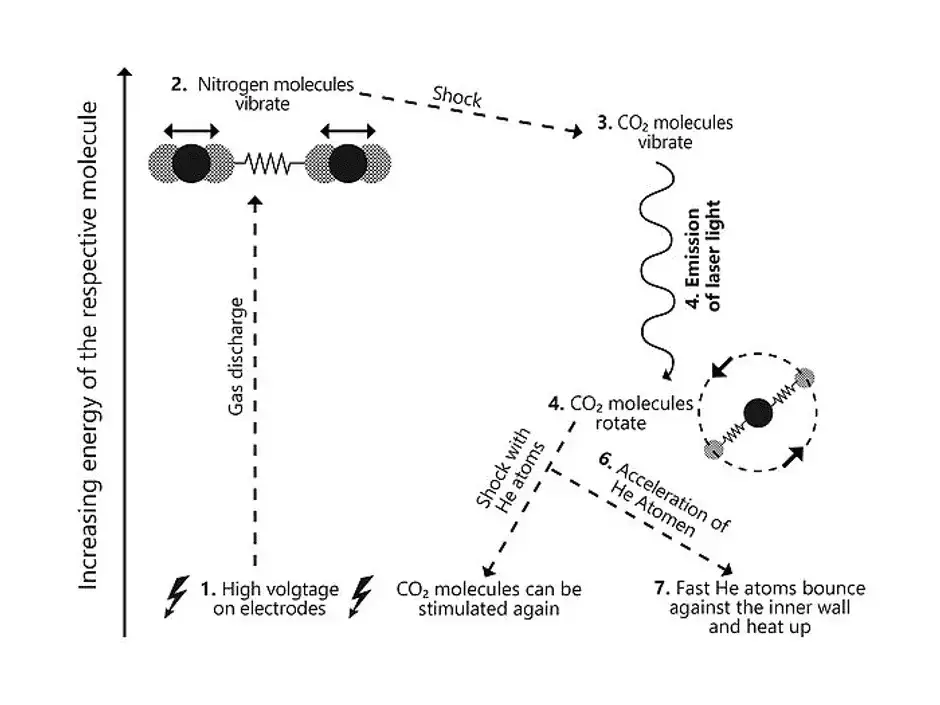
In a DC glass laser, direct current is passed through the laser tube. A high voltage applied to the electrodes inside the tube initiates current flow and excites the CO2 gas or gas mixture. This excitation creates photons that are emitted as a laser beam.
Because the electrodes penetrate the glass body, the tube structure includes feedthroughs and seals. Over time, thermal cycling and different expansion rates between glass and metal may create stress around these areas. This is one reason working environment, cooling quality, and maintenance can affect glass tube lifespan.
RF and DC glass laser tubes are both CO2 laser sources, but they differ in excitation method, structure, cooling, beam quality, service life, operating safety, and ideal application. The table below summarizes the most important differences for buyers and machine operators.
| Comparison Item | RF Metal Laser Tube | DC Glass Laser Tube |
|---|---|---|
| Excitation Method | Radio frequency excitation | Direct current high-voltage excitation |
| Typical Price Range | Higher cost, about $5,000 to $30,000 | More affordable, about $400 to $1,500 |
| Lifespan | Over 10,000 hours, rechargeable and reusable | Generally 2,000 to 4,000 hours, depending on environment and maintenance |
| Cooling and Safety | No high voltage or water cooling required | Usually requires high-voltage operation and water cooling |
| Beam Quality | Circular, uniform beam spot with smaller focused point | Less favorable beam pattern and larger focused point |
| Power Consistency | Stable and uniform output for precision work | Reliable for general use, but may have more variation over time |
| Best Fit | High-speed, high-resolution engraving and precision marking | Cost-effective cutting and general non-metal processing |
RF metal tubes are significantly more expensive than DC glass tubes. A typical RF tube may cost from $5,000 to $30,000, while a glass laser tube may range from $400 to $1,500. For buyers with a limited initial budget, this price difference is often the first major decision factor.
However, the lowest upfront price is not always the lowest long-term cost. RF laser tubes usually require less maintenance and offer longer service life, while DC glass tubes may need more frequent servicing or replacement under heavy use. The better choice depends on whether your business prioritizes initial affordability or long-term stability.
CO2 RF tubes are stable and maintenance-friendly. They can be recharged and used repeatedly, with a service life of over 10,000 hours. Thunder Laser offers a 2-year warranty for RF tubes.
CO2 glass tubes generally last between 2,000 and 4,000 hours. Thunder Laser provides a 1-year warranty for glass tubes. Actual lifespan depends heavily on the working environment, cooling performance, operating habits, and maintenance quality. Some glass tubes can last more than 5 years when properly used and maintained.
Beam quality is one of the clearest advantages of RF laser tubes. CO2 metal RF tubes produce a high-quality beam spot with a circular and uniform pattern. Thunder Laser also equips RF laser systems with beam expanders, helping reduce the divergence angle and achieve a smaller focused laser point.
DC glass tubes can still deliver good cutting and engraving performance, but their beam spot pattern is usually less favorable than that of RF tubes. After focusing, the laser point is generally larger. For detailed engraving, high-contrast marking, small text, and fine graphics, RF laser tubes have a clear advantage.
RF lasers are designed for stable and uniform output over time. This consistency is important for high-precision engraving and marking, especially when the project requires clean contrast, repeated detail, or consistent results across a larger production run.
DC glass lasers can provide reliable performance for general applications, but they may experience more variation over time due to the nature of high-voltage excitation, cooling conditions, and tube aging. For many cutting-focused applications, this is acceptable; for highly detailed engraving, RF output control is usually more desirable.
RF lasers offer dynamic power control, making it easier to adjust speed, depth, and detail in engraving workflows. This helps users achieve more refined results on complex materials or detailed artwork.
DC glass lasers also offer practical power and speed control, but the adjustments are generally less precise than RF laser systems. For standard cutting and general engraving, DC glass tubes remain effective and economical.
In practical comparisons, users may sometimes estimate RF laser performance against DC glass laser power using a rough reference of 1.5 to 2.0 times. For example, a 60W RF laser can often be compared with approximately 80W to 120W DC glass laser power in certain performance contexts.
This reference should not be treated as an exact formula for every material or machine. Actual cutting and engraving results also depend on beam quality, optics, focusing, machine structure, motion control, material type, air assist, and software settings.
Both RF tubes and DC glass tubes can be used for laser engraving and cutting. The best choice depends on whether your daily work focuses more on detail and speed or on cost-effective cutting output.
If engraving is your main workflow, an RF laser tube is usually the better choice. It provides better beam quality, a smaller focused spot, faster engraving speeds, and stronger detail control. RF laser tubes are especially useful for high-resolution images, small text, product personalization, fine patterns, and high-contrast engraving.
If cutting is your primary task, a DC glass laser tube is often more cost-effective at the same power level. Glass tubes are widely used in wood cutting, acrylic cutting, leather processing, clothing, signage, advertising, crafts, and general non-metal manufacturing.
For users who need reliable cutting performance and want to control machine investment, a glass tube laser cutter can deliver strong value when properly cooled, maintained, and operated with suitable settings.
Material compatibility depends on the laser source, machine design, material surface, required finish, and process goal. RF and DC glass lasers both process many non-metallic materials, but their strengths are different.
RF lasers are often selected for materials and applications that demand precision, high contrast, and stable detail. They are commonly used for large-area marking, high-speed engraving, precision engraving, and production workflows where beam quality is critical.
DC glass lasers are commonly used for non-metallic materials such as wood, acrylic, leather, paper, rubber, and many craft or signage materials. They are a practical choice for businesses that need affordable cutting capacity and versatile general processing.
Well-known CO2 RF tube brands include Coherence, Synrad, Rofin, Radion, CRD, and SPT. CO2 glass laser tube production is mainly centered in China, with key glass tube brands including Reci Laser, SPT Laser, EFR Laser, and YL Laser.
Thunder Laser offers different CO2 laser machine options based on different application needs. Instead of choosing only by tube type, users should consider the full machine system, including motion performance, optics, software, enclosure, working area, air assist, exhaust, and support.
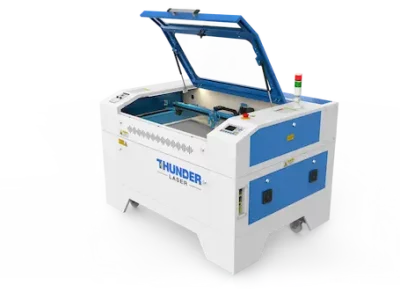
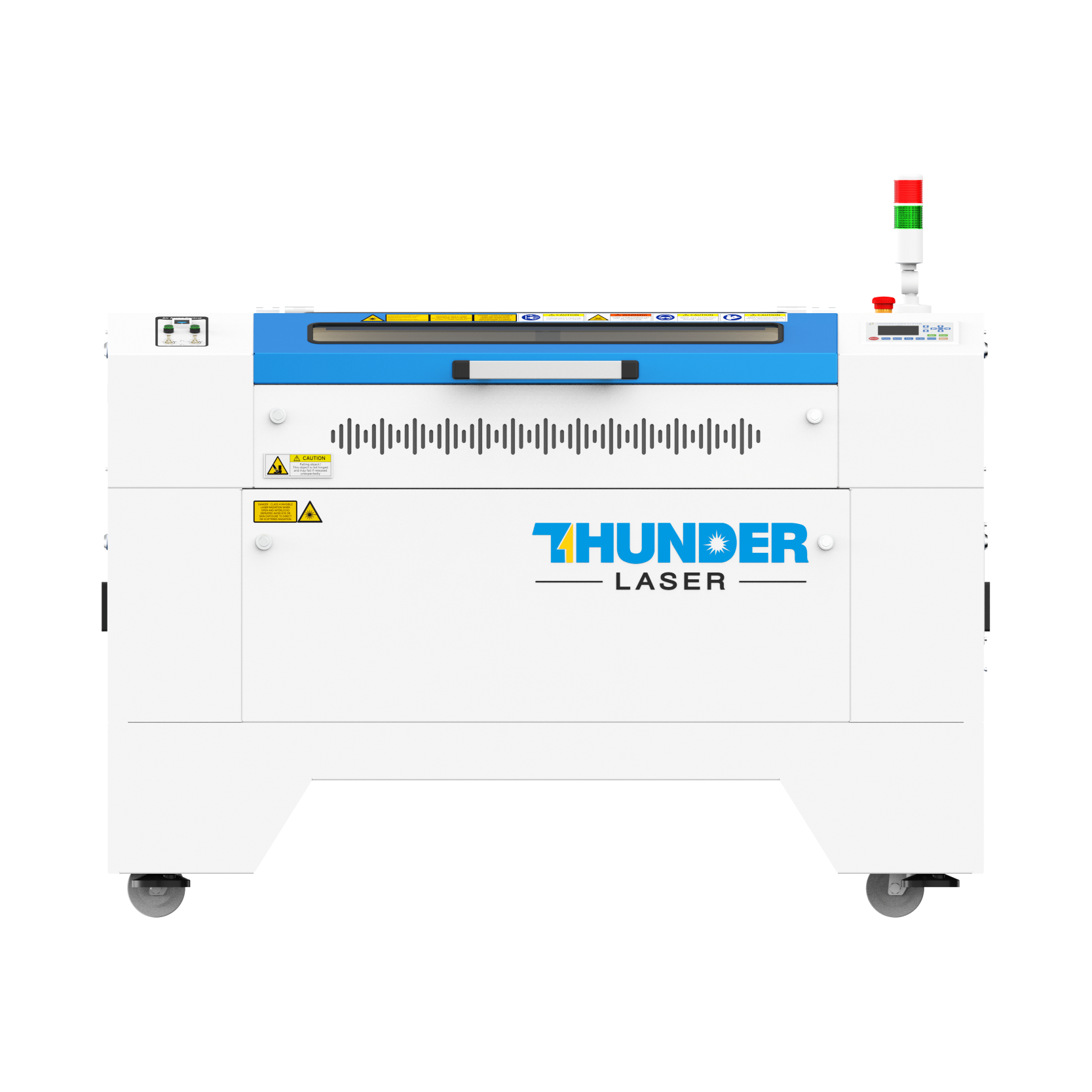
The Nova Series uses glass laser tubes, making it a strong choice for users who focus on cost-effective laser cutting and versatile non-metal processing. It is suitable for materials such as wood, acrylic, leather, and other non-metallic surfaces.
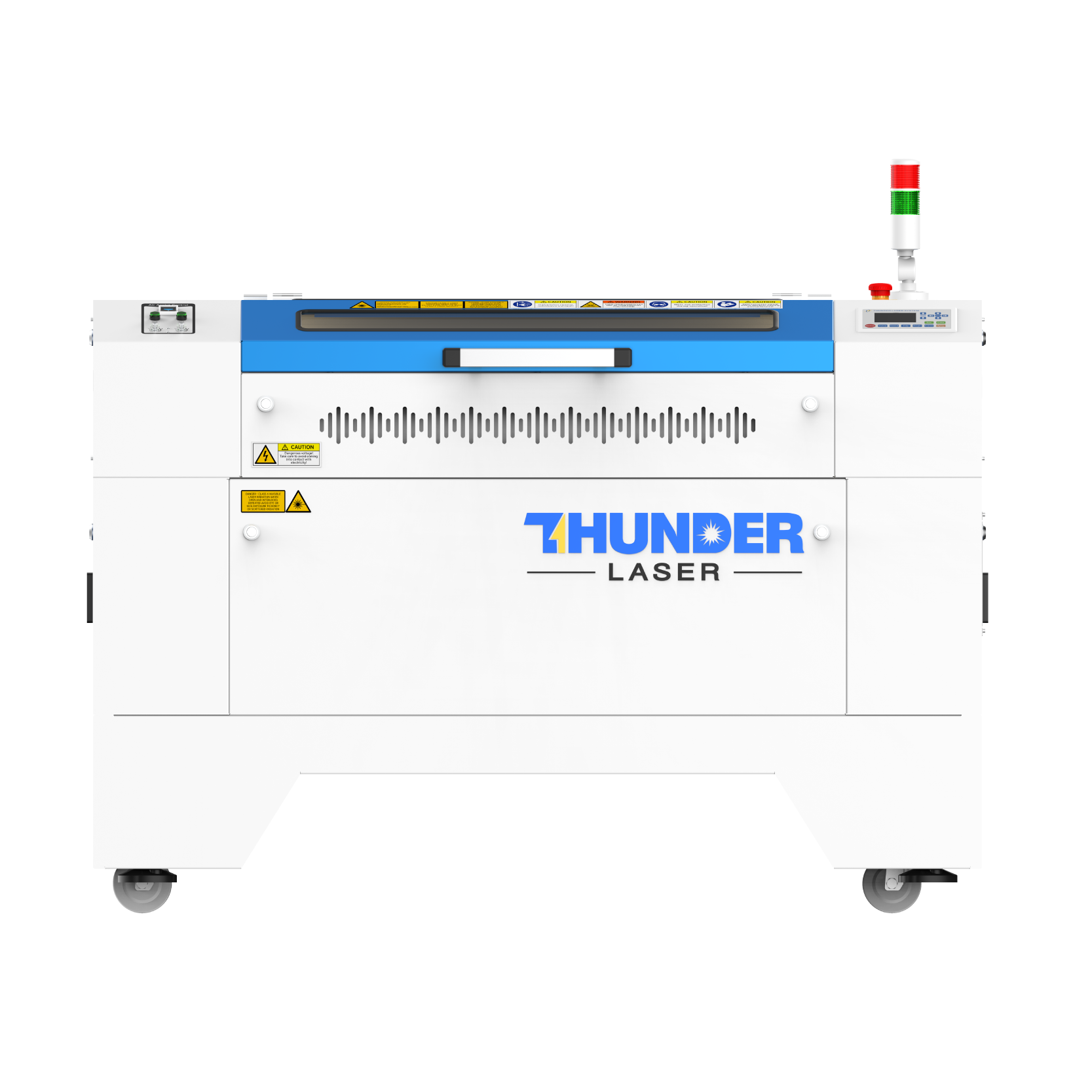
The Nova Plus Series is designed for users who need higher precision, speed, durability, and engraving quality. With RF laser technology, Nova Plus is better suited for intricate engraving, high-contrast marking, and professional production that values stable beam performance.
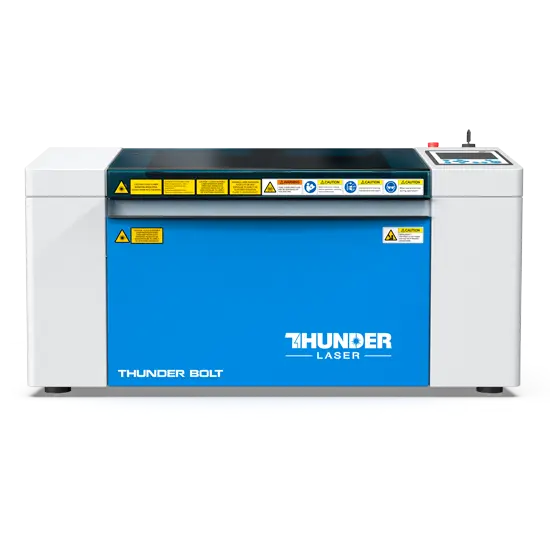
The Bolt Series uses RF metal laser tube technology and is built for high-speed, high-precision laser engraving. It is a practical option for users who want RF engraving performance in a compact desktop laser engraver.
The right choice depends on your application, budget, production volume, material type, and quality expectations. Use the following decision guide to match the tube type to your workflow.
RF laser tubes and DC glass laser tubes are not simply “better” or “worse.” They serve different needs. RF laser tubes are the stronger choice for users who prioritize engraving quality, precision, speed, stable output, safety, and long-term value. DC glass laser tubes are the stronger choice for users who prioritize cutting value, affordability, and general-purpose non-metal processing.
If your work is engraving-heavy, production-focused, and quality-sensitive, consider an RF-based machine such as Bolt or Nova Plus. If your work is cutting-heavy and budget-sensitive, Nova with a DC glass tube is a practical and cost-effective choice.
The most valuable decision is not just choosing a tube type. It is choosing a complete laser system that matches your material, production speed, detail requirements, maintenance expectations, and long-term business goals.
Need Help Choosing Between RF and DC Glass Laser Tubes?
Talk with Thunder Laser experts to match the right CO2 laser machine to your engraving, cutting, material, and production goals.
Contact ExpertsTalk To Our Experts Now!
Please leave your contact information so that we can serve you better.
RF AND DC GLASS LASER TUBE FAQS
FIND THE RIGHT LASER FOR YOUR NEXT PROJECT
Explore Thunder Laser solutions designed for different materials, workflows, and production needs.


 Stable & Consistent MachinesUnlimited ApplicationsRobust After-sales SupportFactory Direct Supply