


Choosing the Best Leather for Laser Engraving
 2024-11-11
WHAT ARE YOU LOOKING FOR?
Search Across Products, Blog Posts, Support Content, And Resources.

Choosing the Best Leather for Laser Engraving
2024-11-11

Choosing the best leather for laser engraving affects engraving contrast, fine details, residue, odor, surface consistency, and the final appearance of the product.
This laser leather engraving guide compares vegetable-tanned, full-grain, top-grain, and PU leather. It also explains which leather types can be engraved, whether PU leather is laser safe, and which materials should be avoided.
Quick answer: Vegetable-tanned leather is generally the best leather for laser engraving because it produces clear, dark, and detailed results.
Full-grain and top-grain leather can also engrave well when their tanning method and surface finish are verified. PU leather may be engraved only when the exact product is confirmed to be PVC-free and suitable for laser processing.
Avoid PVC leather, vinyl leather, and synthetic leather with an unknown composition.
| Leather Type | Typical Engraving Result | Best For | Main Consideration |
|---|---|---|---|
| Vegetable-tanned leather | Dark, clear, and detailed engraving | Wallets, belts, journals, photos, and premium leather goods | Usually the best overall choice |
| Full-grain leather | Natural texture with rich variation | Premium accessories and durable products | Grain and thickness may vary |
| Top-grain leather | Smooth and consistent engraving | Logos, text, and batch production | Coatings and finishes must be verified |
| Verified PVC-free PU leather | Consistent surface and possible color contrast | Hat patches, accessories, and promotional products | Exact composition must be confirmed |
| Chrome-tanned leather | Material-dependent results | Selected tested products | Tanning chemicals and finishes must be verified |
| Bonded leather | Variable and often inconsistent | Limited applications | May contain adhesives and mixed materials |
| Suede or nubuck | Soft and textured engraving | Decorative or specialty projects | Fine details may appear uneven |
| PVC or vinyl leather | Not suitable | None | Do not laser process |
| Unknown synthetic leather | Not suitable until verified | None until composition is confirmed | May contain PVC or unknown coatings |
A leather comparison table that summarizes engraving results, best uses, and key safety considerations for common leather and synthetic leather materials.
Leather can produce attractive laser engraved text, logos, photos, patterns, and textures. However, different leather types can react very differently to the same laser settings.
The result depends on:
A material described simply as “leather” or “faux leather” does not provide enough information to confirm engraving quality or laser compatibility.
Natural leather can vary between hides and production batches. Synthetic leather may contain PU, PVC, mixed polymers, adhesives, backing fabrics, or surface films.
The exact material should therefore be identified before laser engraving begins.
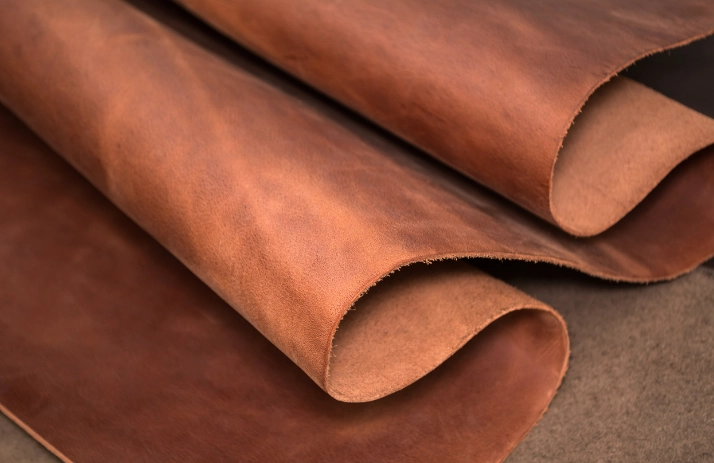
Leather grade, tanning method, finish, thickness, and composition all affect the final laser engraving result.
Leather terminology can be confusing because full-grain, top-grain, vegetable-tanned, and chrome-tanned describe different material characteristics.
Full-grain and top-grain describe the condition of the leather surface.
Vegetable-tanned and chrome-tanned describe the tanning process used to stabilize the hide.
A leather sheet may therefore be:
This distinction matters for leather laser engraving.
For example, full-grain vegetable-tanned leather may produce a clear, natural engraving with strong contrast. Full-grain leather with heavy oils, pigments, or coatings may produce a very different result even though it has the same leather grade.
When choosing leather, consider both the surface grade and the tanning method.
Vegetable-tanned leather is often considered the best leather for laser engraving.
It is tanned using plant-derived tannins, traditionally obtained from materials such as tree bark, leaves, or wood. The process generally produces firm leather that responds well to laser energy and retains fine engraved details.
Vegetable-tanned leather laser engraving is commonly used for:
Vegetable-tanned leather is still a natural material. Results can vary according to:
Dark-colored vegetable-tanned leather may show less visible contrast than natural or light-colored leather.
Heavily oiled, waxed, or finished leather may also produce additional residue or uneven engraving.
Always test the actual production material before completing a full batch.
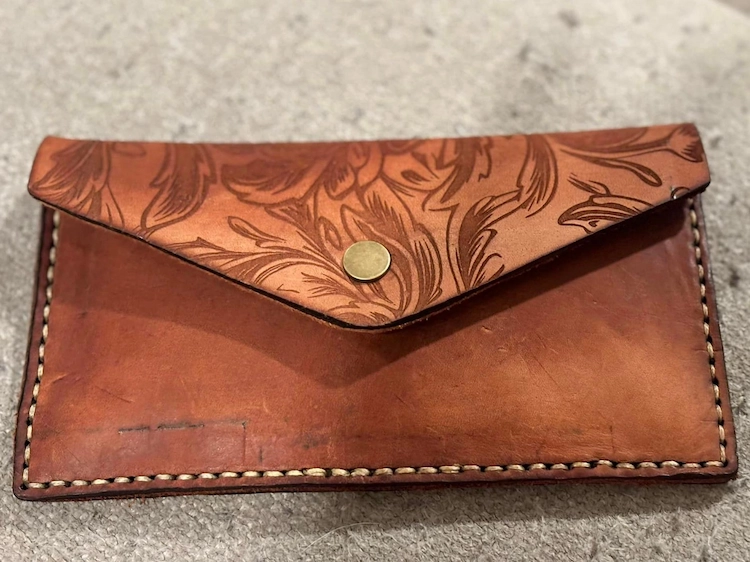
Vegetable-tanned leather is a strong choice for detailed text, logos, patterns, and photo engraving.
Full-grain leather is made from the outermost layer of the hide without removing the natural grain surface.
It is valued for durability, natural texture, and the unique appearance of each hide. Full-grain leather can create premium laser engraved leather goods, especially when it is vegetable-tanned and lightly finished.
The natural surface may contain:
These features can cause slight changes in engraving darkness and detail across the surface.
Full-grain leather may also be thicker or stiffer than other leather types. Careful focusing, flattening, fixture design, and parameter testing may be required.
Full-grain does not automatically mean vegetable-tanned or suitable for laser engraving. Confirm the tanning method, coatings, dyes, oils, and finishes before processing.
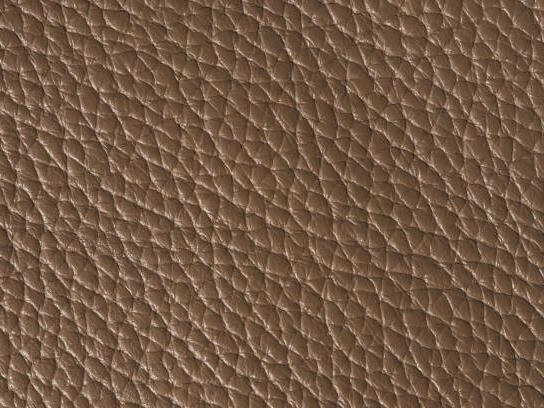
Full-grain leather provides a durable, natural surface for premium custom laser engraved leather goods.
Top-grain leather has been sanded or corrected to reduce surface imperfections and create a smoother finish.
Because the surface is usually more uniform, top-grain leather can provide consistent engraving for logos, text, repeated patterns, and branded merchandise.
Top-grain leather may contain:
These treatments can affect engraving contrast, residue, odor, and surface behavior.
A smooth appearance does not prove that the material is suitable for laser processing. Confirm the tanning method and surface composition before engraving.
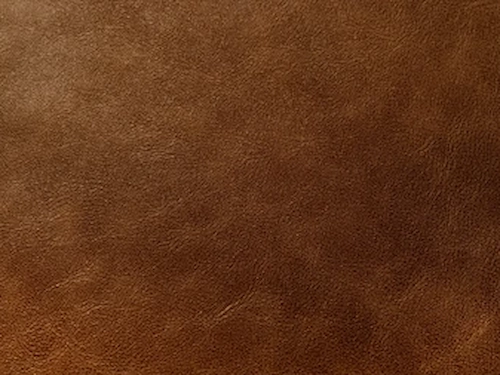
Top-grain leather provides a smooth surface for consistent logos, text, and repeated engraving.
PU leather can sometimes be laser engraved, but only when the exact product is confirmed to be PVC-free and suitable for laser processing.
PU leather usually consists of a polyurethane surface layer over a fabric, fiber, or synthetic backing. Its consistent surface and wide color range make it popular for:
However, the term “PU leather” is not a complete material specification.
A product sold as PU leather may still contain:
Do not assume that a material is suitable for laser engraving simply because it is marketed as:
PU leather is not automatically laser safe.
A specific PU leather product may be considered for laser engraving only after the supplier confirms that the complete material construction is suitable.
Verification should include:
The product should be confirmed as PVC-free and vinyl-free.
PVC leather and vinyl leather should not be laser engraved or cut. Heating PVC can create hazardous and corrosive by-products that can harm the operator and damage the laser machine.
A small engraving test does not replace supplier documentation. Smell, flame color, or visual appearance cannot reliably confirm whether a material is safe.
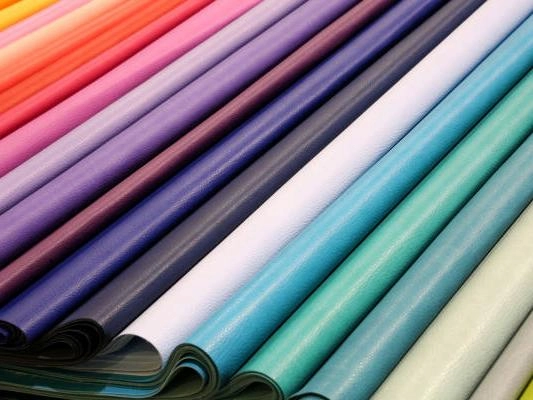
Selected PVC-free PU leather may be suitable for laser engraving, but the complete composition must be verified first.
Do not laser process leather when its composition is unknown or when the supplier cannot provide sufficient material information.
PVC and vinyl leather should not be laser engraved or cut.
These materials can produce hazardous and corrosive by-products when heated.
Artificial leather may contain PU, PVC, mixed polymers, adhesives, films, coatings, or unknown additives.
Do not process synthetic leather until the entire material construction has been verified.
Bonded leather is often made from leather fibers combined with adhesives, backing materials, pigments, and surface coatings.
Its engraving behavior depends on the complete composition and may be inconsistent.
Thick pigments, plastic films, metallic finishes, waterproof coatings, and unknown surface treatments can change engraving behavior and fumes.
Chrome-tanned leather should not be treated as one uniform material category.
Confirm the exact tanning chemistry, dyes, finish, coatings, and supplier safety information before testing.
Flame-retardant leather and synthetic leather may contain additives that require further verification.
Avoid leather contaminated or treated with:
These terms are often compared as though they describe competing leather types, but they refer to different characteristics.
| Term | What It Describes | Laser Engraving Relevance |
|---|---|---|
| Full-grain | The natural outer grain remains intact | Premium texture with more natural variation |
| Top-grain | The surface has been sanded or corrected | Smoother and more consistent |
| Vegetable-tanned | A tanning process using plant-derived tannins | Often firm and responsive to engraving |
| Chrome-tanned | A chromium-based tanning process | Requires material and finish verification |
A comparison table that explains how leather grade and tanning method affect laser engraving results.
A full-grain vegetable-tanned leather can combine natural texture, durability, and strong engraving performance.
A top-grain vegetable-tanned leather may offer a smoother surface for repeated logos and text.
Two full-grain leather sheets may respond differently if one is vegetable-tanned and the other is chrome-tanned, heavily oiled, dyed, or coated.
Evaluate:
Choose leather by considering the desired result, product use, and material consistency.
Smooth and even leather usually provides clearer text, logos, and photo details.
Natural and light-colored leather often produces stronger dark engraving contrast.
Dark leather may require larger designs, bolder lines, or a different contrast strategy.
Thicker leather may require more careful focusing and flattening.
Thickness variation can cause uneven engraving, especially across large designs.
Fine and consistent grain is useful for photographs and small text.
Strong natural grain can add character but may interfere with very fine image details.
Heavily oiled or waxed leather may produce residue or uneven darkening.
Paint, pigments, sealants, protective coatings, and metallic finishes can change how the leather reacts to the laser.
Leather that is too dry, damp, warped, or uneven may produce inconsistent results.
Leather from different suppliers, colors, hides, or production batches may require different settings.
| Project | Recommended Starting Material | Why |
|---|---|---|
| Wallets | Vegetable-tanned or full-grain leather | Premium appearance and durability |
| Belts | Full-grain vegetable-tanned leather | Strong structure and natural finish |
| Hat patches | Vegetable-tanned leather or verified PVC-free PU leather | Suitable for logos and repeat production |
| Photo engraving | Smooth, light-colored vegetable-tanned leather | Better fine detail and tonal contrast |
| Keychains | Vegetable-tanned or top-grain leather | Easy to personalize and finish |
| Journals | Vegetable-tanned or full-grain leather | Premium appearance and long-term use |
| Luggage tags | Vegetable-tanned or top-grain leather | Good durability and text clarity |
| Branded merchandise | Top-grain or verified laser-compatible PU leather | More consistent for batch production |
| Color-layer patches | Verified PVC-free laserable PU leather | May reveal a contrasting lower layer |
| Decorative panels | Vegetable-tanned leather | Suitable for detailed artwork and patterns |
A project recommendation table that matches common laser engraved leather products with suitable starting materials.
Custom laser engraved leather goods are popular for personalized gifts, small businesses, branded products, fashion accessories, and promotional merchandise.
Common products include:
The best material depends on the product.
Vegetable-tanned leather is a strong choice for premium personalized goods and photo engraving.
Full-grain leather is suitable for durable, high-value accessories.
Top-grain leather is useful when a smoother surface and repeatable logo engraving are priorities.
Verified PVC-free PU leather may suit colorful patches, promotional products, and batch-manufactured accessories.
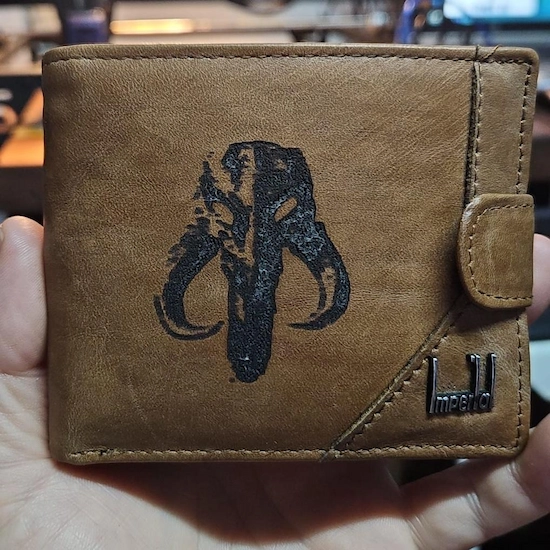
Leather wallets can be personalized with names, monograms, logos, patterns, and custom artwork.
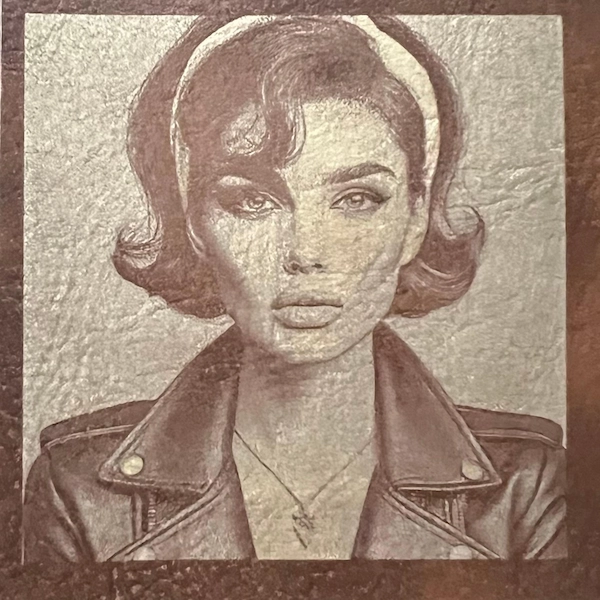
Smooth, light-colored vegetable-tanned leather is a strong starting point for detailed photo engraving.
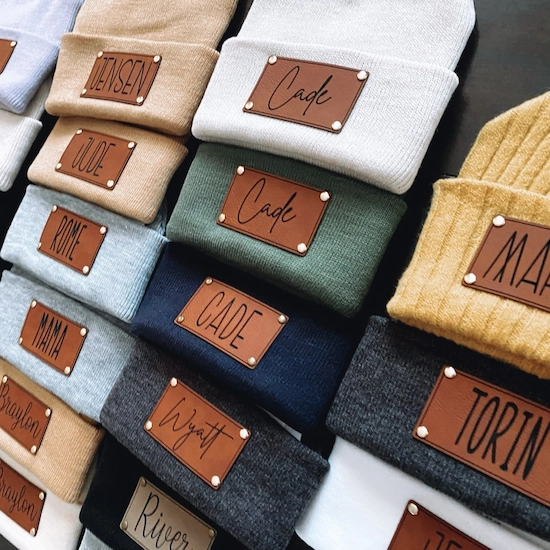
Leather and verified PVC-free synthetic patches can be customized for teams, brands, events, and small businesses.
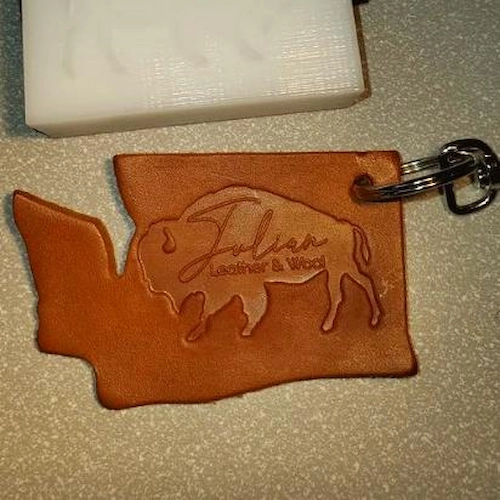
Keychains and small leather accessories are suitable for names, logos, patterns, and personalized gifts.
Even when a leather type is generally suitable, test the exact material before starting a full production batch.
Record:
For synthetic leather, verify the polymer, backing, coating, film, and adhesive.
Check for:
Use an offcut from the same sheet or production batch.
A test on a different color, supplier, finish, or thickness may not provide a reliable result.
Evaluate several settings and compare:
Leather may look different immediately after engraving than it does after cooling and cleaning.
Record:
Repeat testing when any of the following changes:
Correct storage helps keep leather flat, clean, and consistent before processing.
Store leather in a cool, dry area with stable temperature and humidity.
Excessive moisture may encourage mold, while overly dry conditions can make some leather stiff or brittle.
High heat and sunlight may dry, fade, or deform leather.
Avoid tight folds because permanent creases can interfere with focusing and produce uneven engraving.
Use clean paper, cotton, or another breathable cover to reduce dust without trapping moisture.
Store verified laser-compatible leather separately from:
Record:
Leather sheets can be purchased from:
Do not purchase synthetic leather for laser processing based only on descriptions such as “vegan leather,” “faux leather,” or “PU leather.”
A CO₂ laser is generally the most practical choice for engraving and cutting natural leather.
CO₂ laser machines are commonly used for:
The best laser marking machine for leather depends on:
A compact RF CO₂ laser can be suitable for detailed engraving on patches, wallets, and accessories.
A larger CO₂ laser may be better for full leather sheets, bags, furniture panels, and batch production.
Fiber and UV laser systems may produce selected marking effects on certain coated, treated, or synthetic leather products. Compatibility depends on the exact material, coating, laser source, and desired result.
Material testing is required before selecting a laser marking machine for leather production.
Before starting:
Ventilation helps control normal process fumes, but ventilation does not make an unsuitable material safe to engrave.
For most leather laser engraving projects, begin with smooth, natural-colored vegetable-tanned leather from a supplier that can provide consistent material information.
Choose full-grain vegetable-tanned leather when durability, natural texture, and a premium finish are priorities.
Choose top-grain leather when a smoother and more repeatable surface is needed for logos, text, and batch production.
Use PU leather only when the exact material, backing, coating, and adhesive have been confirmed as PVC-free and suitable for laser processing.
Avoid:
Before completing a full production batch:
Need Help Choosing Leather or a Laser Machine?
The best engraving result comes from matching the leather type, laser source, machine configuration, design, fume extraction, and production requirements. Thunder Laser can help evaluate your leather sample, compare processing results, and recommend a suitable leather laser engraving machine for your workshop, studio, or production business.
Contact Thunder LaserTalk To Our Experts Now!
Please leave your contact information so that we can serve you better.
LEATHER LASER ENGRAVING FAQS
FIND THE RIGHT LASER FOR YOUR NEXT PROJECT
Explore Thunder Laser solutions designed for different materials, workflows, and production needs.


 Stable & Consistent MachinesUnlimited ApplicationsRobust After-sales SupportFactory Direct Supply


