Laser Water Coolants & Additives
 2024-05-27
WHAT ARE YOU LOOKING FOR?
Search Across Products, Blog Posts, Support Content, And Resources.

Laser Water Coolants & Additives
2024-05-27

Water-cooled glass tube CO2 lasers depend on a clean and stable cooling system. The main coolant fluid and any added chemicals can affect cooling performance, electrical conductivity, biological growth, corrosion, and long-term laser tube reliability.
This guide explains common coolant options and additives for water-cooled laser systems, including distilled water, tap water, deionized water, engineered coolants, antifreeze, algaecides, biocides, detergents, and surfactants.
For water-cooled glass tube CO2 lasers, clean distilled water is generally the recommended base coolant. Any additive should be used carefully because it may increase conductivity, create contamination, or affect machine components.
Cooling fluid selection for water-cooled CO2 lasers is often debated because different users, machines, environments, and maintenance habits can lead to different results. However, many experienced laser users agree that the safest starting point is clean, impurity-free water with very limited additives when needed.
A good coolant solution should support heat transfer, keep the system clean, avoid biological growth, maintain low conductivity, and reduce the risk of unwanted electrical behavior inside or around the laser tube cooling system.
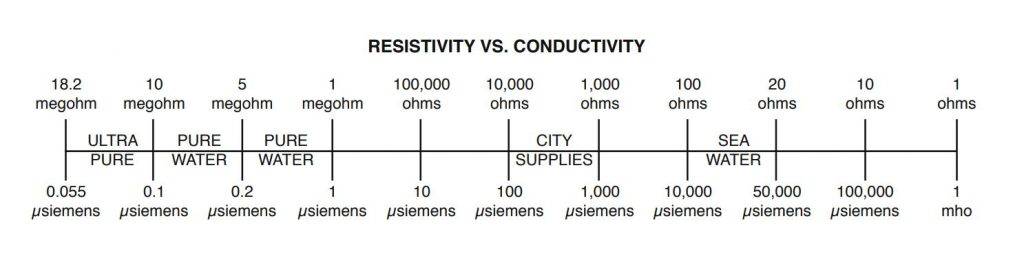
Conductivity is an important concern in water-cooled glass tube CO2 laser systems. If the cooling fluid becomes too electrically conductive, the cooling system may become more vulnerable to unwanted electrical effects from the high-voltage DC excitation used in the laser tube.
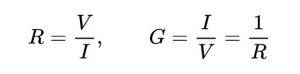
Electrical resistance measures how difficult it is for current to pass through a conductor. Electrical conductance is the opposite: it measures how easily current can pass. Resistance is measured in ohms, while conductance is measured in siemens.
For many materials and conditions, voltage and current are directly proportional, which means resistance and conductance stay relatively constant. This relationship is known as Ohm’s law.
Contamination can come from the cooling system, the fluid, the additives, or biological growth that develops over time. Foreign materials, organisms, and chemical residues may reduce cooling performance, create buildup, or increase maintenance problems.
Keeping the coolant clean is essential. The system should remain free of particles, algae, slime, scale, and chemical contamination as much as possible.
The main ingredient in a water-cooled laser system should usually be clean water. The type of water matters because mineral content, ions, and contaminants can affect conductivity, corrosion, scaling, and cooling performance.
| Cooling Fluid | Main Point | General Recommendation |
|---|---|---|
| Distilled Water | Low in minerals and impurities, with low conductivity. | Recommended base coolant for water-cooled laser tubes. |
| Tap Water | Can contain chloride, calcium, magnesium, and other contaminants. | Not recommended for laser cooling loops. |
| Deionized Water | Very low ion concentration but can be unusually corrosive. | Use only when all cooling loop materials are compatible. |
| Engineered Coolants | Often designed for PC water cooling rather than CO2 laser tube environments. | Review carefully before use; do not assume compatibility. |
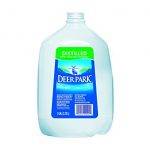
Distilled water is produced by boiling water into vapor and condensing it back into liquid in a separate container. Many impurities remain behind during this process, so the final water is effectively free of most minerals and contaminants.
Distilled water has low conductivity and is a tried, commonly recommended coolant for water-cooled laser tubes.
Tap water can vary greatly depending on local water chemistry. Chloride may be corrosive, and calcium or magnesium can form scale on metal surfaces, reducing thermal performance.
Tap water can also have much higher conductivity than distilled water. For these reasons, tap water should generally not be used in a laser cooling loop.
Deionized water has a very low concentration of ions. This can help reduce mineral deposits and lower the risk of electrical arcing caused by conductive coolant.
However, deionized water can be unusually corrosive because it tends to dissolve substances it contacts. If DI water is used, all cooling loop materials must be corrosion-resistant and compatible with DI water.
Some performance coolants are designed for PC water-cooling systems. They may claim low conductivity, low toxicity, good thermal performance, and corrosion or biological inhibitors. However, PC cooling products are not necessarily designed for the high-voltage environment of CO2 laser tubes.
These fluids may be promising in some cases, but users should review conductivity, chemical compatibility, tube safety, and manufacturer guidance before using them in a laser cooling system.
Additives may be used to prevent freezing, limit biological growth, or improve coolant behavior. However, every additive changes the coolant chemistry and may create side effects, including higher conductivity, contamination, component degradation, or machine failure.
Additives should not be added casually. Use only what is needed, keep the mixture simple, and avoid additives that significantly increase conductivity.
Antifreeze is commonly discussed for laser cooling systems, but it should generally be a last resort. When possible, it is better to keep coolant temperature above freezing by controlling the environment or using suitable heating solutions.
Automotive antifreeze based on ethylene glycol can have high conductivity and may contaminate or degrade parts of the laser cooling system. It is also formulated for vehicle cooling systems, not laser tube cooling loops.
For these reasons, automotive antifreeze is not recommended for water-cooled glass tube CO2 laser systems.
RV antifreeze based on propylene glycol may be a possible non-toxic option for freeze protection when no better solution is feasible. However, it may promote algae growth, so an appropriate algaecide may also be needed.
Conductivity can vary by product. Some RV antifreeze products may exceed acceptable conductivity levels, so users should verify suitability before use.
Additives may be needed to prevent algae and other organic growth in the cooling system. If organic growth is left unchecked, it can cause flow problems, contamination, and maintenance issues.
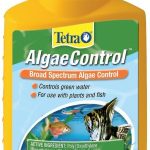
Tetra Algae Control is commonly used to help reduce algae growth and has minimal effect on overall coolant conductivity when used in very small amounts.
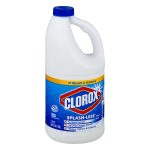
Testing referenced in the source content suggests that a very small amount of Clorox bleach in a larger water volume can inhibit bacteria and algae growth while keeping conductivity within a lower range. Users should still be cautious because bleach is a chemical additive and improper amounts may cause problems.
Detergents and surfactants may be considered to improve coolant conditioning and flow. However, not every surfactant is suitable for laser coolant systems.
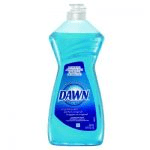
Original-strength Dawn dishwashing liquid has been used in very small amounts as a detergent and surfactant. According to the source content, it appears to have little effect on conductivity at reasonable concentrations.
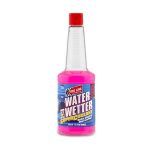
WaterWetter and similar automotive cooling additives are designed for engine cooling systems, not laser cooling systems. Testing cited in the source content showed that WaterWetter can significantly increase water conductivity, making the coolant unsuitable for laser tube cooling.
The source article provides a tested mixture for an unfilled tube and a 5-gallon reservoir. It is based on distilled water with very small amounts of algaecide and dishwashing liquid.
This mixture is based on the source article’s tested setup. Before applying any coolant recipe, confirm that it is compatible with your specific laser machine, chiller, tubing, reservoir, and operating environment.
For water-cooled glass tube CO2 lasers, distilled water is generally the best base coolant because it is clean, low in impurities, and low in conductivity. Tap water is not recommended because it may contain minerals, chloride, and other contaminants that can increase conductivity or create scale.
Additives should be used only when needed. Automotive antifreeze and WaterWetter-style additives are not recommended because they can make the coolant too conductive or unsuitable for laser cooling systems. If algae control, freeze protection, or surfactant support is needed, choose carefully and keep the mixture as simple as possible.
The safest coolant strategy is simple: start with clean distilled water, keep the loop clean, avoid high-conductivity additives, and maintain the cooling system regularly.
Talk To Our Experts Now!
Please leave your contact information so that we can serve you better.
LASER WATER COOLANTS AND ADDITIVES FAQS
FIND THE RIGHT LASER FOR YOUR NEXT PROJECT
Explore Thunder Laser solutions designed for different materials, workflows, and production needs.


 Stable & Consistent MachinesUnlimited ApplicationsRobust After-sales SupportFactory Direct Supply