Choosing the Best Laser Metal Engraving Machine
 2024-08-28
WHAT ARE YOU LOOKING FOR?
Search Across Products, Blog Posts, Support Content, And Resources.

Choosing the Best Laser Metal Engraving Machine
2024-08-28

A metal engraving machine offers exceptional precision and durability, making it suitable for applications ranging from industrial identification to custom metalwork. Whether you work with stainless steel, aluminum, brass, or other metals, choosing the right laser metal engraving machine is essential for producing sharp, long-lasting marks.
This guide explains the main laser types, key machine features, common metal engraving applications, and practical factors to consider before investing in a laser engraver for metal.
Yes, a laser machine can engrave metal, but the result depends heavily on the laser source, power, material type, and engraving goal. The right machine can create precise designs on a variety of metals, making laser engraving useful for both industrial production and creative customization.
Laser engraving and laser marking are valued for speed, accuracy, repeatability, and the ability to process complex patterns with minimal manual effort. The laser marking market is also growing, with one market estimate in the original article projecting growth from USD 3.91 billion in 2024 to USD 5.18 billion by 2029.
If you plan to engrave metal regularly, choosing a suitable laser metal engraving machine is more important than simply choosing the lowest-cost machine. Different laser types perform very differently on bare metal, coated metal, and treated metal surfaces.
Several laser types can be used for engraving, but not all of them are equally suitable for metal. Understanding the strengths and limitations of each laser source will help you choose the right system for your materials and production needs.
Diode lasers can produce different colors of light, with blue diode lasers generally offering higher power output than red or green diode lasers. However, they are usually not powerful enough for reliable engraving on bare metal and are more suitable for coated surfaces or softer materials.
CO2 lasers are primarily used for non-metal materials, but they can engrave coated metals or treated metal surfaces when a marking spray or marking compound is used.
UV lasers are well suited for fine marking and micro-engraving. They are often selected when precision, minimal heat impact, and clean details are important.
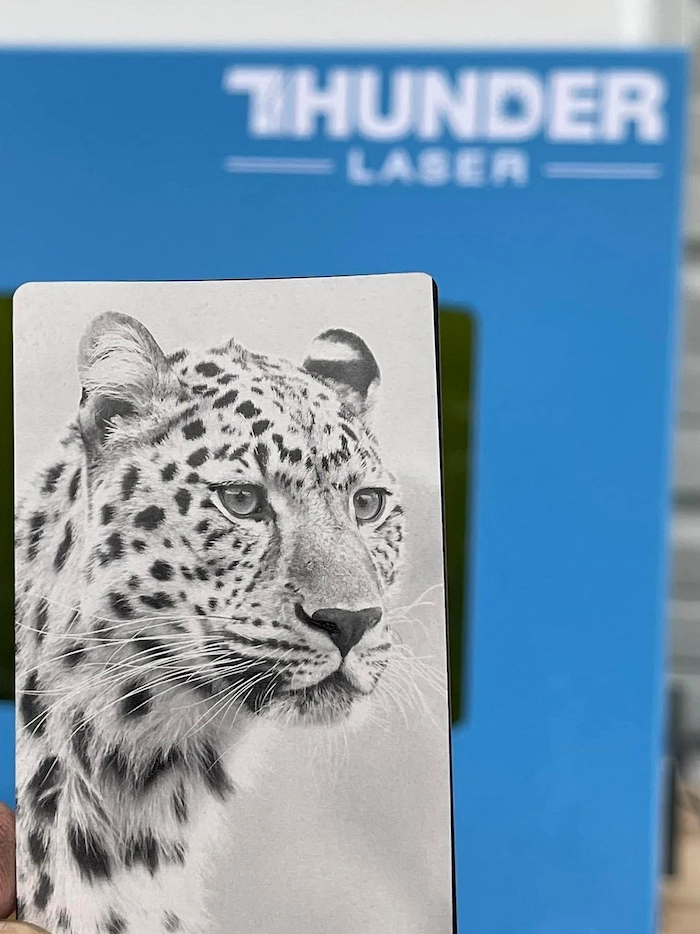
Fiber lasers are one of the best choices for metal engraving because their laser energy is well absorbed by many metals. They can produce deep, precise, and durable marks on materials such as stainless steel, aluminum, brass, copper, and titanium.
The laser size and power you need depend on the metal type, design complexity, marking depth, and production scale. For effective metal engraving, a fiber laser with at least 20W to 50W is commonly recommended. Higher wattage can provide faster engraving and deeper marks, especially on harder metals such as stainless steel.
Work area size is also important. Choose a machine that can fit your largest expected workpiece. For many standard marking projects, common work areas range from 100 mm × 100 mm to 300 mm × 300 mm.
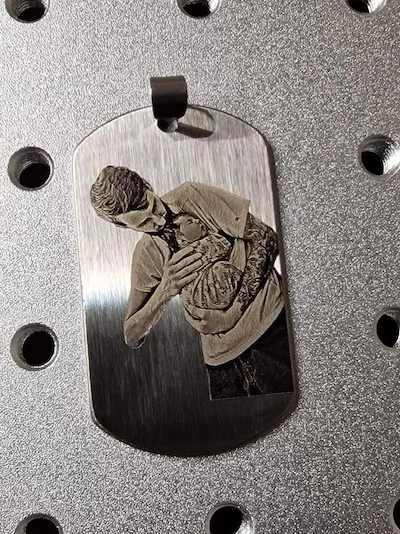
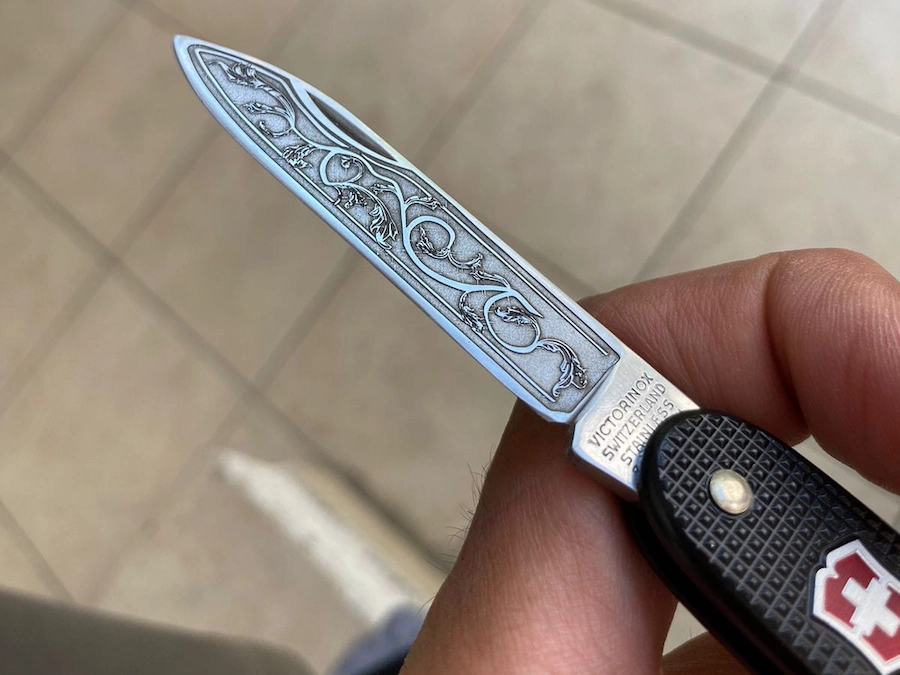
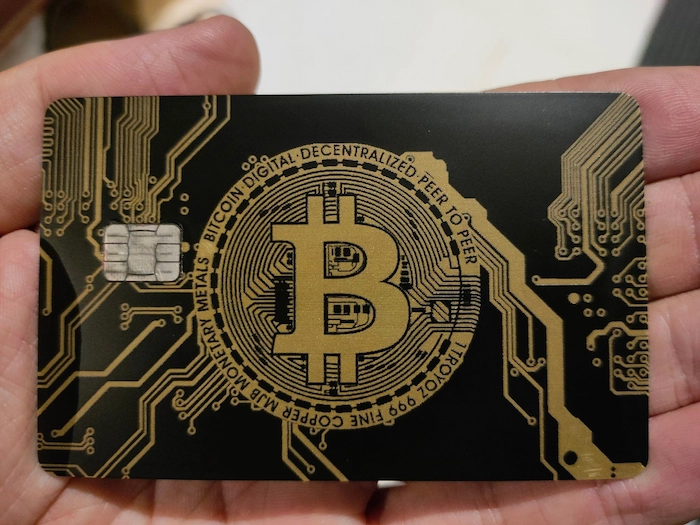
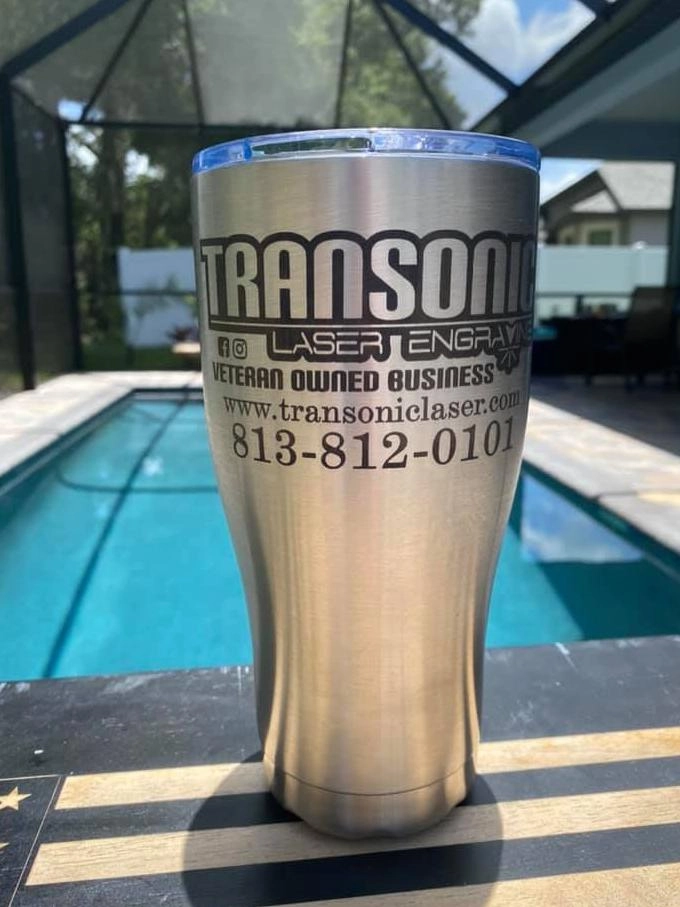
Metal is widely used across many industries, so laser engraving on metal has a broad range of applications. You can customize existing metal items, create functional identification marks, or produce decorative metal artwork through laser engraving.
When selecting a laser metal engraving machine, consider the material, engraving depth, production volume, budget, and expected future applications. The following points can help you make a more practical buying decision.
Start with the metals you need to engrave most often. Stainless steel, aluminum, brass, copper, titanium, and precious metals may require different laser settings and marking strategies. If bare metal engraving is your main goal, fiber laser technology is usually the most suitable choice.
Compare laser source, power, work area, software compatibility, focusing method, cooling system, and ease of operation. A good machine should match both your current engraving needs and your expected production workflow.
Price varies by laser type, power, brand, and feature set. A lower-cost machine may be enough for light marking or occasional projects, while a higher-end fiber or UV laser can be a better long-term investment for professional metal engraving.
Look for real user feedback on engraving quality, software experience, machine stability, maintenance, and technical support. These practical details often reveal how the machine performs beyond its specification sheet.
Choose a laser engraving machine that can grow with your business. If you may expand into deeper engraving, higher-volume production, or more material types, a more capable machine can reduce the need for early replacement.
The cost of a laser engraver for metal can vary widely depending on laser type, power, brand, and features. The original article gives the following general ranges for reference:
| Laser Type | Typical Range | Notes |
|---|---|---|
| Diode Laser | Around $300 to $1,000 | Usually not suitable for engraving bare metal. |
| CO2 Laser | Around $2,000 to $20,000 or more | Typically requires marking spray or treated surfaces for metal engraving. |
| Fiber Laser | Around $5,000 to $50,000 or more | Well suited for metal engraving, with higher-power industrial models at the upper end. |
| UV Laser | Around $15,000 to $70,000 | Specialized for high-precision marking and delicate materials. |
Both UV and fiber lasers can be used for metal engraving, but they are suited to different types of work. UV lasers are useful for fine marking and micro-engraving, especially when precision and low heat impact are priorities. However, they are generally less effective for deep engraving on metal.
If your main focus is metal engraving, a fiber laser is usually the optimal choice. Fiber lasers are well absorbed by metals, making them ideal for deep, precise, and durable marking across a wide range of metal materials.
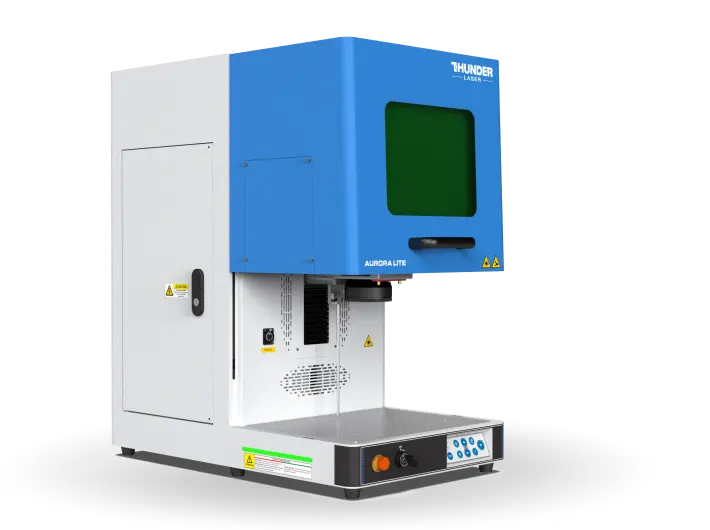
The Thunder Aurora provides both fiber and UV options, making it a strong choice for high-quality, high-precision metal laser engraving and marking. With speeds up to 8000 mm/s, Aurora supports business users in a compact desktop format.
Features such as auto-focus and a light camera help simplify setup and improve workflow efficiency. Aurora is well suited for precise laser marking, and higher-power options can also support deeper engraving applications.
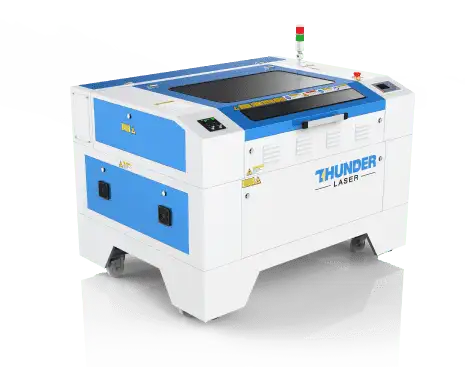
CO2 lasers are not the primary choice for most bare metal engraving, but they can engrave coated or painted metals, anodized aluminum, and metals treated with marking compounds. This makes the Nova useful for certain light metal engraving projects in addition to its main non-metal applications.
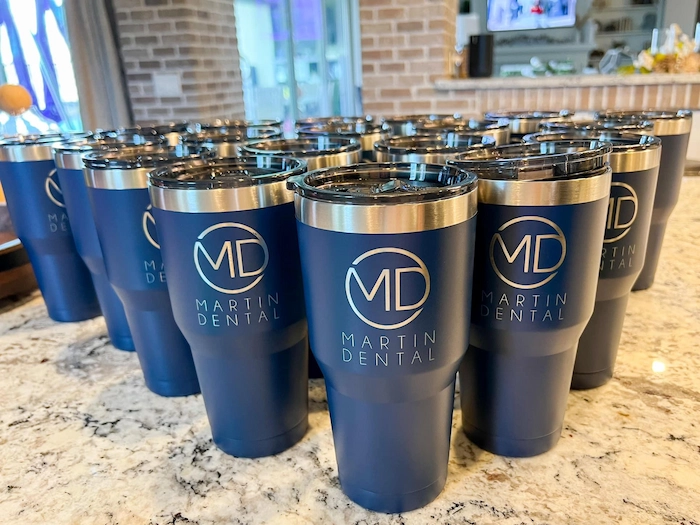
The Nova is primarily used for non-metal materials and offers speeds up to 1000 mm/s. Its larger working area can support bulk production or larger-format customization, such as coated metal cups.
The following parameters are reference settings for the Thunder Laser Aurora-Lite 50W on different metals. Actual results may vary depending on the material surface, desired color, marking depth, and production environment. Always run a small test before final production.
| Material | Marking Result | Speed | Power | Frequency | Fill Mode | Line Interval | Passes |
|---|---|---|---|---|---|---|---|
| 304 Stainless Steel | Black | 200 mm/s | 10% | 100 KHz | Bi-directional | 0.02 mm | 10 |
| 304 Stainless Steel | White | 1700 mm/s | 20% | 50 KHz | CrossHatch | 0.02 mm | 1 |
| Carbon Steel | Black | 100 mm/s | 10% | 50 KHz | CrossHatch | 0.02 mm | 1 |
| Carbon Steel | White | 400 mm/s | 20% | 60 KHz | Bi-directional | 0.02 mm | 1 |
| Brass | Black | 100 mm/s | 50% | 50 KHz | Bi-directional | 0.02 mm | 1 |
| Brass | White | 400 mm/s | 30% | 50 KHz | Bi-directional | 0.02 mm | 1 |
| Aluminum | White | 3500 mm/s | 80% | 50 KHz | Bi-directional | 0.02 mm | 1 |
| Gold | White | 1000 mm/s | 35% | 50 KHz | CrossHatch | 0.02 mm | 3 |
Choosing the right metal laser engraver depends on your goals, whether you need fine precision marking, deep engraving on hard surfaces, or flexible customization across multiple metals. By understanding laser types, material compatibility, machine capabilities, and real production needs, you can choose a laser metal engraving machine with greater confidence.
For most dedicated metal engraving projects, a fiber laser is the preferred option. For fine marking and delicate applications, UV laser technology can also be valuable. With the right machine and tested parameters, high-quality metal engraving becomes practical, repeatable, and efficient.
Find the Right Laser Metal Engraving Machine
Contact Thunder Laser to compare machine options, engraving requirements, and workflow needs for your metal engraving projects.
Contact UsTalk To Our Experts Now!
Please leave your contact information so that we can serve you better.
LASER METAL ENGRAVING MACHINE FAQS
FIND THE RIGHT LASER FOR YOUR NEXT PROJECT
Explore Thunder Laser solutions designed for different materials, workflows, and production needs.


 Stable & Consistent MachinesUnlimited ApplicationsRobust After-sales SupportFactory Direct Supply