How to Choose a Suitable Laser Cutting Machine
 2022-08-27
WHAT ARE YOU LOOKING FOR?
Search Across Products, Blog Posts, Support Content, And Resources.

How to Choose a Suitable Laser Cutting Machine
2022-08-27

Industrial laser cutting machines have changed the way manufacturers process materials across many industries. By using a high-powered laser beam, these machines offer excellent precision, speed, and efficiency compared with many traditional cutting methods. Whether you work with metal, plastic, wood, or composite materials, choosing the right laser cutter can significantly improve production quality.
In this guide, we will explain how laser cutting machines work, compare common laser types such as CO2, fiber, and YAG lasers, and help you choose a suitable machine for your specific materials, applications, and production needs.
An industrial laser cutting machine is a powerful tool used to cut a wide range of materials, including metals, plastics, wood, glass, and composite materials. It uses a high-powered laser beam to heat the material being cut, causing the material to melt, vaporize, or separate along a controlled cutting path.
One of the main benefits of laser cutting is its ability to produce clean and precise cuts with minimal material distortion. This is especially important in industries where accuracy is critical, such as aerospace, automotive manufacturing, medical device production, and custom fabrication.
Laser cutting machines are available in different sizes, power levels, and configurations. This allows users to choose a machine based on the materials they need to process, the size of their workpieces, and the type of projects they plan to complete. When purchasing a laser cutter for a workshop or business, it is important to consider working area, software compatibility, cutting modes, automation features, and long-term maintenance needs.
Understanding how a laser cutting machine works can help you use it more effectively. Most modern laser cutters are controlled by computer software, allowing users to import a design file and automate the cutting process. Below is a simplified breakdown of the main steps.
The laser source generates a concentrated beam of light. In a CO2 laser cutting machine, the laser produces an infrared beam that can be amplified and directed for cutting or engraving.
The laser beam is guided toward the material through optical components such as mirrors and lenses. These components help focus the beam onto the cutting area so the laser energy can be applied accurately.
Once the beam is focused on the material, the high-powered laser heats the material to a very high temperature. Depending on the material and laser settings, the material may melt, vaporize, or burn away along the cutting path.
As the laser beam moves along the programmed path, it cuts through the material with high precision. The machine follows the design file to help ensure that the final cut matches the required shape and dimensions.
After cutting, the material may be cooled by compressed air, assist gas, or a coolant system, depending on the machine type and material. Proper cooling helps improve edge quality and makes the finished part safer to handle.
When shopping for a laser cutter, it is important to understand the differences between common laser types. CO2, fiber, and YAG laser cutters each have their own advantages, limitations, and ideal applications.
CO2 laser cutters are widely used because they can process a broad range of materials, including wood, acrylic, plastics, glass, leather, paper, fabric, and some coated materials. They are available in different sizes and power levels, making them suitable for workshops, small businesses, schools, and production environments.
Features:
Fiber laser cutters are often used for metal processing. They can provide high speed and strong cutting performance for many metal materials, especially in industrial production. However, they are typically more expensive than CO2 laser cutters and are not the best choice for many non-metal materials.
Features:
YAG laser cutters are an older type of laser cutting equipment. Although they are less common than CO2 or fiber laser cutters today, they may still be used in certain industrial applications, especially for thinner materials or specific metalworking tasks.
Features:
Once you understand the differences between these laser types, you can choose a machine that better matches your materials, cutting speed requirements, production volume, and budget.
Laser cutting machines are used across many industries because they offer precision, efficiency, and design flexibility. From manufacturing to construction, laser cutting can help businesses achieve cleaner edges, faster production, and more complex shapes.
The automotive industry uses laser cutting machines to produce parts such as panels, structural supports, decorative trims, and custom components. Laser cutting helps process metal sheets efficiently while supporting both strength and design precision.
In aerospace manufacturing, precision and reliability are critical. Laser cutting machines can help fabricate high-precision components, including panels, engine-related parts, and complex structural elements with minimal material distortion.
The construction industry uses laser cutting for structural elements, custom metal panels, decorative facades, balustrades, and architectural details. Laser cutting allows builders and designers to create accurate parts and complex patterns more efficiently.
Laser cutting and engraving can also be used in packaging, labeling, and product marking for the food and beverage industry. Laser systems can process packaging materials such as cardboard, plastic film, and foil with accuracy and repeatability.
The medical industry requires clean and precise manufacturing. Laser cutting can support the production of surgical instruments, implants, and small medical components that require tight tolerances and consistent results.
Selecting the right industrial laser cutting machine is an important decision for any manufacturer, workshop, or business. To make a better investment, evaluate the following factors before choosing a machine.
Start by identifying the materials you plan to process. A CO2 laser is commonly used for many non-metal materials, while a fiber laser is often selected for metal cutting. Choosing the right laser source helps improve cutting quality and processing efficiency.
Consider the largest material dimensions you need to process. This will help you select a machine with a suitable bed size and working area. Also consider the available floor space in your facility.
Power is an important specification when choosing a laser machine. Higher power can support faster processing and thicker materials, but the right power level depends on your material type, thickness, and expected production volume.
Laser machines vary widely in price depending on size, power, configuration, and additional features. Set a clear budget before comparing models, and consider long-term costs such as maintenance, accessories, cooling, ventilation, and consumables.
Choose a machine built with reliable components and supported by a reputable brand or supplier. Reading customer reviews, checking service support, and asking for recommendations can help you make a more informed decision.
The bed size determines the maximum material size you can process. A larger bed size provides more flexibility for different applications, while a smaller machine may be more suitable for limited spaces or smaller products.
Laser cutting generates heat, smoke, and fumes. A reliable cooling system helps maintain stable performance, while proper ventilation or fume extraction supports a cleaner and safer working environment.
Make sure the laser machine software is compatible with your design workflow. For example, many users work with LightBurn software for laser design and control. Good software compatibility can improve workflow efficiency and reduce setup time.
Laser cutters can occupy considerable space. Measure your available floor area carefully and leave enough room for operation, maintenance, material loading, and ventilation equipment.
Some laser cutters support accessories such as rotary attachments, jigs, specialized nozzles, and air assist upgrades. Check which accessories are included and which ones may need to be purchased separately.
Industrial laser cutters require regular maintenance, including cleaning, lubrication, lens care, mirror inspection, and laser beam alignment. Understanding the maintenance schedule helps reduce downtime and maintain consistent performance.
The cutting head design affects flexibility, precision, and the types of workpieces the machine can handle. Movable cutting heads offer greater flexibility for larger or more complex projects, while fixed cutting head systems may be suitable for smaller and more uniform tasks.
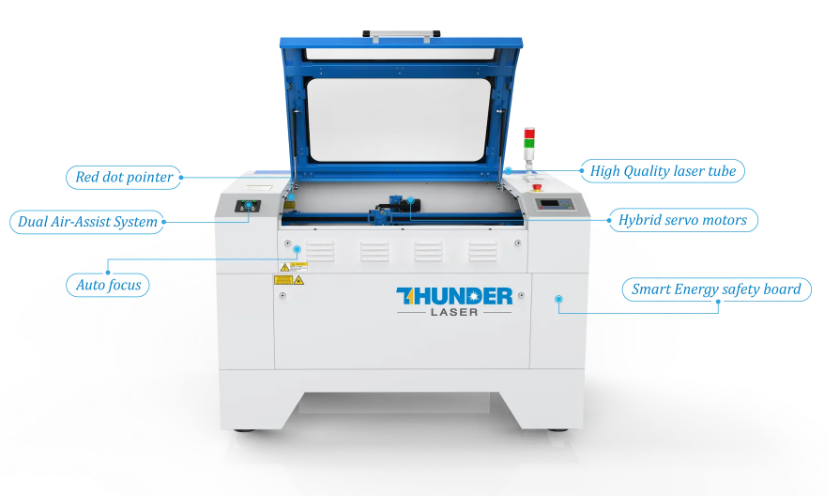
The Nova Laser Cutting Machine is a strong choice for users looking for a high-performance laser cutter. It is built with quality materials for durable operation and is suitable for both small jobs and larger production tasks.
Its large bed size allows users to process larger pieces of material more easily. The air assist and ventilation setup can help reduce heat damage and remove fumes generated during the cutting process, supporting a cleaner workspace.
One of the advantages of the Nova Laser Cutting Machine is its compatibility with LightBurn software. Whether you are a beginner or an experienced user, LightBurn can help you design, edit, and control the cutting process more efficiently.
Overall, the Nova Laser Cutting Machine is a reliable and versatile option for many laser cutting and engraving needs.
Investing in the right industrial laser cutting machine can improve production capability, whether you work in automotive, aerospace, construction, custom manufacturing, or a small business workshop. By understanding how laser cutting works and evaluating key factors such as material compatibility, machine power, bed size, software support, cooling, and maintenance, you can make a more confident decision.
Whether you choose a CO2 laser for versatile non-metal processing or a fiber laser for metalworking precision, selecting a reliable, high-quality machine is essential for achieving consistent and professional results.
Talk To Our Experts Now!
Please leave your contact information so that we can serve you better.
LASER CUTTING MACHINE FAQS
Laser cutting machines should be maintained regularly, with cleaning and inspection every 1-3 months. However, critical parts such as the laser lens and mirrors may need cleaning more frequently, depending on usage. Always refer to the manufacturer’s guidelines for specific maintenance intervals.
FIND THE RIGHT LASER FOR YOUR NEXT PROJECT
Explore Thunder Laser solutions designed for different materials, workflows, and production needs.


 Stable & Consistent MachinesUnlimited ApplicationsRobust After-sales SupportFactory Direct Supply