Effects of Laser Processing on Different Materials
 2024-05-10
WHAT ARE YOU LOOKING FOR?
Search Across Products, Blog Posts, Support Content, And Resources.

Effects of Laser Processing on Different Materials
2024-05-10

Different materials can show very different results during laser processing. Some materials are suitable for high-definition engraving, while others are better for stamps, decorative products, signs, or simple image engraving.
Understanding these material differences helps users choose better materials, set more realistic expectations, and select suitable laser processing methods. This guide introduces the laser processing effects of several commonly used materials and explains why material sub-types and batches may also affect the final result.
In laser processing, the final appearance depends on the material surface, color, density, coating, composition, and manufacturing process. The same laser process may produce carbonization, whitening, coating removal, high contrast, or a three-dimensional visual effect depending on the material.
| Material | Typical Laser Processing Effect | Suitable Applications |
|---|---|---|
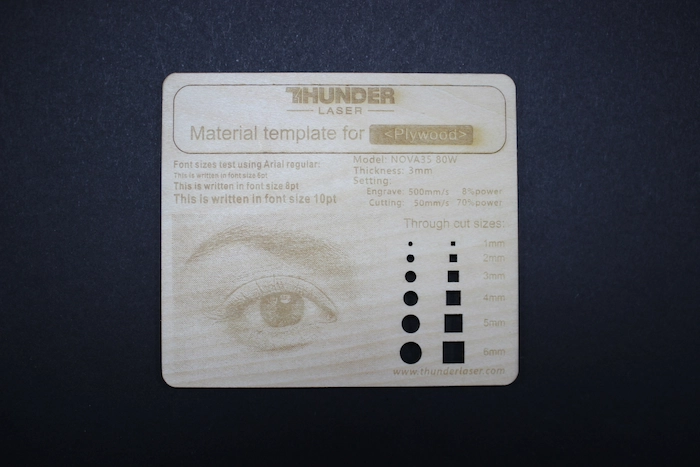
| Basswood Board | Light yellow to brown carbonization | Photo engraving, vector engraving, and general laser projects |
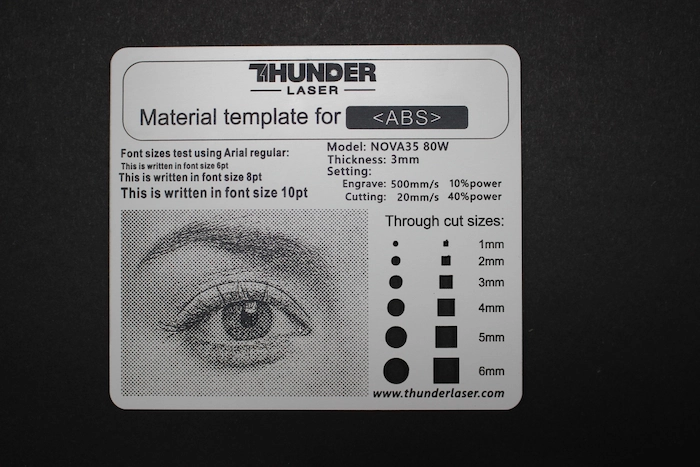
| Double-Colored Board | Surface coating removal with high contrast | High-precision photo engraving and signage |
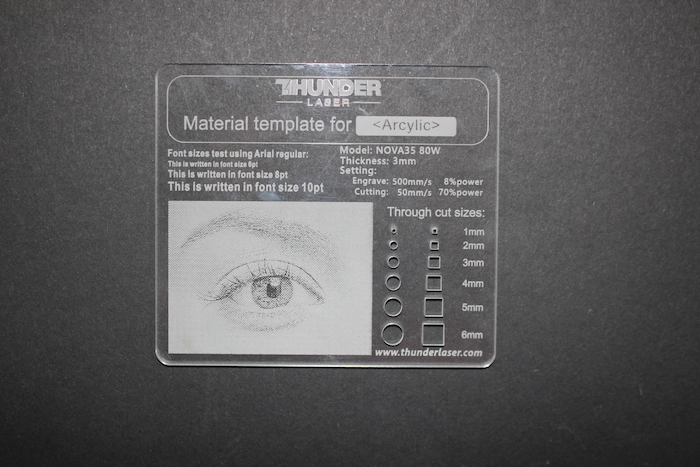
| Acrylic | White engraved areas on a transparent substrate | Decorative pieces, light stand projects, and display items |
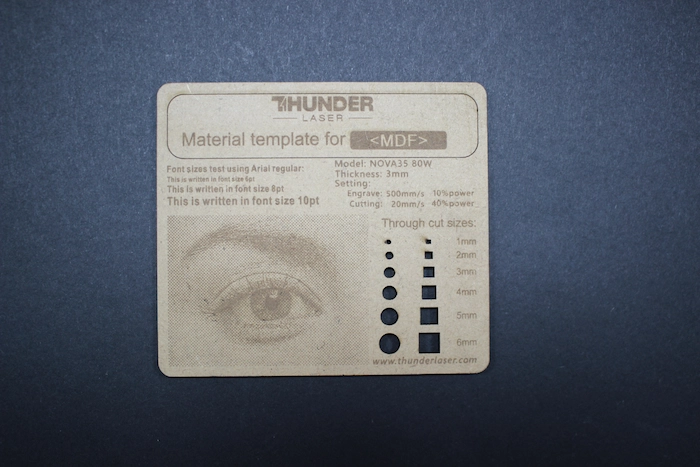
| MDF | Brownish-black carbonization | Photo engraving, vector engraving, and poster-like visual effects |
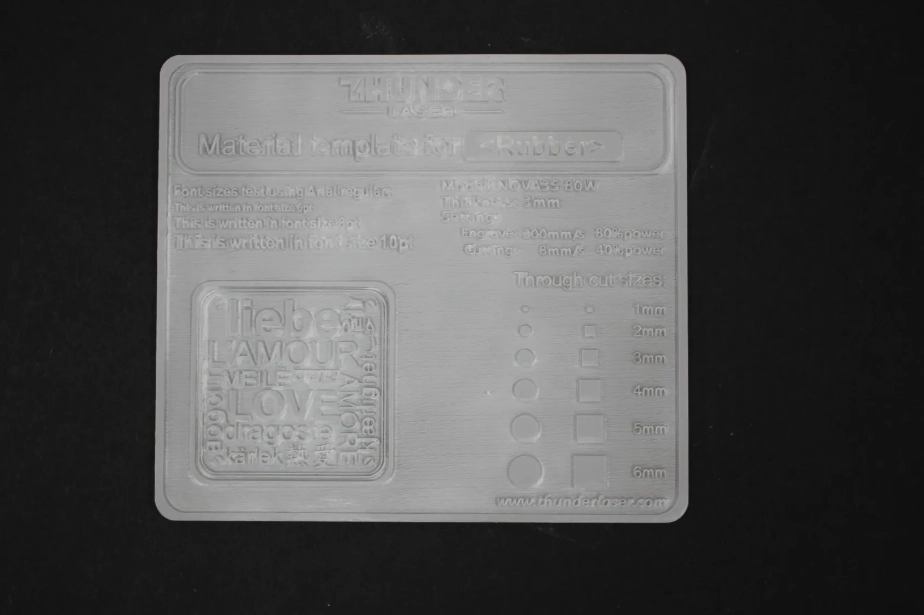
| Rubber Pad | Engraved depth suitable for stamp-making | Stamp production rather than detailed image engraving |
Basswood board is one of the most commonly used materials in laser processing. During laser processing, it usually produces a light yellow to brown carbonization effect. Basswood board performs well in photo engraving, vector engraving, and other common laser techniques.
During laser engraving, the surface coating of a double-colored board is removed, creating a high-contrast effect. Black-bottomed, white-faced double-colored boards are especially suitable for engraving high-precision photos.
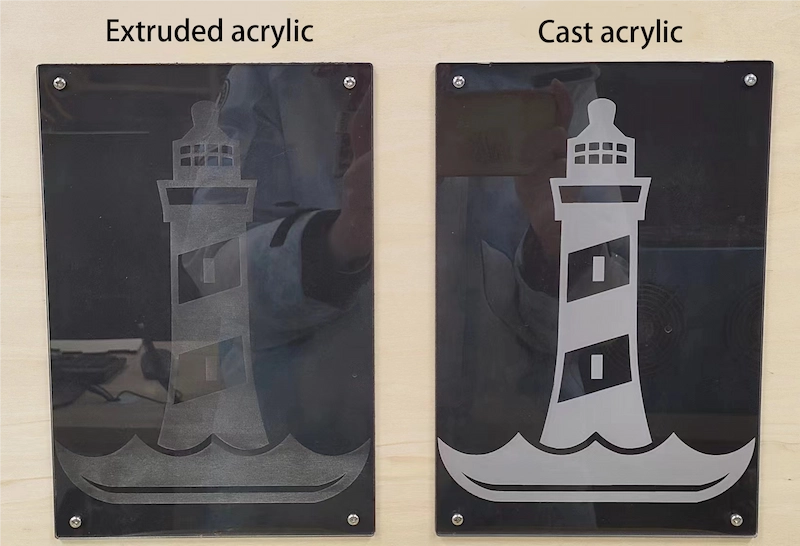
Laser engraved acrylic usually turns white in the processed area, creating a simple and distinctive visual style on a transparent substrate. When combined with a light stand, acrylic can create a unique decorative effect.
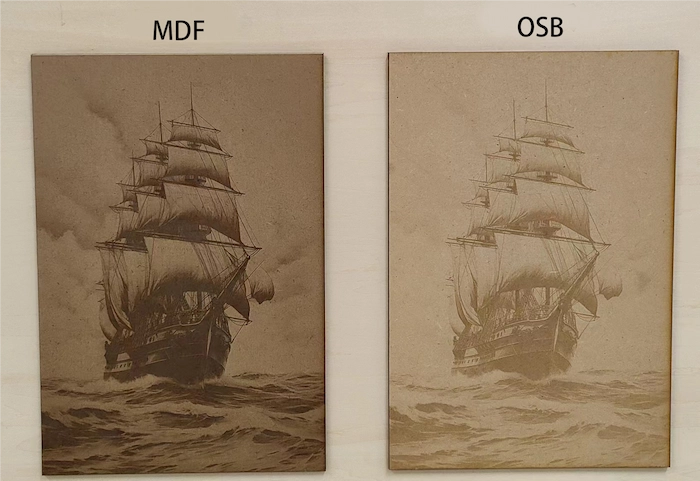
Medium-density fiberboard, often called MDF, is also widely used in laser processing. Laser processing on MDF usually produces a brownish-black carbonization effect. When used for photo engraving, vector engraving, and similar techniques, MDF can create an effect similar to an advertising poster.
Green cardboard can be processed by laser and usually produces a grayish-black carbonization effect. This makes it useful for simple engraving, craft projects, and visual samples.
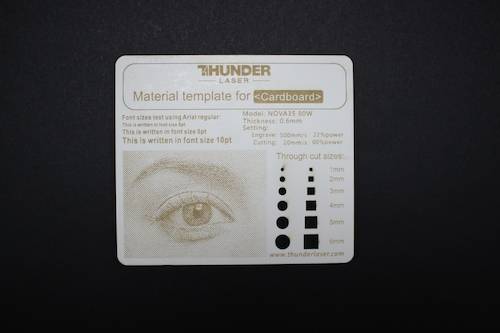
Thick cardboard can also be processed by laser. It generally produces a golden-brown carbonization effect, which can give paper-based projects a warmer and more decorative appearance.
Tech fabric can be processed by laser and usually produces a grayish-brown carbonization effect. The final appearance may vary depending on the fabric texture and composition.
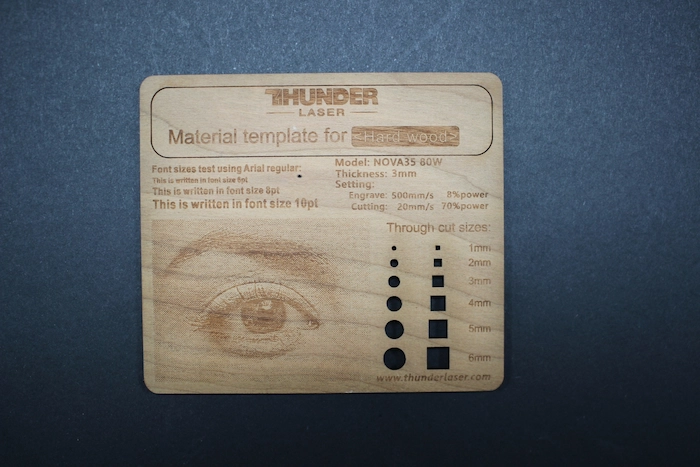
Solid wood board is another commonly used material in laser processing. Depending on the type of wood, laser processing can produce carbonization effects of different depths. Solid wood boards have visible grain and a natural style, making them suitable for photo engraving, vector engraving, and especially relief engraving.
Oka board can be processed by laser and can create a high-contrast effect. It is suitable for engraving high-precision photos and other visual designs that need clear contrast.
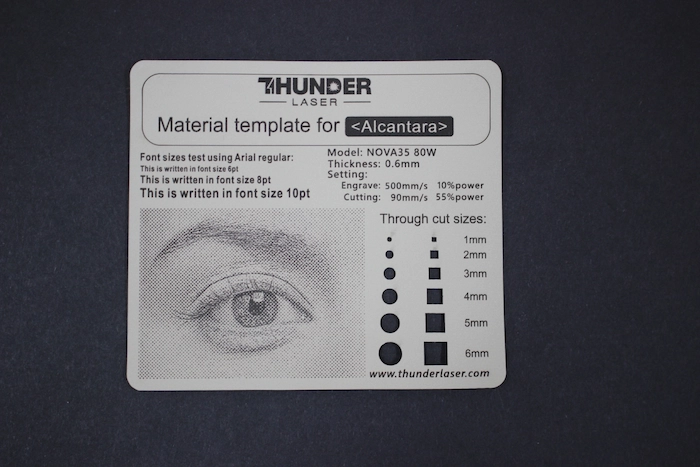
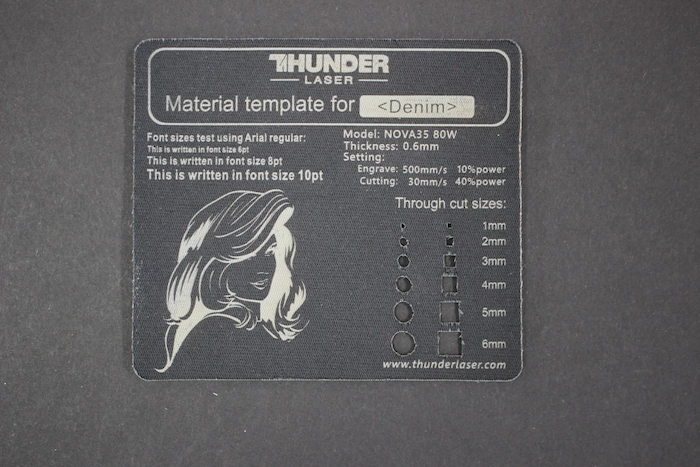
Denim can be processed by laser for image engraving. However, it is not suitable for engraving high-precision photos because the fabric texture and surface variation may reduce fine detail.
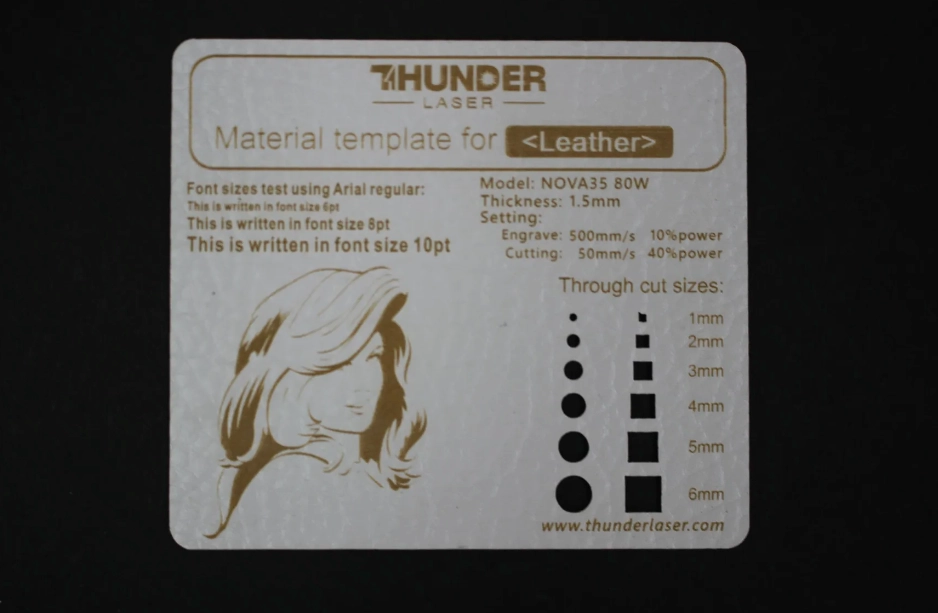
Leather can be processed by laser for image engraving. Similar to denim, it is not ideal for high-precision photo engraving because surface texture, color, and material variation can affect the final detail.
Rubber pads can be processed by laser and are relatively suitable for making stamps. However, they are not as effective as some other materials for image engraving.
Even for the same material category, different sub-types can produce significantly different laser processing effects. These differences may come from manufacturing processes, raw material composition, surface treatment, density, or internal structure.
Both cast acrylic and extruded acrylic are acrylic materials, but their engraving effects can be very different. The engraving effect of extruded acrylic is often dull and uneven, while cast acrylic usually appears bright and evenly white after engraving.
This difference is caused by the different manufacturing processes of cast acrylic and extruded acrylic, which lead to different surface and internal material responses during laser processing.
Fiberboards can also produce different laser engraving effects depending on their composition. MDF usually creates a relatively darker engraving effect, while oriented strand board, also called OSB, can appear brighter after engraving.
This difference is related to the tree species and wood particles used to make MDF and OSB.
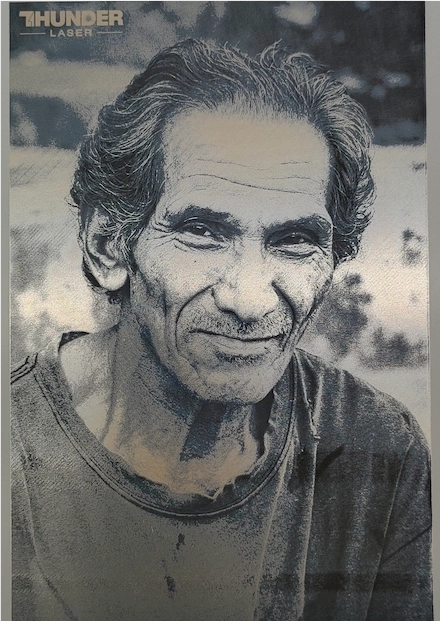
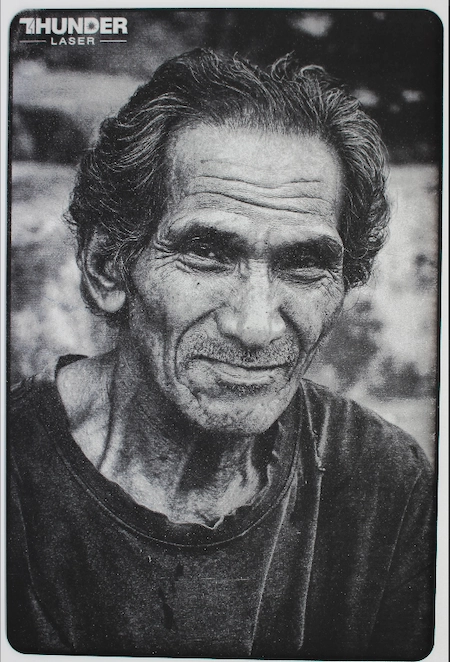
Even for the same sub-type of material, subtle differences in raw material composition, quality, manufacturer, and batch can lead to significant changes in laser processing results. This is especially important for users who need stable, repeatable engraving quality.
The examples below show the result of engraving the same image on black-bottomed, white-faced double-colored boards from the same manufacturer but different batches. Image A shows a double-colored board with a slightly thicker coating, resulting in a more pronounced metallic color and less clear image quality. Image B shows a double-colored board with a thinner coating, resulting in a clearer and higher-contrast engraved photo.
Laser processing effects vary greatly across different materials. Basswood and MDF often show carbonized engraving effects, acrylic can turn white after engraving, double-colored board can create strong contrast, rubber pads are suitable for stamps, and materials such as leather or denim may be better for image engraving than for high-precision photo engraving.
Material sub-types and batches can also affect the final result. For consistent production, users should test the specific material batch before large-scale processing and record suitable settings for each material.
Before starting a project, test the actual material you plan to use. Even materials with the same name can produce different laser engraving colors, contrast levels, and surface effects.
LASER PROCESSING EFFECTS FAQS
Talk To Our Experts Now!
Please leave your contact information so that we can serve you better.
FIND THE RIGHT LASER FOR YOUR NEXT PROJECT
Explore Thunder Laser solutions designed for different materials, workflows, and production needs.


 Stable & Consistent MachinesUnlimited ApplicationsRobust After-sales SupportFactory Direct Supply