





Selection and Application of Different Processing Platforms
 2024-05-11
WHAT ARE YOU LOOKING FOR?
Search Across Products, Blog Posts, Support Content, And Resources.

Selection and Application of Different Processing Platforms
2024-05-11
As an important part of laser cutting and engraving workflows, the processing platform directly affects material support, cutting quality, engraving stability, cleaning difficulty, and loading efficiency. Choosing the right platform can help users reduce burn marks, improve material flatness, and achieve more consistent results.
This guide introduces the structure, application scenarios, cleaning requirements, and advantages of several common processing platforms, including honeycomb platforms, blade platforms, pin platforms, and vacuum platforms.
Different processing platforms use different support structures. These structures determine how the material is held, how much of the material contacts the platform, and how well smoke, vaporized material, and reflected laser energy can escape during cutting or engraving.
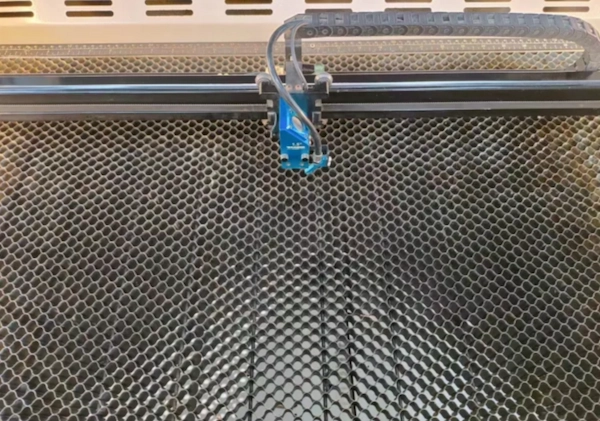
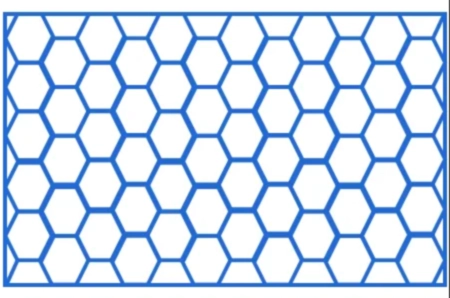
A honeycomb platform, also known as a honeycomb table, is typically made of metal. It is composed of many small grid-like units that form a structure similar to a honeycomb. These units are often nearly hexagonal, but they can also be square or other shapes.
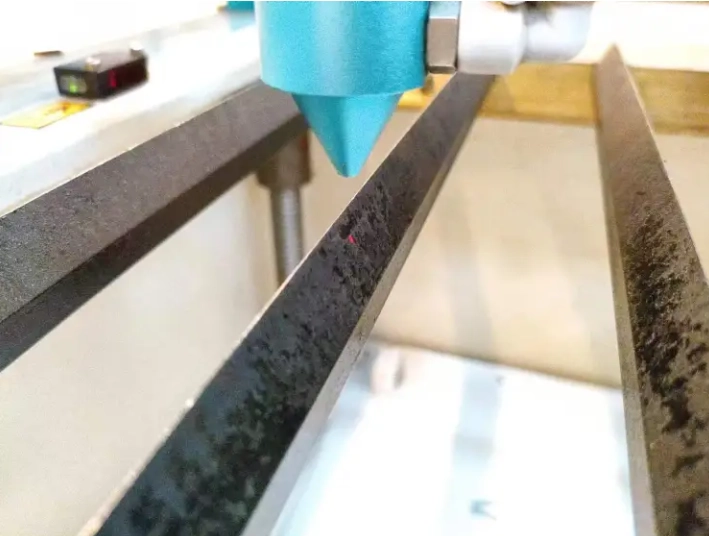
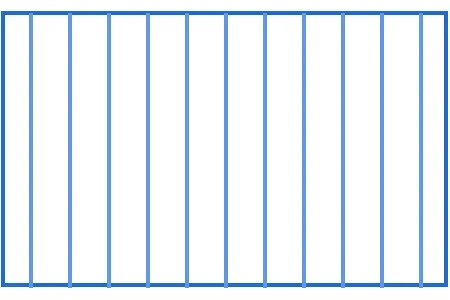
A blade platform is formed by parallel blades mounted on a frame. A flat iron platform is formed by parallel flat irons mounted on a frame. These types of platforms are commonly used for cutting materials, so they are also called cutting platforms.
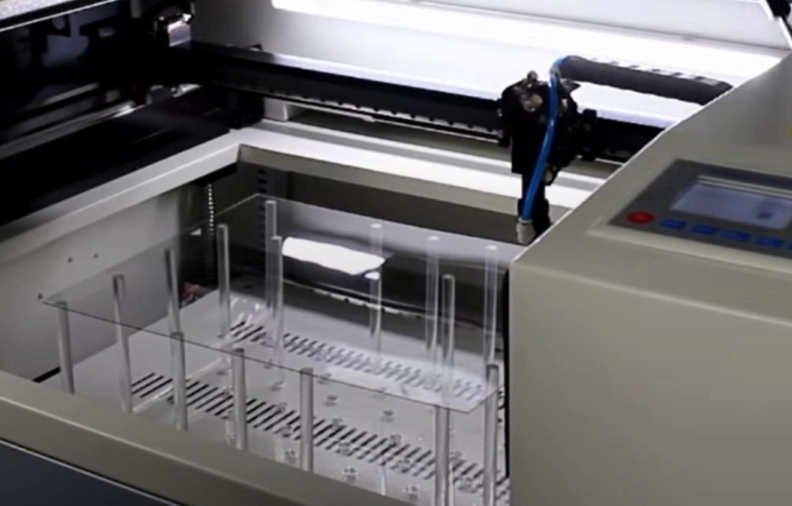
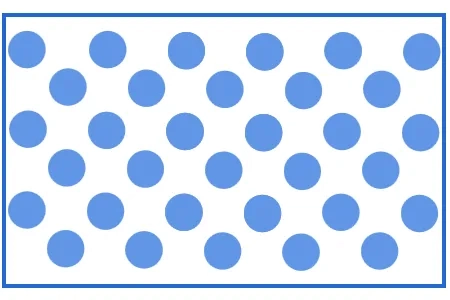
A pin platform consists of upward-facing pins or small cylindrical rods uniformly arranged on a baseboard. Because the material contacts only the top of the pins, the contact area between the workpiece and the platform is very small.
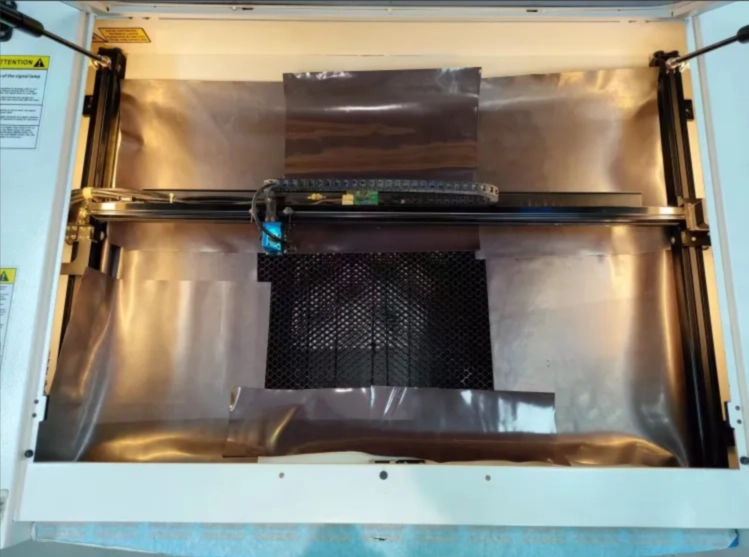
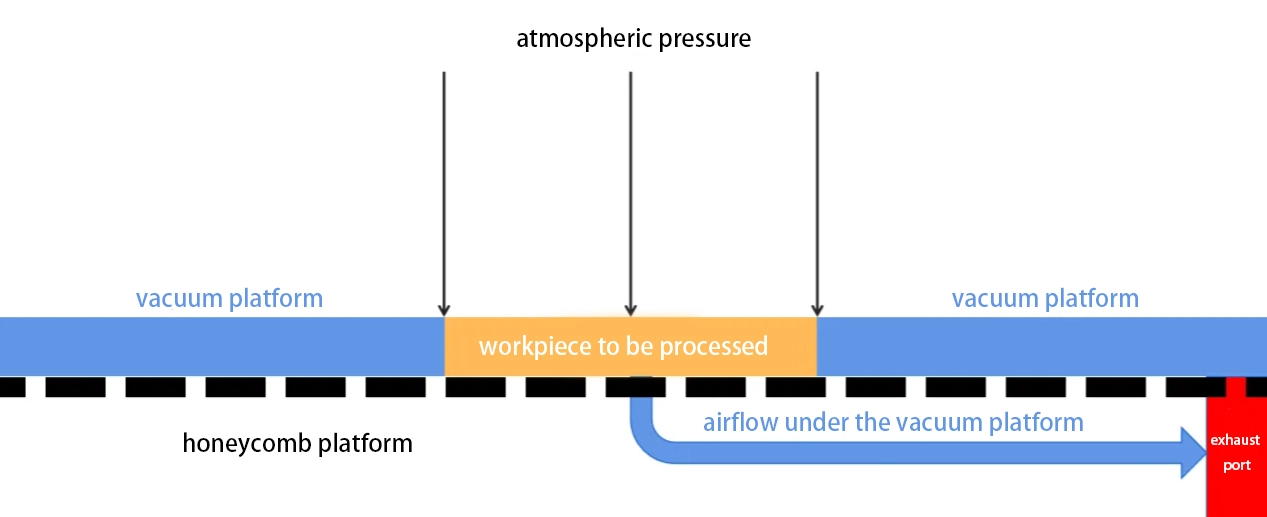
A vacuum platform uses vacuum adsorption to secure the material firmly. In many laser applications, a vacuum platform is built on top of a dense support structure such as a honeycomb platform, then sealed around the work area to create suction.
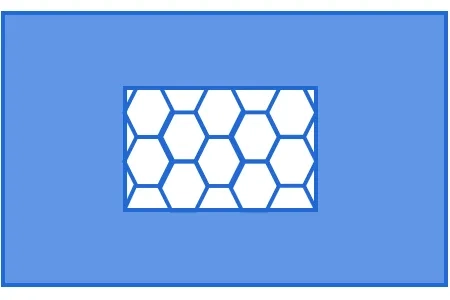
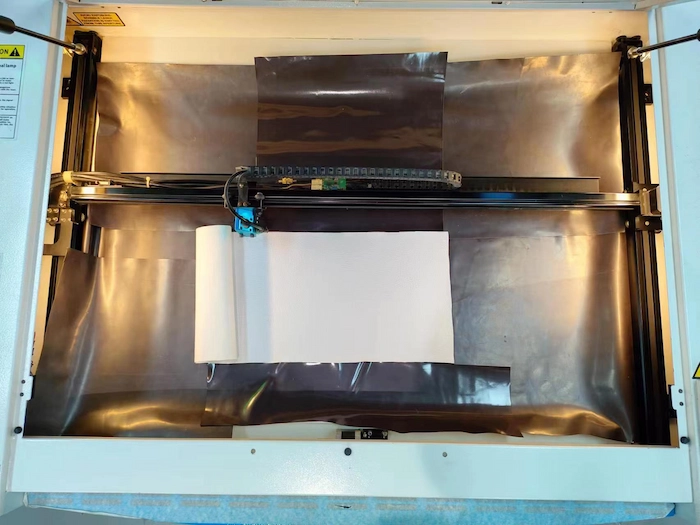
A simple vacuum platform can be created by covering the surface of a honeycomb platform and the surrounding gaps with soft materials such as creasing paper or soft magnets. When using creasing paper, cover the entire honeycomb platform and surrounding gaps, then use the laser to cut an opening the size of the material to be processed.
When using soft magnets, cover all gaps around the honeycomb platform while leaving an unobstructed middle area equal to the size of the material to be processed. The covered area helps reduce air leakage, while the exposed honeycomb area provides suction under the material.
Important points for setting up a vacuum platform include:
When using soft magnets, attach them to the honeycomb platform and fully cover the gaps around the platform edges. Leave an unobstructed space on the honeycomb platform equal to the size of the material to be engraved. Wider soft magnets are recommended for better edge sealing, and one end of the soft magnet can be inserted under the rails to prevent curling, air leakage, or interference with rail movement.
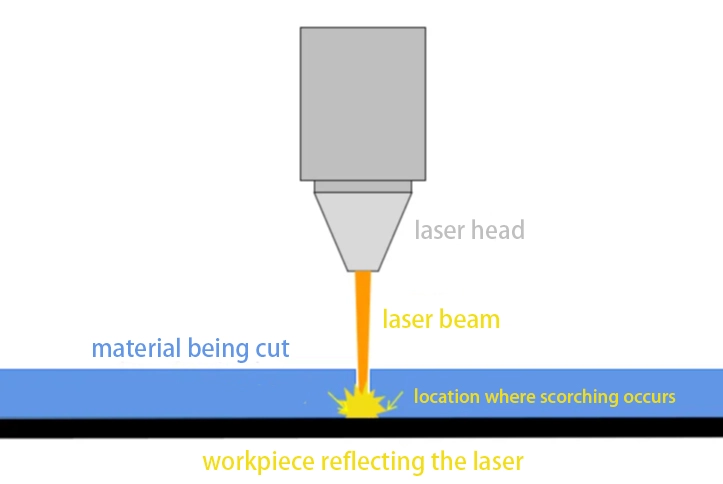
Some small diode laser machines do not come with a processing platform. To avoid damaging the surface underneath, users may place a board under the machine or material. However, during cutting, obvious stains or burn marks may appear around the cut grooves. These marks are caused by laser energy reflecting back onto the material surface from the board underneath.
A proper processing platform can greatly reduce reflected burn marks and help produce smoother finished products. The platform structure weakens reflected laser energy and provides channels for vaporized material to escape, resulting in a cleaner material surface.
Each processing platform has its own advantages and limitations. The best choice depends on material size, thickness, flexibility, flatness, cutting requirements, engraving precision, and cleaning needs.
Due to its unique structure, the honeycomb platform is a preferred choice for many material processing tasks. It provides uniform support and can be used with pins, magnets, creasing paper, and other small tools to reduce movement and flatten warped materials as much as possible.
The honeycomb platform is especially suitable for lightweight, thin, and small materials such as paper, leather, and thin wood boards. However, the honeycomb structure can easily accumulate dust, oil, and debris, so timely cleaning and maintenance are important.
The blade platform is more suitable for processing large, thick, and flat materials such as wood boards and acrylic sheets. Compared with the honeycomb platform, the blade platform has a smaller contact area with the material, which helps reduce reflected burn marks during cutting and keeps the back surface cleaner.
The blade platform is also simpler to clean and maintain. However, it is not suitable for small, thin, soft, or easily warped materials. Small materials may fall through the blade gaps, thin and soft materials may not be well supported, and warped materials are difficult to flatten on a blade platform.
The pin platform further reduces the contact area between the material and the platform by providing point support. This helps reduce reflected burn marks during cutting. Its simple structure also makes cleaning and maintenance relatively easy.
Placing a smaller pin platform on top of a honeycomb platform can create a height difference, which may be useful for certain 3D cutting applications.
The vacuum platform secures the material by creating a vacuum environment and using air pressure differences for adsorption. It provides a very stable processing environment and is suitable for projects that require high precision, flatness, and minimal material movement.
Whether for detailed engraving or thin film cutting, the vacuum platform can help keep the material flat and stationary during processing. However, setting up a vacuum platform requires additional time and effort, so it is usually most useful for extremely lightweight, thin, and soft materials that require high precision.
Without a vacuum platform, faux leather placed directly on the honeycomb platform may have many wrinkles. These wrinkles can affect engraving quality, especially when the engraving design requires clean and consistent detail.
To create a vacuum platform, attach soft magnets to the honeycomb platform and cover all the gaps around the edges. Leave an unobstructed honeycomb area slightly larger than the engraving pattern but smaller than the faux leather material. Then place the faux leather on the platform and flatten it by hand.
After applying the vacuum platform, the faux leather becomes flatter and more stable, helping improve the engraving result.
During regular use, processing platforms should be cleaned and maintained in time. The honeycomb platform has many small cells, so cleaning the entire platform can take more effort. Dust, oil, residue, and debris can build up inside the honeycomb structure.
In comparison, blade platforms and pin platforms have simpler structures and are easier to clean. A cloth and brush can be used for simple cleaning. A vacuum platform can be disassembled after each use. If creasing paper is used, it can be discarded; if soft magnets are used, they can be wiped clean and reused.
Different processing platforms have different strengths in application scenarios, loading and unloading, cleaning, and processing results. The honeycomb platform is the most versatile, the blade platform is suitable for cutting, the pin platform is useful for cutting and certain 3D applications, and the vacuum platform is suitable for thin, lightweight, and soft materials that require flatness and precision.
Selecting the appropriate processing platform can effectively improve processing efficiency and quality. Thunder Laser cutting and engraving machines are equipped with a dual-layer platform, with a honeycomb platform on top and a blade platform below, making loading and unloading more convenient for different creative workflows.
Choose the platform based on your material: use honeycomb support for thin and small materials, blade support for large flat cutting jobs, pin support to reduce contact marks, and vacuum support when lightweight flexible materials need to stay flat.
Talk To Our Experts Now!
Please leave your contact information so that we can serve you better.
LASER PROCESSING PLATFORM FAQS
FIND THE RIGHT LASER FOR YOUR NEXT PROJECT
Explore Thunder Laser solutions designed for different materials, workflows, and production needs.


 Stable & Consistent MachinesUnlimited ApplicationsRobust After-sales SupportFactory Direct Supply