


Nova Laser Head Guide: Choose the Right Lens for Cutting and Engraving
 2024-06-13
WHAT ARE YOU LOOKING FOR?
Search Across Products, Blog Posts, Support Content, And Resources.

Nova Laser Head Guide: Choose the Right Lens for Cutting and Engraving
2024-06-13

Selecting the right laser head can make a noticeable difference in engraving detail, cutting quality, and overall processing consistency. For Thunder Laser Nova machines, commonly used lens options range from 1.5″ to 4″. These inch values refer to the nominal focal length of the lens—the optical distance between the lens and the area where the laser beam is focused.
Different focal lengths produce different spot sizes and depths of focus. A shorter focal length generally creates a smaller focused spot for fine engraving, while a longer focal length provides greater depth of focus and can be advantageous when cutting thicker materials.
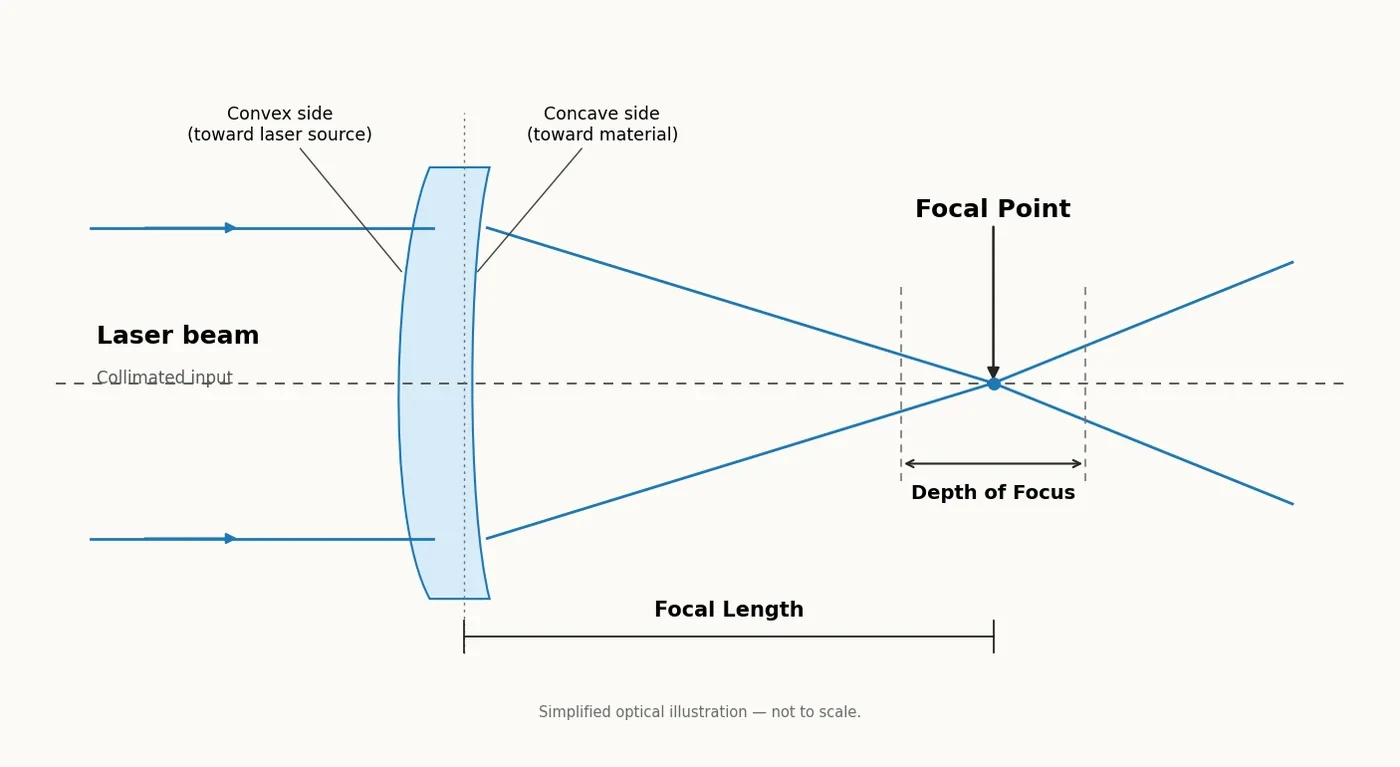
Focal length affects the focused spot size, depth of focus, and how the laser beam behaves during engraving and cutting.
Nova users can choose different laser heads depending on the required engraving detail, material thickness, and processing goal. The table below compares several commonly used Nova laser head configurations.
| Type | Laser Spot Size | Reference Focus Gap | Typical Application |
|---|---|---|---|
| Standard Laser Head | 0.0039″ / 0.099 mm | 5.0–6.5 mm | General-purpose engraving and cutting |
| High Resolution Head | 0.0020″ / 0.050 mm | 3.0–4.0 mm | Fine engraving, small graphics, and very thin materials |
| 4″ Laser Head | 0.0078″ / 0.198 mm | 9.0–11 mm | Thicker-material cutting and applications requiring greater depth of focus |
Comparison of common Nova laser head configurations, spot sizes, reference focus gaps, and typical applications.
Note: The values shown under “Reference Focus Gap” refer to the approximate focusing gap used with specific Nova laser head configurations. They are not the nominal optical focal lengths of the lenses. The actual head-to-material distance may vary depending on the machine and optical configuration.
For many Thunder Laser Nova configurations, the standard lens is 2.0″. It offers a practical balance between spot size, depth of focus, engraving performance, and cutting capability, making it a versatile choice for everyday work.
In general, shorter focal length lenses, such as 1.5″ lenses, are better suited to applications that require a smaller focused spot and fine detail. Longer focal length lenses, such as 2.5″ and 4.0″ lenses, provide greater depth of focus and can be advantageous when processing thicker materials.
Shorter focal length lenses, such as a 1.5″ lens or a High Resolution Head, generally create a smaller spot at the focal plane. This concentrates the laser energy over a smaller area and makes these configurations well suited to small text, fine graphics, detailed line work, and certain photo engraving applications.
A smaller spot does not automatically produce a better result in every application. When engraving larger areas, the individual scan lines may become more noticeable depending on the material and processing parameters, which can result in a less uniform surface finish.
Tip: If scan lines are too pronounced, a small amount of intentional defocus may help. Moving the material surface slightly away from the optimal focal plane increases the spot size and can produce a smoother result on some materials. Test the adjustment first, as the required amount depends on the machine, lens, material, and processing settings.
The standard 2.0″ lens is one of the most versatile options for Nova machines. It offers a practical balance between engraving detail, depth of focus, and cutting capability, making it suitable for a wide range of everyday laser projects.
If your work includes both engraving and cutting and does not require an unusually small spot or an especially large depth of focus, the 2.0″ lens is usually a practical starting point.
A 2.5″ lens has a longer focal length than the standard 2.0″ lens. It generally provides greater depth of focus and a slightly larger focused spot, which can be useful when the application does not require extremely fine detail.
In some large-area engraving applications, the larger spot may distribute the laser energy over a slightly wider area. Depending on the material and settings, this can reduce highly localized heating compared with using a very small focused spot. This may be useful for certain heat-sensitive plastics, but it should not be treated as a universal rule. Material testing is recommended before production.
The 4.0″ lens is primarily used for thicker-material cutting and other applications where greater depth of focus is beneficial. The larger depth of focus helps keep the beam within a useful focus range over a greater portion of the material thickness.
This can help produce a more consistent kerf profile through thicker materials and, under suitable conditions, support straighter cutting edges. However, there is no single material-thickness threshold at which a 4.0″ lens automatically becomes the best choice.
Cutting performance also depends on the material, laser power, speed, air assist, focus position, beam alignment, and number of passes. Lens selection is only one part of achieving a reliable thick-cutting result.
Nova Laser Head and Lens Selection Reference Video
The best laser head depends on the material, required detail, material thickness, and processing goal. Fine engraving, general-purpose work, large-area engraving, and thicker-material cutting each place different demands on the optical system.
Choosing the appropriate Nova laser head can make a noticeable difference in engraving detail, cutting consistency, surface finish, and edge quality. Shorter focal length lenses are generally better suited to applications requiring a smaller focused spot, while longer focal length lenses provide greater depth of focus and can be advantageous when processing thicker materials.
For many users, the standard 2.0″ laser head is the most practical everyday option because it provides balanced performance for both engraving and cutting. Specialized applications, such as very fine engraving or thicker-material cutting, may benefit from a different focal length. The final choice should always consider the material, thickness, required detail, laser power, and actual processing conditions.
Need Help Choosing a Nova Laser Head?
Contact Thunder Laser for guidance on laser head selection, focal length, engraving detail, thicker-material cutting, and Nova machine setup.
Contact UsTalk To Our Experts Now!
Please leave your contact information so that we can serve you better.
NOVA LASER HEAD FAQS
FIND THE RIGHT LASER FOR YOUR NEXT PROJECT
Explore Thunder Laser solutions designed for different materials, workflows, and production needs.


 Stable & Consistent MachinesUnlimited ApplicationsRobust After-sales SupportFactory Direct Supply


