How to Laser Engrave Stainless Steel: Tools, Settings & Creative Ideas
 24-09-26
WHAT ARE YOU LOOKING FOR?
Search Across Products, Blog Posts, Support Content, And Resources.

How to Laser Engrave Stainless Steel: Tools, Settings & Creative Ideas
24-09-26

Stainless steel is sleek, durable, and widely used in jewelry, drinkware, tools, industrial parts, and everyday products. However, it can also be challenging to engrave because its corrosion-resistant surface, hardness, heat sensitivity, and reflectivity all require the right laser process and careful parameter control.
This guide explains how to laser engrave stainless steel, which laser types work best, what settings can be used as a starting point, and how to improve engraving quality for practical and creative projects.
Stainless steel is commonly used in construction, medical equipment, automotive parts, consumer products, and custom goods because it is durable and corrosion resistant. That same durability is also why engraving stainless steel requires more precise control than many softer materials.
The protective chromium oxide layer on stainless steel helps resist corrosion, but it also makes surface marking more demanding. Stainless steel is hard, heat sensitive, and reflective, so incorrect laser settings may cause discoloration, weak marks, poor contrast, or unnecessary material distortion.
Stainless steel can be engraved or marked in several ways, including laser engraving, mechanical engraving, chemical etching, and hand engraving. Mechanical engraving physically carves the surface with cutting tools, while chemical etching and hand engraving can produce different levels of depth and detail.
For most detailed, repeatable, and production-friendly stainless steel marking tasks, laser engraving is usually the most efficient option. It delivers high precision, fast processing, and consistent results without tool wear, making it suitable for logos, serial numbers, barcodes, decorative designs, and customized products.
A fiber laser is typically the best choice for engraving stainless steel. Fiber lasers are highly efficient for marking and engraving metals because they can create precise, permanent marks with excellent control. They are well suited for detailed designs, industrial identification, branding, and product customization.
A CO2 laser can mark stainless steel when used with a suitable marking spray or paste that bonds to the metal surface. Without a marking agent, CO2 lasers generally cannot directly engrave or cut stainless steel effectively. For direct metal marking, a fiber laser is usually the better option.
Tip: If your main goal is direct stainless steel engraving, choose a fiber laser. If you already use a CO2 laser, test a compatible marking compound before processing the final product.
Stainless steel works well for both practical products and personalized gifts. With the right laser engraving process, you can add names, logos, artwork, photos, decorative patterns, or identification marks to a wide range of items.
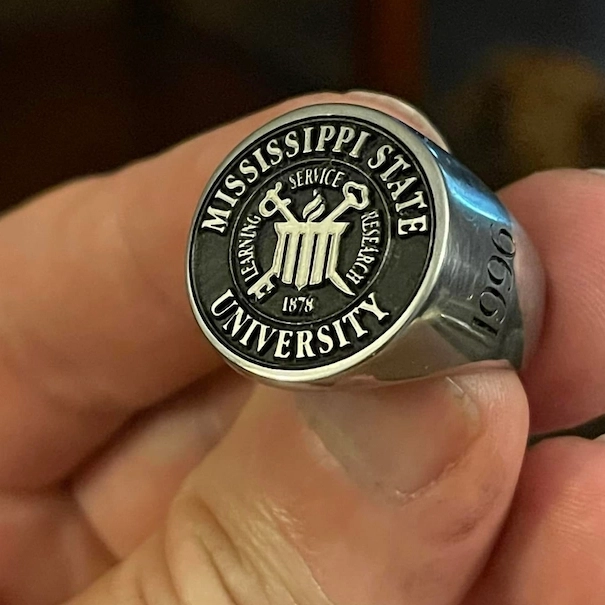
Stainless steel is popular for jewelry such as rings and earrings because it has a clean metallic finish and strong rust-resistant properties. Laser engraving adds personalization to jewelry pieces while keeping the design precise and refined.
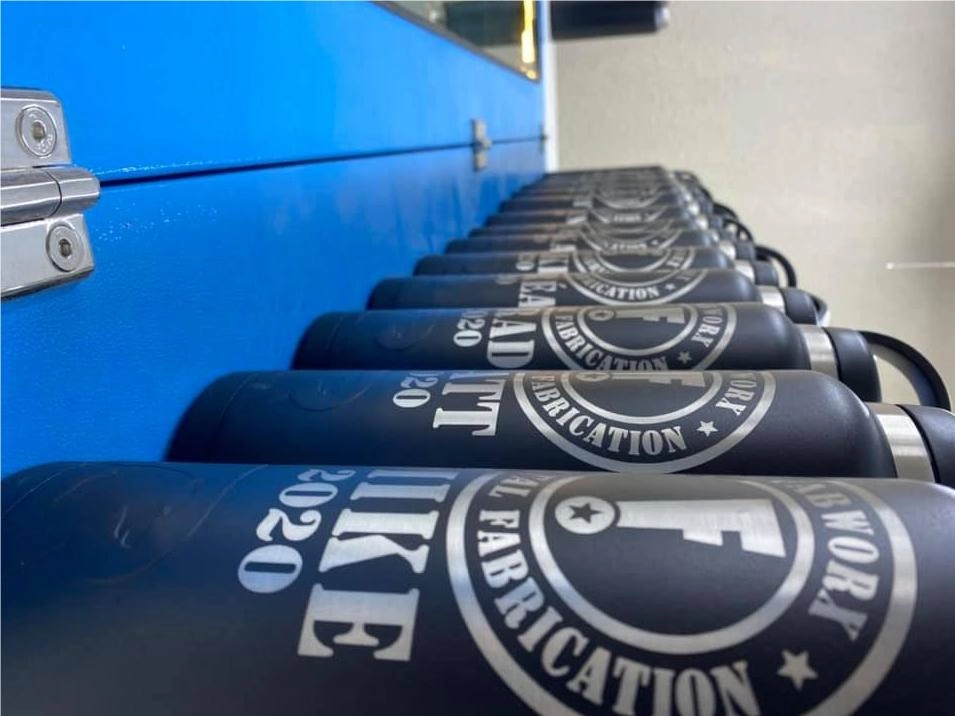
Coated stainless steel tumblers are ideal for laser engraving. The laser removes or etches the coating to reveal the stainless steel beneath, making it suitable for custom logos, decorative patterns, and batch personalization.
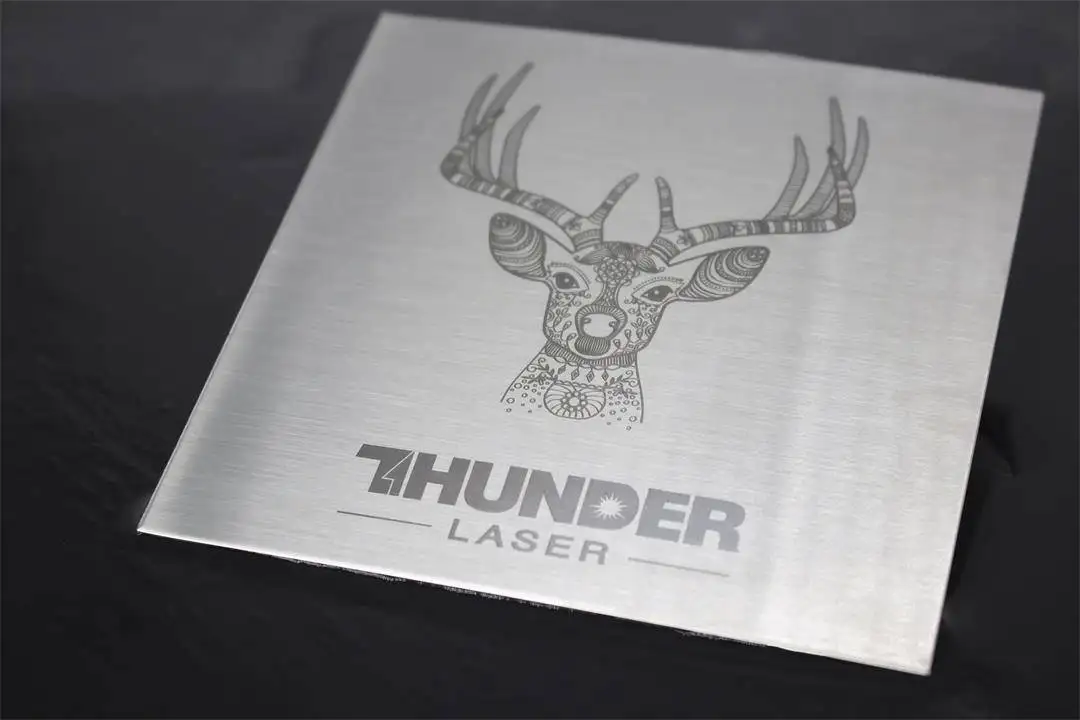
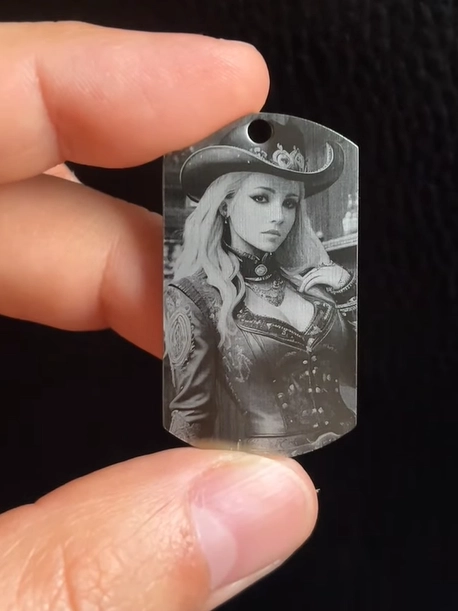
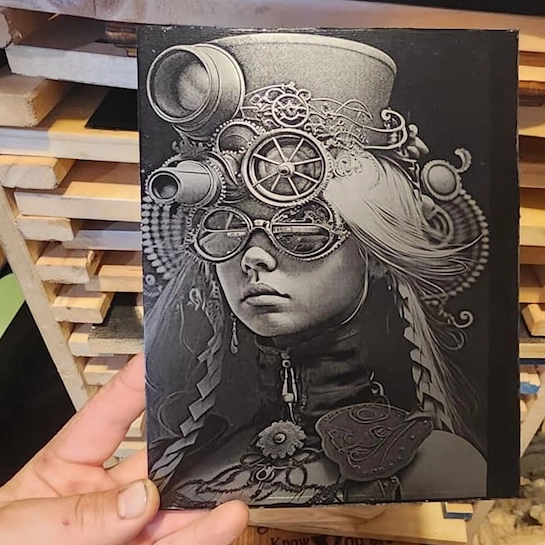
Laser etching on stainless steel can capture fine photo details such as highlights, shadows, and tonal contrast. This makes stainless steel a strong choice for photo plaques, keepsakes, and personalized display pieces.
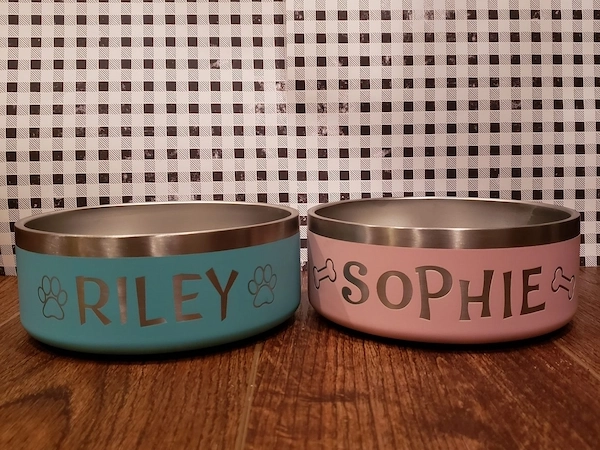
Stainless steel dog bowls, cups, and similar containers are durable and practical. Laser engraving can add names, decorative icons, branding, or useful identification details to make these items more personal and visually appealing.
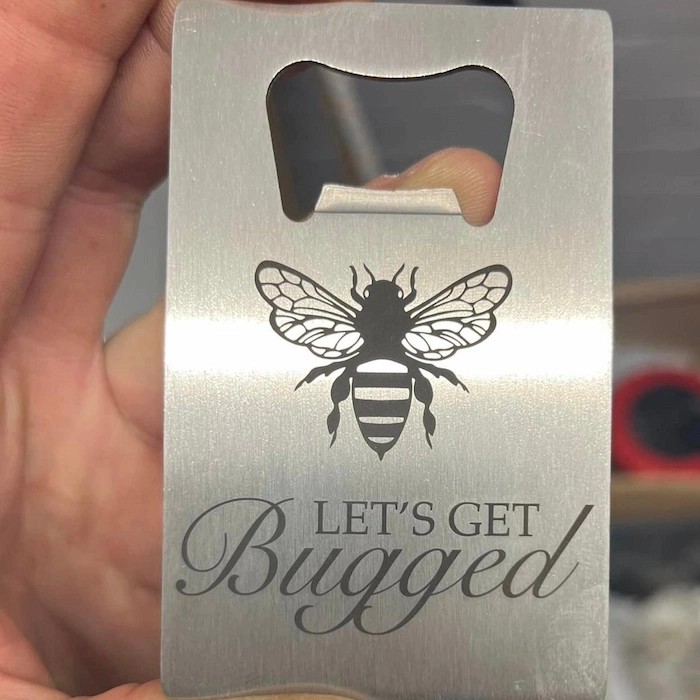
Stainless steel is also common in bottle openers and kitchen accessories. Laser engraving can transform simple functional tools into customized gifts, branded merchandise, or creative everyday products.
For stainless steel engraving, a fiber laser with at least 20W to 50W is commonly recommended for basic engraving work. For deeper engraving or faster processing, higher wattages such as 50W to 100W may be more suitable. The right wattage depends on the required engraving depth, detail level, material surface, and production speed.
The following parameters were measured using an Aurora 8 machine with a 50W fiber laser. Use them as a starting reference only. Different machines, laser power, surface finishes, and design goals can affect the final result, so always test on the material before engraving the final product.
| Materials | Marking Results | Speed (mm/s) | Power (%) | Frequency (kHz) | Hatch Type | Line Interval | No. of Passes |
|---|---|---|---|---|---|---|---|
| 304 stainless steel | Black | 200 | 10 | 100 | Double | 0.02 | 10 |
| 304 stainless steel | White | 1000 | 20 | 60 | Double | 0.02 | 1 |
| Mirror-polished stainless steel | Black | 100 | 20 | 90 | Double | 0.02 | 10 |
| Mirror-polished stainless steel | White | 700 | 20 | 70 | Double | 0.02 | 1 |
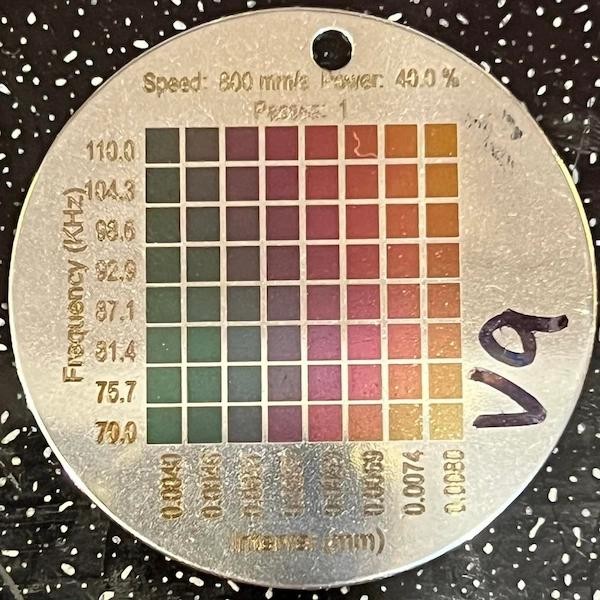
Color laser engraving on stainless steel is typically achieved with a fiber laser through laser annealing. Instead of removing material, the laser heats the metal surface and creates a controlled oxidation reaction. Different temperature ranges can produce different colors, such as blue, brown, yellow, and green.
To achieve color effects, adjust the laser power, speed, and frequency and run multiple tests before processing the final piece. Results can vary depending on the stainless steel type, surface finish, laser source, and machine power.
Passivation removes free iron and other contaminants from stainless steel and helps restore corrosion resistance by forming a protective oxide layer. A basic passivation workflow includes cleaning, acid treatment, rinsing, and drying.
After engraving, you can apply a clear protective oil, wax, or specialized metal sealant to help create a barrier against moisture and other corrosive elements. The best protective method depends on the product’s use environment and surface requirements.
Regular cleaning is also important. Clean the engraved surface with mild soap and water to remove contaminants that could contribute to rust or corrosion. Avoid harsh chemicals and abrasive cleaners because they may damage the protective layer or affect the finished surface.
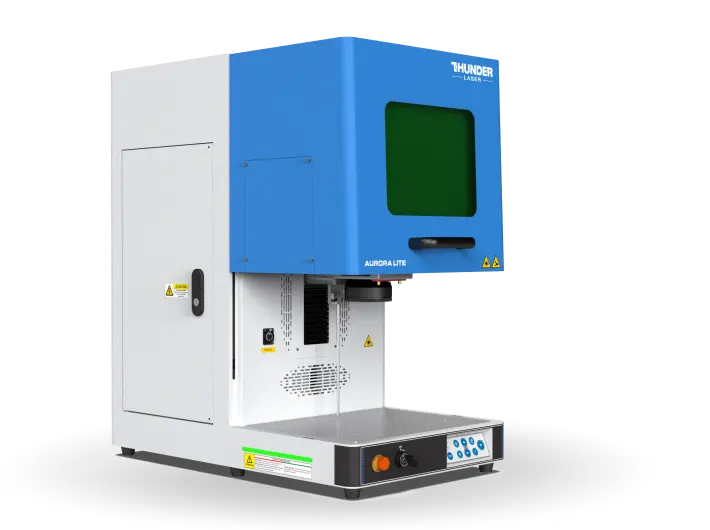
Because fiber lasers are highly effective for stainless steel engraving, the Thunder Aurora Laser Marker is a strong choice for creators and professionals who need efficient metal marking. The Aurora series supports fiber and UV laser sources and is designed for precise marking and engraving work on metal materials.
The standard Aurora 8 and Aurora UV models can reach speeds of up to 2000mm/s, while the Aurora 8 Pro can reach up to 8000mm/s. Despite their compact desktop size, Aurora machines support efficient processing for business and hobby projects, including stainless steel marking and engraving.
Ready to Start Laser Engraving Stainless Steel?
Explore Thunder Aurora laser markers and find a practical setup for stainless steel engraving, marking, and customization.
View Thunder AuroraTalk To Our Experts Now!
Please leave your contact information so that we can serve you better.
STAINLESS STEEL LASER ENGRAVING FAQS
TAKE THE NEXT STEP WITH THUNDER LASER


 Stable & Consistent MachinesUnlimited ApplicationRobust After-sales SupportFactory Direct Supply