How to Extend the Lifespan of an RF Laser Tube?
 2026-05-06
WHAT ARE YOU LOOKING FOR?
Search Across Products, Blog Posts, Support Content, And Resources.

How to Extend the Lifespan of an RF Laser Tube?
2026-05-06

An RF laser tube is the core component of many high-precision cutting, engraving, and marking systems. Its performance and reliability directly affect production quality, processing consistency, and long-term operating efficiency.
This article explains what defines the lifespan of an RF laser tube, which factors shorten or extend it, and what practical methods you can use to maximize operating life. Whether you are using a Coherent, SPT, Iradion, or another RF laser tube brand, proper maintenance and operating habits can help maintain consistent performance while reducing long-term costs.
The lifespan of an RF laser tube is defined by accumulated operating hours, not by the date of manufacture or installation. If a machine remains idle for years but the laser has only been used for 50 hours, the tube has consumed only 50 hours of its usable life.
Rather than a fixed countdown, RF laser tube lifespan should be understood as a statistical performance metric. It represents the average number of operating hours a tube can deliver stable output before power or beam quality falls below production requirements.
End-of-life rarely appears as a sudden failure. Instead, it usually happens gradually, often as reduced output power, unstable beam characteristics, or declining processing consistency. These changes may result from the natural degradation of internal electrodes, RF components, and the sealed CO2 gas mixture.
Note: Manufacturer-rated lifespans are established through controlled laboratory testing under stable conditions, including regulated temperature, optimized cooling, consistent duty cycles, and defined power levels. Under these ideal conditions, premium RF laser tubes from brands such as Coherent, SPT, and Iradion are commonly rated for up to 45,000 hours. These figures should be treated as reference benchmarks rather than guarantees, because real-world operating environments rarely match laboratory standards.
Although RF laser tubes are designed for long-term, stable operation, their actual service life can be significantly reduced by unfavorable operating conditions. The most common lifespan-limiting factors are usually related to how the laser is used, powered, cooled, and maintained in daily production.
Heat is one of the primary drivers of RF tube degradation. Insufficient cooling, unstable coolant temperature, or blocked airflow can cause internal components to operate outside their optimal thermal range.
Prolonged exposure to elevated temperatures may accelerate electrode wear, degrade RF circuitry, and destabilize the sealed CO2 gas mixture. Over time, this can lead to faster power loss and lower processing consistency.
Running the laser at high power for extended, uninterrupted periods increases both thermal and electrical load. RF tubes are designed for industrial use, but consistently operating near maximum output without adequate rest cycles can accelerate internal aging.
This is especially important in high-throughput production environments, where cooling systems may be pushed close to their limits for long periods.
Repeatedly turning the laser on and off within short intervals introduces thermal expansion and contraction stress. These rapid temperature changes can affect internal alignment and RF stability, contributing to gradual performance degradation.
Occasional power cycling is unavoidable, but excessive on-off cycling should be minimized whenever possible.
RF laser tubes are highly sensitive to electrical stability. Voltage fluctuations, inadequate grounding, or electrical noise from nearby equipment can place continuous stress on RF components.
Over time, electrical instability can shorten tube life and may contribute to premature failure of internal RF modules, even if the laser is not operated at high output levels.
Dust, oil mist, corrosive fumes, and high humidity can affect the laser system and its cooling components. Environmental contamination can impair heat dissipation, degrade electrical insulation, and increase the risk of corrosion on connectors and RF components.
Over time, this indirect stress can shorten the effective lifespan of the RF laser tube and reduce overall machine reliability.
Nothing lasts forever, but with proper maintenance and operating discipline, an RF laser tube can deliver reliable performance for far longer than its baseline rating.
Only part of the RF power generated by the internal RF amplifier becomes actual laser output. A large portion of the remaining power is converted into heat. If this heat is not effectively managed, it can accumulate inside the tube and cause the operating temperature to exceed the recommended range.
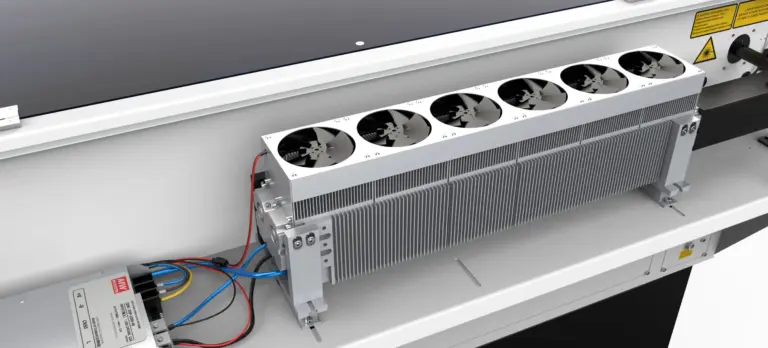
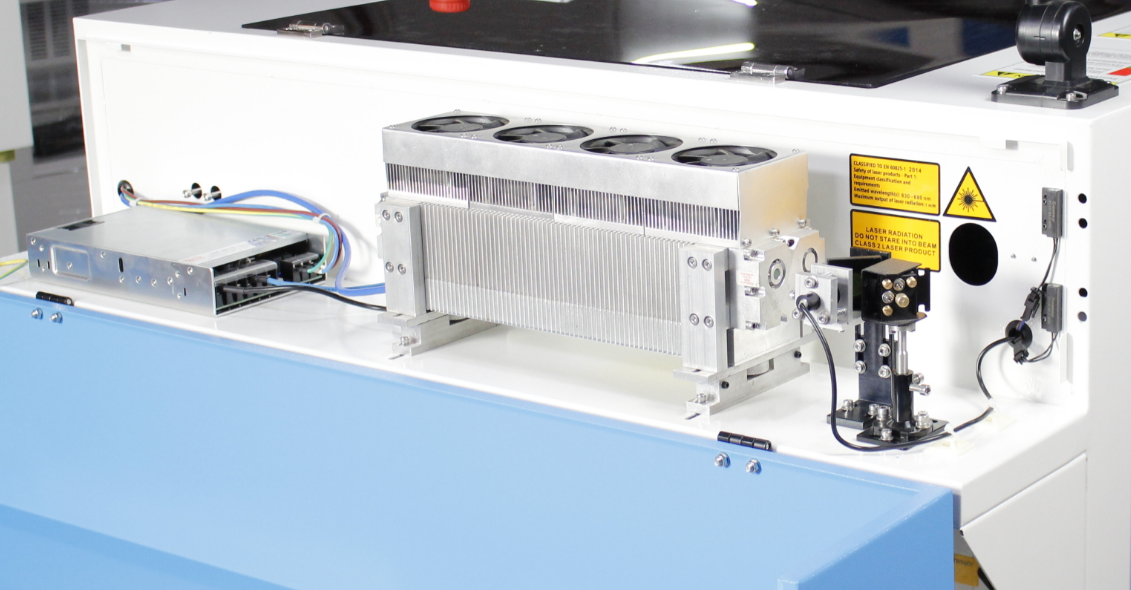
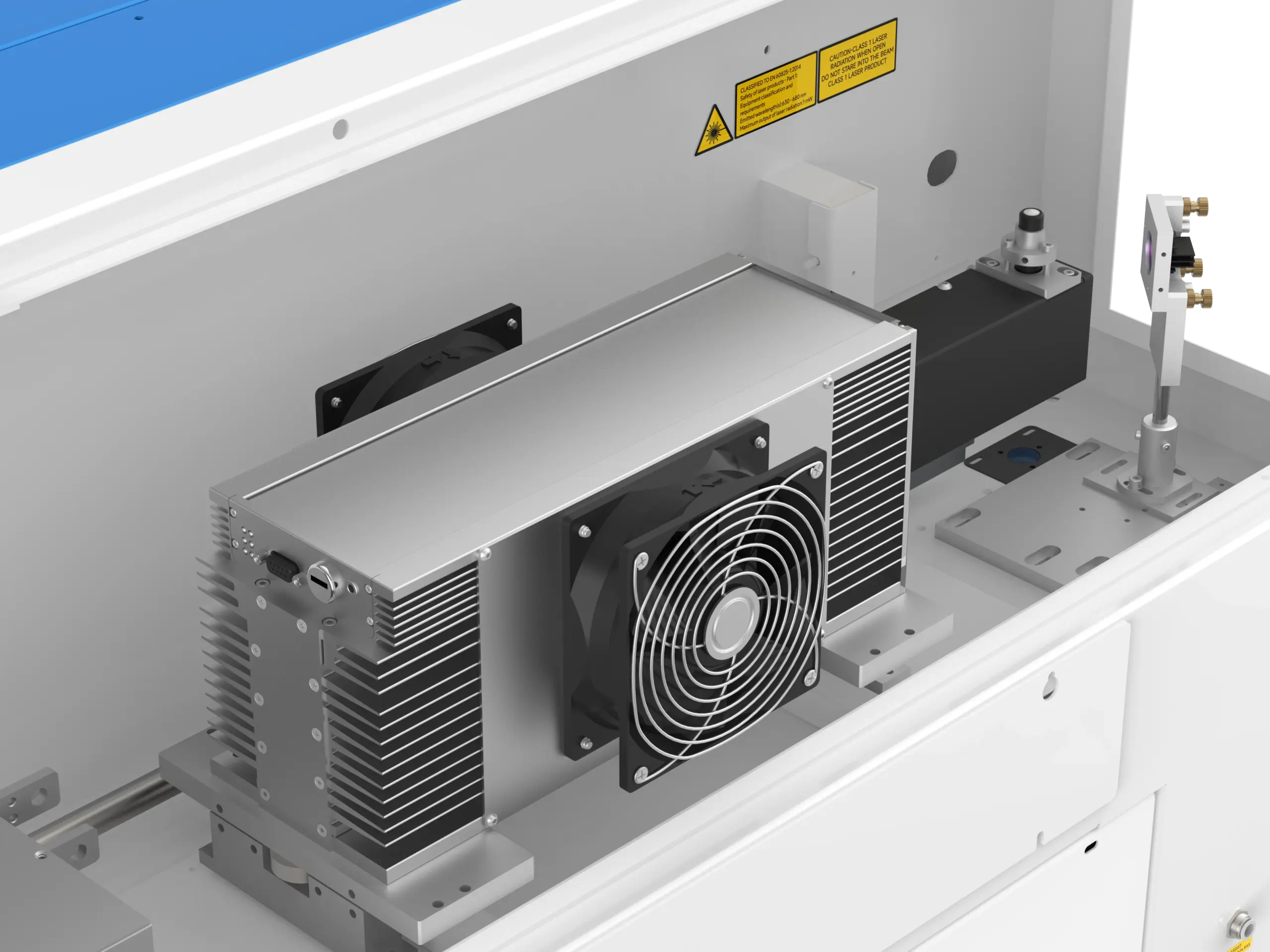
Excessive heat can degrade beam quality and reduce RF laser tube lifespan. To maintain stable temperatures, RF laser tubes are equipped with either air-cooling or water-cooling systems, depending on the power and design of the model.
Learn more about power conversion efficiency of RF CO2 lasers.
Maintenance requirements differ depending on the cooling method.
Air-cooled systems are commonly used in lower-power RF laser tubes. To support stable performance, it is recommended to:
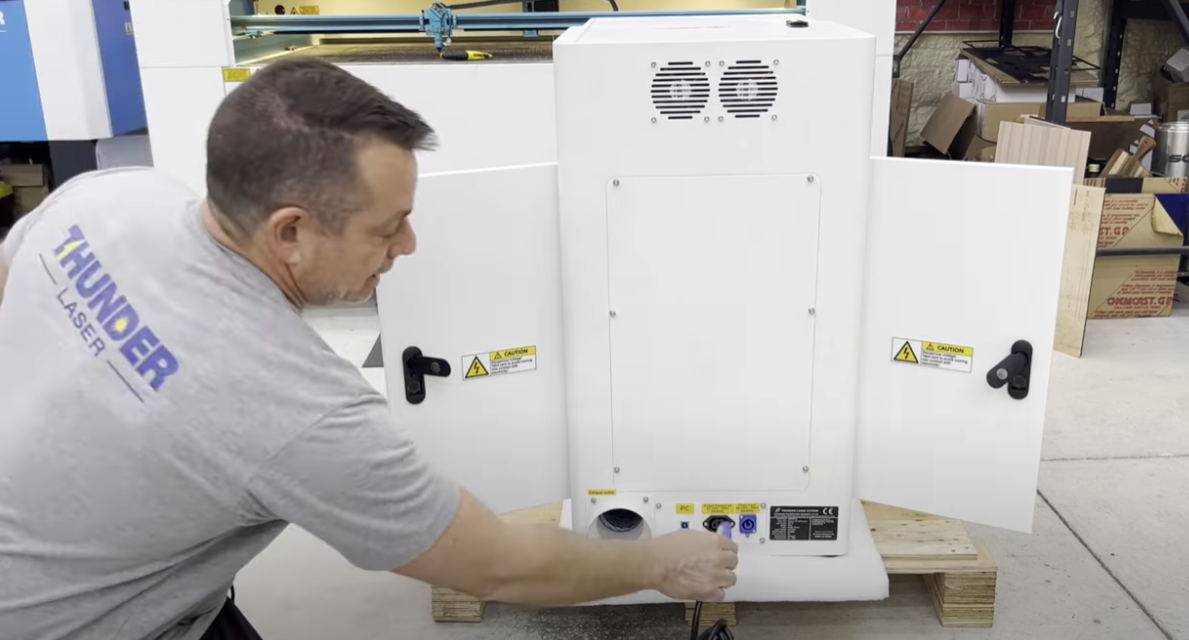
Water-cooled systems are used in higher-power RF laser tubes for more efficient heat dissipation. Maintenance steps include:
For water-cooled RF laser systems, the external cooling system should meet the manufacturer’s requirements. The following reference values are based on SPT recommendations:
| Cooling Requirement | Recommended Value |
|---|---|
| Minimum cooling water flow rate at laser outlet | 5.7 L/min |
| Cooling water temperature range | 10–35°C |
| Intake pressure at laser inlet | 205–520 kPa |
| Cooling water hardness, equivalent to CaCO3 | <250 mg/L |
| Pressure difference | >170 kPa |
| Carrier heat and pH value | 2.5 kW; pH 5–9 |
| Particle size | Less than 200 microns in diameter |
Reference cooling requirements for water-cooled RF laser systems.
For additional cooling and freeze prevention steps, refer to this cooling temperature and freeze mitigation guide.
Each start and stop of the tube can cause rapid heating and cooling, placing stress on electrodes, seals, and the gas mixture. Minimizing unnecessary cycling helps reduce cumulative wear.
RF laser tubes require a consistent and stable electrical supply within specified voltage and current ranges. Power fluctuations or operation outside recommended settings can stress internal components.
Because rated voltage and current vary between manufacturers, always refer to the specific guidelines provided for your tube. These guidelines define recommended operating voltage, maximum output, and duty cycle limits, and they should be followed closely for safe and reliable operation.
It is recommended to:
RF laser tubes perform best in a clean, dry, and stable environment. To support stable operation:
A well-maintained optical system prevents unnecessary stress on the RF laser tube and helps ensure stable output. Regular tasks should include:
Consistent monitoring and maintenance help track RF laser tube performance and support reliable operation. Key practices include:
RF laser tubes are durable, but they are not immune to wear. Internal aging is inevitable, but careful attention to cooling, duty cycle, power supply, operating environment, optical path integrity, and routine monitoring can significantly extend the lifespan of an RF laser source.
For users who rely on consistent laser cutting, engraving, or marking quality, good maintenance is not optional. It is one of the most effective ways to protect tube performance, reduce downtime, and lower long-term operating costs.
Need Help Maintaining Your RF Laser Machine?
Contact Thunder Laser to discuss RF laser machine maintenance, cooling, operating conditions, and long-term performance.
Contact UsTalk To Our Experts Now!
Please leave your contact information so that we can serve you better.
FAQS
NEED HELP FINDING THE RIGHT SOLUTION?
Talk to our team for machine recommendations, application advice, and support based on your needs.


 Stable & Consistent MachinesUnlimited ApplicationsRobust After-sales SupportFactory Direct Supply