



FABRIC LASER
ENGRAVING & CUTTING & MARKING
Achieve precise fabric cutting, engraving, and marking across compatible natural, synthetic, blended, and technical textiles.
WHAT ARE YOU LOOKING FOR?
Search Across Products, Blog Posts, Support Content, And Resources.

FABRIC LASER
ENGRAVING & CUTTING & MARKING
Achieve precise fabric cutting, engraving, and marking across compatible natural, synthetic, blended, and technical textiles.


LASER PROCESSING ADVANTAGES FOR FABRIC
Fabric is a versatile, creative, and widely used material in fashion, décor, crafts, and industrial applications. With a laser machine, fabrics and textiles can be engraved, cut and marked with:
 Detailed Patterns and CutoutsControlled Fabric EdgesContact-Free ProcessingFlexible Design and PersonalizationConsistent and Repeatable Production
Efficient Use of Fabrics
Detailed Patterns and CutoutsControlled Fabric EdgesContact-Free ProcessingFlexible Design and PersonalizationConsistent and Repeatable Production
Efficient Use of Fabrics
FABRIC LASER PROCESSING METHODS
With a Thunder Laser machine, fabrics can be processed more easily and precisely than ever, and the flexibility of laser processing allows a
wide range of effects to be achieved quickly on the material.


Shallow Engraving
Creates light textures, tone-on-tone graphics, logos, and decorative patterns by modifying the upper fiber surface without cutting through the fabric.
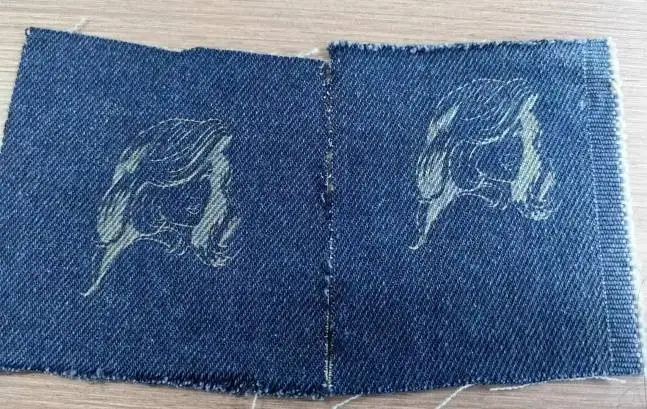
Denim Fading and Color Change
Lightens or removes selected surface dye to create whiskers, faded graphics, logos, vintage effects, and decorative patterns on suitable denim.

Vector Engraving
Follows precise paths to cut garment parts, patches, appliqués, labels, decorative openings, and custom textile shapes.

Photo Engraving
Turns digital images into detailed, high-contrast markings on suitable fabrics.

Laser Cutting
Cuts fabric precisely along defined paths, producing clean shapes and controlled edges. On selected synthetic fabrics, laser heat may also help seal the edge and reduce fraying.

Laser Marking
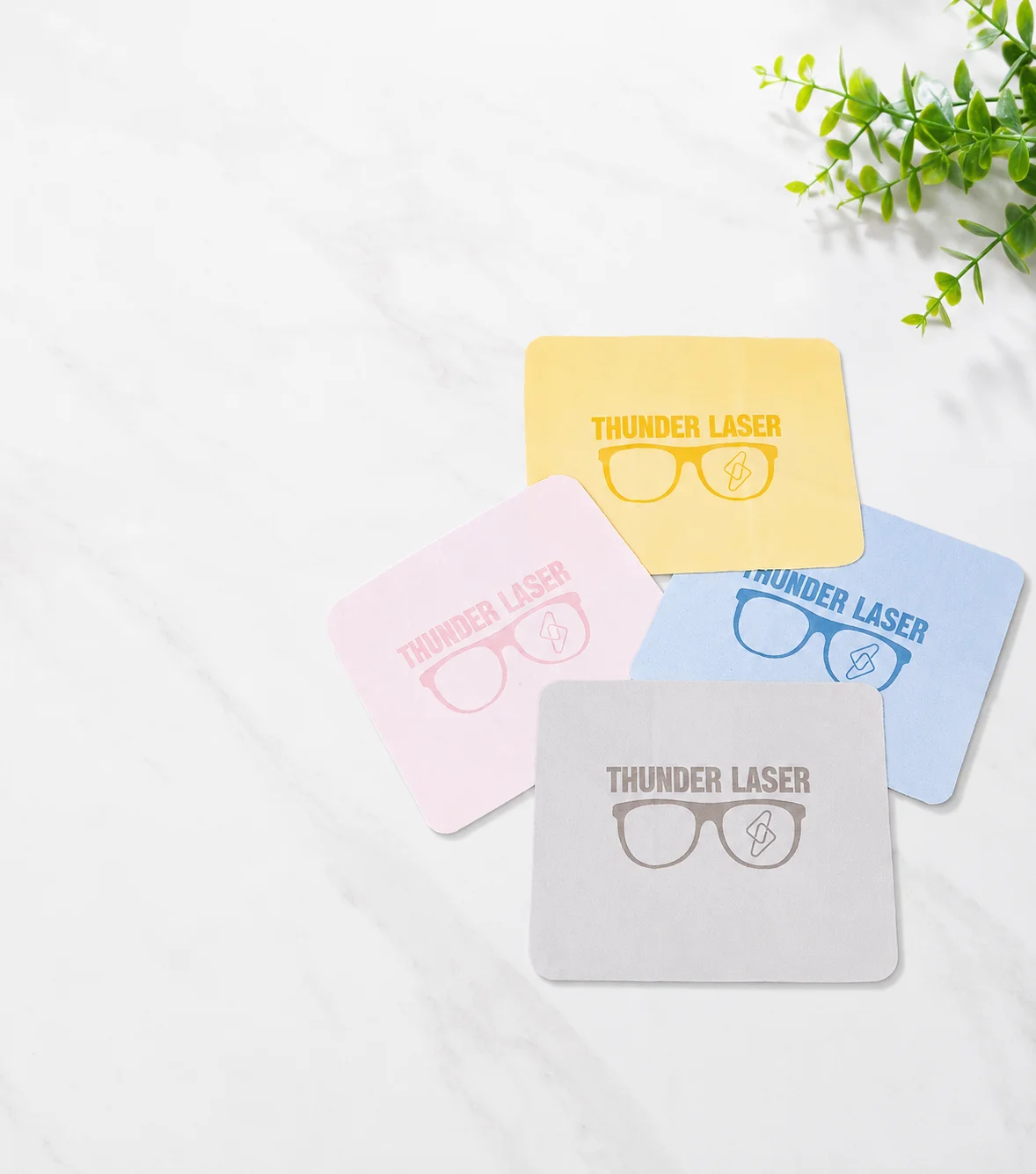
Applies permanent, high-contrast logos or designs on coated fabrics, synthetic textiles, and leather surfaces.
CHOOSING THE BEST TYPE OF FABRICS FOR LASER USE
Fabric materials differ in fiber composition, weave, texture, coatings, and heat response. Choosing the right textile is essential for controlling engraving contrast, edge quality, residue, and thermal damage. Explore the categories below to identify suitable starting materials for you:
Natural Fiber Fabrics Synthetic Fiber Fabrics Blended Fabrics Nonwoven and Technical Fabrics Textured and Heavy Fabrics 
CO₂ VS. DIODE VS. FIBER VS. UV
WHICH LASER FOR FABRIC PROCESSING?
Different laser sources are suited to different fabric applications. Compare their typical uses, advantages, and limitations to choose the right laser for your textile workflow.
|
Laser Source
|
CO₂ Laser
|
Diode Laser
|
Fiber Laser
|
UV Laser
|
| Best For | Fabric Cutting & Engraving | Light Craft Processing | Metal Accessories | Fine Low-Heat Marking |
| Typical Applications | Appliqués, Patches, Denim Fading, Garment Panels, Nonwoven Cutting | Small DIY Projects, Light Textile Personalization | Metal Buttons, Tags, Zippers, Apparel Hardware | Fine Textile Marking, Delicate Technical Materials, Small Detailed Graphics |
| Typical Wavelength | 10.6 μm | 450 nm | 1064 nm | 355 nm |
| Cutting Capability | Excellent on Many Fabrics | Limited, Mostly Thin Materials | Not Suitable for Most Fabrics | Limited, Specialty Use |
| Engraving / Marking | Excellent for Denim, Felt, Cotton, Polyester, and Decorative Textiles | Basic Marking on Selected Fabrics | Best for Marking Metal Parts, Not Fabric Surfaces | Fine, Controlled Marking with Lower Thermal Impact |
| Main Advantage | Most Versatile and Proven Choice for Fabric Processing | Accessible Entry Point for Small-Scale Users | Fast Permanent Marking on Metal Components | Finer Detail with Lower Heat Input |
| Heat Impact | Moderate, Depends on Settings and Fabric Type | Moderate | Material Dependent | Lower |
| Key Consideration | Incorrect settings may scorch natural fibers or melt synthetic edges | Lower power and efficiency for demanding textile production | Mainly for garment metal parts rather than direct fabric processing | Results depend heavily on the exact fabric composition, coating, and finish |
WHAT YOU CAN MAKE
WITH FABRIC LASER MACHINES?

Packaging Industry

Packaging Industry

Packaging Industry

Personalized Customization

Clothing Industry

Clothing Industry

Clothing Industry

Personalized Customization

Personalized Customization

Packaging Industry

Packaging Industry

Personalized Customization
CREATING WITH FABRIC HAS
NEVER BEEN THIS EASY

Position & Focus
Place the fabric on the laser bed.

Import Design&Test Settings
Import or create a design and make material testing.

Start engraving & Cutting & Marking
Just send the file, hit Start, and wait—it’s that easy.
RELATED RESOURCES

FABRIC LASER PROCESSING
& MATERIAL FAQS
Ready to test, create, and scale?
Book a demo or send us a message — we’ll help you get there.

 Stable & Consistent MachinesUnlimited ApplicationsRobust After-sales SupportFactory Direct Supply