
Author: Virgil
The aerospace industry has always pushed the boundaries of manufacturing, balancing structural strength with aggressive weight reduction.
Today, Selective Laser Melting (SLM), a core metal 3D printing technology, has evolved from a prototyping tool into a proven solution for producing flight-critical components. As the metal 3D printing market rapidly expands, SLM is enabling aerospace manufacturers to combine advanced metallurgy with unprecedented design freedom—reshaping the future of aviation engineering.
In this article, we will explore how advanced SLM systems facilitate the convergence of advanced metallurgy and radical design freedom to redefine the limits of aviation engineering.

1. The Aerospace Paradigm Shift: Overcoming Subtractive Limitations
Traditional aerospace fabrication often relies on “hog-out” machining, where massive billets of expensive alloys are milled down to the final part. This legacy approach is fundamentally at odds with the modern push for sustainability and efficiency.
Minimizing the Buy-to-Fly Ratio: Slashing Material Waste in High-Value Alloys
In aerospace circles, the Buy-to-Fly ratio is the grim metric of inefficiency. It is not uncommon for traditional CNC machining to have a ratio of 15:1 or even 20:1, meaning 95% of a high-value titanium or nickel-based superalloy is reduced to floor scrap. SLM technology fundamentally disrupts this economy. By building parts layer-by-layer, the process achieves a near-net-shape output with a ratio approaching 1.1:1. This is not just an environmental win; it is a financial imperative when dealing with exotic materials where feedstock costs can exceed several hundred dollars per kilogram.
Design Freedom: Engineering Beyond the Constraints of Traditional Tooling
Traditional “Design for Manufacture” (DfM) often forces engineers to simplify geometries so that cutting tools can reach specific features. SLM replaces these constraints with Design for Performance (DfP). Internal cooling galleries with non-linear trajectories, which are impossible to drill or cast, can be printed effortlessly. This freedom allows for the creation of organic, aerodynamic forms that were previously dismissed as “unmanufacturable,” optimizing airflow and thermal management in ways once thought impossible.
Rapid Iteration: Accelerating the Development Cycle
The time-to-market for aerospace components is notoriously long, often due to the lead times required for casting molds and specialized jigs. SLM compresses this timeline significantly. Data from industrial implementations indicates that manufacturing time can be reduced by over 60% compared to multi-step traditional methods. By moving directly from a 3D model to a metal part, R&D teams can iterate on designs in days rather than months, a critical advantage in the competitive race for next-generation propulsion and satellite systems.
2. Engineering Precision: The Technical Core of Metal Additive Manufacturing
Precision in the aerospace sector is a prerequisite for safety. High-end SLM systems are engineered to meet these rigorous standards through a synergy of high-energy optics and meticulous thermal control.
Ensuring Full Density in Aerospace Superalloys
Processing aerospace-grade alloys like Cobalt-Chromium or Nickel-based superalloys requires high energy density to ensure complete liquefaction. Industrial SLM systems utilize high-power fiber lasers to maintain stable melt pools, ensuring that the resulting parts achieve nearly 100% relative density. This minimizes the risk of fatigue-inducing porosity, which is vital for components subject to high-frequency vibration and extreme pressure.
Micron-Level Control: Navigating Complex Geometries
With beam diameters typically ranging from 40–100μm, SLM offers granular control over feature resolution. This allows for the fabrication of delicate thin-wall structures and sharp edges required for laminar flow in aerodynamic components. The precision of the laser ensures that even the most intricate internal fluid channels are reproduced with metallurgical integrity, maintaining internal surface finish and dimensional fidelity.
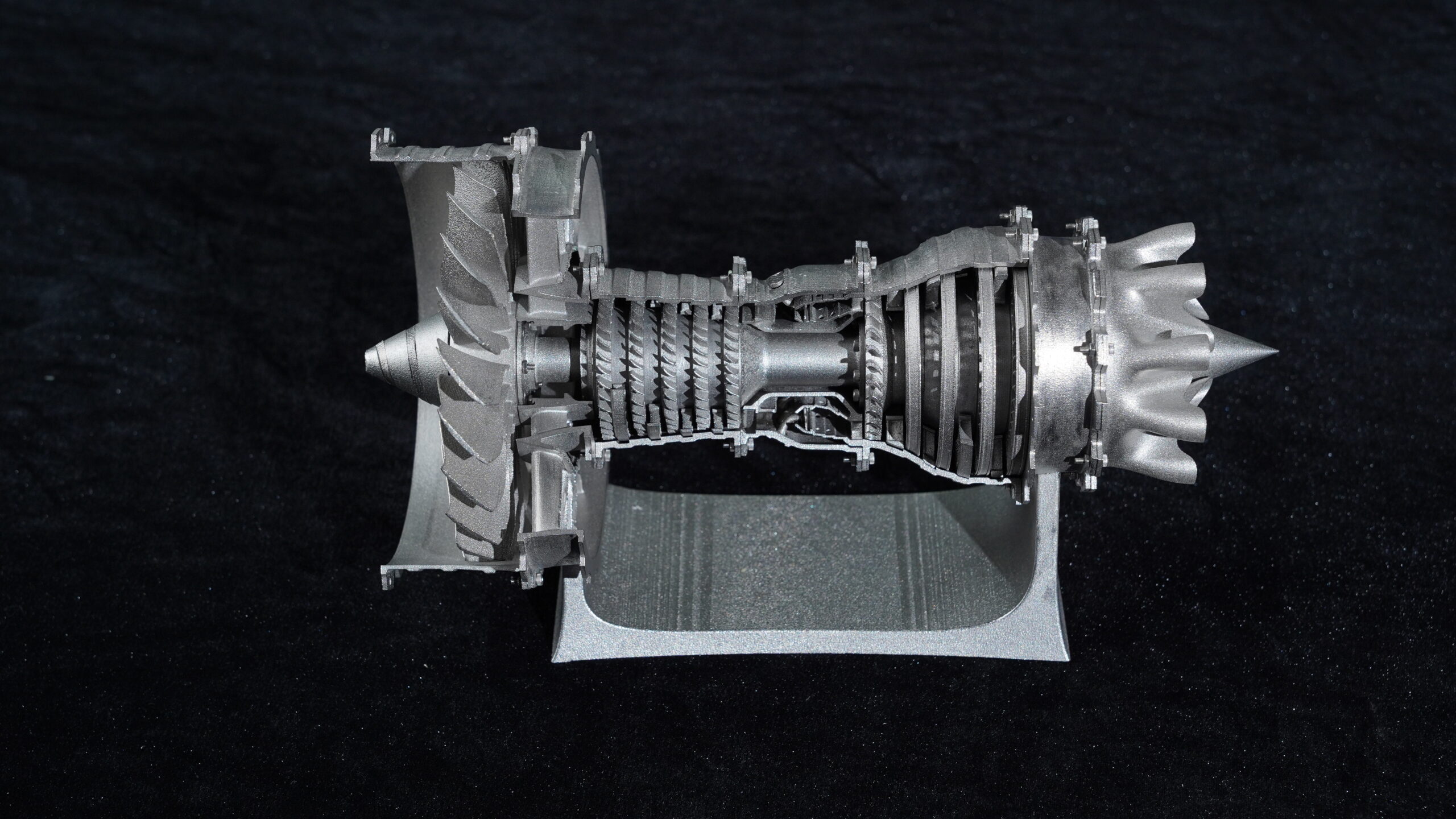
3. The Weight-Reduction Frontier: Topology Optimization and Lattice Architectures
In an industry where a single kilogram saved can save thousands of dollars in fuel over an aircraft’s lifespan, the ability to “engineer out” mass is invaluable.
Engineering the Impossible: Biomimetic Designs and Generative Geometry
Topology Optimization (TO) uses algorithmic solvers to remove material from non-load-bearing areas. The resulting parts often look “biological” or “bone-like.” While these shapes are a nightmare for a CNC mill, they are perfectly suited for SLM. This allows engineers to achieve a massive reduction in weight—often exceeding 40%—without compromising structural stiffness or safety factors.
Lattice Structures: Maximizing Stiffness-to-Weight Performance
Beyond the exterior shell, SLM can print complex lattice structures—repetitive unit cells that create “engineered foam” cores. These lattices provide exceptional energy absorption and vibration damping for satellite components and internal airframe supports. This strength-to-weight ratio is unattainable through any other manufacturing method and is increasingly used in passive cooling systems due to the massive surface area these structures provide.
4. Monolithic Innovation: Structural Integration and Part Consolidation
The most transformative application of SLM in aerospace is Part Consolidation—merging complex multi-part assemblies into a single, monolithic unit.
Eliminating the Weakest Link: The End of Mechanical Fasteners
Every bolt, rivet, and weld in an aircraft is a potential failure point. By printing an integrated part, engineers eliminate the risk of joint fatigue and fluid leakage. For example, fuel nozzles and heat exchangers that once required dozens of components and brazing steps can now be printed as a single piece. This eliminates the “stacked tolerances” of assembly and removes the weight of fasteners entirely.
Unitized Structures: Streamlining the Supply Chain
When a complex assembly becomes a single part, the supply chain simplifies. There are no gaskets to track, no fasteners to source, and no assembly labor required. This structural integration leads to higher reliability and a more streamlined manufacturing workflow, reducing both the BOM (Bill of Materials) and the risk of human error during assembly.
5. Material Resilience: Processing High-Performance Aerospace Alloys
Aerospace environments are brutal, characterized by extreme thermal gradients and corrosive atmospheres. SLM systems are designed to handle the high-performance alloys required for survival.
Extreme Thermal Stability: Leveraging Superalloys
Nickel-based and Cobalt-Chromium alloys are favored for their ability to maintain yield strength at temperatures near their melting points. SLM processes these alloys within a controlled inert atmosphere (using $Ar$ or $N_{2}$), ensuring that the final parts possess the high-temperature stability required for exhaust manifolds, turbine blades, and propulsion systems.
Fatigue Resistance and Certification Readiness
Consistency is the cornerstone of aerospace certification. High-quality SLM processes ensure uniform material properties across the build volume. By utilizing intelligent path planning, the system minimizes residual stress during the build, enhancing the fatigue life of the parts to meet strict airworthiness standards.
| Comparison Item | Traditional (CNC / Casting) | Metal 3D Printing (SLM) |
|---|---|---|
| Buy-to-Fly Ratio | Often 15:1 or 20:1 | Close to 1.1:1 |
| Material Waste | Up to 95% ends as scrap | Less than 10% waste |
| Design Freedom | Limited by tool access | Highly flexible; "Complexity is free" |
| Part Count | Many parts needing assembly | One integrated, monolithic part |
| Production Speed | Multi-step; 60 mins per item | One-step; 23 mins per item |
| Weight Saving | Heavy due to solid cores | Up to 55% lighter using lattices |
| Initial Tooling | Costly molds and jigs | Zero tooling; print from CAD |
Thunder SLM-175: The Compact Industrial Catalyst for Aerospace R&D
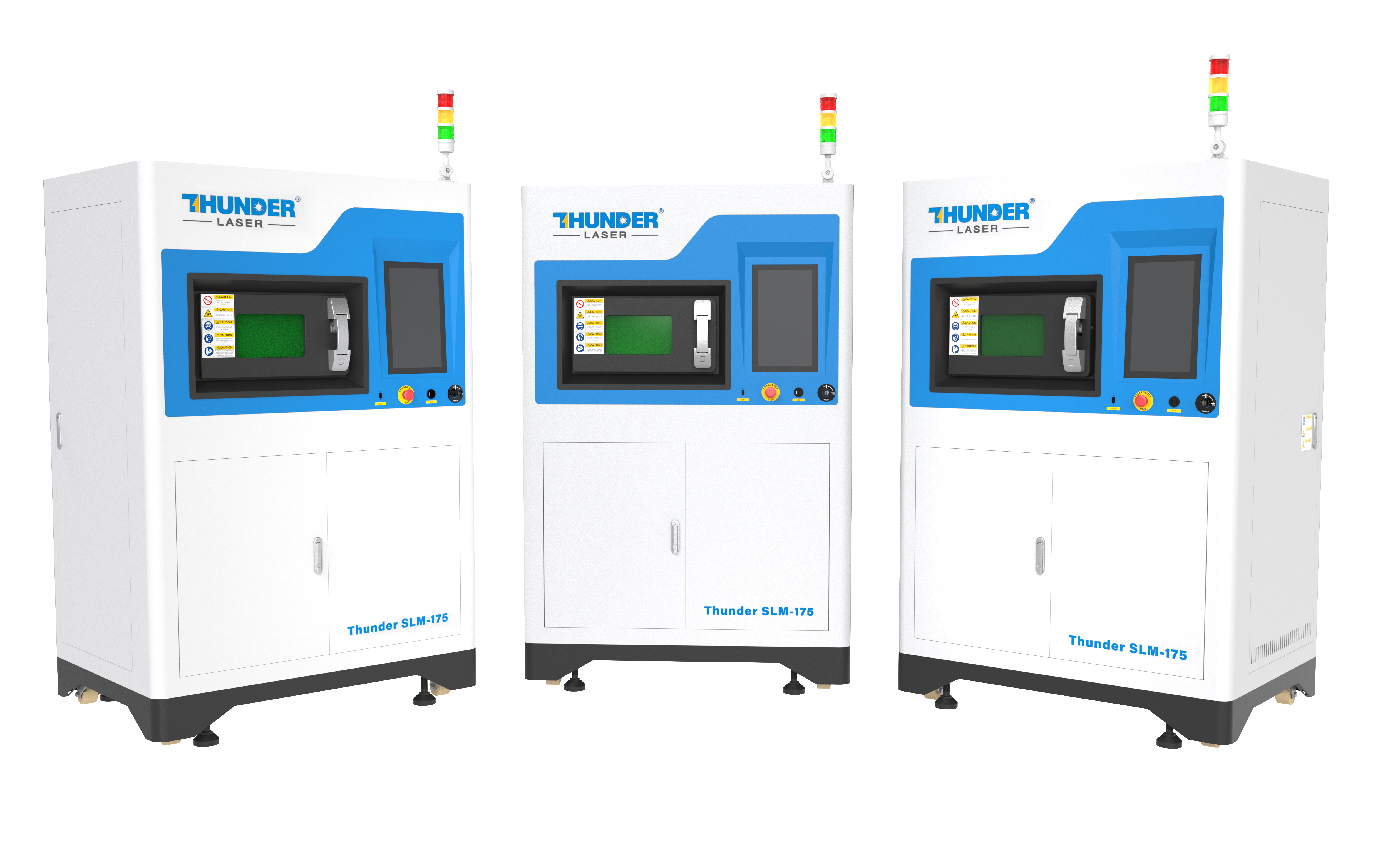
For organizations seeking to implement these aerospace advancements without the prohibitive cost of large-scale foundry equipment, the Thunder SLM-175 offers a high-precision, industrial-grade solution. Featuring a 500W Fiber Laser and an adjustable beam diameter of 40-100μm, it delivers the ±0.05mm accuracy required for flight-critical components. Its 85% powder recovery rate makes the use of expensive aerospace alloys economically viable, while the Thunder Make software optimizes laser trajectories to boost efficiency by 15%. By facilitating structural integration and extreme lightweighting in a compact, modular footprint, the SLM-175 serves as a strategic bridge from innovative research to small-batch aerospace production.
Conclusion
The convergence of SLM technology and aerospace engineering has unlocked a new dimension of design.
By moving toward monolithic, optimized structures, the industry is shedding the weight of the past. The strategic application of additive manufacturing allows for a future where aircraft and spacecraft are more efficient, reliable, and faster to produce.
As the technology matures, platforms that offer high precision and material versatility will continue to be the primary drivers of this orbital transformation.
.png "laser cutter Globle") International
International
 United States
 Brasil
 Canada
 Costa Rica
 Mexico
 Česká
Česká
 Romania
 Polska
 Ireland
 Italia
 Lietuva
 Россия
 Deutschland
 Britain
 Україна
 France
 Sverige
 Norway
 Denmark
 Ελλάδα
 Portugal
 한국
한국
 中国
中国
 中国香港
中国香港
 Israel
 中國臺灣
中國臺灣
 ジャパン
ジャパン India
India
 پاکستان
 پශ්රී ලංකා
 ประเทศไทย
 Australia
 New Zealand
 South Africa