


How to Choose the Best Fume Extractor: 2026 Buying Guide
 26-03-13
WHAT ARE YOU LOOKING FOR?
Search Across Products, Blog Posts, Support Content, And Resources.

How to Choose the Best Fume Extractor: 2026 Buying Guide
26-03-13

Invisible airborne contaminants are one of the biggest safety and maintenance challenges in modern workspaces. Whether you run a laser engraving shop, welding area, electronics assembly station, 3D printing workspace, laboratory, or small production studio, your process may generate hazardous fumes, fine particles, smoke, odors, and volatile organic compounds.
Relying only on an open window or a basic fan is usually not enough. Poor extraction can affect operator comfort, increase residue inside machines, shorten filter or optics life, and make the workspace harder to manage. A properly selected fume extractor helps capture contaminants at the source, filter them effectively, and support a cleaner, safer, and more professional working environment.
But with so many fume extraction systems on the market, choosing the right one can be confusing. This guide explains what a fume extractor is, why it matters, what types are available, which specifications actually matter, and how to match a fume extractor to your application.
A fume extractor, also called a smoke absorber, air filtration system, or local exhaust ventilation unit, is a specialized system designed to capture, filter, and remove airborne contaminants such as smoke, fine particles, and chemical vapors generated during soldering, welding, laser engraving, laser cutting, 3D printing, chemical work, and similar processes.
Modern fume extractors usually use multi-stage filtration. A pre-filter captures larger particles, a HEPA or high-efficiency particle filter captures fine dust and smoke particles, and an activated carbon filter helps reduce odors, gases, and VOCs. Depending on the application, a system may also include spark protection, specialty chemical media, filter monitoring, and high-static-pressure fans.
Fume extractors can be compact desktop units for light-duty work, portable floor-standing units for workshops, extraction-arm systems for fixed workstations, or centralized ducted systems for larger production facilities. The right choice depends on the contaminant type, smoke volume, capture distance, workspace layout, and maintenance expectations.
A quality fume extractor is not only about removing bad smells. It can help protect operators, reduce machine contamination, support a cleaner workspace, and lower long-term maintenance costs. For businesses, schools, studios, and production teams, it is an important part of a safer and more reliable workflow.
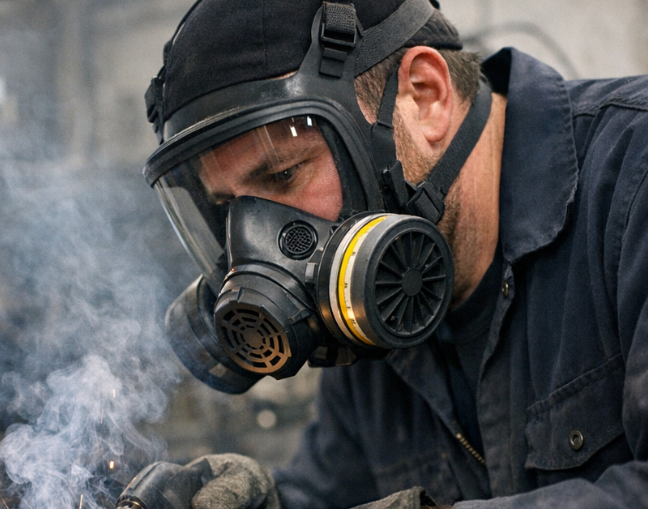
Laser cutting, soldering, welding, resin printing, and similar processes can release smoke, VOCs, fine particles, odors, and other airborne contaminants. Capturing these contaminants close to the source helps reduce exposure and improves comfort during daily operation.
Airborne contaminants can also affect equipment. Sticky residue, fine dust, and corrosive fumes may settle on laser lenses, mirrors, circuit boards, rails, belts, fans, and other sensitive parts. A suitable extraction system helps reduce residue buildup and supports more stable machine performance over time.
For laser users, proper exhaust and filtration are especially important because smoke and particles can affect optics, cutting quality, engraving consistency, and maintenance frequency. For more laser-specific guidance, see Laser Exhaust System Guide and Laser Machine Safety Guide.
Effective filtration helps reduce odors, dust, smoke, and residue on surrounding surfaces. This is especially important in enclosed studios, classrooms, retail production spaces, and small workshops where users work close to the machine.
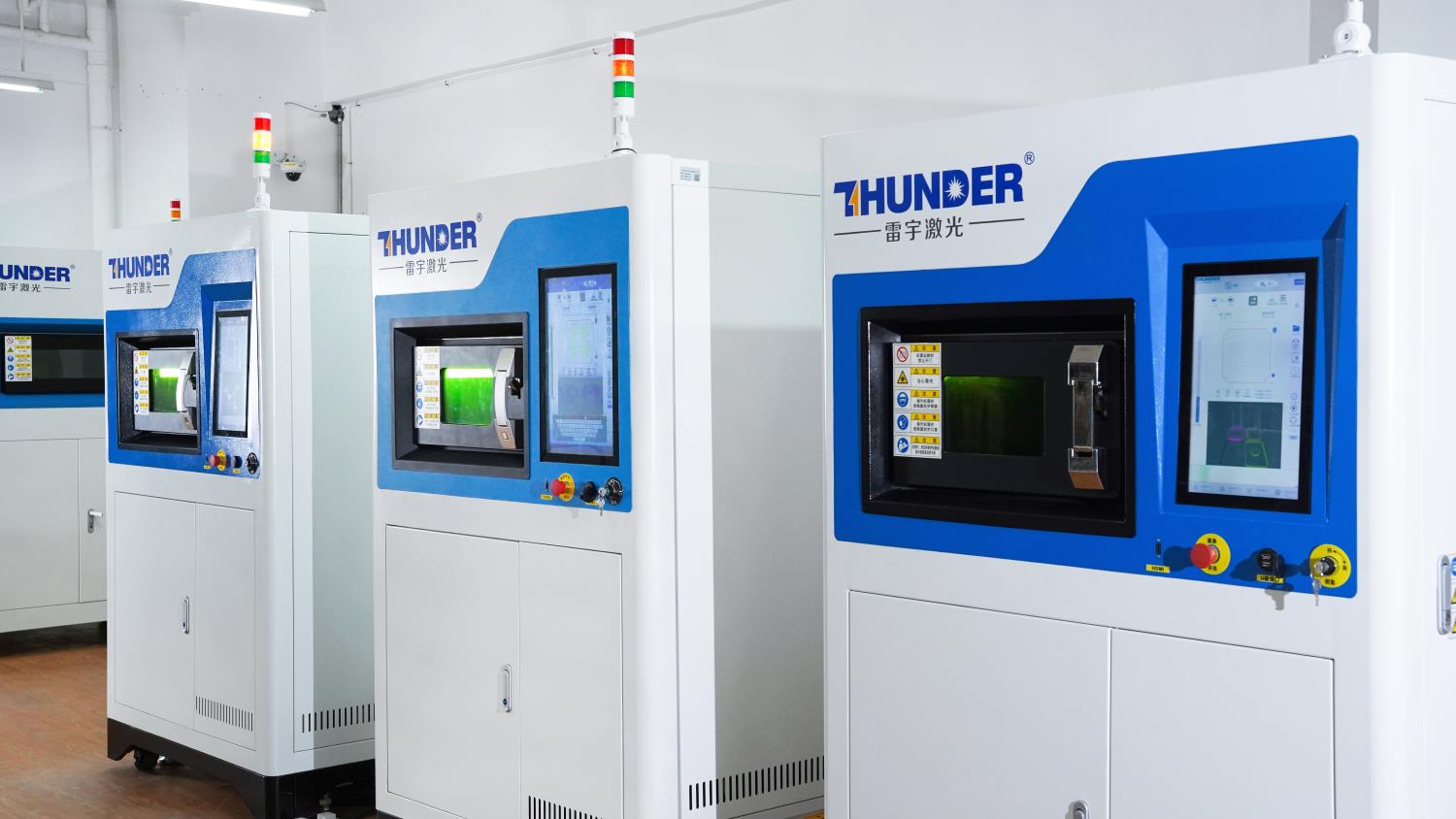
Many workplaces need to manage indoor air quality, operator exposure, and process-related fumes responsibly. A properly selected fume extraction system can support internal safety standards, facility requirements, and cleaner day-to-day operation.
Before comparing airflow, filter grades, and prices, first decide which type of fume extractor fits your workflow. A small desktop unit may be enough for light soldering, while a laser cutting setup usually needs stronger airflow, better filtration, and a direct enclosure connection.
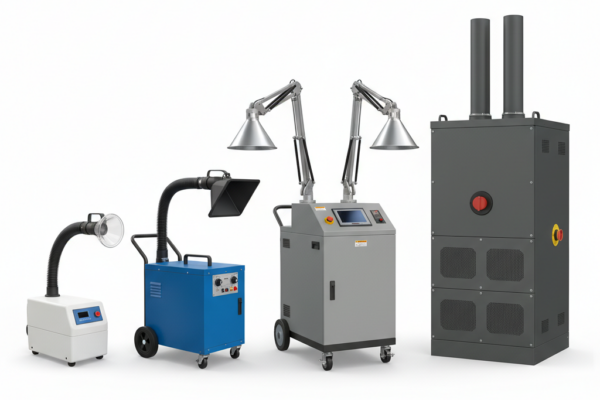
Benchtop and portable fume extractors are compact, self-contained units that sit on or near a workstation. Most use a built-in fan to pull fumes through a small filter stack and return filtered air to the room.
Extraction arms are wall-mounted, ceiling-mounted, or bench-mounted arms with a hood or funnel at the end. They connect to a fan-and-filter unit or a centralized duct system and capture fumes near the source.
Industrial floor-standing extractors are high-capacity units designed for heavier applications. They are often placed near the work area and connected to one or more extraction points using flexible hoses.
A centralized system uses ductwork to route fumes from multiple capture points to one larger filtration or exhaust system. This setup is usually designed for facilities with multiple workstations or continuous production.
| Feature | Benchtop / Portable | Extraction Arm | Industrial Floor Unit | Centralized Ducted |
| Best for | Soldering, light lab work, hobby use | Fixed workstations and production lines | Welding, laser processing, plasma cutting, grinding | Multi-station facilities and cleanrooms |
| Airflow range | 50–150 CFM | 100–300 CFM per arm | 200–1,200 CFM | 500–5,000+ CFM |
| Filtration | 1–3 stages | 2–4 stages | 3–5 stages | Custom / application-specific |
| Installation | Plug and play | Wall or bench mounting | Hose connection and floor placement | Ductwork and HVAC engineering |
| Portability | High | Low to medium | Medium | None |
| Best TCO when | 1–2 stations, light use | 2–6 fixed stations | Heavy single-point extraction | 5+ stations, continuous use |
Comparison table: common fume extractor system types and their typical applications.
Spec sheets can make every fume extractor look impressive. The key is understanding what each specification means in real use and whether the values are measured under realistic operating conditions.
Airflow rate, usually measured in CFM or m³/h, tells you how much air the system can move. It is one of the first numbers buyers compare, but it can be misleading if you do not know whether the rating was measured with filters installed.
A simple room-level airflow estimate can be calculated using air changes per hour:
Airflow Formula
CFM = Room Volume × Air Changes per Hour ÷ 60
In metric units, the formula is:
Metric Airflow Formula
m³/h = Room Volume × Air Changes per Hour
| Workspace Type | Recommended Airflow |
| Small desktop workspace | 300–500 m³/h |
| Medium workshop | 500–800 m³/h |
| Heavy smoke production | 800–1500+ m³/h |
Reference airflow ranges for different workspace sizes and smoke loads.
Tip: Match airflow to your actual application. Free-air airflow and filtered airflow are not the same. If one manufacturer lists free-air airflow and another lists airflow with filters installed, the comparison is not equal.
Capture velocity is different. It refers to the air speed at the point where fumes, smoke, dust, or odor are actually being pulled into the extraction system. This is important because a high airflow number does not always mean strong real-world capture. If the inlet is too far from the fume source, the hose is too long, the nozzle is poorly positioned, or the capture hood is not suitable for the work area, fumes may still escape into the room even when the extractor has a large airflow rating.
For users, capture velocity answers a more practical question: Can the extractor pull fumes away before they spread into the workspace?
Generally speaking, the closer the capture point is to the fume source, the easier it is to control smoke and odor. For example, a laser machine with a well-sealed enclosure and a properly connected exhaust port can guide fumes into the extractor more efficiently. An open working area, a large cutting bed, or a process that produces fast-rising smoke usually needs stronger capture performance and better airflow control.
The following table gives a practical reference for comparing capture velocity requirements in different applications:
| Application Scenario | Recommended Capture Velocity Reference | How to Understand It |
| Light odor control, low-smoke applications, small localized fume sources | 0.25–0.5 m/s / 50–100 fpm | Suitable for light odor control, but not enough to represent strong smoke capture performance. |
| General laser engraving, light cutting, enclosed laser machines | 0.5–1.0 m/s / 100–200 fpm | A practical baseline range for many enclosed laser engraving and cutting setups. |
| Wood, MDF, leather, rubber, acrylic, and other visible-smoke laser applications | 1.0–1.5 m/s / 200–300 fpm | More suitable for materials that generate heavier smoke, stronger odor, or more particles. |
| Open work areas, large worktables, or extraction points farther from the fume source | 1.5–2.5 m/s / 300–500 fpm | Requires stronger inlet speed, better hood design, and more stable airflow control. |
| Welding fume reference | 0.51–0.87 m/s / 100–170 fpm | Useful as a reference for hot fume control, but it should not be directly applied to every laser application. |
Comparison table: practical capture velocity references for different fume extraction scenarios.
Capture zone refers to the effective area where fumes can still be pulled into the system. A small inlet placed very close to the smoke source may work well for a concentrated fume point. A larger work area may require a wider hood, better enclosure design, or stronger suction to cover the full processing zone.
When comparing fume extractors, do not only check the maximum airflow rating. Also consider:
In short, when choosing a fume extractor, look for a system that matches your machine size, application intensity, duct setup, and filter loading conditions, not just the highest airflow number on the specification sheet.
A quality fume extractor should use multiple filtration stages. Each stage targets a different type of contaminant and protects the filters downstream.
| Filter Type | What It Captures | Common Use |
| Pre-filter | Large dust, debris, hair, and coarse particles | All applications |
| HEPA filter | Fine particles and smoke particulate | Laser smoke, solder fumes, fine dust, and grinding dust |
| Activated carbon | Odors, gases, VOCs, and chemical vapors | Laser acrylic fumes, flux fumes, resin printing, adhesive work |
| Specialty media | Application-specific chemical vapors | Labs, semiconductor work, chemical processing, and regulated environments |
Common fume extractor filter types and their main functions.
Note: HEPA filtration is for particles. It does not remove gases or vapors. If your process generates odors or VOCs, such as laser-vaporized acrylic, solder flux, resin fumes, or adhesive vapors, you also need activated carbon or suitable gas-phase filtration.
For laser processing, a practical filtration stack usually includes a pre-filter, particle filter, and activated carbon filter. For spark-generating applications such as welding or grinding, spark protection or a pre-separator may also be required.
Static pressure describes how well the extractor maintains airflow against resistance from filters, hoses, elbows, duct length, and machine enclosures. This matters because a fume extractor with good free-air airflow may lose significant performance once filters and ducting are installed.
For laser machines, static pressure is especially important because the extractor must pull air through the machine enclosure, flexible hose, filter stack, and sometimes external ducting. A stronger fan with suitable static pressure helps maintain stable smoke removal during real operation.
Noise level matters in small workshops, studios, schools, and office-adjacent production spaces. Many users prefer systems that operate at or below 65 dB for long-term comfort, but the acceptable level depends on the environment and application.
The cheapest fume extractor to buy is not always the cheapest to own. Filter replacement cost, filter life, energy use, and maintenance labor can strongly affect total cost over time.
Total Cost of Ownership Formula
2-Year TCO = Purchase Price + Filter Cost × Replacement Cycles + Energy Cost
Replacement cycles should be calculated based on expected filter life and total operating hours over 24 months.
When comparing systems, ask for filter life in operating hours, the price of a complete replacement filter set, and whether the unit has a filter saturation indicator or differential pressure sensor.
A fume extractor may run for hours each day in an environment with dust, heat, vibration, and chemical exposure. Durable housing, reliable motors, sealed filter compartments, and accessible maintenance design are important for long-term performance.
| Certification | What It Indicates |
| CE | Meets relevant EU safety, health, and environmental protection requirements. |
| UL / ETL | Third-party electrical and fire safety testing for US or Canadian markets. |
| RoHS | Restriction of certain hazardous substances in electrical and electronic products. |
| EN 15012 | A standard related to welding fume extraction equipment performance. |
| ISO 21904 | An international standard for welding fume capture and separation equipment. |
Common certifications and standards related to fume extraction equipment.
Smart features can improve workflow and reduce maintenance guesswork. Useful features include automatic fan speed adjustment, filter life monitoring, pressure differential sensing, real-time status display, and remote monitoring for multi-station facilities.
Tip: Do not evaluate one specification in isolation. High airflow means little if capture velocity is weak. A particle filter is not enough if your process produces VOCs. A low purchase price may become expensive if filters are small and replacement cycles are frequent.
There is no universal best fume extractor. The right system is the one that matches your contaminants, workflow, capture method, workspace, and operating hours. The following five-step process can help narrow down your options.
Start by identifying what your process generates. Laser engraving and cutting often produce both fine particulates and gases, so a combination of pre-filter, HEPA or high-efficiency particle filter, and activated carbon is usually needed.
| Industry / Application | Main Contaminants | Primary Filter Needed |
| Laser engraving and cutting | Smoke, VOCs, odors, fine particles | Pre-filter + particle filter + activated carbon |
| 3D printing | VOCs and ultrafine particles | HEPA + activated carbon |
| Electronics soldering | Flux smoke, rosin fumes, fine particles | HEPA + activated carbon |
| Welding and metal fabrication | Metal oxide fumes and fine metal particles | Spark protection + pre-filter + HEPA |
| Chemical laboratories | Solvent vapors and organic gases | Activated carbon or specialty media |
| Education labs and makerspaces | Mixed fumes from laser cutting, soldering, and 3D printing | Pre-filter + HEPA + carbon |
Different applications generate different contaminants and require different filtration combinations.
Next, consider how and where fumes are generated. A direct enclosure connection, such as on a laser engraver or laser cutter, is different from an open soldering bench or welding station. Capture distance, hood shape, hose diameter, and source movement all affect performance.
Combine your contaminant type and capture scenario to define the minimum airflow, filtration stack, and suction performance required for your application.
| Application Scenario | Minimum CFM at Nozzle | Suggested Filtration Stack | Typical Capture Setup |
| Soldering / rework | 80–120 CFM | Pre-filter + HEPA + activated carbon | 4–8 in from source |
| Laser cutting / engraving | 150–400 CFM | Pre-filter + HEPA + deep-bed carbon | Direct enclosure connection |
| Welding | 200–500 CFM per capture point | Spark arrestor + pre-filter + HEPA | Close hood or extraction arm |
| FDM 3D printing | 60–100 CFM | Pre-filter + HEPA + activated carbon | Enclosure-integrated |
| Resin 3D printing | 50–80 CFM | Activated carbon-focused filtration | Enclosure-integrated |
Reference airflow and filtration guidance for common fume extraction scenarios.
Tip: If you are choosing between two sizes, it is often better to size up slightly. A unit running at 70% capacity is usually quieter and more stable than one running at full load all day.
A powerful extractor will not work well if it does not fit your workspace. Measure the unit footprint, filter access clearance, hose routing, outlet location, noise expectations, and maintenance access before buying.
| Constraint | What to Check |
| Footprint | Make sure the unit fits beside or behind the machine without blocking operation. |
| Hose routing | Shorter and straighter hose paths usually maintain better suction. |
| Noise | Consider whether the extractor will run near operators, students, or office areas. |
| Filter access | Leave enough space to replace filters without moving other equipment. |
| Power supply | Confirm voltage, plug type, circuit capacity, and continuous operating requirements. |
Workspace factors to confirm before choosing a fume extractor.
Do not compare fume extractors only by purchase price. A low-cost unit with short filter life can become expensive over time. Compare filter replacement cost, expected filter life, electricity use, downtime, and maintenance labor.
For laser applications, also consider whether better extraction can reduce residue buildup inside the laser machine, extend optics maintenance intervals, and improve everyday cleaning efficiency.
Laser engraving and cutting require stronger extraction than many light-duty processes because different materials can generate smoke, odors, fine particles, VOCs, and sticky residue. Wood produces smoke and dust. Acrylic produces strong odor and VOCs. Rubber can create heavy fumes. Leather may produce odor and particles. Some plastics should not be processed at all if their composition is unsafe.
For laser users, the best fume extractor should have enough airflow, good static pressure, multi-stage filtration, effective carbon capacity, easy filter maintenance, and compatibility with the laser machine’s exhaust port.
If you are unsure whether a material is safe to process, review Materials Not for Laser Processing before using the machine.
The Thunder Air 700 is designed to support laser engraving and cutting workflows by helping manage smoke, particles, odors, and fumes generated during material processing.
It is especially useful for users who cannot directly vent outside, users working in shared indoor environments, and users who process materials that generate noticeable smoke or odor. When paired with a suitable Thunder Laser machine and proper material selection, Thunder Air 700 helps create a cleaner and more controlled laser workspace.
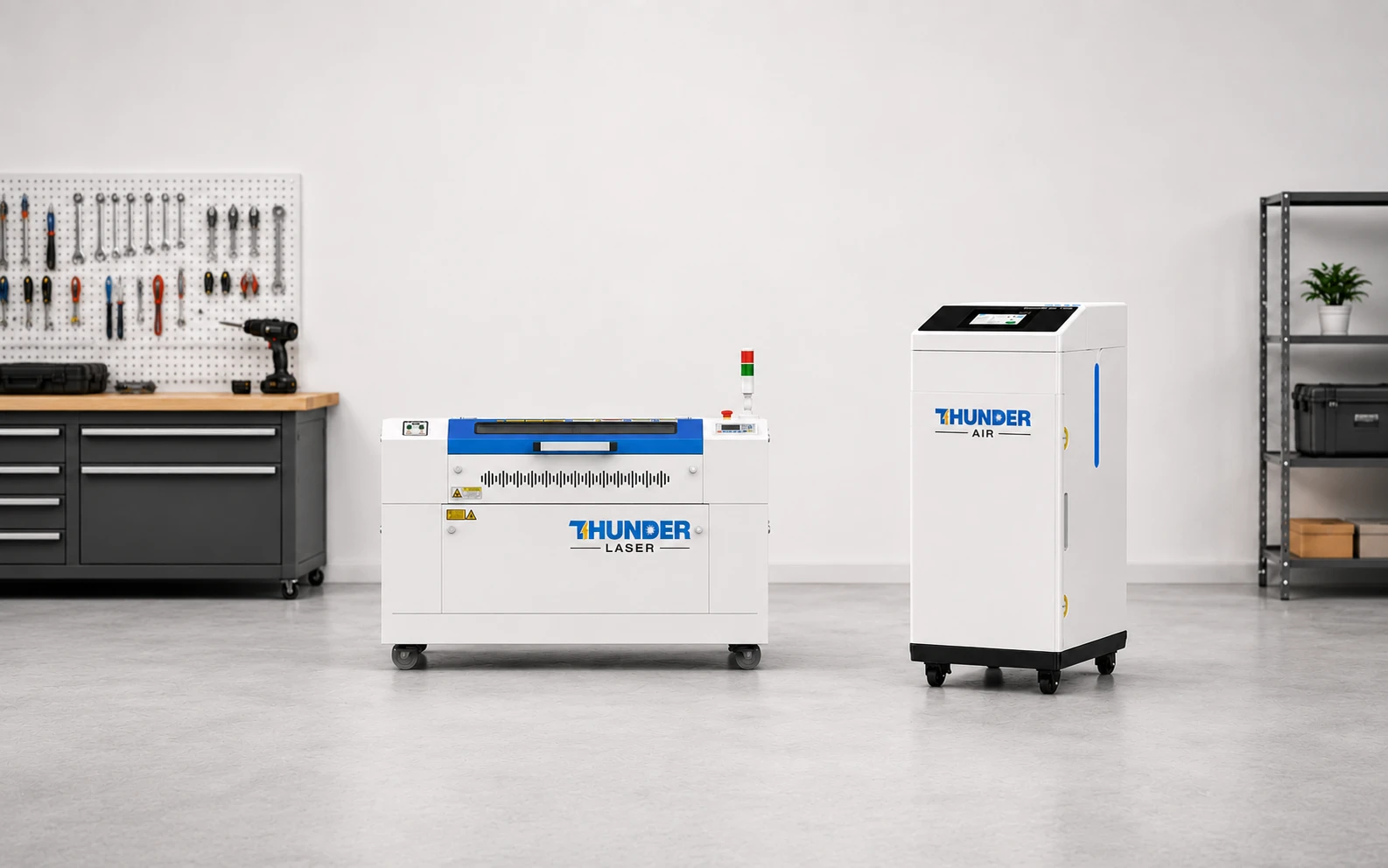
Thunder Air 700 fume extractor
| Specification | Thunder Air 700 |
| Dimensions | 475 × 605 × 1003 mm / 18.70″ × 23.8″ × 39.5″ |
| Weight | 95 kg / 209 lb |
| Compatible Voltage | 220 V |
| Power | 600 W |
| Filtration System | 5-stage filtration |
| Maximum Airflow | 700 m³/h |
| Maximum Static Pressure | 4,000 Pa |
| Noise Level | ≤ 65 dB, even under full load |
| Exhaust Leakage | < 0.01% |
| System Type | Floor-standing, portable with caster wheels |
| Filter Monitoring | Differential pressure sensor with real-time status display |
| Housing | Fully sealed all-metal structure |
| Certification | CE |
Thunder Air 700 main specifications for laser fume extraction workflows.
For users working with larger laser machines or higher smoke loads, a suitable fume extractor can support cleaner processing and easier maintenance. The Nova Series is commonly used for wood, acrylic, leather, paper, rubber, and mixed material processing, where exhaust performance is especially important.
For compact laser workstations and small studios, the Bolt Series can also benefit from proper fume extraction, especially when engraving wood, acrylic, rubber, leather, or coated materials indoors.
If you are comparing laser machine options, see How to Choose Thunder Laser Machines.
A high airflow number may look attractive, but it does not tell the full story. Filter resistance, hose length, static pressure, and capture setup all affect real extraction performance. Always compare practical operating conditions, not only free-air airflow.
Fine particle filtration is not enough when the process generates gases, odors, or VOCs. Laser acrylic cutting, solder flux, resin printing, and adhesive work usually require activated carbon or suitable gas-phase media.
Small filters may clog quickly in high-smoke applications. Before buying, check the full replacement filter price, expected filter life, and whether the unit provides filter status monitoring.
A desktop soldering extractor is not suitable for heavy laser cutting. A centralized system may be excessive for one small workstation. Match the extractor type to the actual workflow, not only the workspace size.
No fume extractor can make unsafe laser materials safe. Materials such as PVC, vinyl, unknown plastics, and certain coated materials should not be processed without verification. A good fume extractor reduces exposure for compatible materials, but it does not replace material safety checks.
A fume extractor can only perform well if it is maintained properly. Filters clog over time, hoses collect residue, and airflow may drop gradually if users do not inspect the system.
For laser users, fume extractor maintenance should be part of the same routine as cleaning optics, checking air assist, and inspecting the exhaust path. For related machine setup guidance, see Air Assist for Laser Engraving and Cutting.
Choosing the best fume extractor is about matching the system to your real process, not simply buying the highest airflow number or lowest-cost unit. The right extractor should match your contaminants, filtration needs, capture setup, workspace constraints, noise expectations, and long-term maintenance budget.
For laser engraving and cutting, choose a fume extractor with enough airflow, strong static pressure, multi-stage filtration, particle capture, and activated carbon capacity. This helps reduce smoke, odor, residue, and airborne particles while supporting cleaner daily operation.
For Thunder Laser users, the Thunder Air 700 is the most relevant product for fume and particle management. It pairs naturally with systems such as the Nova Series and Bolt Series, depending on your machine size, material type, and workflow.
Need Help Choosing a Fume Extractor for Your Laser Workspace?
Contact Thunder Laser to discuss your machine model, material type, smoke load, workspace layout, ventilation conditions, and suitable fume extraction options.
Contact UsTalk To Our Experts Now!
Please leave your contact information so that we can serve you better.
FAQS
TAKE THE NEXT STEP WITH THUNDER LASER


 Stable & Consistent MachinesUnlimited ApplicationRobust After-sales SupportFactory Direct Supply


